The Styrian
Pumpkin Seed Oil Journal
The Styrian
Pumpkin Seed Oil Journal
- The Styrian Pumpkin Seed Oil Journal
Shop EN
pumpkinseedoil.ccShop DE
kuerbiskernoel.cc
About
This website also contains some content created with the support of AI.
Does Pumpkin Seed Oil Stain Teeth?
Cosmetic notice: Cosmetic use only — not a medicine. Patch-test on a small skin area first. Stop use if irritation occurs.
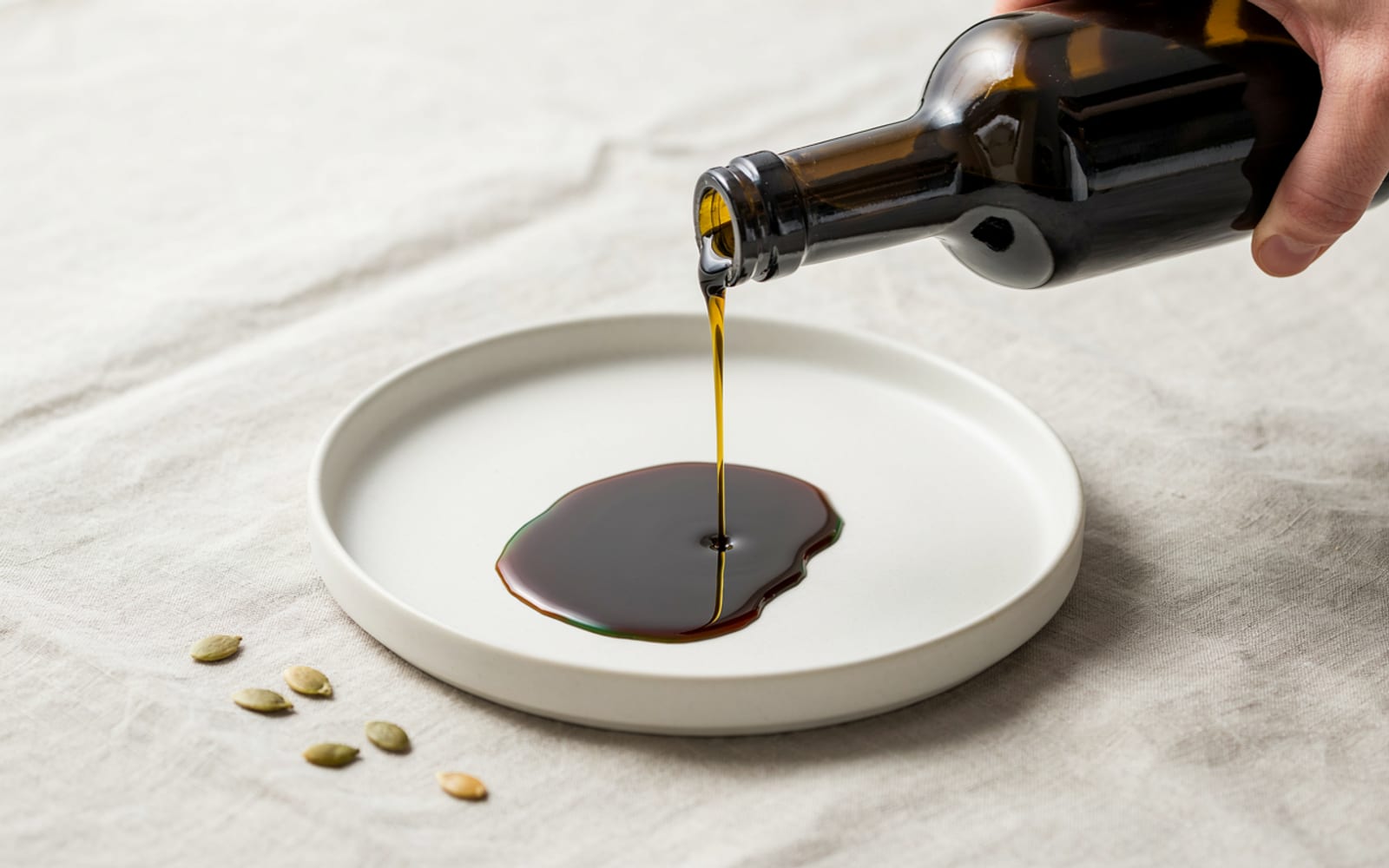
Hold a bottle of authentic Styrian pumpkin seed oil up to the light and you see straight away why the question comes up at all: the oil is deep dark green to brown, almost black in shadow. Anyone seeing that colour on a spoon for the first time is right to wonder what it does to teeth or tongue.
Where the Dark Colour Comes From
Chlorophyll and carotenoids from the thin seed skin are responsible, carried into the oil during pressing. These same pigments are what can briefly become visible with prolonged, direct contact with teeth or tongue. More on the chemistry behind it is on the composition of pumpkin seed oil page.
Kernel, Extract, or Oil — an Important Difference
When studies examine pumpkin products, the form used is decisive. Whole kernels bring fibre, protein, and minerals with them. Extracts are concentrated and dosed in fixed amounts. The culinary oil from the bottle is mostly fat with fat-soluble colour and aroma compounds. Results found for kernels cannot simply be carried over to a spoonful of oil.
What Actually Happens During Normal Eating

A drop on salad, soup, or warm potatoes means only brief contact between oil and tooth surface. Any light film afterwards usually disappears with water, saliva, and the next brushing — that is something quite different from years of staining from tobacco or coffee.
Where the Risk Actually Increases
The risk rises when the oil is swished around the mouth for a long time or sipped slowly on its own — then the contact simply lasts too long. Use the oil the way it is meant to be used instead: as a bold finishing touch on the plate, not as a mouth rinse.
Where the Claim Ends
A plausible explanation is not yet proof of a lasting problem. With normal, everyday use as a culinary oil, there is no reason for concern — the brief, visible staining after eating is usually harmless and temporary.
The Best Place for the Oil Stays the Plate

Use the oil above all for its nutty, roasted flavour: on potatoes, salad, vegetables, or a mild soup. Small amounts are enough, since the oil is intense and energy-dense. Notes on use, aroma, and storage are in the kitchen.
When Professional Advice Matters More
If staining persists or worries you, simply mention it to your dentist at your next check-up — other causes are easier to assess there than here. More topics with the same careful perspective are in the health overview. In the end, the dark colour stays exactly what it is: a sign of character in the glass — no reason to give up the flavour.
Shop premium Styrian pumpkin seed oil
Shop now