The Styrian
Pumpkin Seed Oil Journal
The Styrian
Pumpkin Seed Oil Journal
- The Styrian Pumpkin Seed Oil Journal
Shop EN
pumpkinseedoil.ccShop DE
kuerbiskernoel.cc
About
This website also contains some content created with the support of AI.
Pure Oil or Salad Oil Blend?
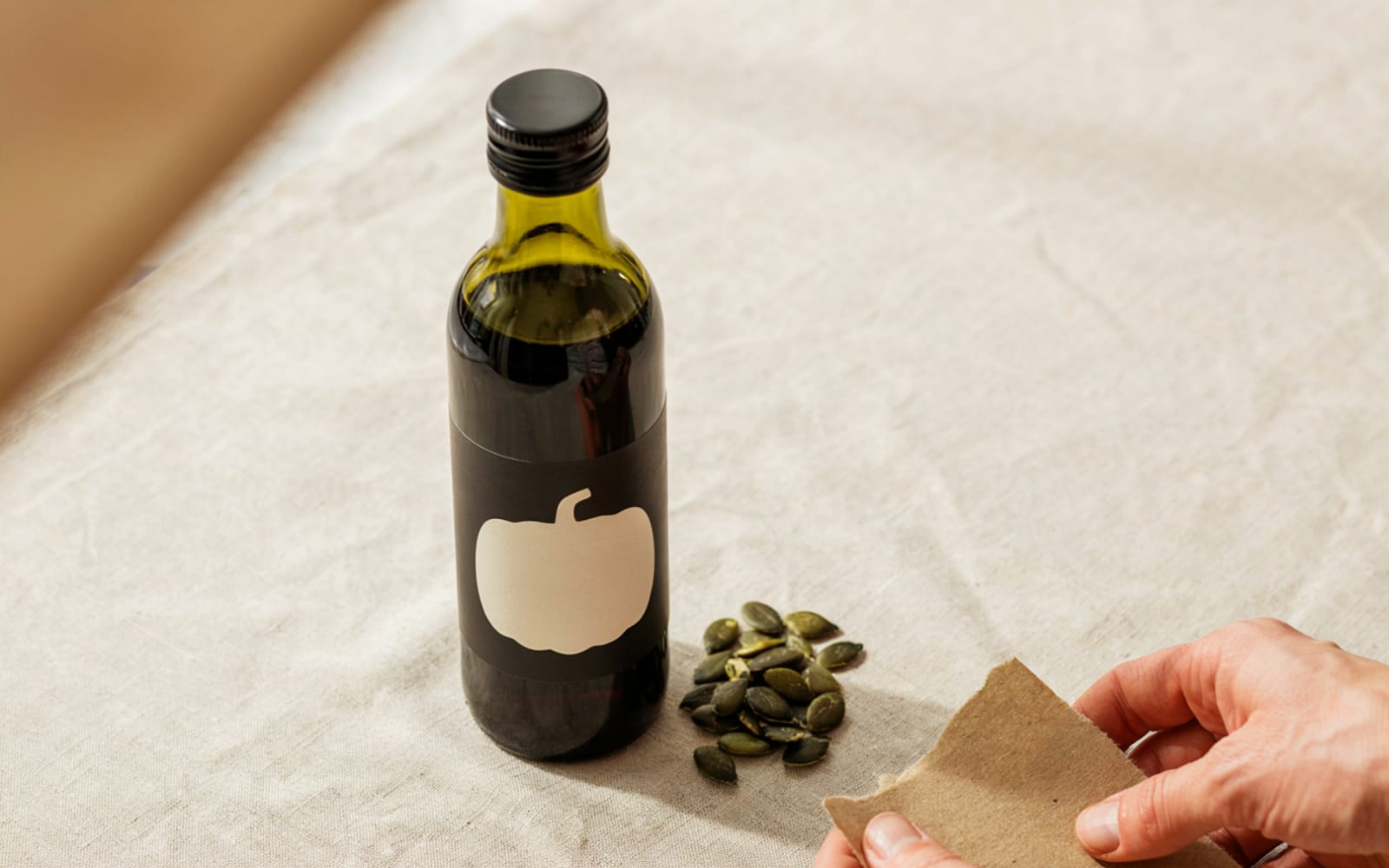
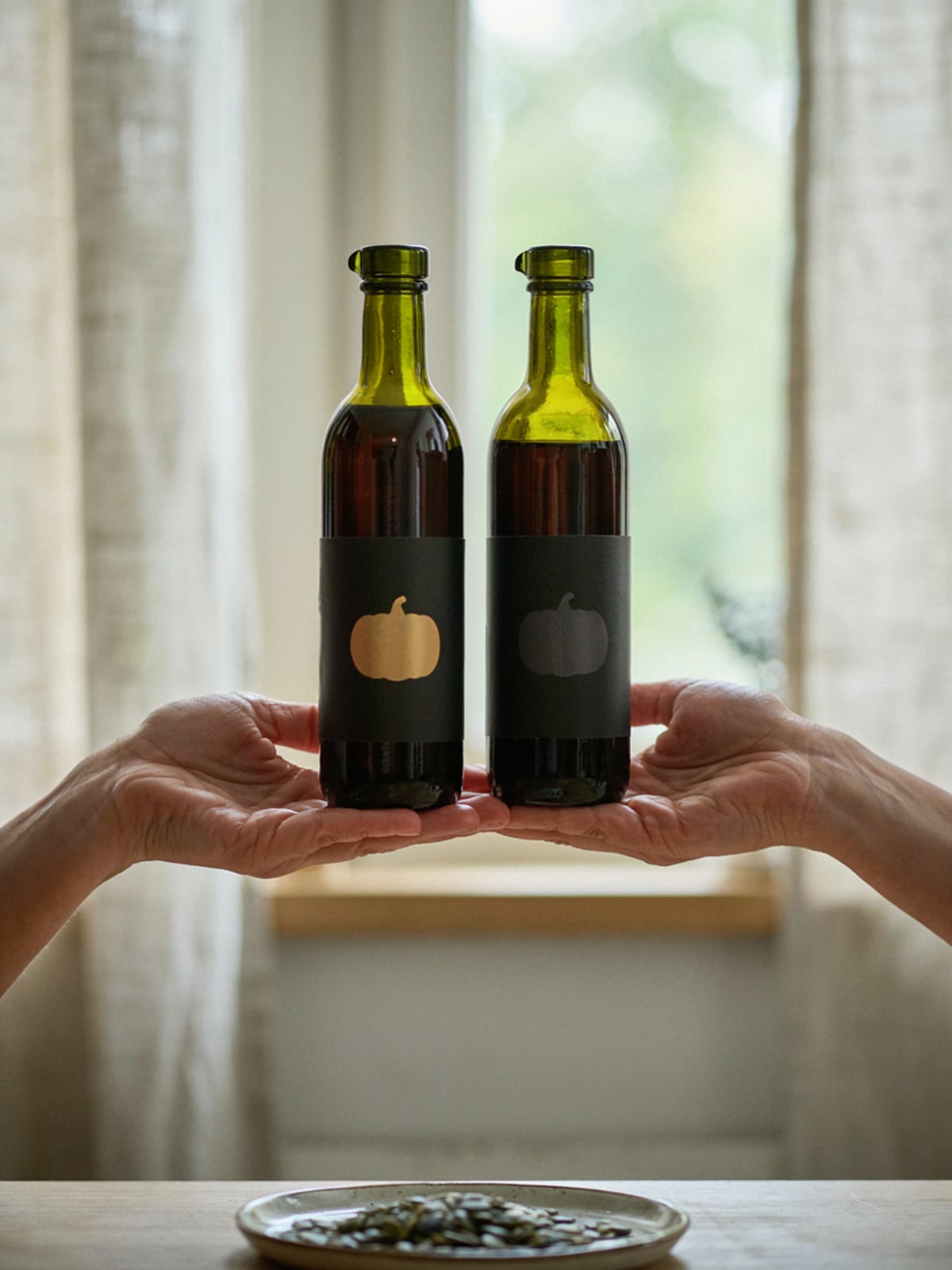
The spoon dips into warm soup, a splash of dark oil goes on top, and the first taste arrives: roasted, nutty, with a depth that announces itself immediately. By the second spoonful, that same flavour suddenly feels quieter. Not a mistake of the tongue — a clue. Two bottles can look equally dark on the shelf and still hold very different things: one pure pumpkin seed oil, the other a blend with a quieter neighbour in the glass.
What the Label Actually Says
The answer shows up faster on the label than on the tongue. If it lists a single oil named pumpkin seed oil, you're holding pure oil. If several oils appear side by side — often rapeseed or a similarly mild oil — it's a blend, even if the front label promises “pumpkin” in large letters. If percentages are printed, they count; if they're missing, the cheaper oil usually makes up the larger share of the bottle. More on reading labels: blends and imports and the glossary.
How Colour and Taste Give It Away
Hold a glass of pure Styrian oil to the light and it looks almost black-green, with a reddish shimmer at the edge. On the tongue, the bold roasted flavour that made this oil famous arrives immediately. Blends look lighter and taste milder — pleasant, but without that depth. Colour alone proves nothing, though; it's just a first clue. The label stays the reliable source, and anyone wanting to understand the protected origin in more depth can read Styrian PGI and what does PGI mean?
When a Blend Is Exactly Right
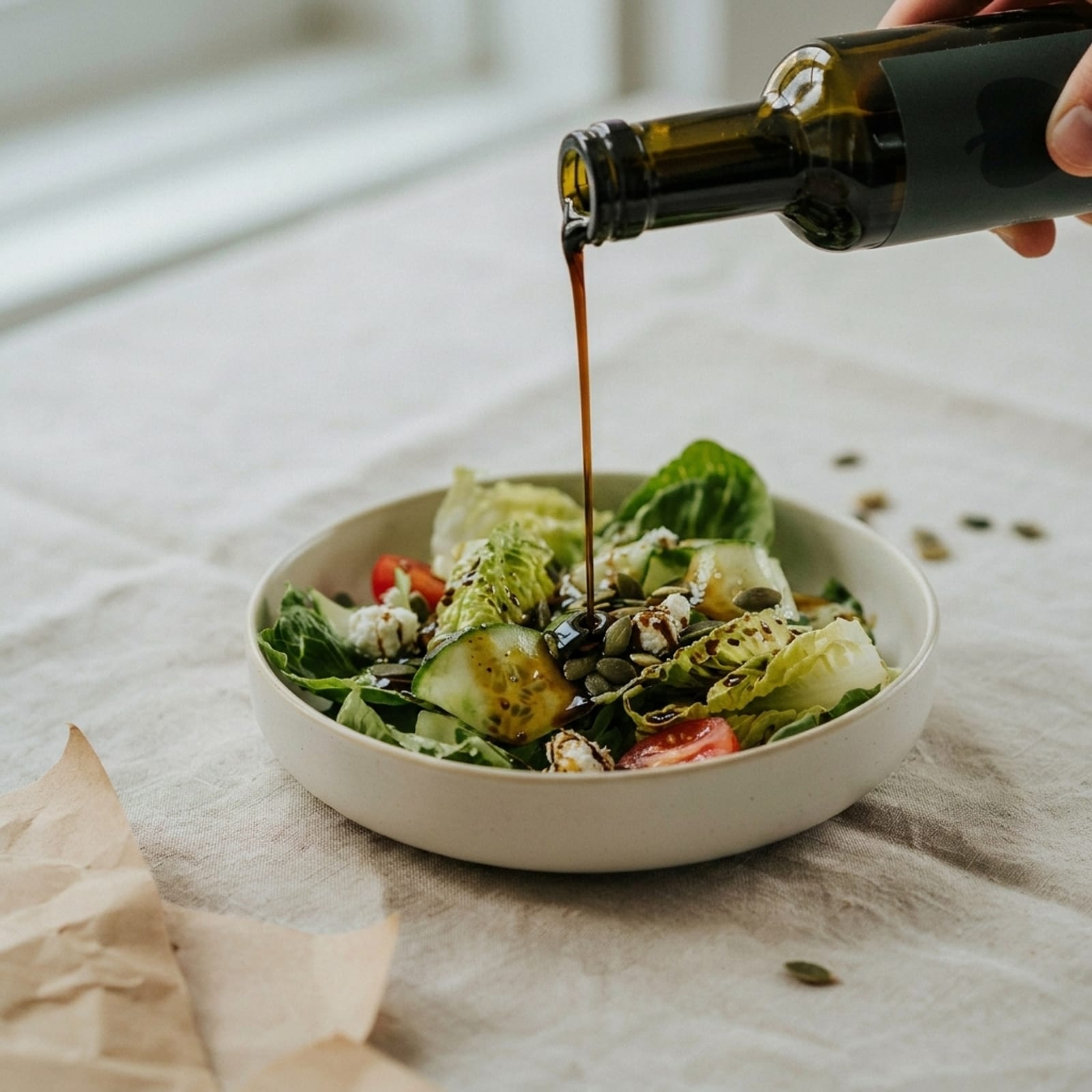
On an ordinary evening, when a salad needs to come together quickly, often just a hint of pumpkin seed character is wanted, not the full intensity. A blend delivers exactly that: flavour that's present without overwhelming the plate, at a price that makes sense for everyday use. That's not a trick, as long as the label stays honest — it's a tool for daily cooking. Ask at the oil mill and you often hear the same line: “Both are honest oil — the only difference is what you need it for.” Pure oil, by contrast, is worth saving for the moment when the flavour itself is meant to take the lead: at a tasting, in a soup finish, on a dish that has earned exactly that entrance.
Why the Kitchen Rules Still Apply to Both
Pure or blended, treat pumpkin-forward oil as a finishing oil, not a frying fat. It arrives on the plate at the end, not first in a hot pan. What that looks like: cooking and can you cook with it? And because even the best bottle eventually gets opened: a firm, quiet click when closing the cap plays its part in how long the flavour lasts — more at storage and how long does an opened bottle last?
The Short Answer for a Quick Decision
A glance at the ingredient list is enough: one oil means pure, several oils mean blend. Wanting the full Styrian roasted character means reaching for pure PGI oil; wanting a milder, more affordable everyday dressing means reaching for a blend on purpose — and that's an equally valid choice. Anyone wanting to first understand what defines Styrian pumpkin seed oil at all can start at what is Styrian pumpkin seed oil?, more questions in the FAQ hub.
Price Hints at Something, But Proves Nothing
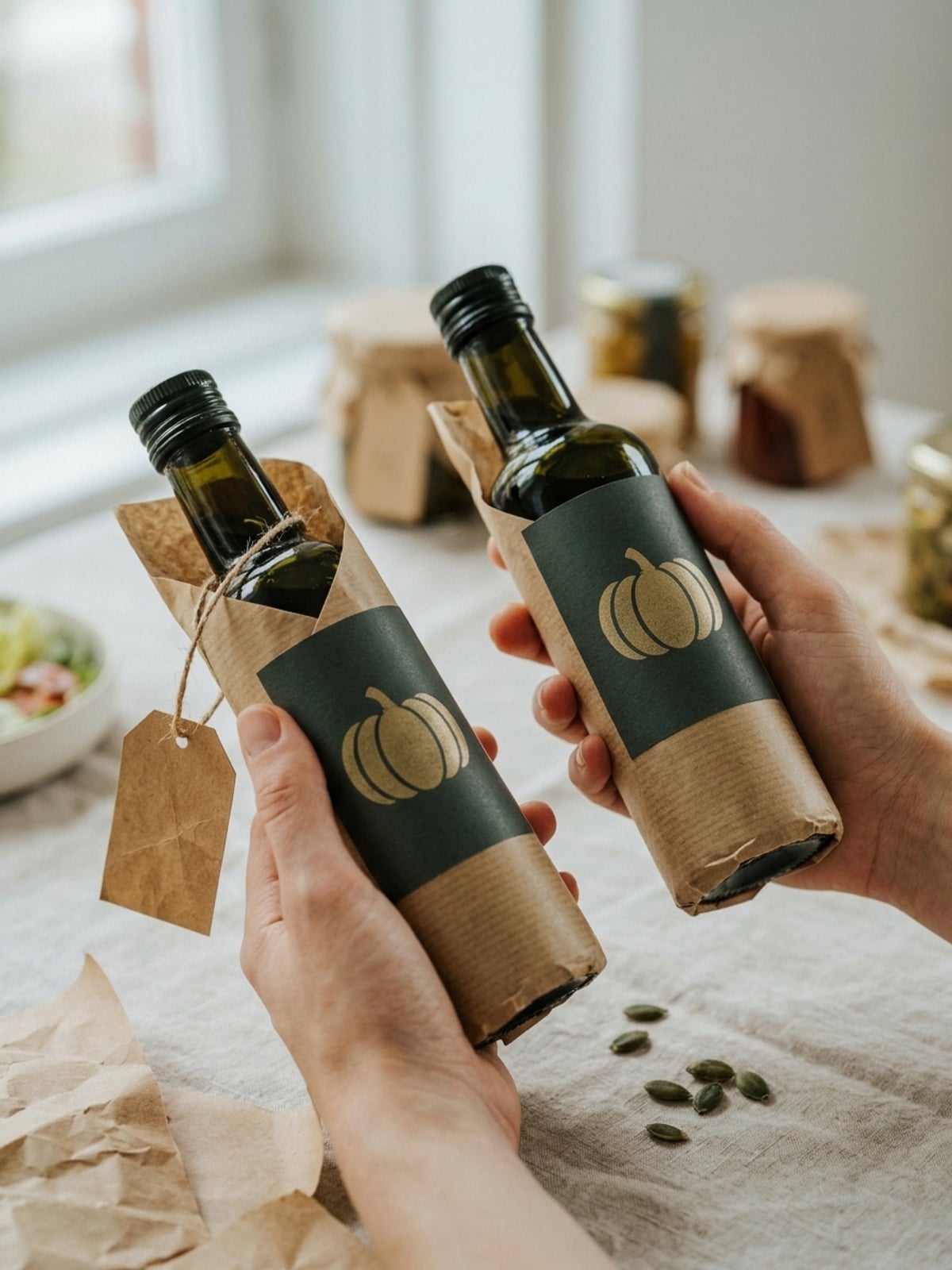
Pure PGI oil from Styria usually costs noticeably more per litre than a blend from the supermarket shelf — that comes from harvest, roasting, and pressing, not packaging. A suspiciously cheap bottle that still claims “100 percent” deserves a second look at origin and scent. Equally true: an expensive bottle is still a blend if the ingredient list names several oils. Take the price as a hint — the label always delivers the proof.
What's Actually in the Glass at a Restaurant
Some kitchens deliberately serve a milder blend for the everyday salad during busy service, saving pure oil for the tasting menu or the final finish at the table. If the oil tastes softer than expected from the bottle at home, a quick question is worth asking. Neither version is dishonest — as long as it's labelled and explained the way it actually is.
Shop nutty roasted Styrian seed oil
Shop now