The Styrian
Pumpkin Seed Oil Journal
The Styrian
Pumpkin Seed Oil Journal
- The Styrian Pumpkin Seed Oil Journal
Shop EN
pumpkinseedoil.ccShop DE
kuerbiskernoel.cc
About
This website also contains some content created with the support of AI.
What Is in Pumpkin Seed Oil?
Health notice: This page discusses topics related to health research and tradition. It is not medical advice. Do not use it to diagnose, treat, cure, or prevent any disease. Talk to a qualified healthcare professional before changing your diet or supplements.
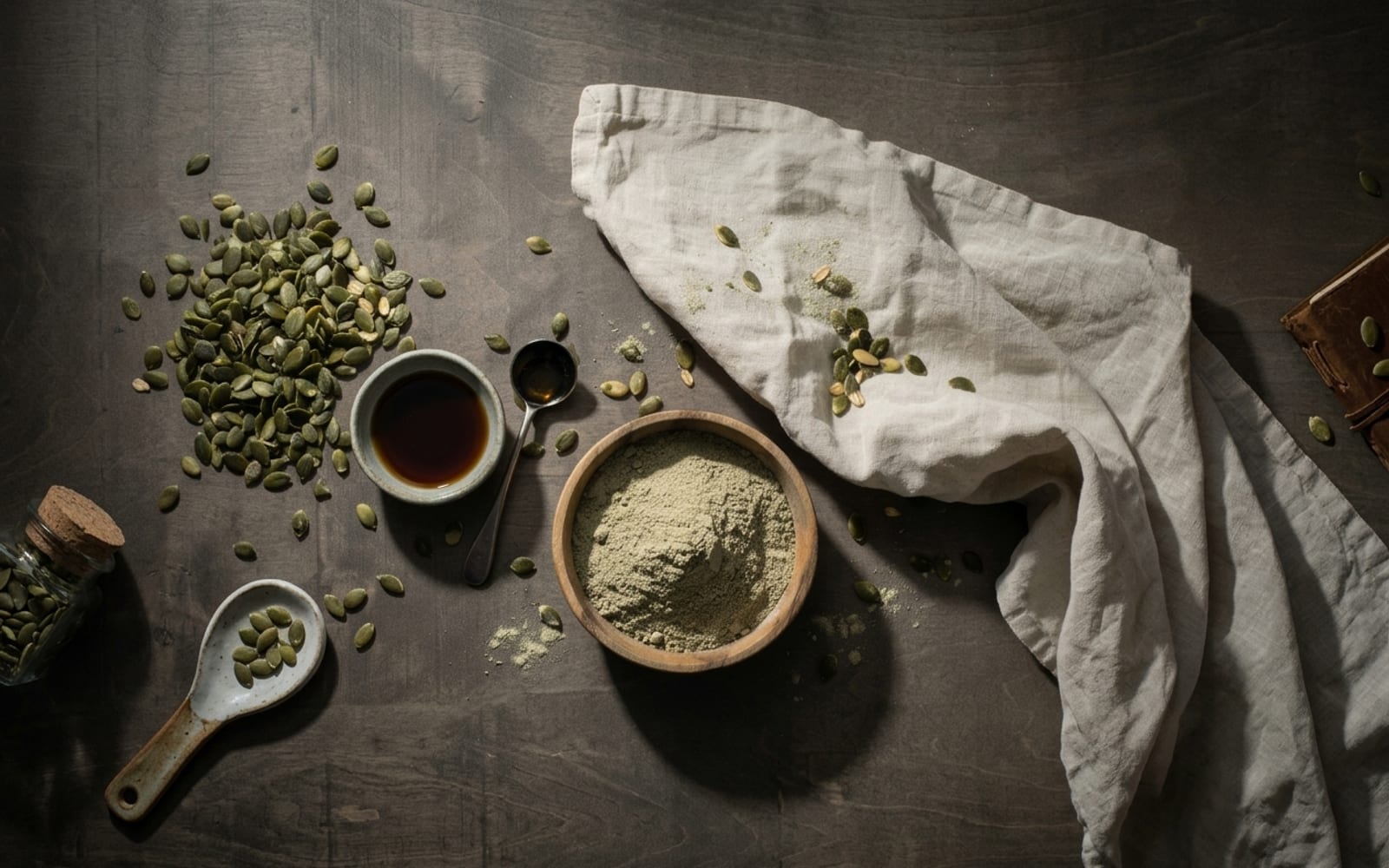
Anyone who has watched pumpkin seed oil under a lab light knows the moment: the drop spreads thin, and against a strong beam it flips from a deep blackish green to a narrow red rim. People who run these tests often say the same thing — that every batch shows its own signature. What sits inside that single drop is a small library of compounds that researchers keep coming back to. The sections below follow the drop through its fatty acids, its vitamins, and the quieter details that set it apart from other kitchen oils.
Linoleic Acid: The Largest Share in the Drop
Linoleic acid fills most of the drop — usually 45 to 60 percent of all its fatty acids. The body cannot make it on its own; it has to come from food. In diets that already lean heavily toward omega-6 and light on omega-3, an oil this rich in linoleic acid adds its own weight to that larger balance. At the same time, it is a building block in every cell membrane and a starting material for signalling molecules — far more than a source of calories alone.
Oleic Acid: The Quiet Steadying Hand
Sitting right beside it is oleic acid, the same fatty acid that gives olive oil its reputation, though here it plays a smaller part, usually 20 to 35 percent. It works less loudly than linoleic acid but holds the drop together more calmly than a purely polyunsaturated oil ever could. For anyone curious about the fat quality of pumpkin seed oil, this pairing of linoleic and oleic acid is the first thing worth understanding.
Gamma-Tocopherol: The Vitamin E That Travels With It
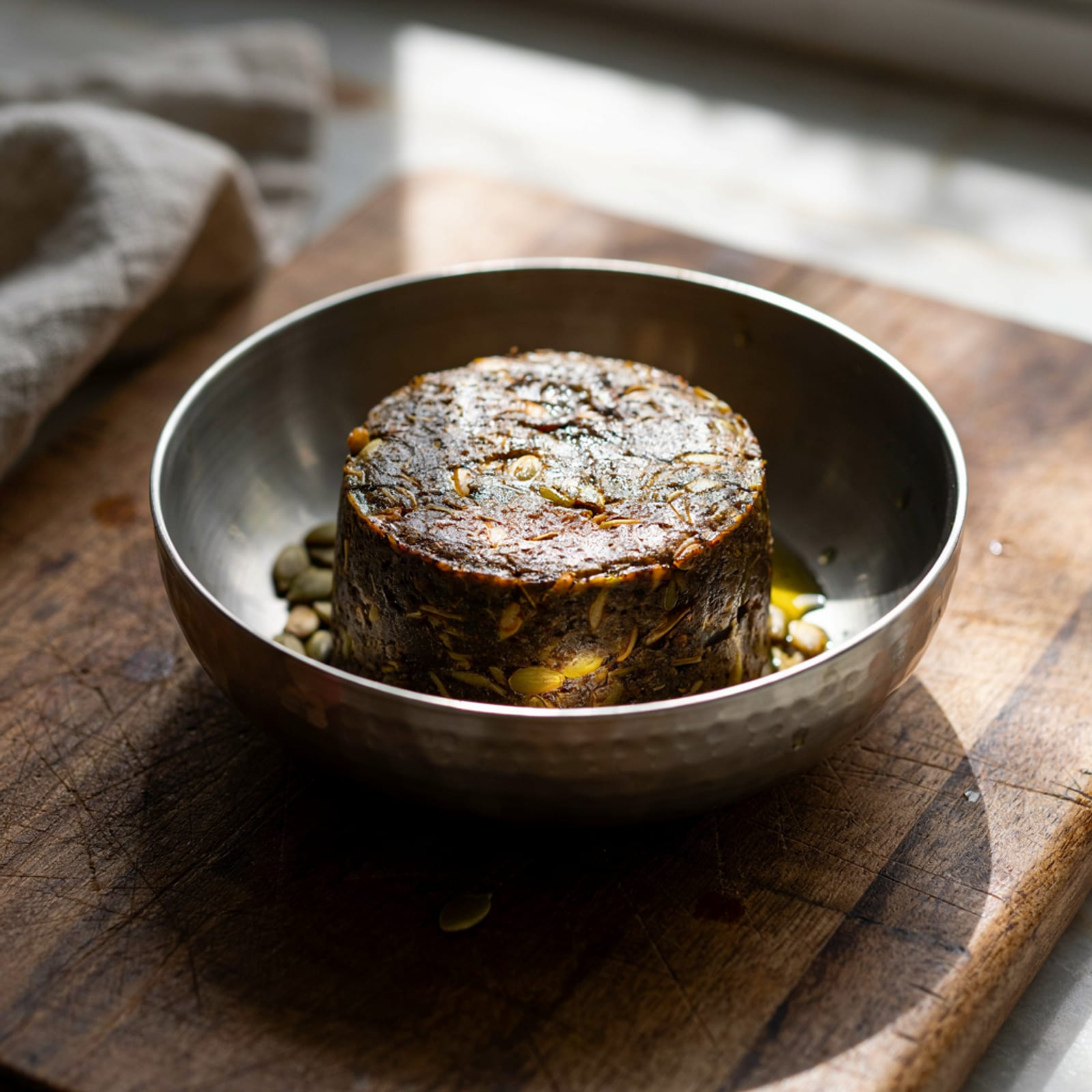
Vitamin E is not one molecule but a family of eight. Most labels and most studies talk about alpha-tocopherol — but in pumpkin seed oil, a different member of that family leads: gamma-tocopherol. It behaves differently from its better-known relative and is more effective at neutralising certain reactive nitrogen compounds involved in inflammation. Whether gamma-tocopherol carries further effects of its own, including in prostate tissue, is still being researched, and no firm clinical consensus exists yet.
Delta-7 Phytosterols: A Quiet Signature
Almost every cooking oil carries phytosterols, plant relatives of cholesterol. Most lean on beta-sitosterol, campesterol, and stigmasterol. Pumpkin seed oil carries something rarer: delta-7 sterols, mainly delta-7-stigmastenol — also called spinasterol — and delta-7-avenasterol. Their double bond sits in a different spot on the sterol ring than in the common delta-5 sterols, which is exactly what makes them one of the most reliable fingerprints of genuine pumpkin seed oil.
This same feature is part of why pumpkin seed preparations have traditionally been used to support urinary function, particularly for lower urinary tract complaints in folk medicine. Researchers are currently examining whether these sterols interact with steroid hormone metabolism or with androgen receptors in prostate tissue. The Wellness section of this journal goes further into the evidence.
Cucurbitin: An Amino Acid That Stays Behind
Not every interesting compound makes it into the drop. Cucurbitin, an unusual amino acid found in cucurbit seeds, became known mainly through traditional use against intestinal parasites — but in preparations made from the whole seed or seed meal, not from the pressed oil. It concentrates in the seed flesh far more than in the oil, so for the drop on your plate, it plays a much smaller role than it does for the whole seed.
Chlorophyll: Why the Bottle Stays Dark
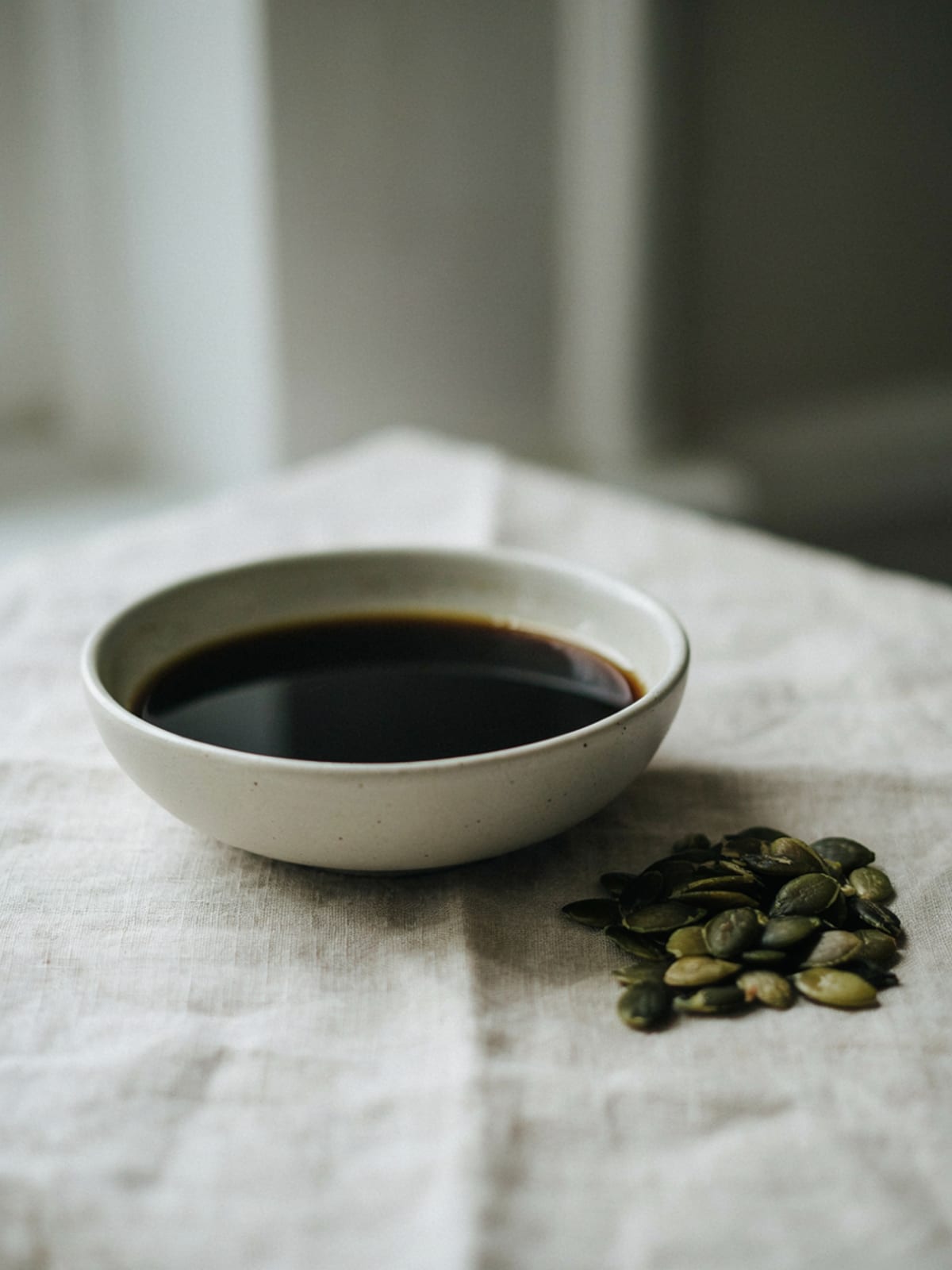
Hold the drop up to a light source and its most recognisable trait appears: an unusually high chlorophyll content, higher than in almost any other seed oil. It is responsible for the colour shift between near-black in shadow and garnet-red in a thin beam of light. That same pigment also makes the drop more light-sensitive than steadier, more saturated oils — which is exactly why every bottle sits in dark glass rather than clear.
Carotenoids: One Last Touch of Colour
Alongside the chlorophyll, the drop carries carotenoids such as beta-carotene and lutein, though in smaller amounts than in the whole seed. Cold-pressed oil keeps more of these than traditionally roasted oil, since the heat of roasting breaks some of them down. Lutein is studied for its link to eye health, and beta-carotene is a precursor to vitamin A — both present in amounts that stay modest on their own but are not meaningless within a varied diet.
Eventually the drop that spent a moment under the lab light heads back the way every other drop does: into the dark bottle, and from there onto your plate. What makes it distinctive is exactly this mixture — linoleic and oleic acid, gamma-tocopherol, rare sterols, and a last touch of colour that nobody had to invent. It is simply there.
Taste Styrian oil pressed in the region
Shop now