The Styrian
Pumpkin Seed Oil Journal
The Styrian
Pumpkin Seed Oil Journal
- The Styrian Pumpkin Seed Oil Journal
Shop EN
pumpkinseedoil.ccShop DE
kuerbiskernoel.cc
About
This website also contains some content created with the support of AI.
Why Pumpkin Seed Oil Is Called "Green Gold"
In Styria, people rarely hear this name for the first time off a brochure or a billboard. They hear it at the farm, at the mill, at a market stall: "green gold" — said the way you'd say something everybody already knows, long before it ever made it onto an export label. Listen a little closer and it becomes clear the phrase describes two very real things at once — how the oil actually looks, and what its production genuinely costs.
A Name From the Field, Not From Advertising
Drive through Styrian fields in autumn and you'll see heavy, striped pumpkins lying close together in the soil. The people working there rarely offer a long explanation. What you hear instead is a short sentence: "That's our green gold." A shorthand that has stuck among people close to the oil — with no marketing department behind it, passed from one harvest to the next.
What You Notice First: the Dark Bottle
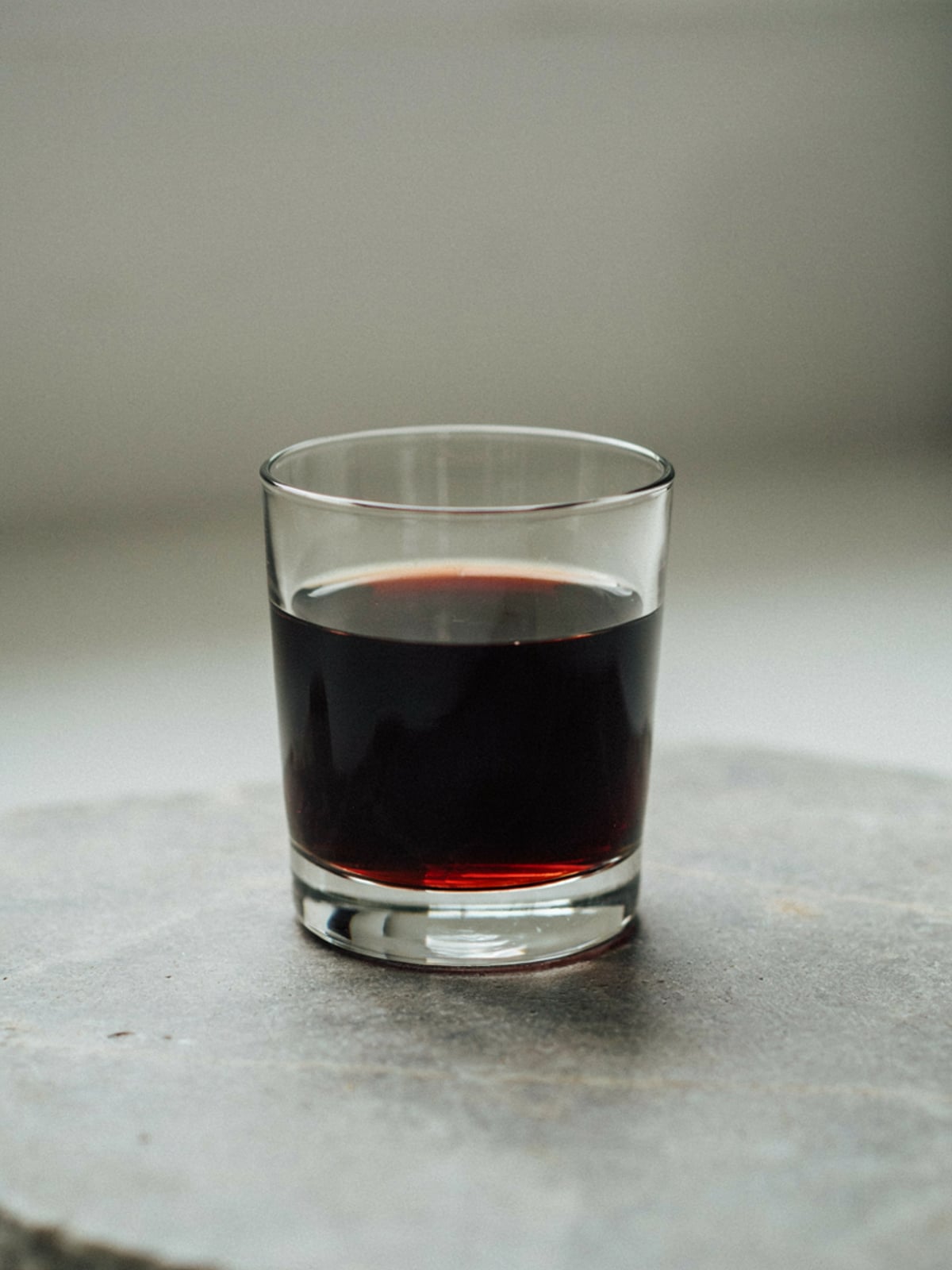
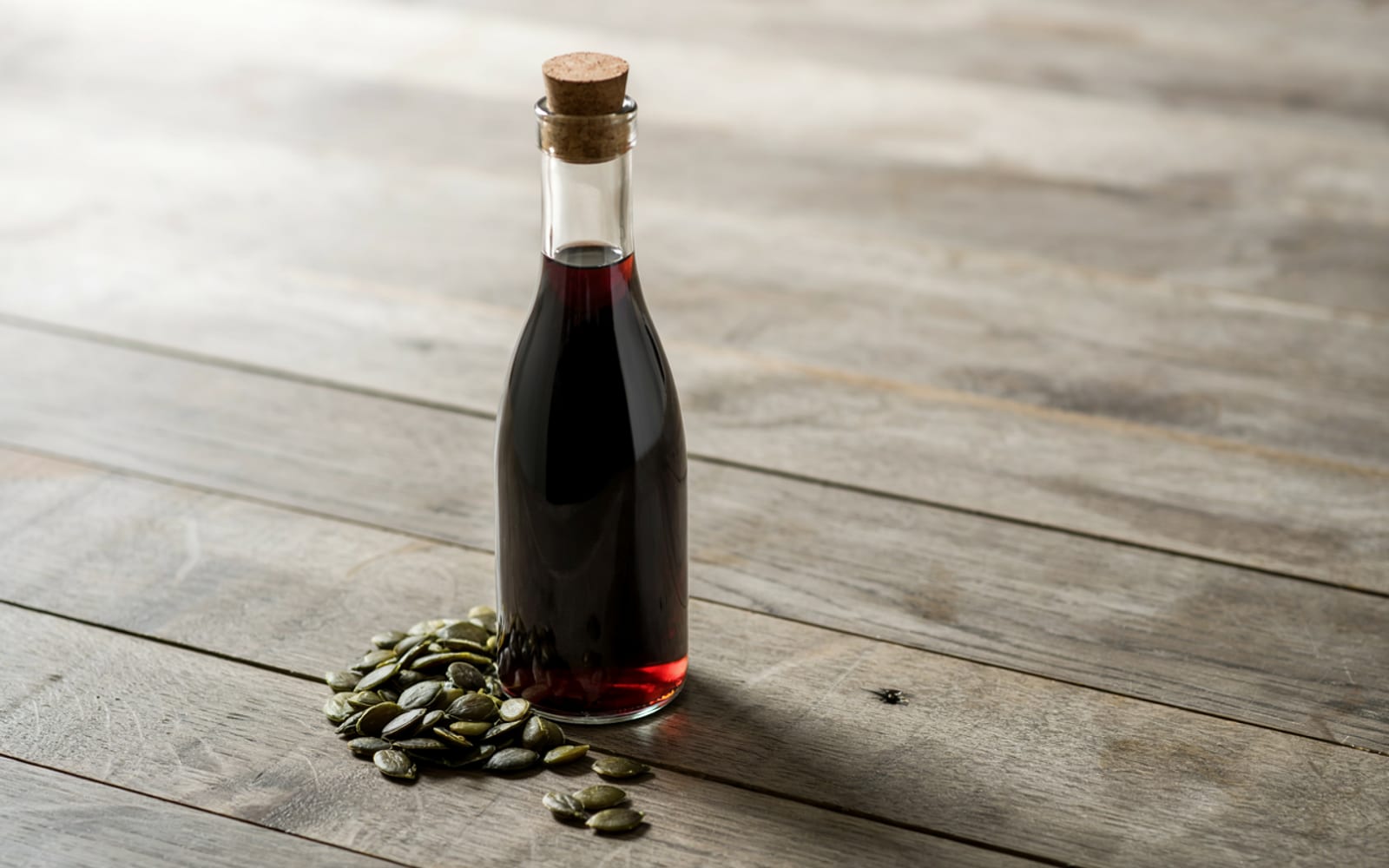
In the bottle, the oil looks almost black. No hint of green, no hint of gold — just a deep, opaque tone that draws curiosity while keeping its secret to itself. Only when a thin film of it lets light through does everything change.
The Green That Gives the Name Its First Half
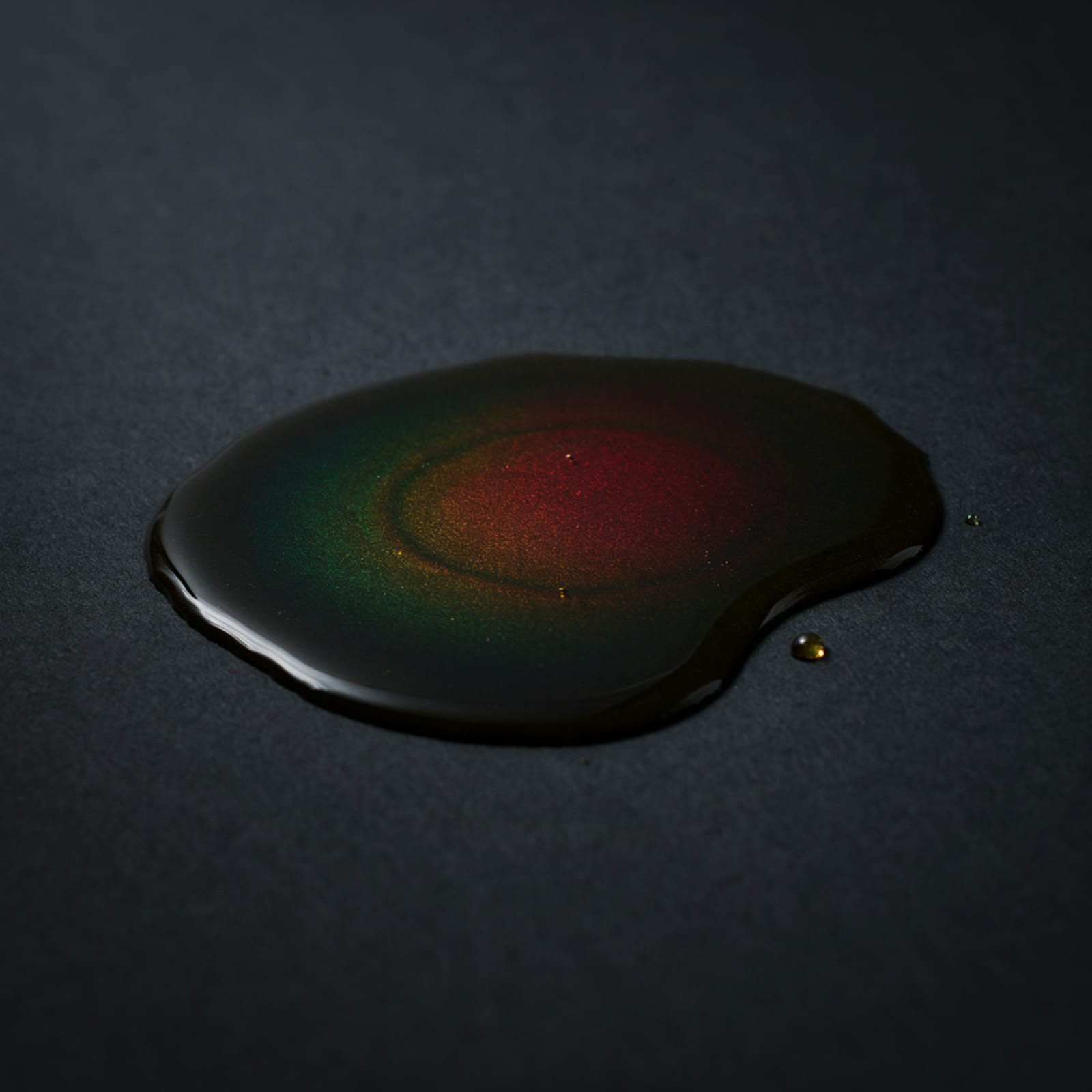
Pour the oil out thin and hold it against a light source, and the colour flips: a deep, translucent green shifting to garnet at the edge. This effect is called dichroism, and it is distinctive enough that even people who have never tasted the oil recognise it on sight. That exact green, visible in a thin film across a plate, is the first half of the name. The optical detail behind it is explained in full under colour and taste of pumpkin seed oil.
Why One Field Yields So Little Oil
The second half of the name has nothing to do with colour and everything to do with value. A field of Styrian oil pumpkins delivers a modest amount of seed once flesh, rind, and fibre are stripped away — and that seed itself contains less oil than many other oilseed crops. Hearing that for the first time, it suddenly makes sense why this bottle never sits next to the cheapest sunflower oil on the shelf.
The Reason for the Second Half: "Gold"
Add to that the traditional roasting-and-pressing method, which stays noticeably slower and more hands-on than the industrial extraction used for most other seed oils. The result is an oil that has sold at a genuine premium for generations — not thanks to clever marketing, but because that price reflects the real cost behind it. "Gold" here is not exaggeration. It is an old, plain way of valuing a harvest that never turned into a commodity crop the way soybean or sunflower oil did.
Where the Value Begins: On the Field
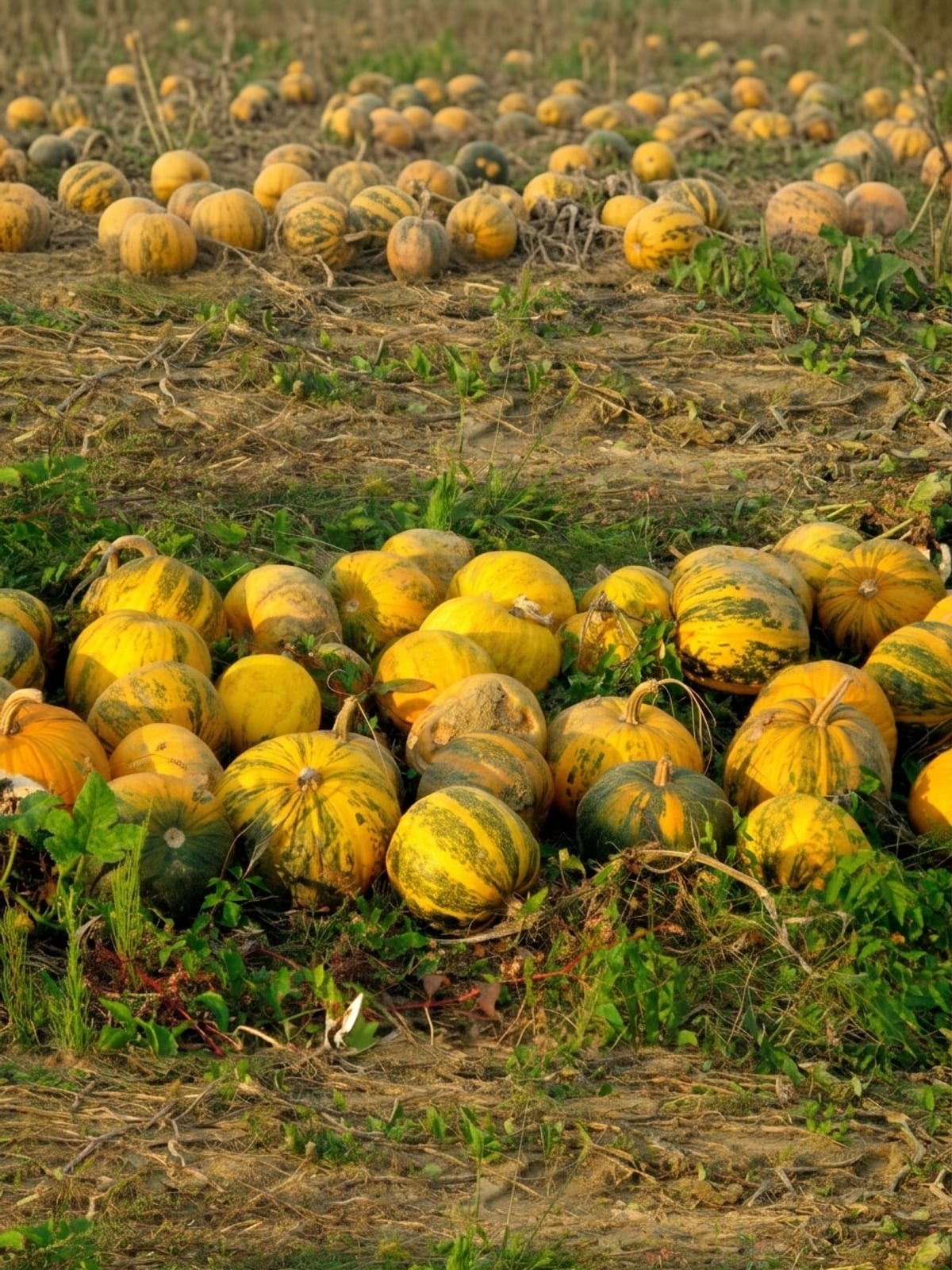
Back on the field, in the late summer light, the reason for that value sits there in plain sight: row after row of heavy fruit, sorted by hand, processed only once the harvest is done. No step can be rushed without aroma or colour paying the price. How this harvest turned, over generations, into something inseparable from the region is told under the history of Styrian pumpkin seed oil.
A Nickname, Not a Seal
It's worth being clear about what "green gold" is not. It is no certification, no legal designation, no guarantee of quality. Unlike the independently audited PGI status, no formal standard stands behind the nickname — in principle, it could be printed on any bottle regardless of where the oil actually came from.
Anyone who reads the phrase on packaging should take it for exactly what it is: an evocative regional name. The PGI logo, the named mill, and the declared origin remain the more reliable proof of what is really in the bottle — and what will eventually end up on your table.
Buy genuine Steirisches Kürbiskernöl
Shop now