The Styrian
Pumpkin Seed Oil Journal
The Styrian
Pumpkin Seed Oil Journal
- The Styrian Pumpkin Seed Oil Journal
Shop EN
pumpkinseedoil.ccShop DE
kuerbiskernoel.cc
About
This website also contains some content created with the support of AI.
Why Good Oil Costs What It Does
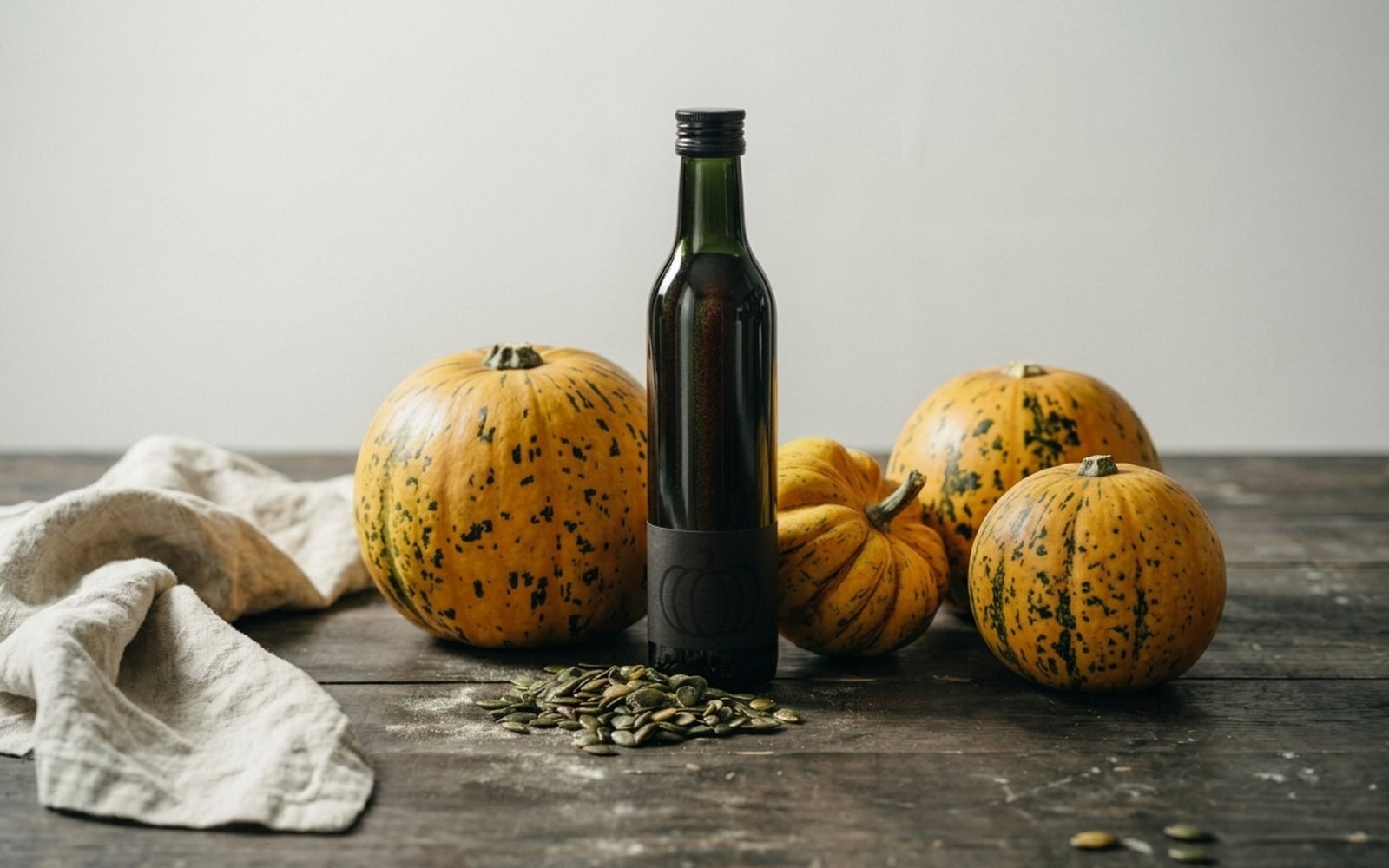
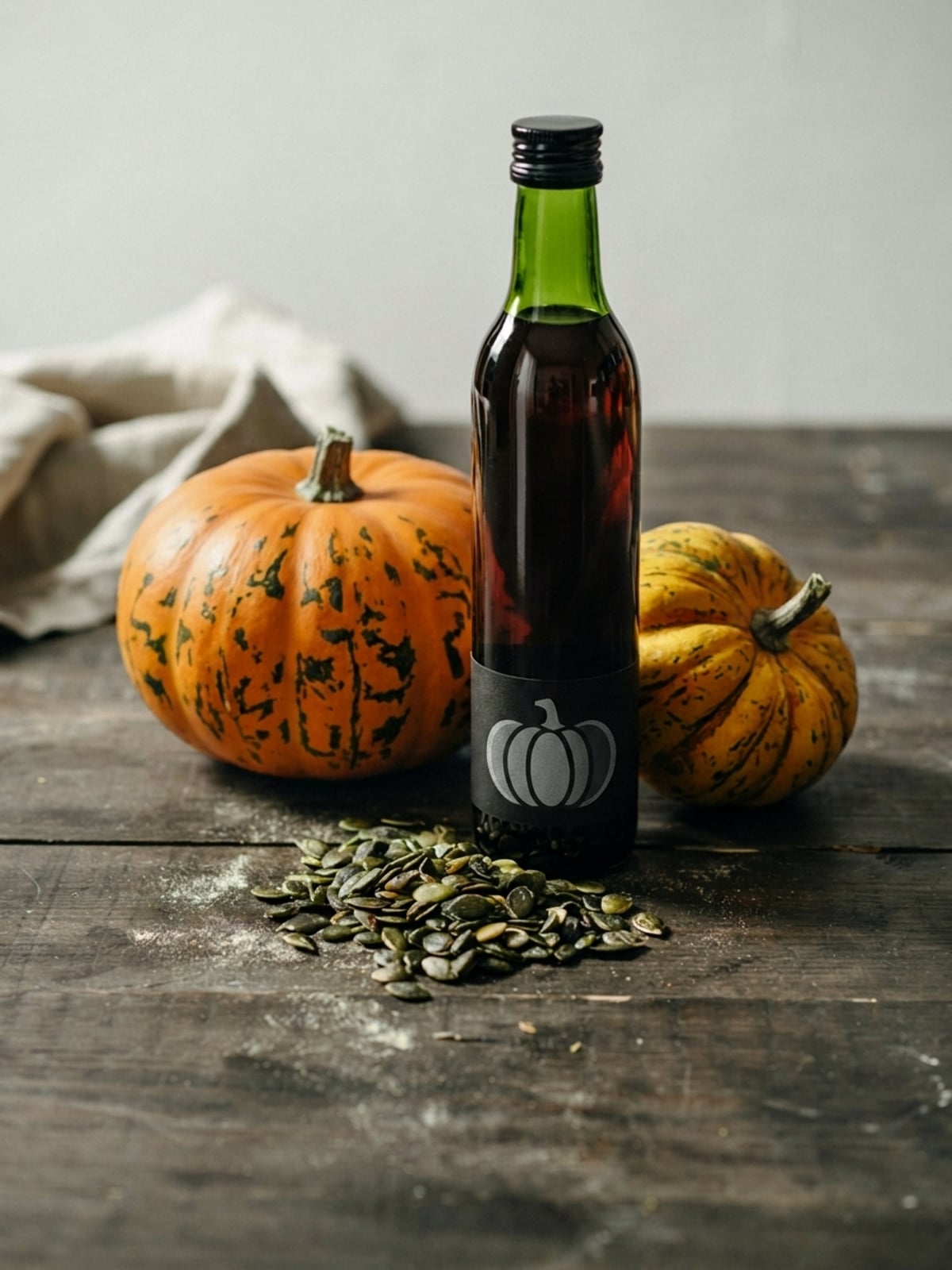
Anyone seeing genuine, PGI-certified Styrian pumpkin seed oil next to sunflower or rapeseed oil for the first time — typically priced between 20 and 40 euros per 500 ml, depending on producer and sales channel — pauses for a moment. The price gap is real, and it makes sense once you follow the oil's path from the very start. It comes not primarily from marketing or brand markup, but from a production chain that costs more at almost every single step than making ordinary vegetable oil.
It starts with the pumpkin itself
It begins with a specific variety of oil pumpkin (Cucurbita pepo var. styriaca), grown within the defined Styrian region. The fruit itself is large and heavy, yet the part that eventually becomes oil is tiny by comparison: the soft, hull-less seeds inside. Separating them from the damp flesh happens by machine or — on smaller farms — still largely by hand. The flesh itself has no further use in oil production and has to be composted or disposed of another way. At its core, you're paying for the effort of growing a large, heavy fruit of which only a small part ultimately remains.
A modest yield per hectare
Oil pumpkins deliver a comparatively low seed yield per hectare, measured against high-yield oilseeds like sunflower or rapeseed. The seeds themselves carry a lower oil content too — typically 35 to 50 percent by dry weight, against roughly 45 to 55 percent for sunflower seeds — and that's without the efficiency gains of industrial solvent extraction. Because Styrian pumpkin seed oil is mechanically cold-pressed rather than solvent-extracted, the yield per tonne of seed stays lower still. It takes roughly four to five kilograms of seed for a single litre of oil — seeds that first required growing and harvesting an entire pumpkin fruit.
The roasting step that costs time
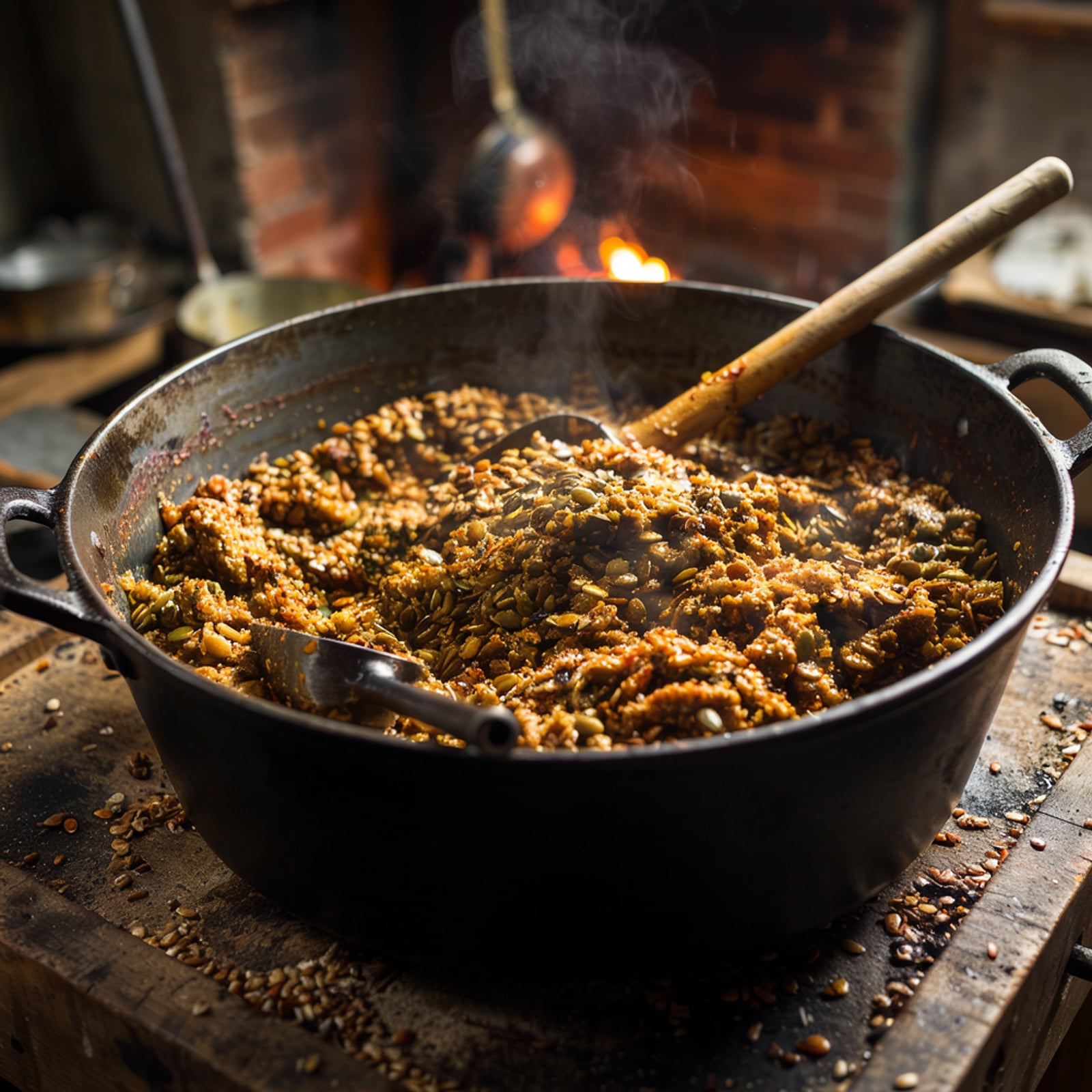
What makes Styrian pumpkin seed oil unmistakable — its deep aroma, its characteristic colour, its taste — comes mainly from roasting the seeds before pressing. Dried seeds get mixed with a little water and salt, then slowly roasted at controlled temperatures until the moisture evaporates and the Maillard reaction develops the complex aroma compounds that define the oil. This step takes time, care, and energy — there's no industrial shortcut that wouldn't cost quality in return. Roasted too hot or too fast, the result turns bitter and degraded; too cool or too brief, and the characteristic depth never develops.
Cold pressing — and what stays behind in the cake
After roasting, the seeds get cold-pressed in a screw press. Cold pressing — no solvents, no additional heat, no chemical refining — is the only method compatible with PGI certification for Styrian pumpkin seed oil. It's also the method that preserves the most flavour, colour, and micronutrients in the oil. The cost: more oil stays behind in the press cake than solvent extraction would ever allow, pushing the yield per kilogram of raw material down further. The result is a more expensive oil — for producers and buyers alike — that differs fundamentally in glass and on the palate from a solvent-extracted, refined product.
What PGI certification requires
Maintaining PGI certification comes with ongoing inspection and documentation obligations. The oil must be grown, processed, and bottled within the defined region — at its core Styria, plus adjoining parts of Burgenland and Lower Austria. Slovenian pumpkin seed oil from neighbouring growing areas, by contrast, carries its own separate designation of origin. Paperwork, independent audits, and the boundaries of a legally defined process raise operating costs noticeably within this system. Those costs aren't trivial, but they create exactly the accountability that makes the PGI seal meaningful to buyers who will never visit the farm themselves.
What actually sits in the price
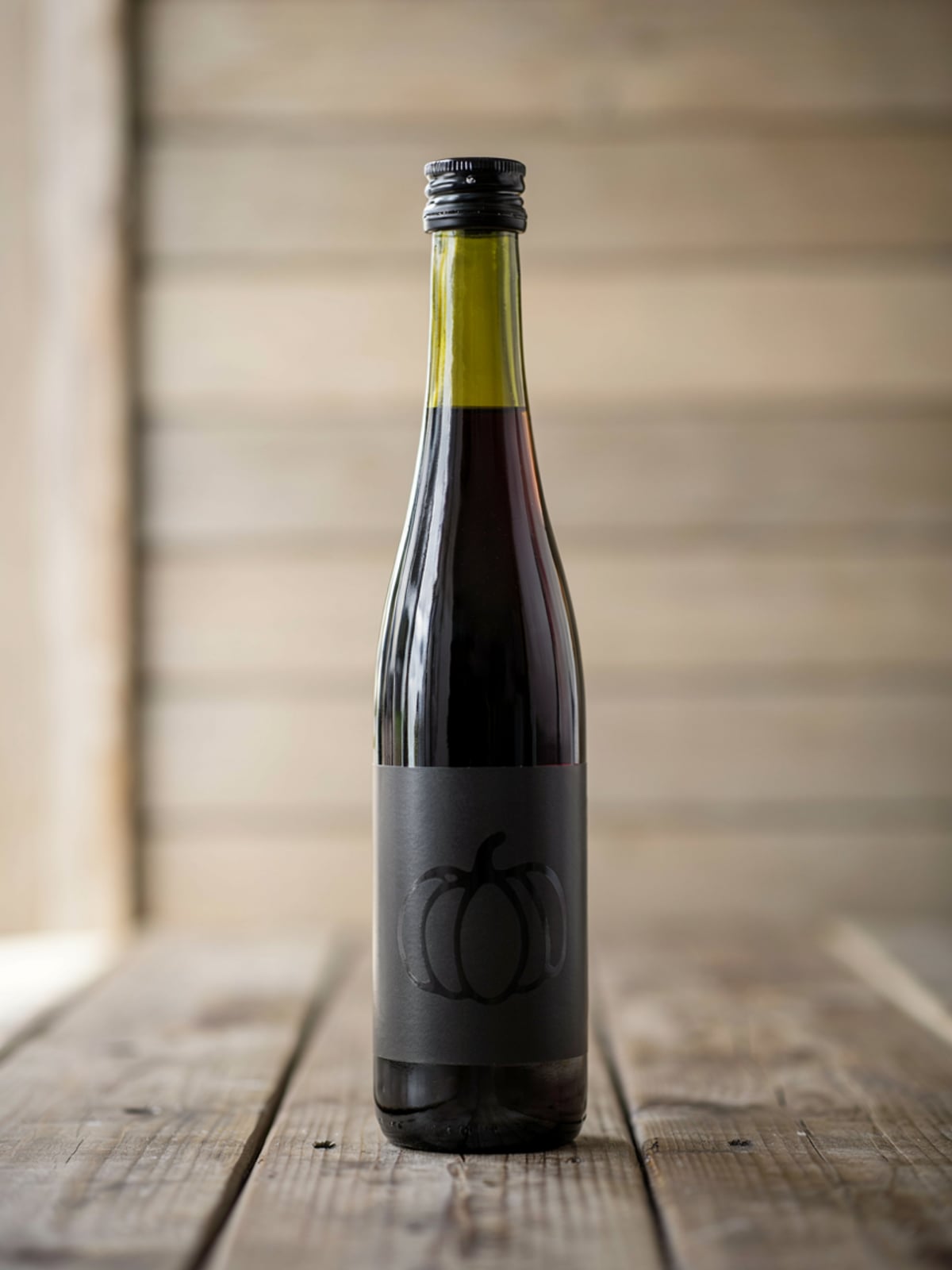
Add up all these steps — the modest yield, the labour-intensive roasting, the gentle but lossy cold pressing, the demands of certification — and a picture emerges that has little to do with marketing. Every euro on the price tag traces back to a concrete step between field and bottle. That's exactly what sets the price of genuine Styrian oil apart from one built purely on clever marketing.
What you get for your money
Anyone paying the premium for genuine Styrian pumpkin seed oil is buying something a cheaper alternative can't replace: the specific aroma profile of a roasted, cold-pressed oil from a defined origin, made through a traceable process. Why it's called green gold looks at this product's value from a historical angle, while quality checking explains how to confirm on the label that you're actually getting what you're paying for. If a price sits well below the range mentioned here, it's worth asking why — an oil that skipped the production costs of genuine Styrian manufacture can hardly be priced that honestly. For a reliable source, where to buy is the next step.
Taste traditional Styrian mill oil
Shop now