The Styrian
Pumpkin Seed Oil Journal
The Styrian
Pumpkin Seed Oil Journal
- The Styrian Pumpkin Seed Oil Journal
Shop EN
pumpkinseedoil.ccShop DE
kuerbiskernoel.cc
About
This website also contains some content created with the support of AI.
Vitamins and Minerals in Pumpkin Seed Oil
Nutrition notice: Nutrient figures are indicative and depend on product and portion. They are not health claims under EU Regulation 1924/2006.
One Drop, Two Stories
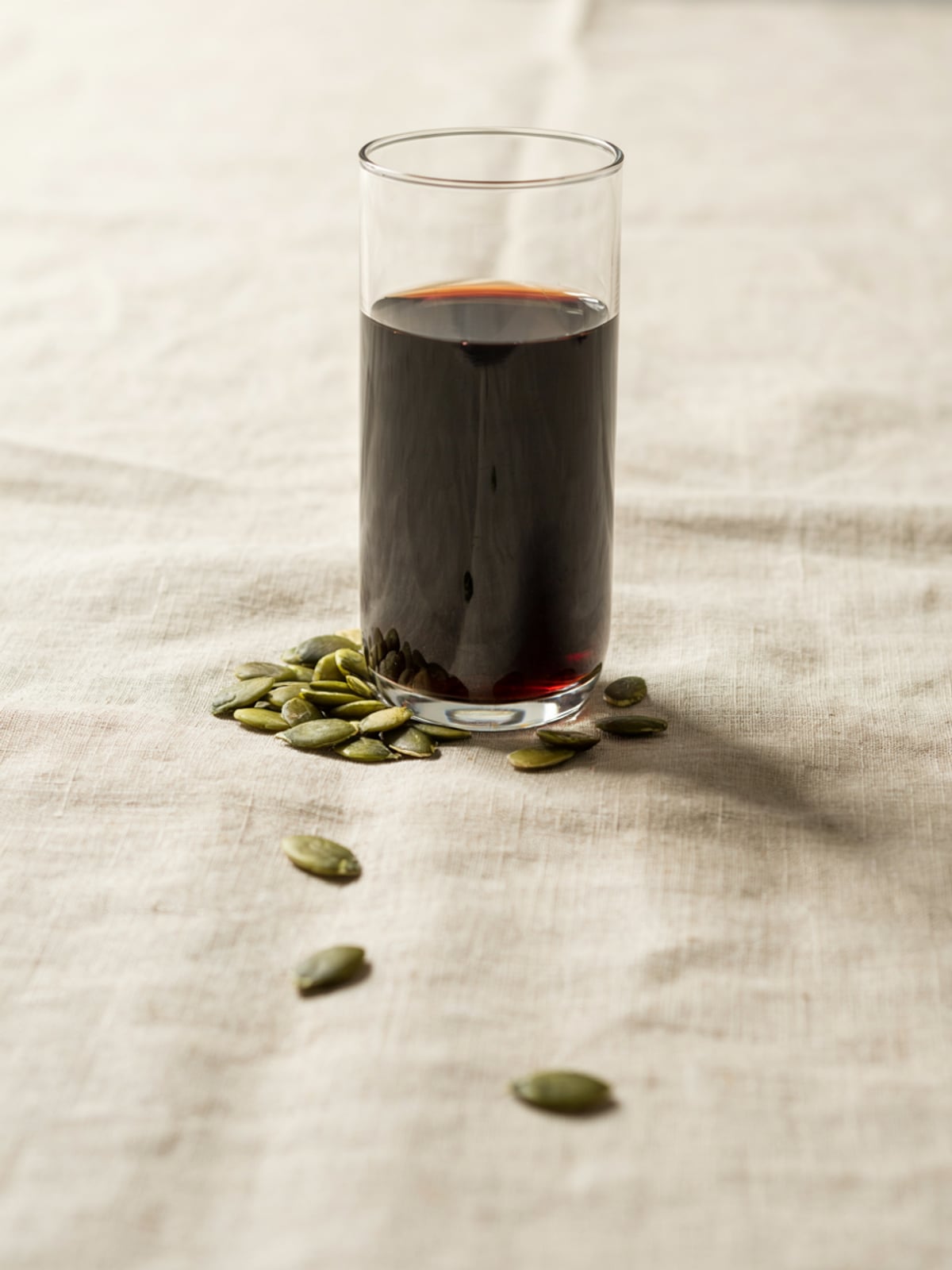
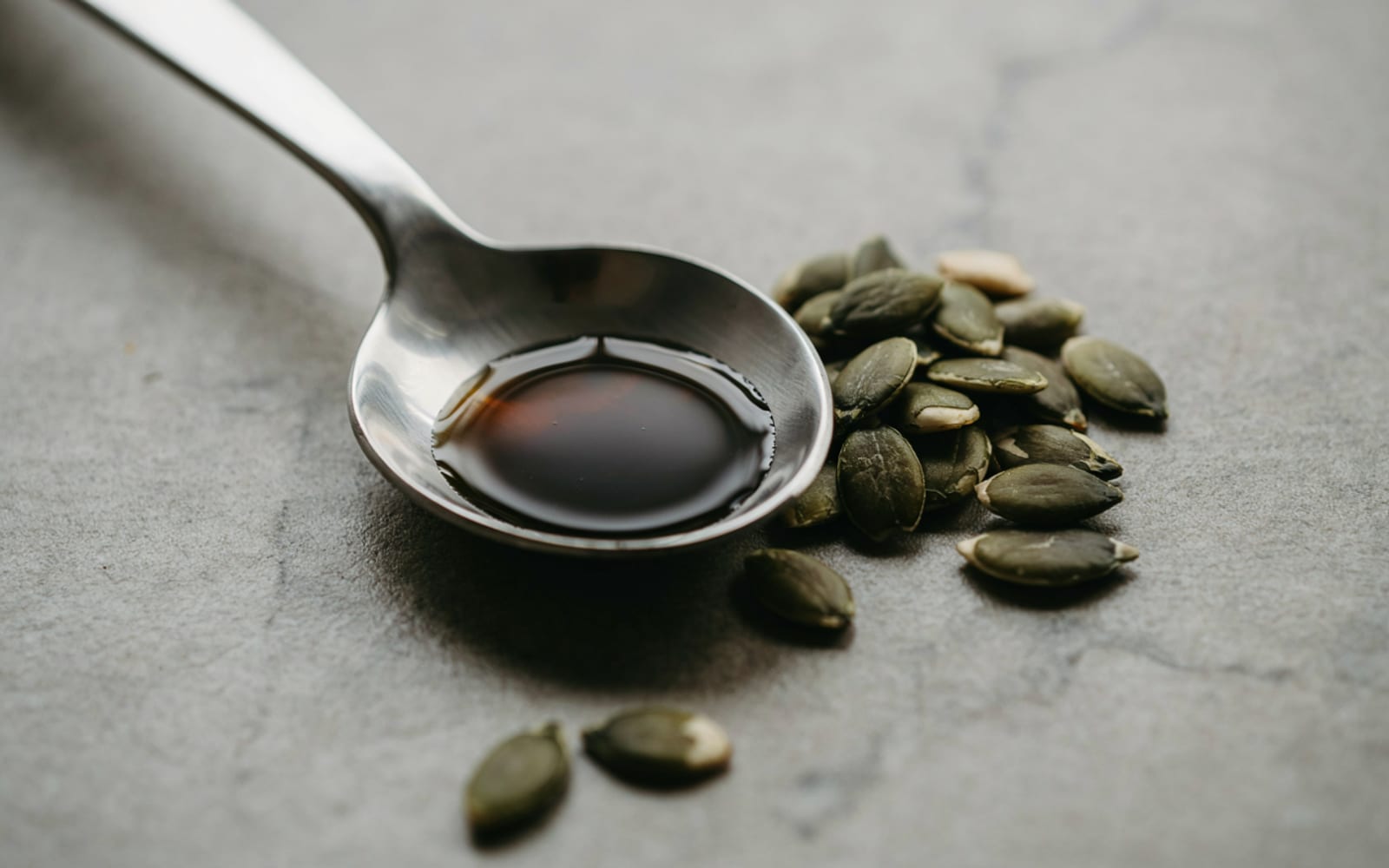
A pumpkin seed drops into the press, warm and glistening with oil, and comes back out as two very different products: an oil, where the fat-soluble compounds collect, and a press cake, which holds back almost everything else. Pumpkin seeds rightly have a reputation as a good source of magnesium, zinc, and iron — but that reputation gets carried over to the pressed oil without much scrutiny, even though the chemistry decides otherwise at this fork in the road. Anyone measuring the values in a lab tends to put it plainly: "Not everything in the seed makes it into the oil." The sections that follow trace exactly that split.
Vitamin E: The One That Really Makes the Trip
Vitamin E is the micronutrient that genuinely reaches the drop, because tocopherols are fat-soluble and travel with the fat during pressing. Pumpkin seed oil usually contains around 20 to 30 mg of total tocopherols per 100 ml — at first glance, a generous amount next to the EU reference value of 12 mg for vitamin E. The honest nuance: most of that is gamma-tocopherol, not alpha-tocopherol, and the official vitamin E rating refers specifically to alpha-tocopherol equivalents, to which gamma-tocopherol only contributes a small amount. A tablespoon of pumpkin seed oil, about 14 ml, therefore covers a genuine but comparatively modest share of the official reference value — even though the total tocopherol figure looks generous on paper. Whether a particular oil clears the EU threshold for labelling as a "source of vitamin E" depends on the exact tocopherol profile of that batch.
Where Magnesium and Zinc Actually Go
Magnesium, zinc, iron, and selenium — the minerals most often associated with pumpkin seeds — take the other path at that fork. They are bound to the protein and fibre structure of the seed, not dissolved in its fat, and so stay almost entirely in the press cake during pressing. Whole pumpkin seeds really are a good source of magnesium and zinc — pumpkin seed oil, nutritionally speaking, is not. A tablespoon of oil supplies only vanishingly small amounts of these, even next to a small handful of seeds. That is the most important distinction in this oil's nutrient profile.
Why the Split Is So Clear-Cut
This division simply follows solubility. Fat-soluble compounds — tocopherols, phytosterols, carotenoid pigments, chlorophyll — move into the oil during pressing because they are chemically compatible with it. Water-soluble and protein-bound nutrients, including the B vitamins and the minerals mentioned above, stay bound to the solid seed structure and end up concentrated in the press cake — that nutrient-rich residue which lives on in some kitchens for baking, as animal feed, or as a coarse, nutty flour, but remains its own product with its own nutrient identity. Roasting, which gives Styrian oil its dark colour, changes this split only slightly: fatty acids and phytosterols stay largely intact, while the somewhat more heat-sensitive tocopherols and carotenoids decrease a little. Cold-pressed versus roasted describes this roasting effect in more detail.
Vitamin K and the Colours Along for the Ride
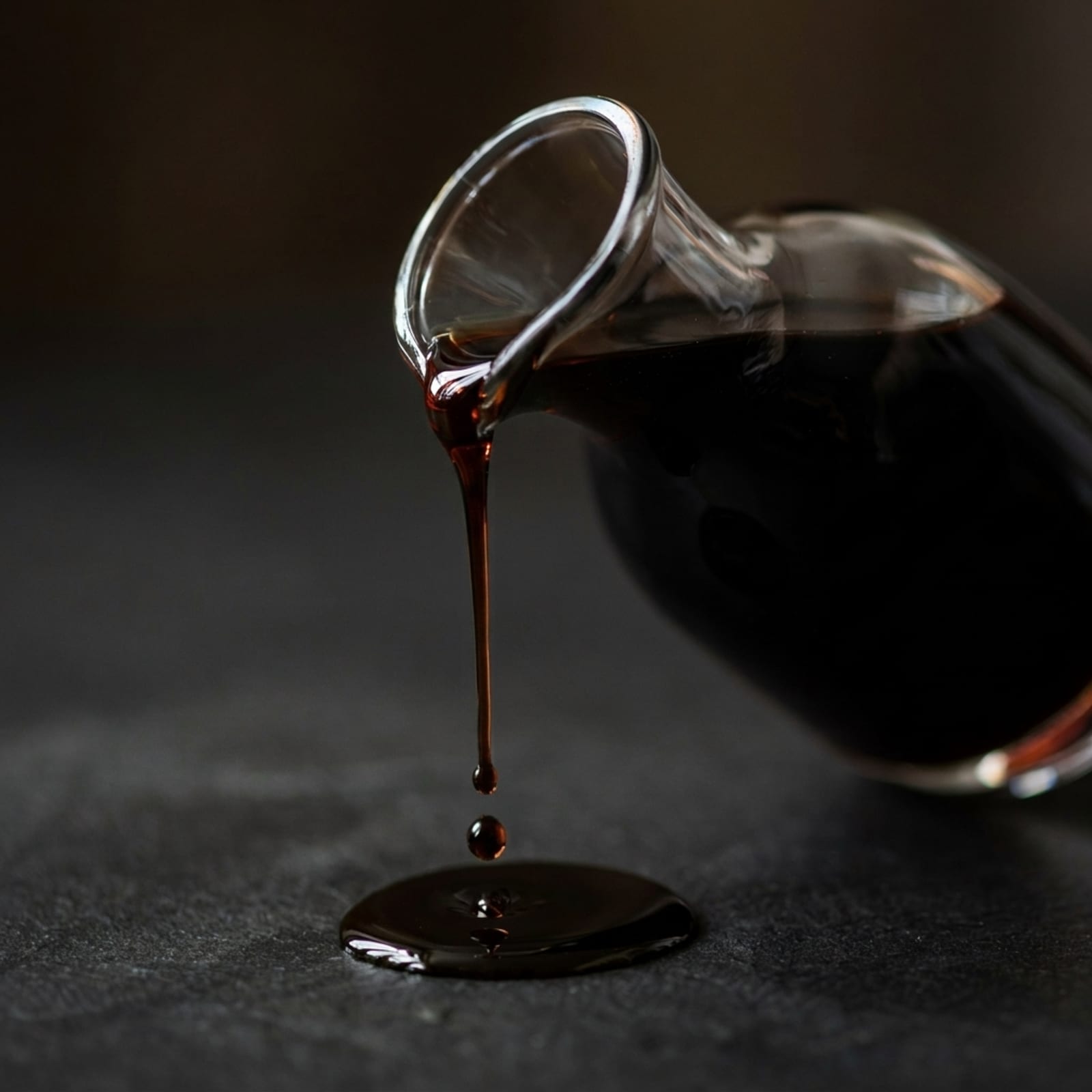
Besides vitamin E, pumpkin seed oil contains small amounts of vitamin K1 (phylloquinone), along with the carotenoids and chlorophyll breakdown products responsible for its distinctive play of colour — the deep, almost black appearance in the bottle and the garnet-red shimmer in a thin layer. These pigments belong to the same fat-soluble fraction and move into the oil for the same reason vitamin E does, rather than staying in the press cake. None of these compounds appears in amounts that would make the oil a significant nutrient source on its own — they shape its character, but they are not grounds for a nutrition claim.
What This Means for Your Plate
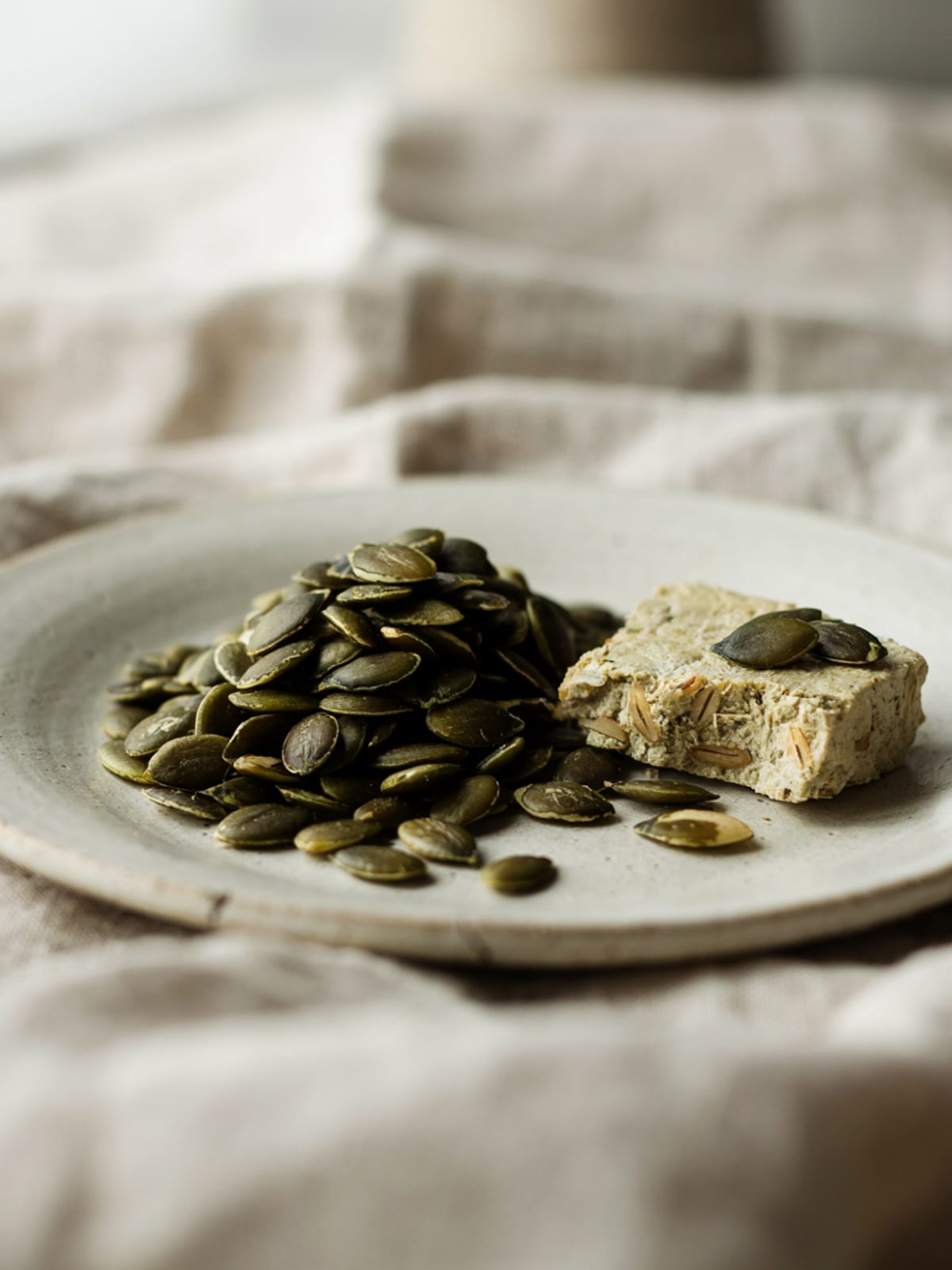
If magnesium, zinc, or iron are a specific dietary goal, whole pumpkin seeds — as a snack, roasted over a salad, or worked into a spread — fill that role far more reliably than the pressed oil ever could. If, instead, the goal is a distinctive, roasted finishing oil with fat-soluble nutrients for salads, potatoes, and cold dishes, pumpkin seed oil earns its place through flavour first — the nutrition numbers are a real, but secondary, bonus. Treating seed and oil as nutritionally interchangeable remains the most common mistake in discussions of this food.
One Tablespoon, Kept in Proportion
A realistic serving of pumpkin seed oil is one to two tablespoons, poured over a finished dish, not measured out like a supplement. At that amount, the most notable nutritional contribution is a moderate level of vitamin E activity, alongside a nutritionally interesting but not dominant amount of monounsaturated and polyunsaturated fatty acids. The full fatty acid profile is covered in fatty acids in pumpkin seed oil, and the wider picture is summed up in the overview of pumpkin seed oil's composition. None of this turns the oil into a multivitamin substitute — it makes it a flavourful cooking oil with a genuine, if narrower than its reputation suggests, micronutrient profile.
Order authentic green-gold pumpkin seed oil
Shop now