The Styrian
Pumpkin Seed Oil Journal
The Styrian
Pumpkin Seed Oil Journal
- The Styrian Pumpkin Seed Oil Journal
Shop EN
pumpkinseedoil.ccShop DE
kuerbiskernoel.cc
About
This website also contains some content created with the support of AI.
Pumpkin Seed Oil Glossary: Every Term Explained
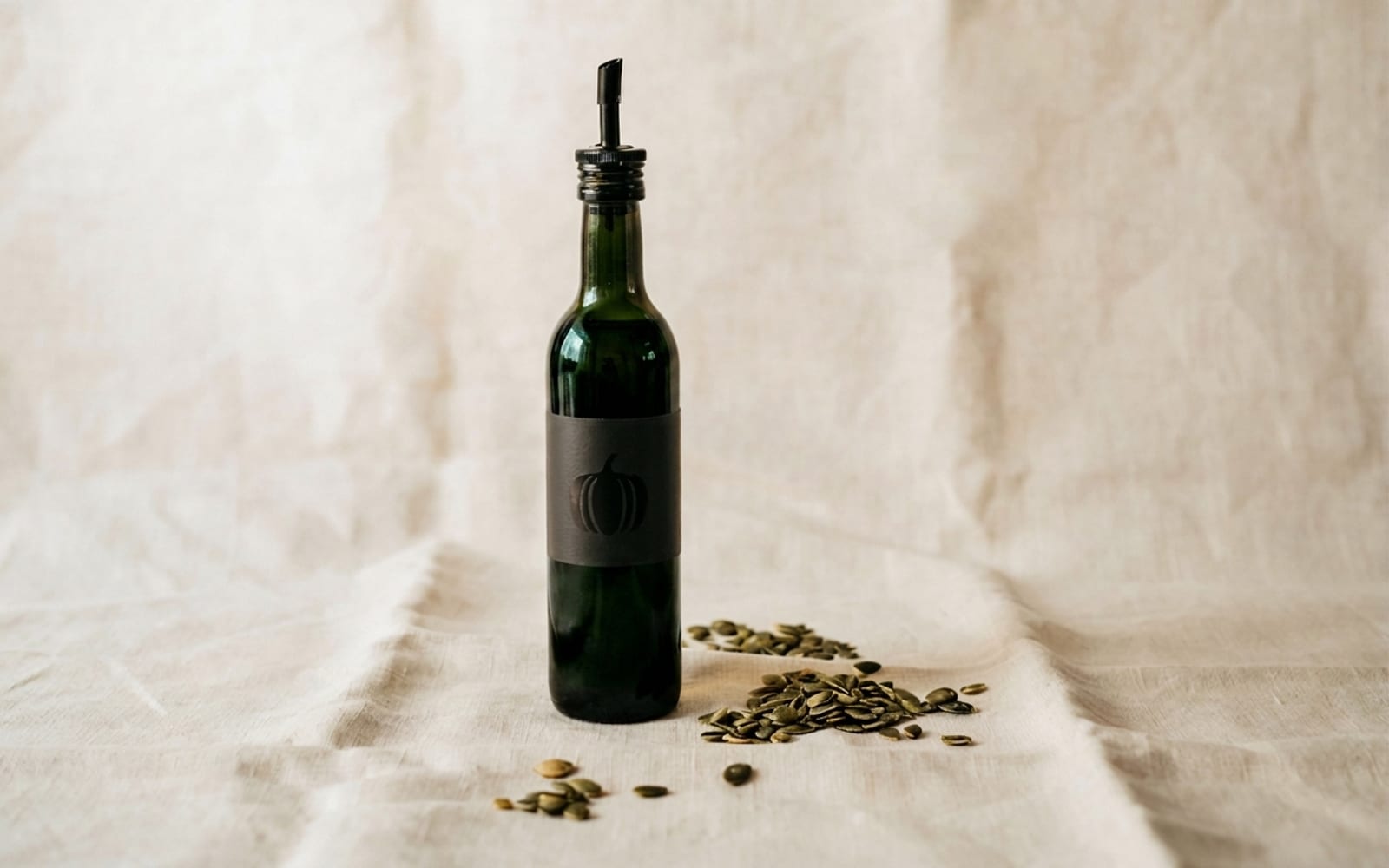
Pumpkin seed oil comes with its own vocabulary, and more of it matters at the point of purchase than most buyers realise. Some of the terms are legal — Protected Geographical Indication, g.g.A. Some are botanical — Cucurbita pepo var. styriaca. Some describe process — roasting, cold pressing, first pressing. And some are simply the language producers and regulars have used for generations — green gold, Ölmühle, terroir. Knowing what these words actually mean turns a label from a wall of unfamiliar print into a set of facts you can weigh for yourself. This glossary gathers the terms that come up most often across this journal, in alphabetical order, with enough context in each entry to explain not just the definition but why it matters in practice.
A
Authenticity. In this category, authenticity is not a marketing adjective — it means the oil in the bottle was genuinely pressed from Styrian-grown hull-less seeds, by the traditional or PGI-specified method. The most reliable proxies for it are the EU PGI logo, a named mill with an address, and a clearly declared seed origin. Vague phrases like "Austrian-style" or "traditional recipe" carry no legal weight at all.
B
Blend. A blend is pumpkin seed oil mixed with another, more neutral oil — typically sunflower or rapeseed — to lower the cost and lighten the flavour. EU labelling rules require blends to declare each component and its share. A blend is not automatically a poor product, but it is a different one from pure pumpkin seed oil, and the front label should not be allowed to obscure that. The article on blends, imports and label clarity explains how to read the small print.
Burgenland. An Austrian province east of Styria, parts of which fall within the official PGI production zone for Steirisches Kürbiskernöl. Oil pressed from eligible Burgenland seeds, processed to the certified method, can legally carry exactly the same protected designation as oil pressed in Styria itself.
C
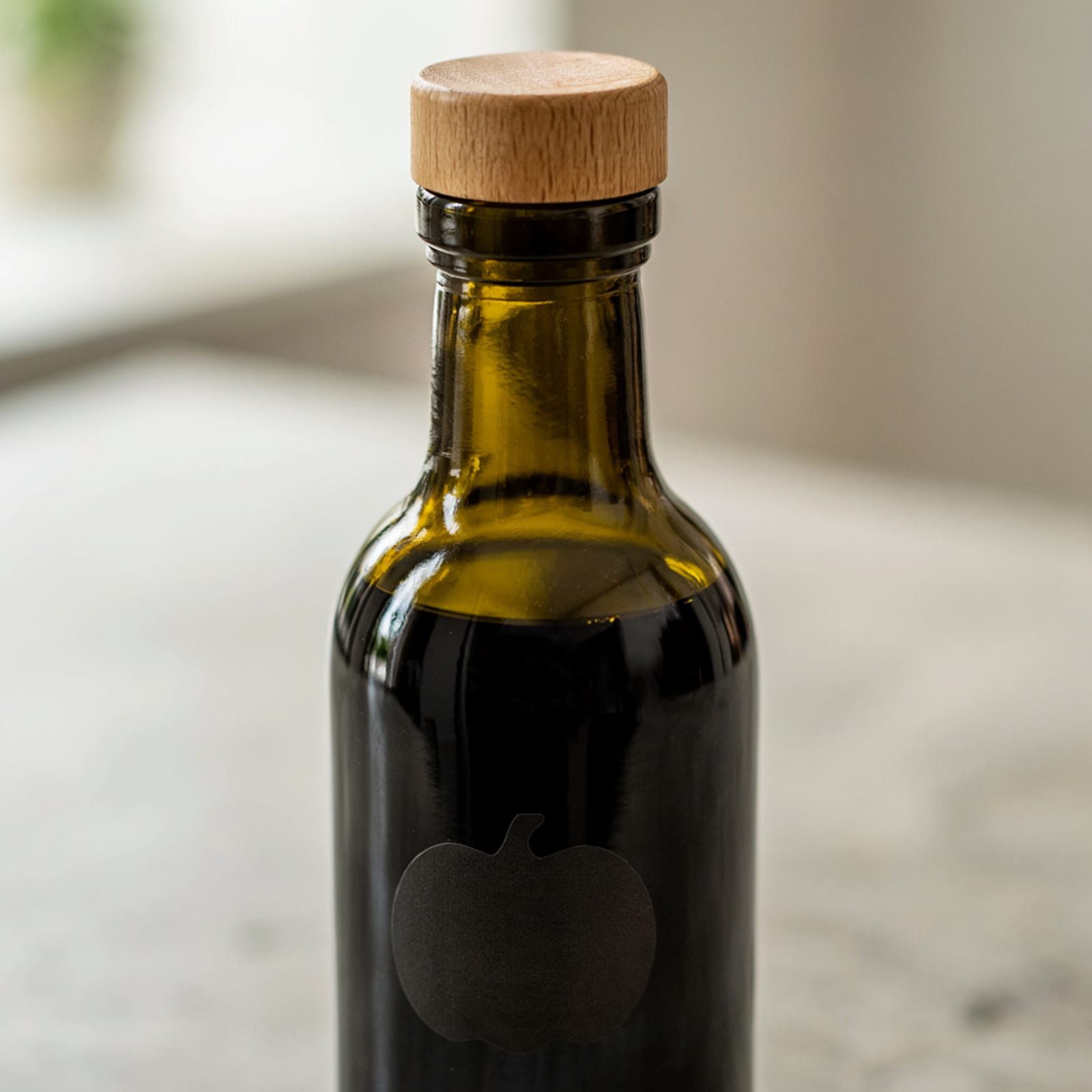
Cold-Pressed. In EU food law this is a defined production method: no external heat applied at the point of pressing, and no chemical solvents used to separate oil from seed. For unroasted seeds, cold pressing produces a pale, mild oil. Applied to the roasted seeds used in traditional Styrian production, the term describes only the pressing step — the seeds themselves were heated substantially beforehand, during roasting. The distinction is explained fully in Cold Pressed vs Roasted Pumpkin Seed Oil.
Cucurbita pepo var. styriaca. The full botanical name of the Styrian oil pumpkin — the hull-less cultivar bred over generations specifically for pressing rather than eating whole. See The Styrian Oil Pumpkin for how the plant became what it is.
D
Dark Glass Bottle. The near-universal packaging choice for genuine pumpkin seed oil, selected specifically to block the light wavelengths that accelerate oxidation. A pumpkin seed oil sold in clear glass has generally traded shelf life for shelf appeal, which is rarely a fair exchange for the buyer.
Delta-7 Phytosterol. An unusual plant sterol found at a notably high concentration in Styrian oil-pumpkin seeds. Certification and authenticity testing programmes use its concentration as one chemical marker of genuine styriaca cultivar origin, distinct from seeds of other pumpkin varieties.
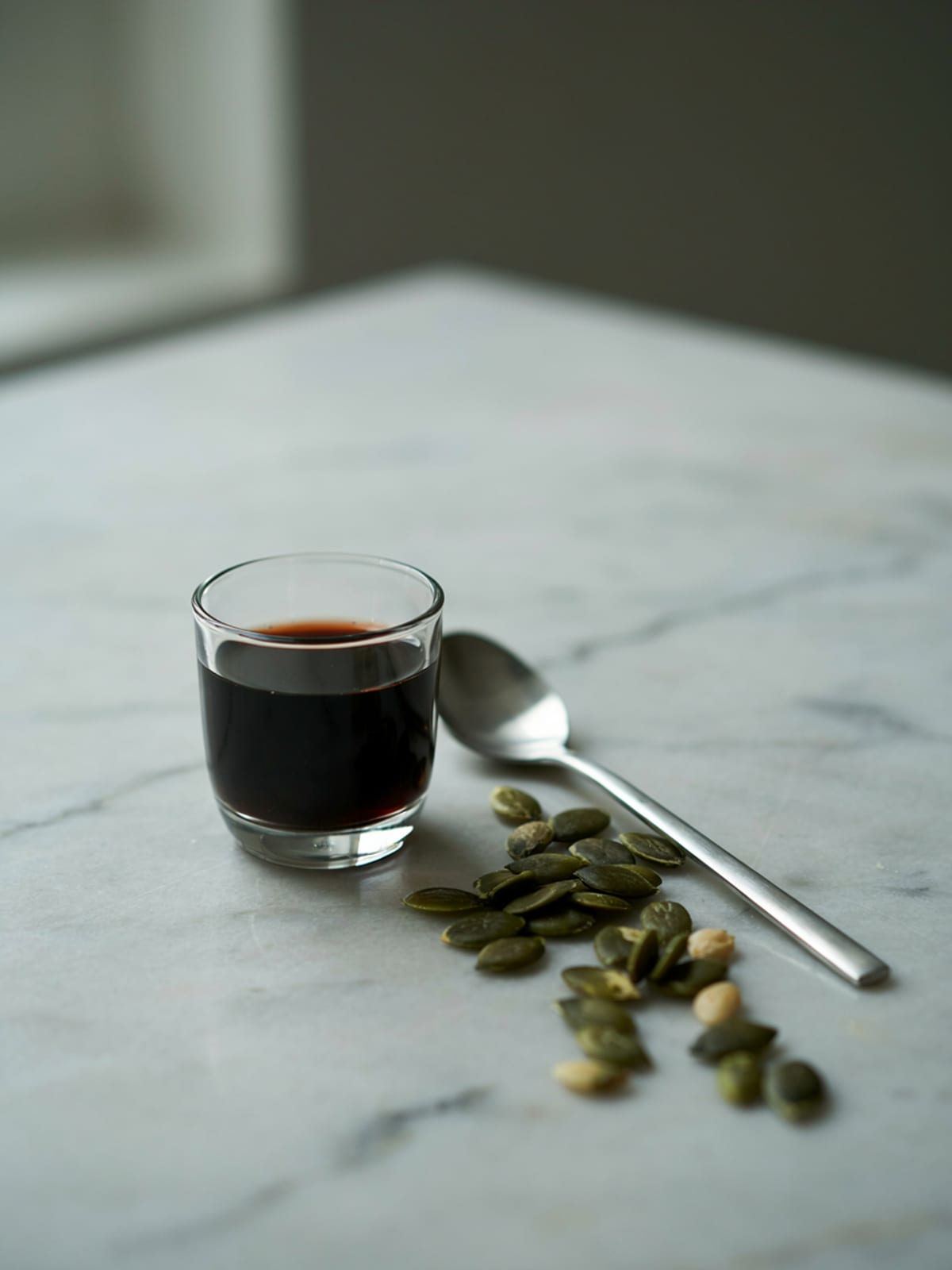
Dichroism. The optical property responsible for the oil's most famous party trick: it looks nearly black in a full bottle, yet glows a deep garnet-red when spread in a thin layer on a plate. It is the same oil throughout — only the depth of oil the light passes through changes. Colour and Taste of Pumpkin Seed Oil explains the chemistry behind it.
F
Finishing Oil. An oil intended to be added after cooking rather than used to cook with — drizzled over a finished dish for flavour and aroma. Pumpkin seed oil is used this way almost exclusively; its low smoke point and delicate aromatic compounds do not survive sustained heat.
First Pressing. The initial mechanical extraction of oil from the roasted, ground seed paste, and the fraction that yields the highest quality. Any further, lower-yield extraction from the remaining press cake produces a lesser oil that reputable mills do not bottle under the same name or sell as their primary product.
G
g.g.A. The German-language abbreviation for geschützte geografische Angabe — protected geographical indication — printed on genuine Styrian labels alongside or in place of the EU PGI logo. It is the identical legal designation as PGI, simply rendered in the local language.
Green Gold. The regional nickname for Styrian pumpkin seed oil, pointing at once to its colour and to the real economic value locked up in a labour-intensive, low-yield crop. It is a working phrase used by growers and mills, not an invented slogan.
H
Hull-Less Seed. The defining feature of the Styrian oil pumpkin: seeds that develop without the tough white outer coat found on ordinary pumpkin seeds, wrapped instead in a thin, dark, pigmented membrane that goes straight into the press with nothing wasted and nothing filtered out beforehand.
L
Linoleic Acid. The dominant polyunsaturated fatty acid in pumpkin seed oil. It is nutritionally significant, and because polyunsaturated fats oxidise more readily than saturated ones, it is also the main reason correct storage matters so much for this particular oil. See the full ingredients overview for the wider fatty acid picture.
M
Maillard Reaction. The chemistry between sugars and amino acids that unfolds during roasting, producing the brown pigments and roasted aromatic compounds that give traditional Styrian oil its dark colour and nutty depth. It is the same family of reactions that browns bread crust and coffee beans.
Mill (Ölmühle). The German word for the small, often family-run presses where Styrian pumpkin seeds are roasted and pressed into oil. Many have operated seasonally, sometimes for generations, at a scale closer to a farm workshop than a factory.
O
Oxidation. The chemical process, driven by light, heat, and oxygen acting on unsaturated fats, by which oil gradually turns rancid. Understanding oxidation is the entire logic behind storing pumpkin seed oil in a cool, dark place with the cap replaced tightly after every use — see how to store pumpkin seed oil.
P
PGI (Protected Geographical Indication). The EU certification scheme that protects Steirisches Kürbiskernöl, requiring that the seeds be grown and the oil pressed within a defined zone, following a registered specification, verified by independent audit. Styrian PGI (g.g.A.) Explained covers exactly what it does and does not guarantee.
Press Cake. The dry, defatted seed residue left behind after pressing. Nothing about it is wasted — press cake is commonly used as animal feed and increasingly valued as a protein-rich ingredient in its own right — but it plays no further part in the finished oil.
R
Rancidity. The end state of oxidation: a sharp, bitter, paint-or-crayon-like smell and taste that signals oil past its useful life. Rancid oil is unpleasant rather than typically dangerous in small amounts, but it delivers none of the flavour that justifies using pumpkin seed oil in the first place.
Roasting. The step, central to traditional Styrian production, in which the ground seed paste is heated — typically somewhere between 100 and 160 degrees Celsius — before pressing. Roasting is what turns a pale, mild seed oil into the dark, intensely nutty oil the region is known for.
S
Sediment. Fine natural particulate matter that can settle at the bottom of an unfiltered or lightly filtered bottle. It is harmless, simply a sign of minimal processing rather than of spoilage, and can be shaken back into the oil or left to settle again.
Steirisches Kürbiskernöl. The German name for Styrian Pumpkin Seed Oil, and the exact protected term printed alongside the PGI logo on every certified bottle.
T
Terroir. A term borrowed from wine language for the idea that soil, climate, and local growing conditions leave a detectable mark on the finished oil from one harvest and region to the next — something producers who press from their own fields year after year can often describe in specific terms.
Tocopherol. The chemical family that includes vitamin E, present in pumpkin seed oil in meaningful amounts. Like other heat-sensitive micronutrients, it is only partially reduced by roasting rather than eliminated, and remains higher again in genuinely cold-pressed, unroasted versions of the oil.
V
Vintage (Harvest Year). Some producers state the harvest year on the label, in the same spirit a winemaker would. Because pressing conditions and seed quality vary somewhat between years, this detail can matter to an attentive buyer, though the practice is far less standardised for pumpkin seed oil than it is for wine.
This list will keep growing as the journal covers more of the detail behind the label. If a term you have encountered on a bottle is missing here, the surrounding reading on discovering the oil and its everyday kitchen use is usually the next place to find the context a short definition cannot fully carry.
Buy artisanal Styrian pumpkin seed oil
Shop now