The Styrian
Pumpkin Seed Oil Journal
The Styrian
Pumpkin Seed Oil Journal
- The Styrian Pumpkin Seed Oil Journal
Shop EN
pumpkinseedoil.ccShop DE
kuerbiskernoel.cc
About
This website also contains some content created with the support of AI.
Blends, Imports, and Reading the Label
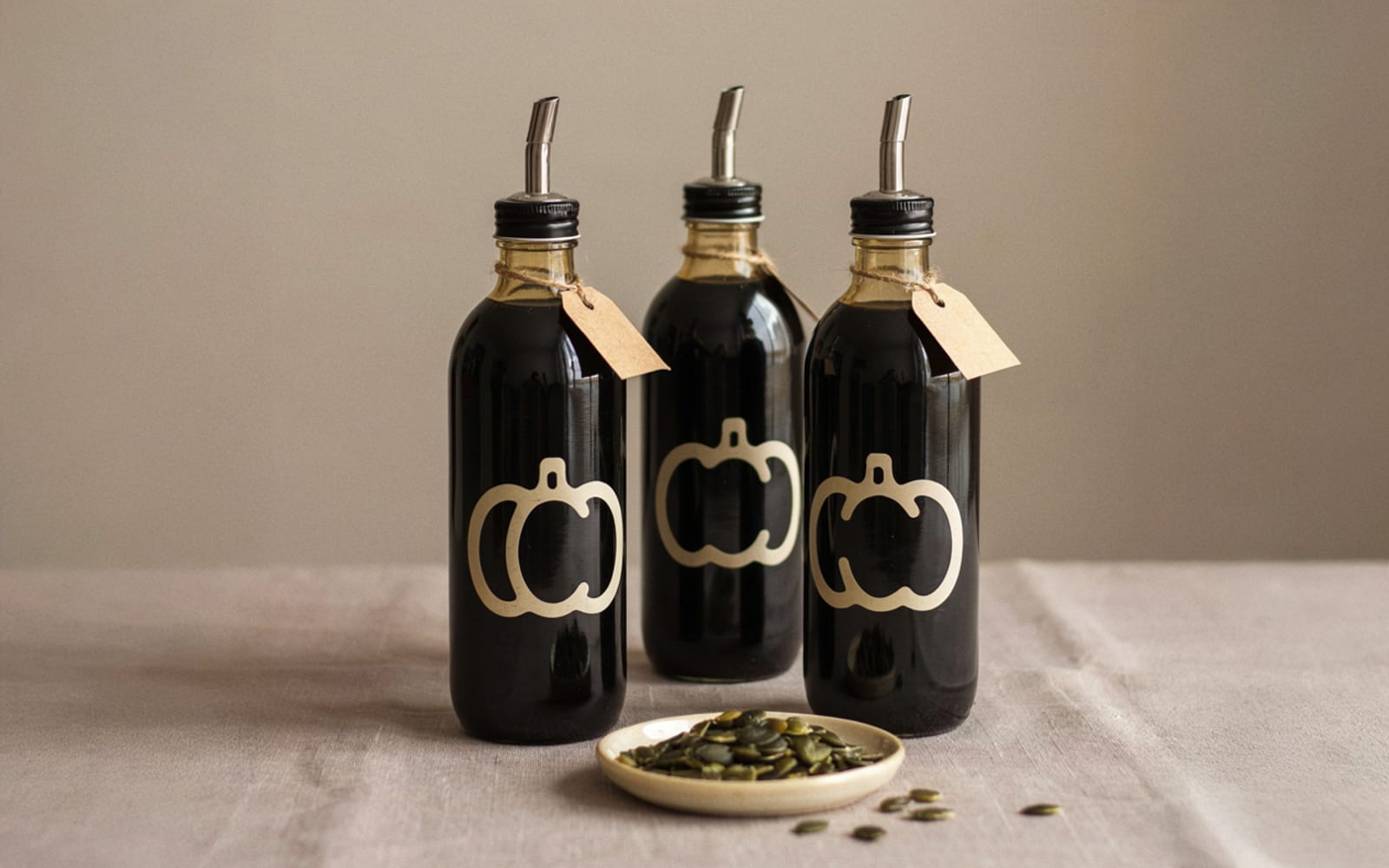
A shelf full of dark bottles, the same green pumpkin printed across every one. Anyone standing in front of that display for the first time usually reaches for whichever bottle looks most familiar. Only on closer inspection does it become clear how different what's actually inside can be. Some bottles hold a tightly controlled oil from a single region. Others are blends of several vegetable oils, or made from seeds that have travelled a very long way. In between sits a large group of honest products that simply ask for a careful read.
Where the seeds actually come from
Hull-less pumpkin seeds have long since stopped growing only in Austria. Entire shipments arrive from Hungary, from China, from Ukraine, and from southeastern Europe, where land and labour cost less than in Styria. For producers who want to offer an inexpensive oil, reaching for seeds like these is an obvious move.
Import doesn't automatically mean poor quality. But imported seeds are simply a different thing from seeds grown within the protected Styrian region. Climate, soil, seed variety, and processing method all shape the oil that ends up in the glass. Anyone looking for an oil with a clear regional signature should watch not only where it was pressed, but also where the seeds themselves came from.
Two oils, one bottle
A common variant blends pumpkin seed oil with a more neutral oil, usually sunflower or rapeseed. Blends like this look lighter, taste milder, and cost less — often practical enough for a quick everyday salad. What they can't match is the deep colour and dense, nutty aroma of a pure pumpkin seed oil.
What matters is what's printed on the back. An ingredient list reading "pumpkin seed oil 25%, sunflower oil 75%" makes things unambiguous. It gets trickier when the front promises a pure premium oil while the actual pumpkin seed oil content sits in small print somewhere on the back. Always turn the bottle around before deciding.
Pure means one ingredient
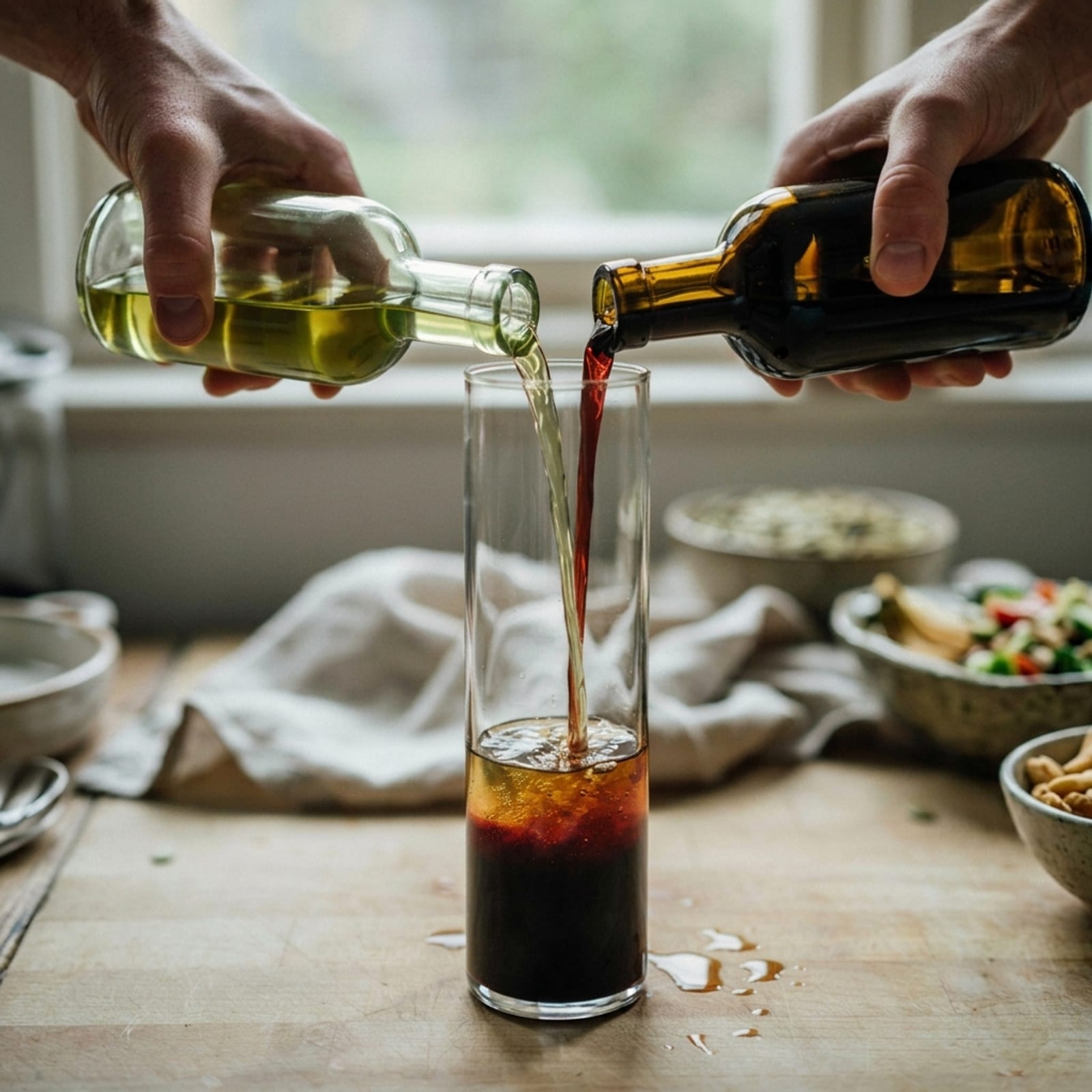
Hold a pure pumpkin seed oil next to a lighter blend and the difference shows immediately: dark, almost black-green oil on one side, a noticeably paler mixture on the other. With pure pumpkin seed oil, the ingredient list actually reads just one word: pumpkin seed oil. That alone says nothing yet about variety, origin, or pressing method, but it's the first important step. Once other vegetable oils appear on that list, you're looking at a blend — not a lesser category, just a different purpose.
Even within pure pumpkin seed oil, several origins can come together. The product stays unmixed, but its regional identity blurs. Especially with names that carry a regional ring to them, a second look at the exact origin statement pays off.
A seal that promises more than a label
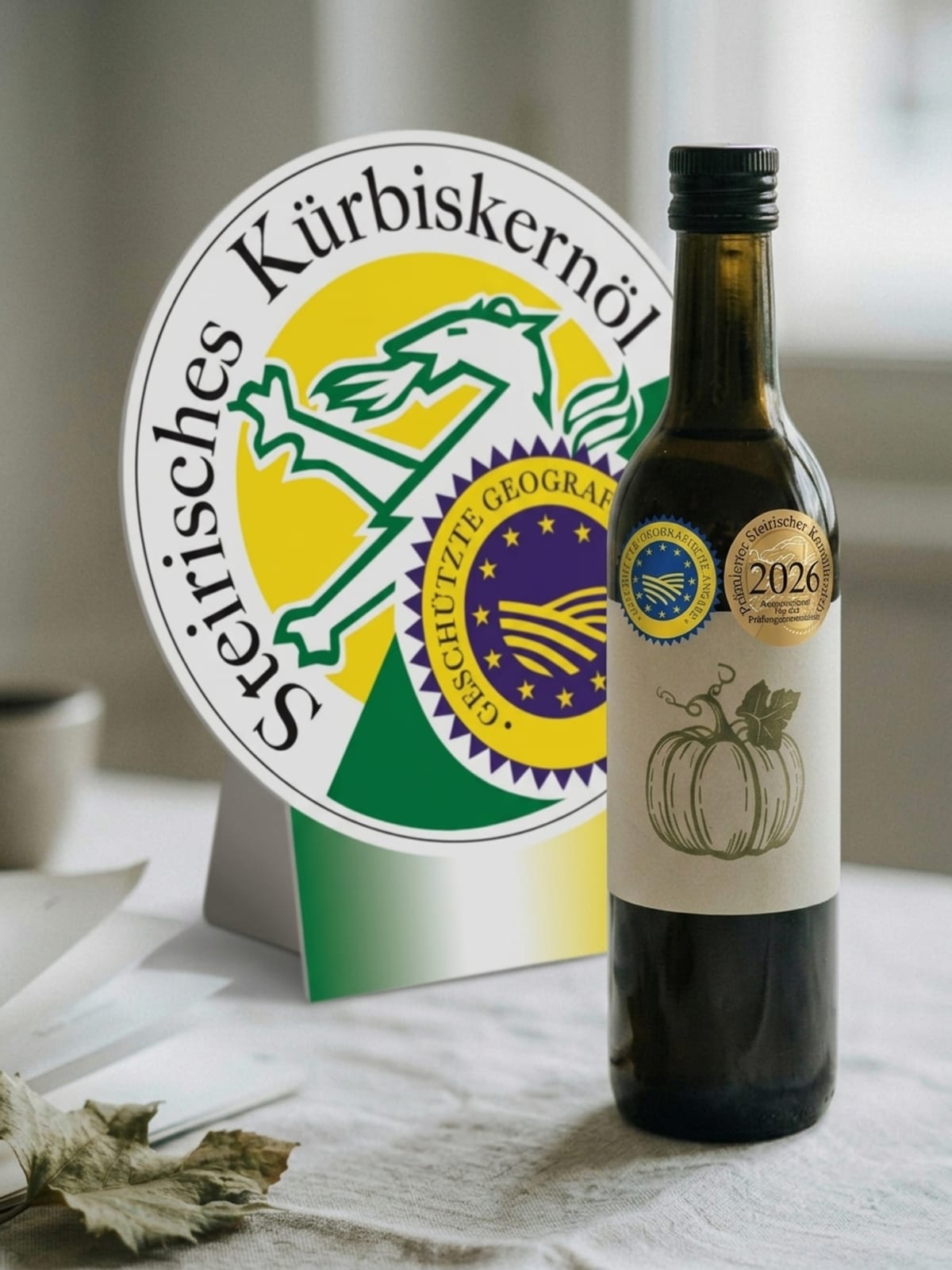
The European mark for protected geographical indication together with the full name Styrian Pumpkin Seed Oil PGI is the most reliable sign of controlled origin. Behind it sits a clear requirement: the hull-less seeds must come from the defined Austrian region, and both growing and processing are documented and checked. What this seal guarantees in detail is explained under Styrian pumpkin seed oil PGI explained.
A label with an Austrian connection but no PGI mark can still describe a good regional oil. It just asks for more attention: the name and address of the oil mill, the exact growing region, and a clear statement on seed origin should all be findable. If those details are missing, asking the retailer or producer directly is entirely reasonable.
Price doesn't tell the whole story
Genuine Austrian seeds, harvest, drying, roasting, pressing, and inspection all cost time and money. A certified oil therefore has a realistic minimum price. A strikingly cheap bottle isn't automatically a bad buy, but it is a good reason to check the ingredient list and origin especially carefully.
The reverse holds too: a high price is no guarantee of quality. A clear declaration matters more in the end than attractive packaging. Anyone who can trace the origin and knows the taste buys with more confidence over time than someone guided only by the most eye-catching label. A direct comparison of different oils sits under pumpkin seed oil compared.
How to read the label
In the end, it comes down to a short but effective sequence. First the ingredient list: does it really say only pumpkin seed oil? Then the seeds' origin and the place of pressing. After that the PGI seal, any organic mark, and the name of the oil mill — small signs packed into a tight space that together add up to a complete picture. How these quality markers are actually checked is covered under checking pumpkin seed oil quality.
With that eye trained, an attractive bottle on the shelf becomes more than just a pretty label. You'll see at a glance whether you're holding a pure Styrian oil for a special moment, or deliberately choosing a milder blend for everyday use — and that's exactly what counts once the bottle finally opens at home.
Buy Styrian pumpkin seed oil for cooking
Shop now