The Styrian
Pumpkin Seed Oil Journal
The Styrian
Pumpkin Seed Oil Journal
- The Styrian Pumpkin Seed Oil Journal
Shop EN
pumpkinseedoil.ccShop DE
kuerbiskernoel.cc
About
This website also contains some content created with the support of AI.
Discover Styrian Pumpkin Seed Oil
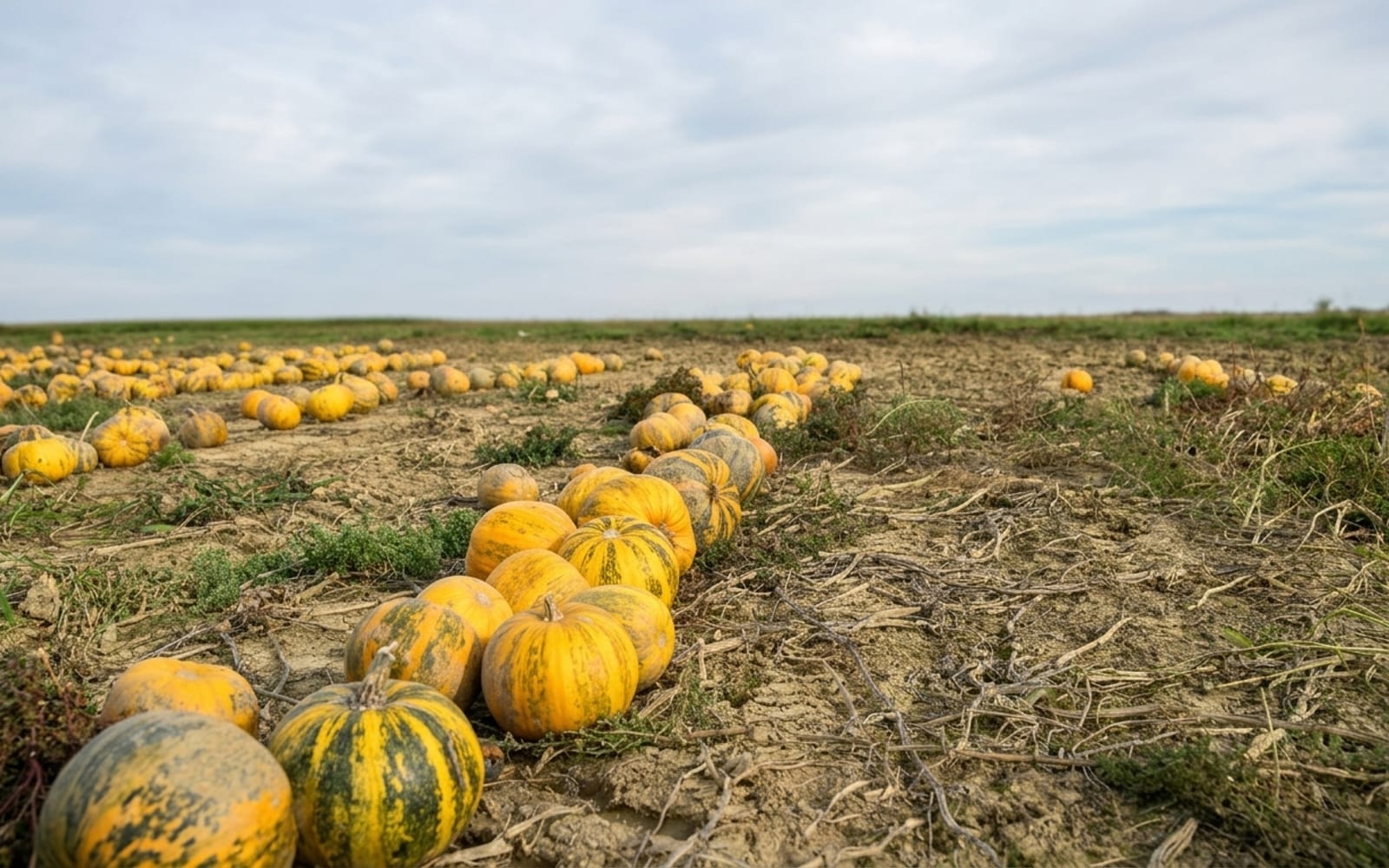
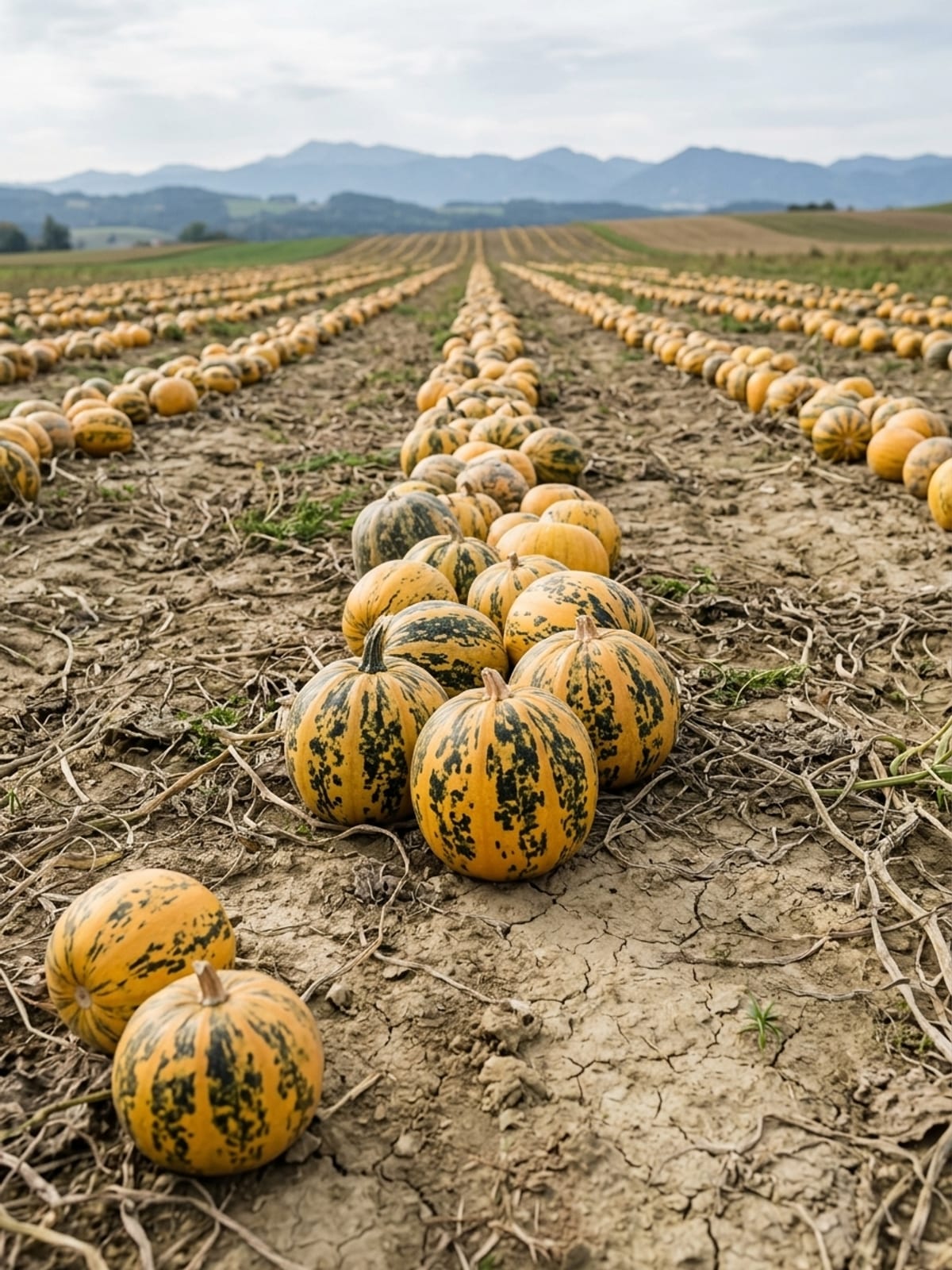
Before the first frost reaches the lowlands of southern Styria each October, the pumpkin fields have already been harvested and the hulled seeds are drying in long, flat trays in the courtyard of the mill. What follows — the grinding, the mixing, the slow roasting over an open stone — has been part of the rhythm of this region for at least three hundred years. The oil that comes out the other side is one of the most flavour-intensive, chemically unusual, and culturally specific cooking ingredients in Europe.
The Discover section of this journal exists to answer the foundational questions. What exactly is pumpkin seed oil, and why does the Styrian variety occupy a distinct category of its own? Where is it grown? How did this particular agricultural tradition develop? What does the European Protected Geographical Indication seal actually guarantee? And what is the difference between the dark-roasted traditional style and the lighter, less intensely flavoured cold-pressed alternative?
The Plant and the Seed
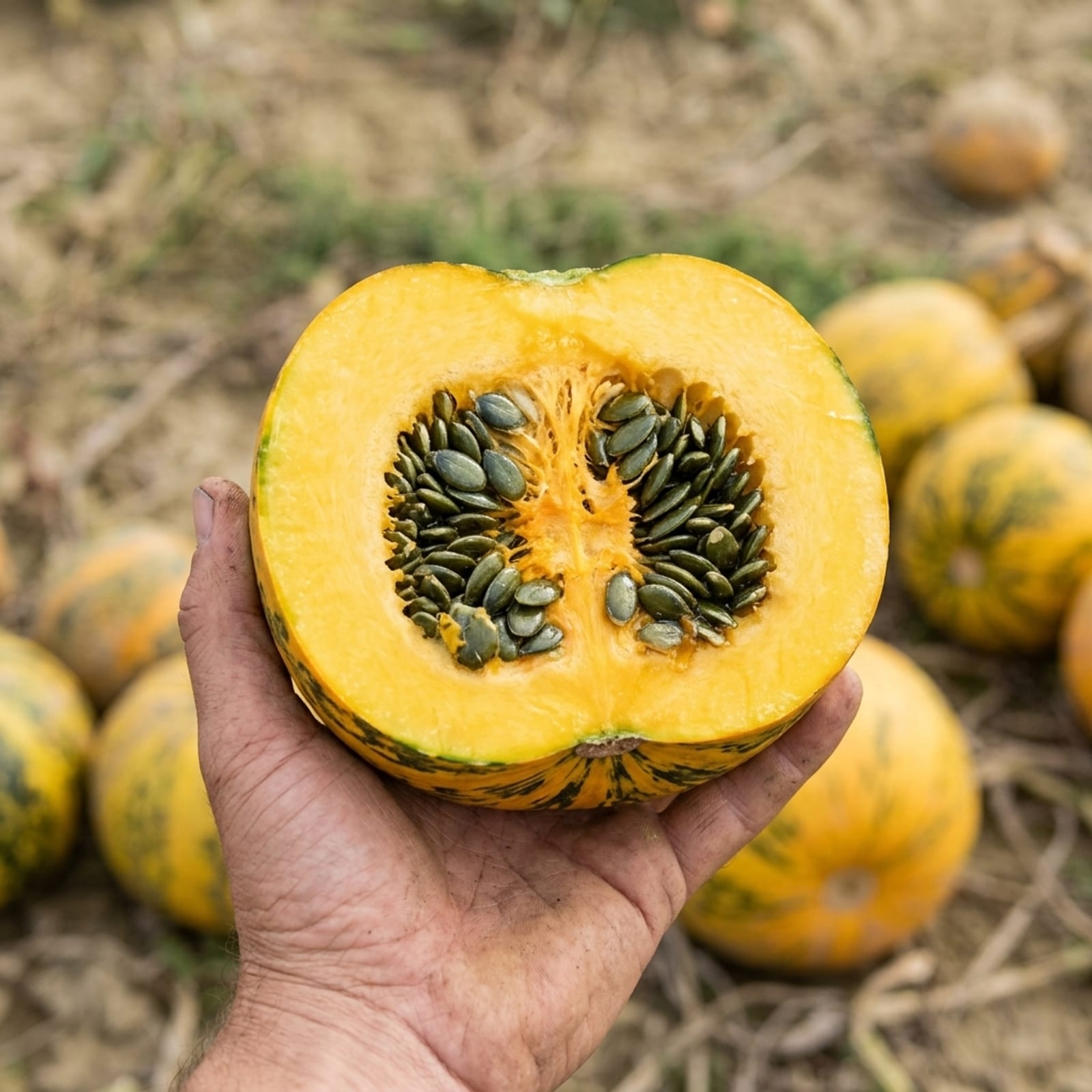
All pumpkin seed oils begin with the same genus — Cucurbita — but there the similarity ends. Conventional pumpkin varieties produce seeds enclosed in a tough white hull. The hull-less Styrian cultivar, Cucurbita pepo var. styriaca, is a natural mutation first formally documented in the Styrian region in the late nineteenth century. Its seeds come without that outer shell, coated instead only in a thin, oil-rich membrane. This single botanical fact has enormous consequences: extraction yields are higher, the seed can be used directly without hulling, and the resulting oil has a richer, more complex flavour profile than oils pressed from hulled seeds of conventional cultivars.
The cultivar is not merely a curiosity. It is the agricultural foundation of an entire regional industry. Farmers in Styria and adjacent parts of Slovenia and Burgenland have bred and selected specific strain lines over generations, optimising for oil content, seed size, resistance to local weather patterns, and flavour outcomes after roasting. The seeds that reach a Styrian mill today represent the cumulative horticultural knowledge of more than a century.
The Production Region
The defined geographical zone for Styrian Pumpkin Seed Oil PGI covers the federal state of Styria in Austria, along with parts of neighbouring Slovenia and the Burgenland region of eastern Austria. The landscape is characterised by rolling hills, a warm continental climate with adequate summer rainfall, and soils that drain freely — conditions well suited to pumpkin cultivation. The combination of altitude, aspect, and seasonal temperature variation in this zone is considered part of the oil's terroir, much as grape-growing regions claim the influence of their specific geography on wine character.
Three Hundred Years of the Oil Mill
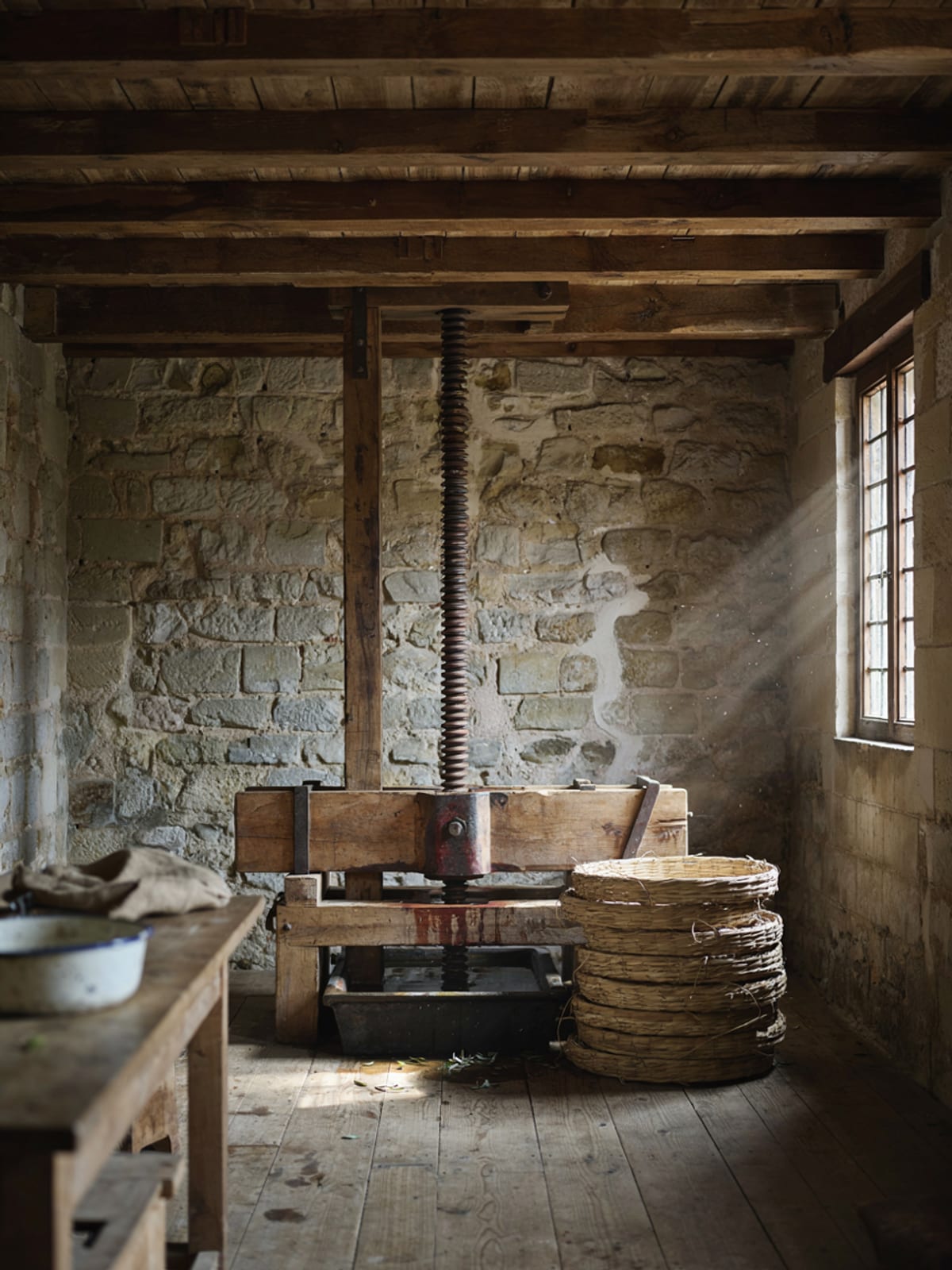
The earliest documented oil mills in Styria pressing pumpkin seeds date to the early eighteenth century, though the practice is likely older. By the nineteenth century, pumpkin seed oil had become a defining ingredient of the Styrian kitchen — used on salads, drizzled over soups, consumed as a nutritional supplement in the traditional sense long before that phrase acquired its modern pharmaceutical overtones, and valued as a source of calorie-dense fat in a rural diet that left little room for waste.
The mills of that era were driven by water or animal power and operated seasonally, tied to the harvest. Modern mills are electrically powered and can press year-round, but the essential process — grinding the dried seeds to a coarse paste, adding water and salt, roasting carefully, and pressing — has changed remarkably little. This continuity is part of what the PGI designation is designed to protect and recognise.
Understanding the PGI Designation
Protected Geographical Indication is one of three European quality marks for food products with a specific geographical origin (the others being PDO — Protected Designation of Origin — and TSG — Traditional Speciality Guaranteed). PGI is awarded when at least one stage of the production process takes place in the defined region. For Styrian pumpkin seed oil, this covers both the agricultural origin of the seeds and the pressing process. The designation is formally registered with the European Commission and carries legal protection throughout EU member states.
In practice, the PGI logo on a bottle of pumpkin seed oil tells you that the oil was pressed from seeds grown in the defined zone and processed under the rules of the specification. It does not, by itself, guarantee a particular flavour intensity or tell you whether the oil is from the current harvest or from older stock — those distinctions are matters of producer reputation and purchasing practice. But it does rule out the possibility that you are buying oil from seeds grown in China, Ukraine, or elsewhere and passed off under a Styrian name.
What comes next
Use the guides above to start, then continue through the essay. When you are ready for the kitchen, the chemistry, or the evidence, move on to Kitchen, Composition, and Wellness. For purchase cues, see Quality and where to buy.
Get Austria’s iconic pumpkin seed oil
Shop now