The Styrian
Pumpkin Seed Oil Journal
The Styrian
Pumpkin Seed Oil Journal
- The Styrian Pumpkin Seed Oil Journal
Shop EN
pumpkinseedoil.ccShop DE
kuerbiskernoel.cc
About
This website also contains some content created with the support of AI.
Does Pumpkin Seed Oil Need the Fridge?

The fridge door stands open for a moment. Cold air spills out, a jam jar fogs instantly, and right in the middle sits the bottle of dark oil. Does it really need to go in there? Anyone asking this for the first time often hears conflicting answers. The short truth: cold alone isn't the goal. A dark, evenly cool spot matters more than a few extra degrees off the temperature.
The Unopened Bottle in the Cupboard
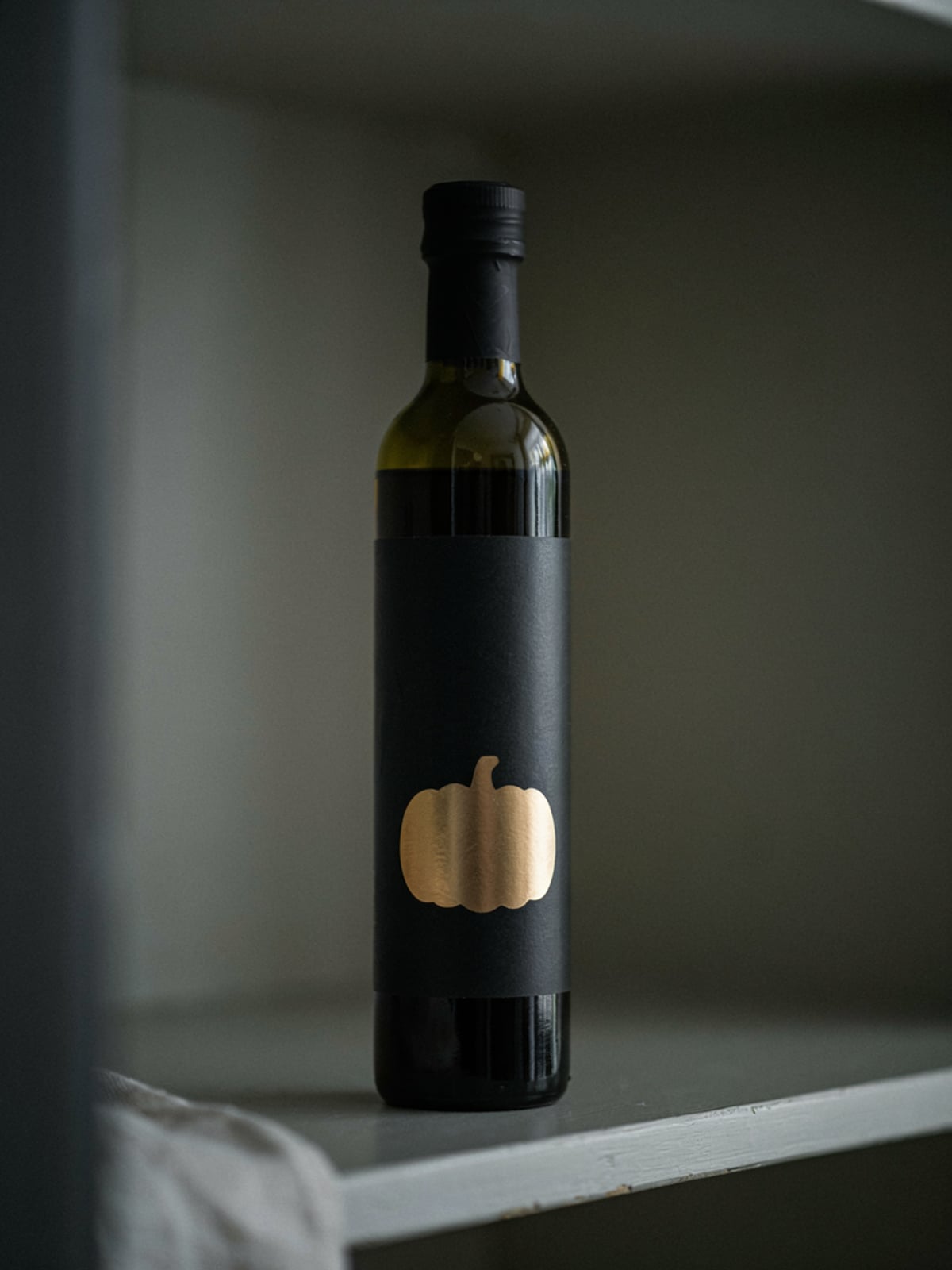
A sealed bottle of Styrian pumpkin seed oil prefers to travel in the dark. A pantry that stays similarly cool all year round is plenty for most kitchens. Nobody needs to shove a freshly delivered bottle into the fridge that same evening. Treat it like other precious finishing oils: a spot away from the stove and the windowsill protects the roasted aroma more reliably than a brief cold shock. More on proper care at storage and shelf life.
Once the Bottle Is Open
The moment the cap comes off, the game changes. Air, light, and warmth immediately start wearing down the aroma. That's why closing the bottle firmly right after every pour pays off. If the kitchen sits under relentless summer sun, the fridge noticeably slows that decline. If the oil gets used often and stored in the dark instead, many households manage fine without refrigeration at all — smell remains the most honest guide. Once the aroma turns flat or paint-like, it's done. What that feels like is covered at what does rancid smell like?
What the Fridge Does to the Oil
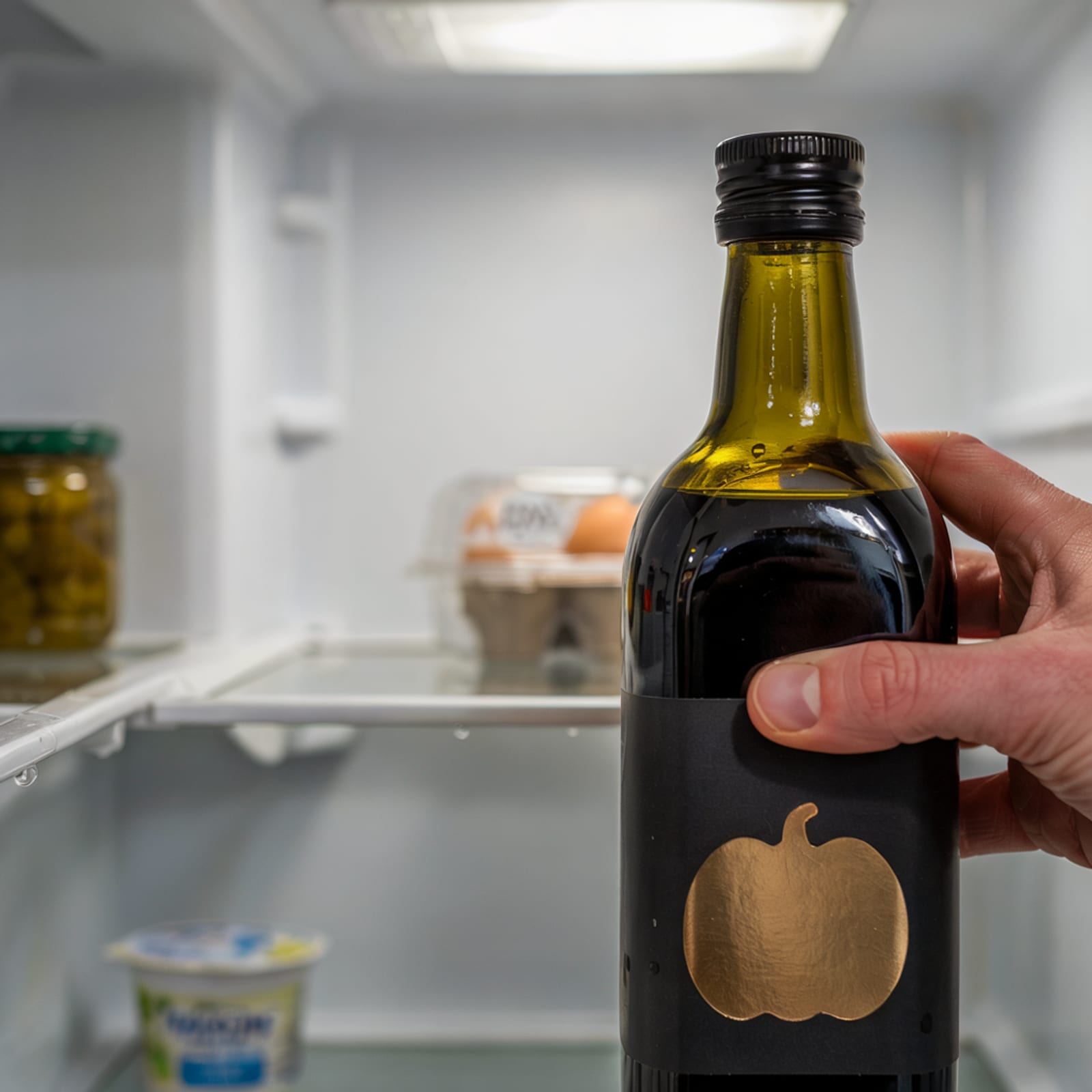
Anyone taking the bottle straight from the cold shelf notices the difference immediately: the oil flows thicker, almost stubborn, and takes a moment to find its way out of the neck. That's not a flaw, just physics — cold makes oil more viscous. A few minutes at room temperature and it runs easily over the leaves again. A thin film of water also tends to form on the neck once the bottle leaves the cold. A quick wipe is enough to keep any water from finding its way into the oil. Freezing, meanwhile, is unnecessary — for normal use, this oil doesn't need such a cold journey.
Date and Nose — Two Different Clocks
The label carries a date, but it's more a quality promise than a countdown. An opened bottle sitting in the heat can lose character well before that day. An unopened, well-stored bottle, on the other hand, often smells just as lively right up to that date as it did on day one. In the end, what the nose and tongue say matters more than the print alone. More detail at is expired oil still usable? and opened bottle.
A Habit Worth Keeping
The simplest fix is a small habit: buy a bottle size that gets finished while the roasted note is still strong. Close the bottle right after use, and keep it wherever you'd confidently store other delicate oils. The fridge is a helper for hot days here, not an unbreakable rule. More answers on storage and freshness sit in the FAQ hub; quality marks to look for while shopping are covered on the quality page.
On the Move: Travel and Picnic Bottles
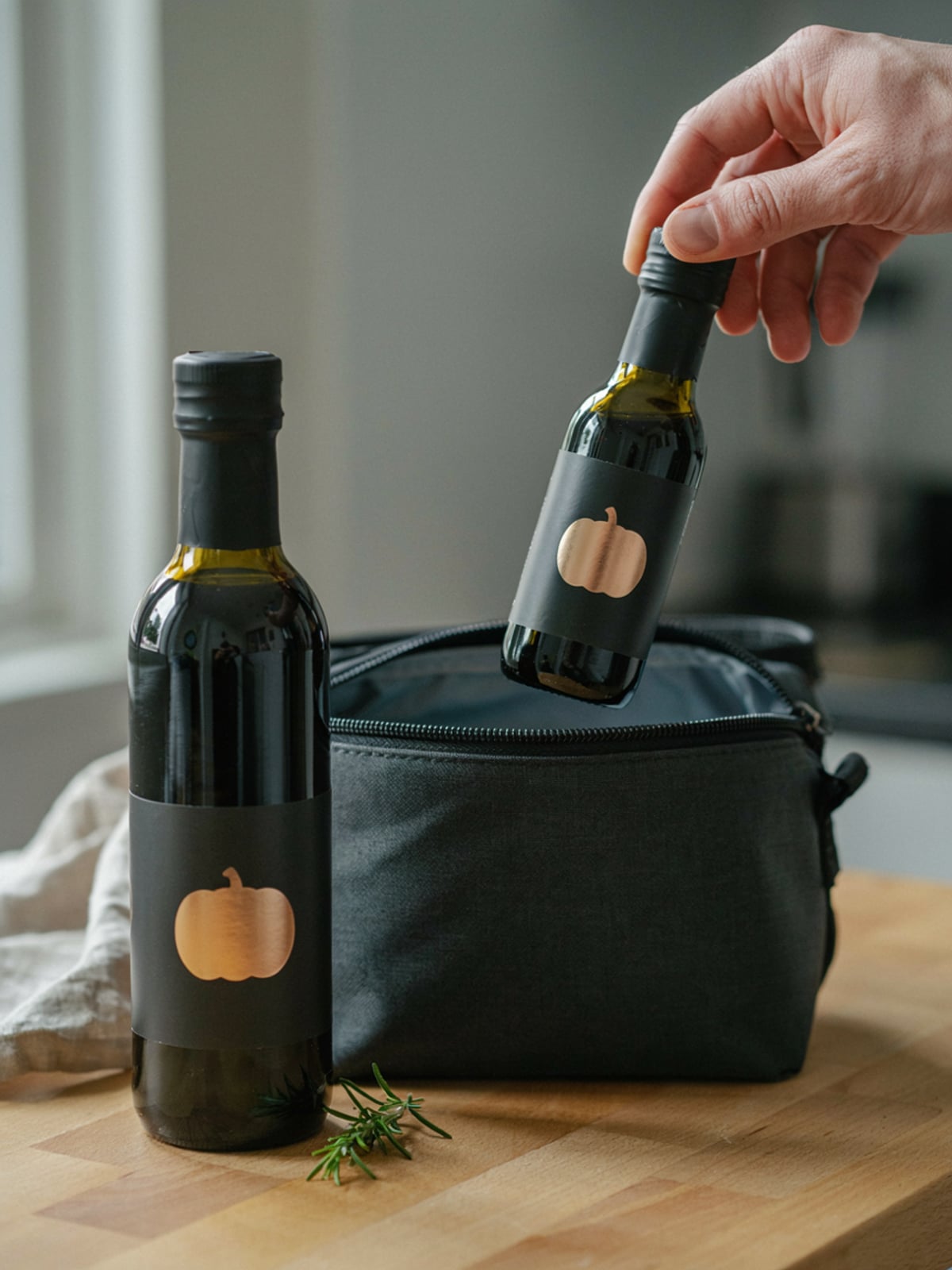
For a day trip outdoors, a small, tightly closed bottle beats any large, half-open litre bottle in a heated trunk. Carrying it in the shade and returning it promptly to a cool, dark spot afterwards gets more right than worrying about a single night in a hotel minifridge. Before the oil flows over a shared salad away from home, a quick sniff at the bottleneck is worth the second.
The Fog on the Glass
Back at the fridge: the thin water film on the outside of the glass is normal once a cold bottle meets warm kitchen air. Wipe it off, don't worry about it. It only becomes a problem if water gets inside the bottle, for instance through hasty pouring with wet hands. Pour cleanly, close firmly — and the bottle stays exactly what it's meant to be: a reliable companion, whether in the cupboard or for an evening in the fridge.
Get culinary Styrian pumpkin seed oil
Shop now