The Styrian
Pumpkin Seed Oil Journal
The Styrian
Pumpkin Seed Oil Journal
- The Styrian Pumpkin Seed Oil Journal
Shop EN
pumpkinseedoil.ccShop DE
kuerbiskernoel.cc
About
This website also contains some content created with the support of AI.
Kitchen Cooking with Pumpkin Seed Oil
Some ingredients arrive in the kitchen with modest ambitions. Pumpkin seed oil does not. A single tablespoon carries more flavour weight than most whole components in a recipe, and working with it productively means accepting that it does not play a supporting role — it is, in almost any dish it touches, the point. The Kitchen section of this journal explores that character: where the oil belongs, how to use it without overwhelming a dish, and where the Styrian culinary tradition has found combinations that work so well they have become standard.
The Finishing-Oil Principle
The single most important rule of cooking with Styrian pumpkin seed oil is that it is a finishing oil, not a cooking oil. The reasons are both practical and culinary. Practically: the smoke point of the oil is low — roughly 120–160°C depending on its exact composition and production method — which means it breaks down and begins to smoke at temperatures well below what you need for frying or sautéing. Culinary: the aromatic compounds that make the oil so distinctive are volatile, meaning they evaporate under heat. Frying with pumpkin seed oil destroys the thing you paid for.
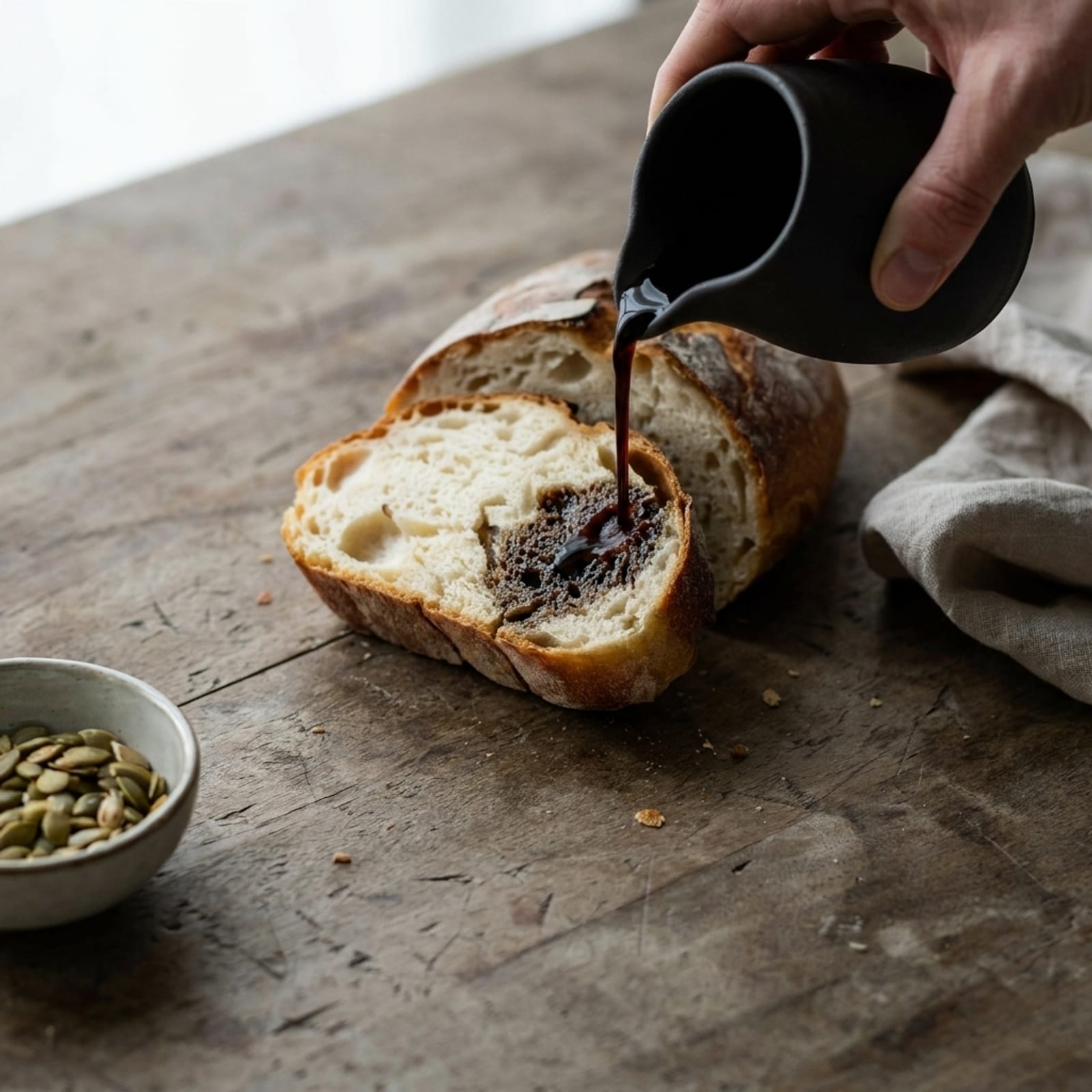
Used correctly — drizzled cold over a finished dish, whisked into a vinaigrette, stirred into a cool sauce, or added to a hot soup just before serving — pumpkin seed oil contributes exactly what it should. The heat of a bowl of soup is enough to warm the oil and release its aroma without destroying the volatile compounds. A dressing made with pumpkin seed oil benefits from resting for a few minutes; the flavours integrate and the olive-oil sharpness of a fresh pressing settles.
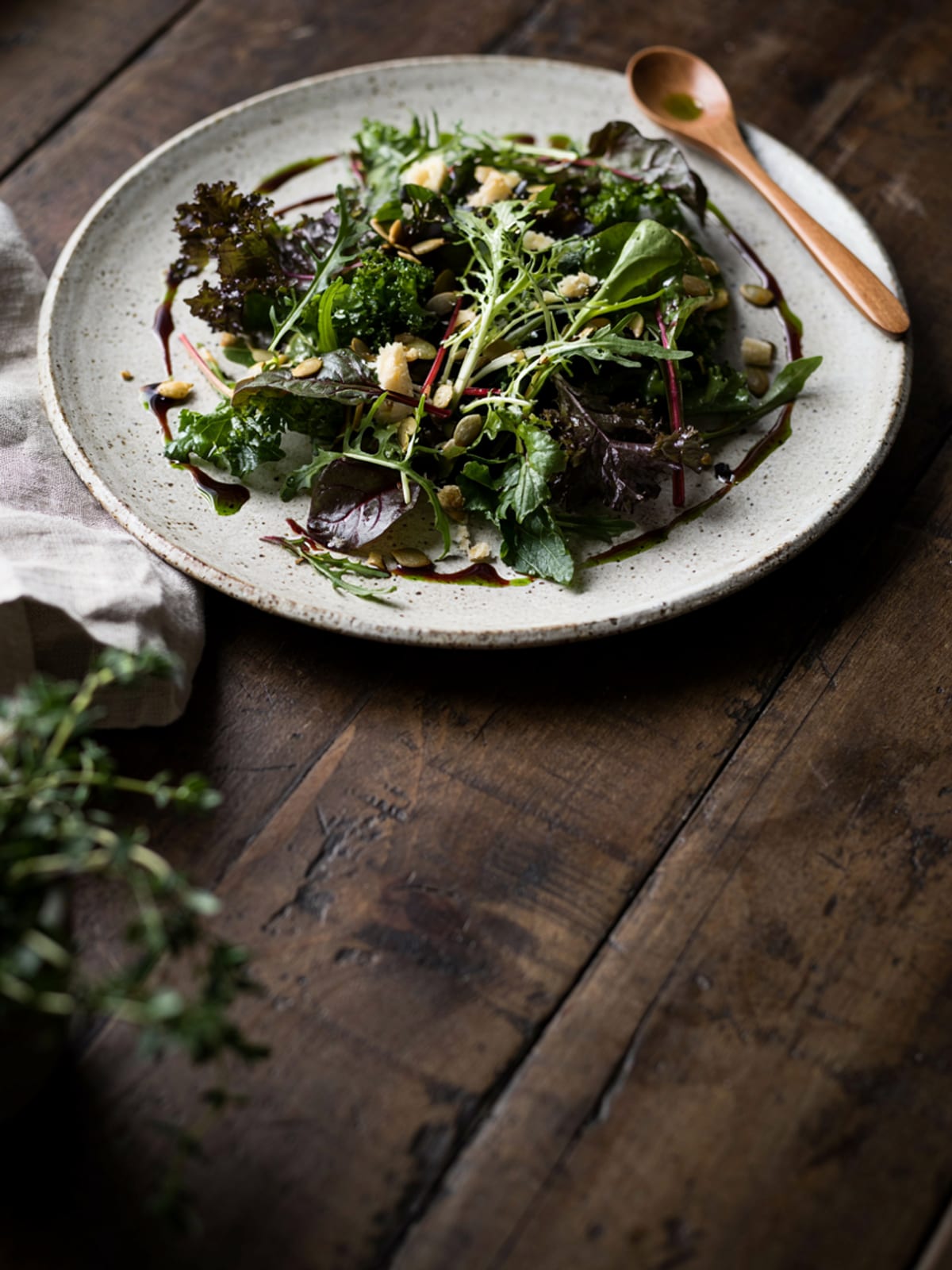
The Classic Styrian Salad
If there is a single recipe that defines the oil's culinary identity, it is the Styrian salad dressing: pumpkin seed oil, apple cider vinegar or mild white wine vinegar, a little salt, sometimes a small amount of neutral oil to moderate the intensity, and nothing else. Applied to firm-leafed greens, cucumber, or the classic combination of field salad with crispy bacon and pumpkin seeds, this dressing is transformative. The ratio of oil to vinegar is typically more generous with acid than a standard vinaigrette — the oil is assertive enough to carry a higher proportion of sharpness without the dressing becoming flat.
The same basic formula extends to potato salad — particularly the warm, vinegar-dressed Styrian style that uses no mayonnaise — and to grain salads with farro, spelt, or barley, where the nutty oil complements the earthy grain character.
Soups and the Drizzle
Pumpkin soup and pumpkin seed oil have an obvious affinity — they share a botanical source and a flavour family. But the oil is equally rewarding over other vegetable soups: butternut, carrot, parsnip, celeriac, and leek all gain depth from a finishing drizzle. The technique is straightforward: ladle the hot soup into the bowl, drizzle a teaspoon or two of oil in a spiral pattern over the surface, and serve immediately. A spoonful of crème fraîche and a few toasted seeds complete the standard presentation.
The Ice Cream Combination
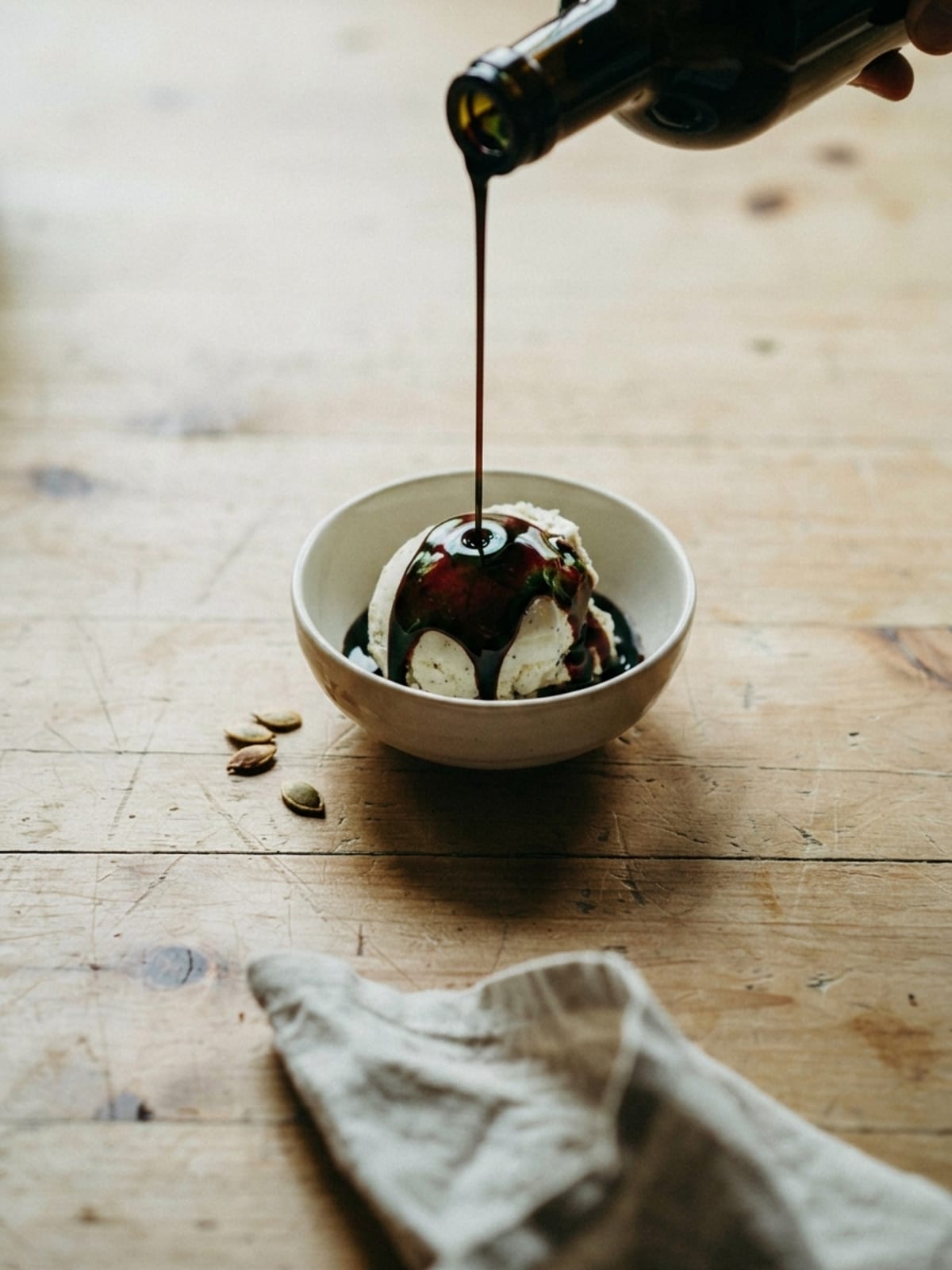
One of the most cited (and initially surprising) uses of pumpkin seed oil in the Styrian culinary tradition is as a sauce for vanilla ice cream. The pairing sounds improbable until you encounter it: the cold, sweet, dairy richness of good vanilla ice cream meeting the warm, nutty, slightly savoury depth of the oil creates a contrast that works on every sensory level. The technique is simply to drizzle a small amount of oil — less than you think you need — over a scoop of vanilla ice cream immediately before serving. It has become a standard item on the dessert menu of Styrian restaurants and one of the more memorable ways to introduce the oil to a sceptical guest.
Further Culinary Uses
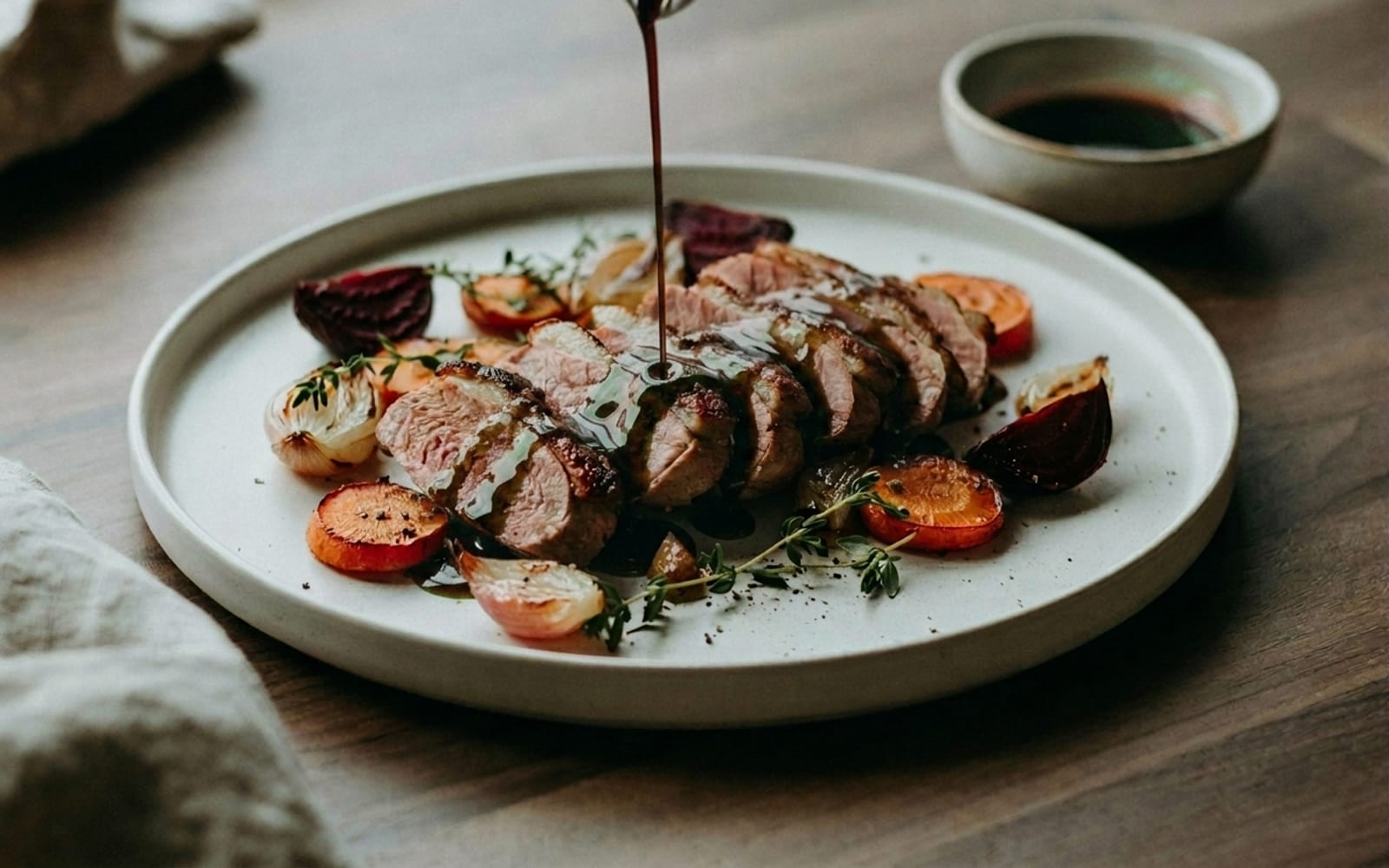
Beyond salads, soups, and the ice cream combination, pumpkin seed oil finds productive uses in a range of contexts. Stirred into hummus before serving, it adds depth without fighting the tahini. Drizzled over roasted beetroot with goat's cheese and walnuts, it ties together a composed salad that needs a complex dressing. Mixed with a mild-flavoured cream cheese as a spread, it creates something richer and more interesting than either ingredient alone. Incorporated into a marinade for room-temperature application (not for high-heat grilling), it contributes character without the risk of burning.
In baking, small quantities of pumpkin seed oil can replace some of the neutral oil in quick breads, muffins, and seed-topped flatbreads, adding a background nuttiness. The flavour is present but more integrated than when the oil is used as a finishing drizzle, making this a different and more subtle deployment.
Pairing with Other Ingredients
Ingredients that pair well with pumpkin seed oil share a quality of earthiness, sweetness, or dairy richness that the oil can complement or contrast. Pumpkin, squash, root vegetables, aged hard cheeses, firm-textured grains, cured meats, smoked fish, apples and pears, honey, and walnuts or pumpkin seeds themselves all sit comfortably alongside the oil. Ingredients to use with more care include strong fresh herbs (the oil can overwhelm delicate flavours like basil), citrus-heavy preparations (the acid can sometimes clash), and very delicately flavoured proteins like white fish where the oil's intensity may dominate rather than complement.
For step-by-step technique and quantities, see how to use pumpkin seed oil in the kitchen.
Taste Styrian oil pressed in the region
Shop now