The Styrian
Pumpkin Seed Oil Journal
The Styrian
Pumpkin Seed Oil Journal
- The Styrian Pumpkin Seed Oil Journal
Shop EN
pumpkinseedoil.ccShop DE
kuerbiskernoel.cc
About
This website also contains some content created with the support of AI.
Pumpkin Seed Oil in the Thermomix
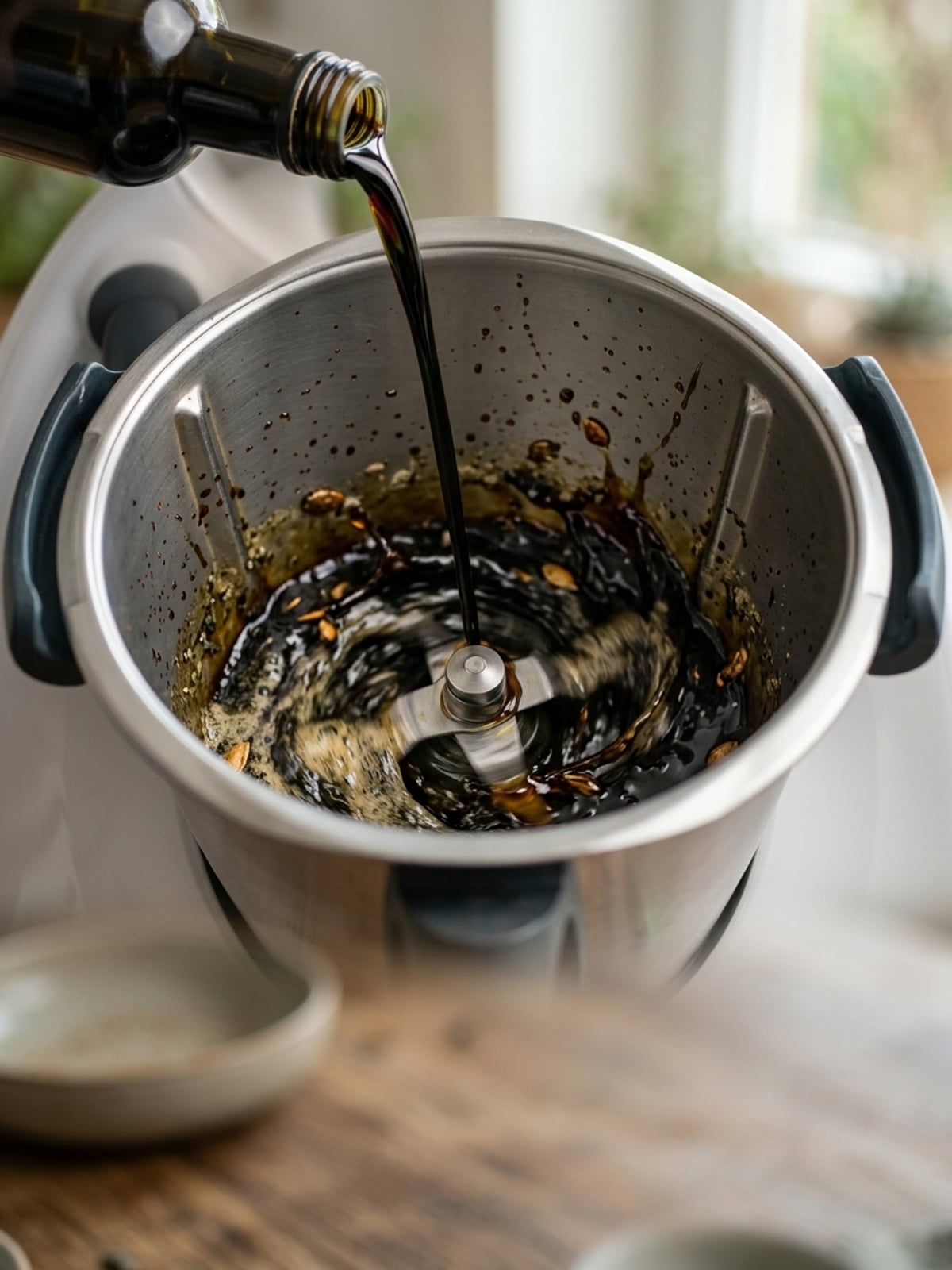
The bowl chops, emulsifies, and holds a mixture together reliably — it just cannot be allowed to get hot when Styrian pumpkin seed oil is involved. Once that lesson sticks, the oil never goes in at the start of a programme, only once the blades have already slowed or come to a full stop. That last moment decides everything: whether a dressing with real roasted aroma ends up on the table, or a sauce that smells of burnt seed instead of a proper roast.
When the Machine Hums and the Oil Waits
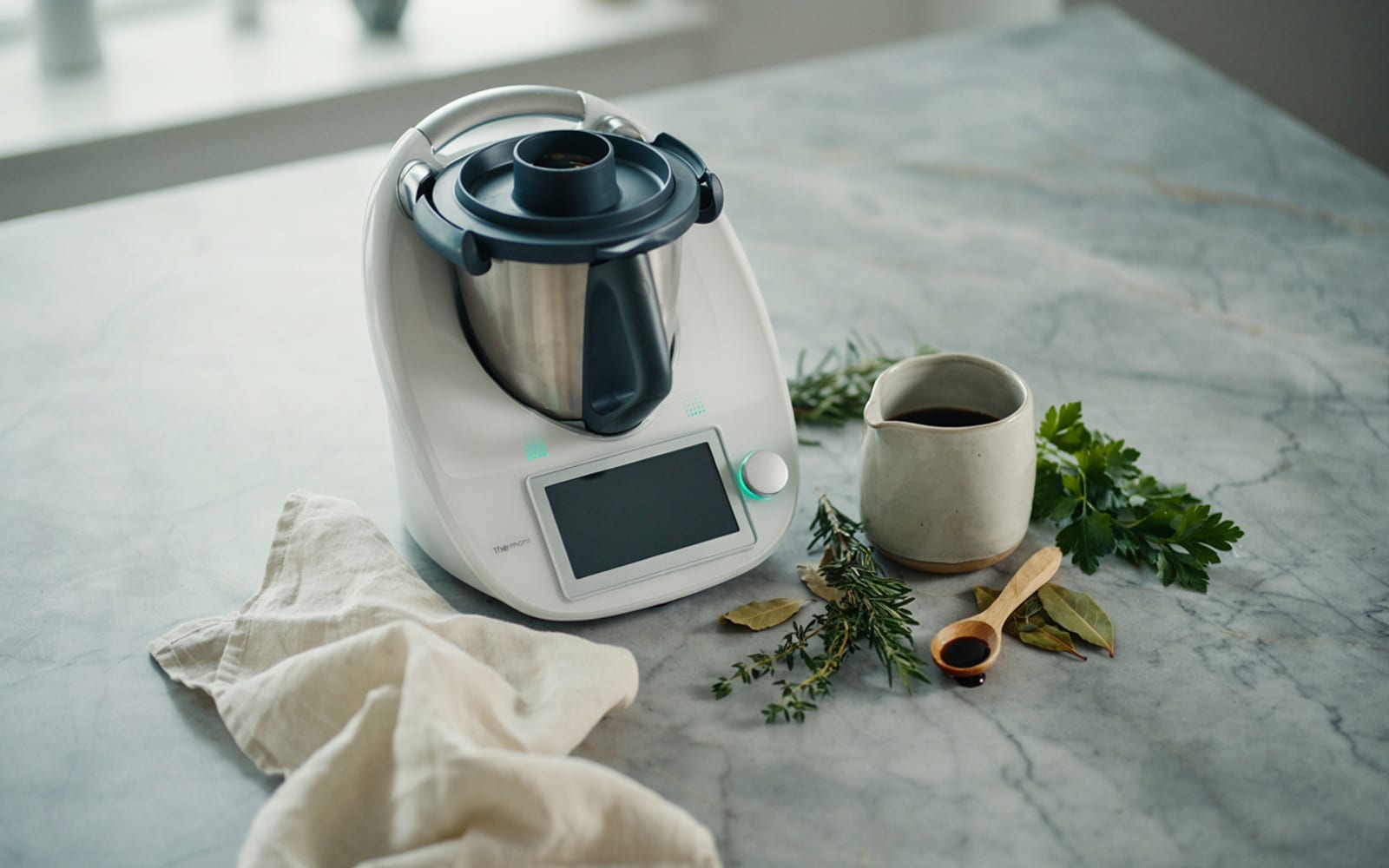
A Thermomix can do a great deal, but patience only exists in it if you programme it in. For pumpkin seed oil, that means one of two things: it arrives late as a finishing touch, or it carries the flavour through a cold sauce that never rises above room temperature. The kitchen rule stays the same whether you stir by hand or press a button — heat destroys the roasted aroma, no matter which appliance produces it. Background on that under cooking with pumpkin seed oil. And real aroma starts with real Styrian oil in the first place — Styrian PGI pumpkin seed oil.
What the Machine Actually Does Well
Cold dressings come together in minutes: vinegar or lemon, salt, a spoonful of mustard for a little grip — then the oil streams in on a low speed until everything is loosely combined. A full emulsion is not even the goal here; in Styrian salad tradition, a dressing is allowed to look slightly "broken" and still taste exactly right. Hummus, bean dips, and yoghurt sauces take the machine well too — as long as the oil goes on top after blending, or gets folded through briefly right at the end. More on this under dressings with pumpkin seed oil and pumpkin seed oil for salad.
Pesto That Gets to Stay Cool
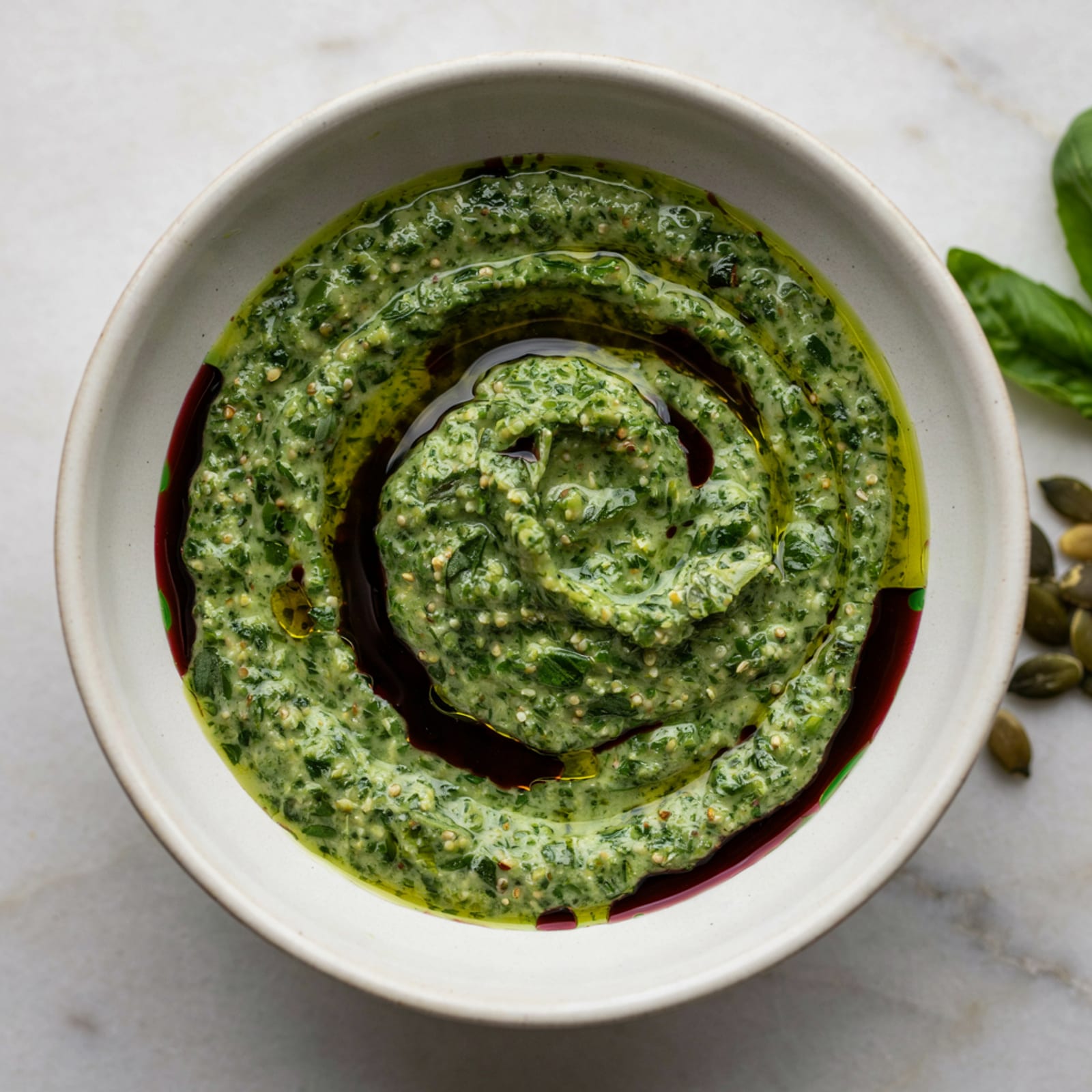
Herbs and garlic go into the bowl first and get chopped briefly. Then come the cheese and already-cooled, toasted pumpkin seeds — anyone wanting more crunch toasts them separately in a dry pan beforehand. Only now does the oil trickle in, in short pulses, so the mixture stays cool and dark green rather than turning warm and mushy. If the paste warms up regardless, a short pause helps more than another pulse. At the end, a last splash of oil folded in by hand with a spatula gives it a final gloss. Proportions and quantities live under pumpkin seed pesto; plated on pasta, under pasta with pumpkin seed pesto.
Where the Heat Is Not Allowed to Go
As a fat for Varoma frying, a hot roasting programme, or the only oil in a long simmer, pumpkin seed oil is not the right choice. Its smoke point sits below that of refined frying oils; the delicate aromatic compounds fade, and the kitchen suddenly smells of burnt seed rather than roast. If a recipe needs a hot cooking fat, butter, ghee, or a high-smoke-point oil takes over that job in the bowl — the base cooks, and only the finished plate gets its splash of pumpkin seed oil away from the heat, exactly as with eggs and soups in a traditional kitchen. No oil film should linger on the lid seal or measuring cup either: dark residue stains plastic and clings to silicone, so wiping the bowl and lid soon after use is worth the habit. If a mark does set, removing pumpkin seed oil stains covers what actually helps.
A Dressing in Just a Few Minutes
Vinegar, salt, pepper, and a pinch of sugar or honey go into the bowl first and mix briefly on a low speed. With the machine running slowly, one to two tablespoons of pumpkin seed oil follow per two salad portions — streamed in, never poured all at once. The machine stops the moment the dressing looks ready to coat leaves, not before and not after. When adjusting the seasoning, add any further oil by the teaspoon, never the tablespoon. Dry leaves then get tossed by hand in a separate bowl — delicate greens have no business anywhere near the blade.
Breakfast, Boards, and a Drop at the End
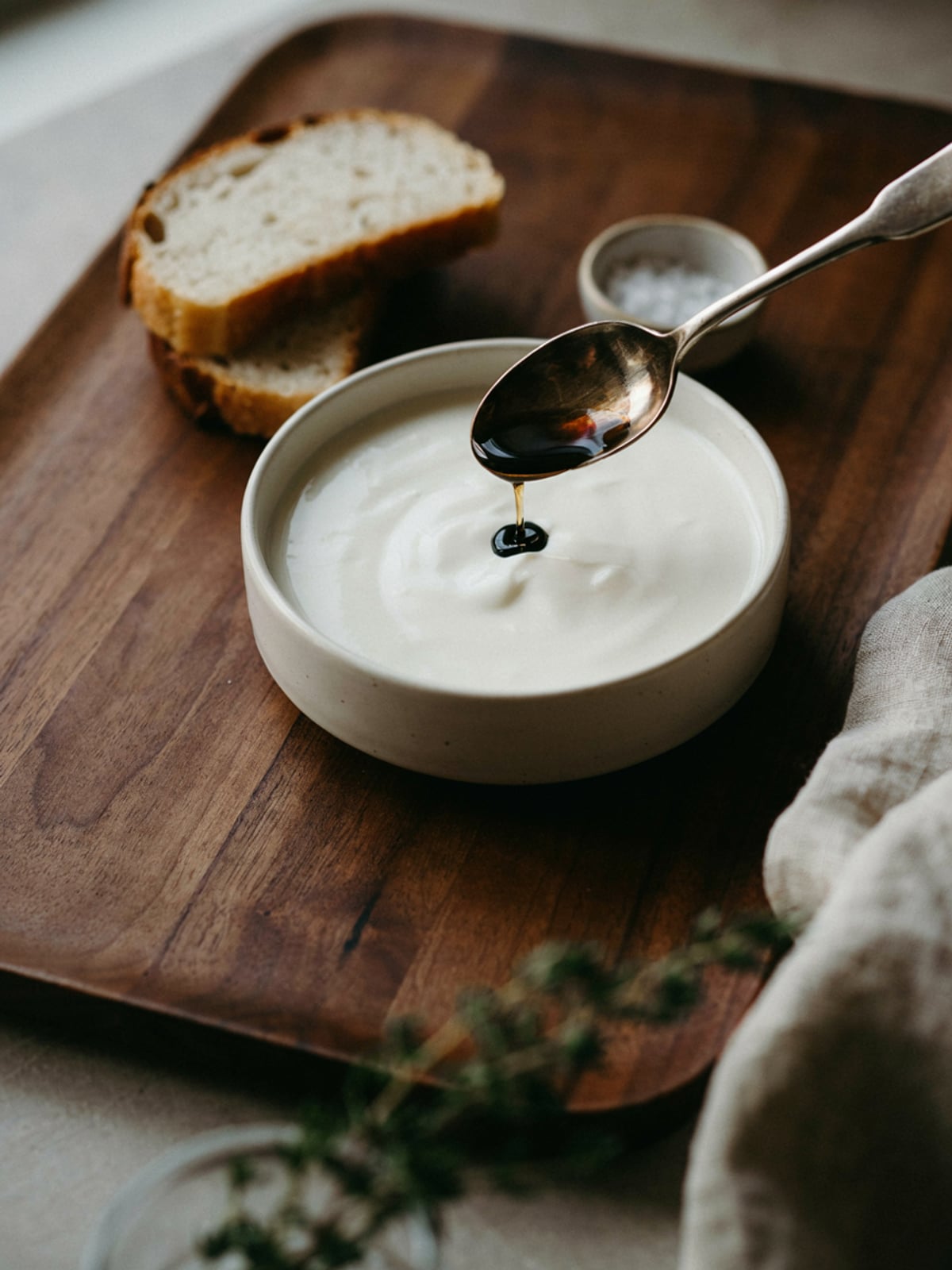
Overnight-oat bases or yoghurt sauces can be blended and chilled entirely without oil; only at serving does the drop of pumpkin seed oil go on top, and the aroma stays noticeably clearer than with any earlier addition. Ideas for that under muesli and yoghurt. For boards and dips, the same principle applies: blend hummus or white bean purée in the bowl, plate it, and only then finish with oil and a few seeds — just as with a cold plate.
Where the Bottle Stands Next to the Machine
The everyday bottle stays capped, away from the Thermomix's warm vent and out of direct sun. Light and heat age the oil faster than a cool cupboard does — storing pumpkin seed oil explains what matters there. Against milder oils, pumpkin seed oil gains character in cold sauces and loses ground on heat tolerance — a trade-off covered in detail under comparing oils.
In Short: What the Machine Can Do, What the Oil Needs
The Thermomix is free to chop, emulsify, and repeat a favourite dressing reliably. Pumpkin seed oil arrives late in that process, runs only in short, cool bursts, and is never asked to stand in for a frying fat. Follow that small order, and there is barely any difference between the appliance and a steady hand — the roasted aroma still lands on the plate exactly as it sat in the bottle.
Taste authentic oil from Styrian mills
Shop now