The Styrian
Pumpkin Seed Oil Journal
The Styrian
Pumpkin Seed Oil Journal
- The Styrian Pumpkin Seed Oil Journal
Shop EN
pumpkinseedoil.ccShop DE
kuerbiskernoel.cc
About
This website also contains some content created with the support of AI.
Organic Pumpkin Seed Oil: What Does the Seal Mean?
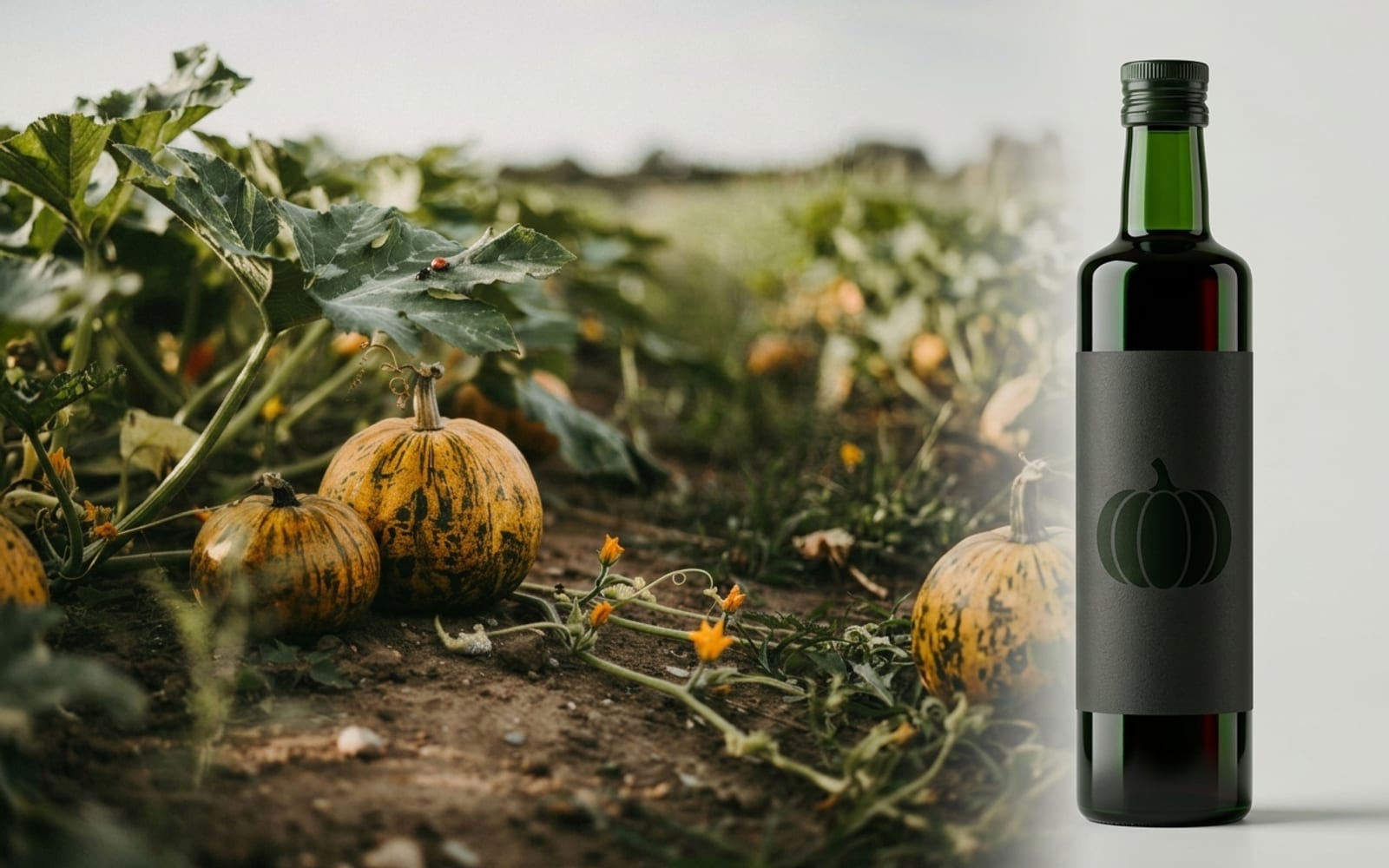
Standing in front of the oil shelf, most people know that brief moment of hesitation. Two dark bottles, nearly the same weight in the hand, and yet only one carries a small green leaf made of stars on its label. The other has no such mark. Open either one and both smell of roasted pumpkin seed. Both are Styrian pumpkin seed oil. And yet a question sits right there that many only answer properly once they're home: what exactly does "organic" mean here — and how does it relate to the PGI seal that so often sits right beside it?
Two seals, two entirely different questions
It's tempting to think "organic" and "genuinely Styrian" are just two angles on the same idea. They aren't. The PGI certification answers a question about origin and method: did the seeds grow within the defined Styrian region, and was the oil pressed according to the traditional specification? It says nothing about farming practice. Organic certification asks something entirely different: did the harvest involve pesticides, synthetic fertiliser, or genetically modified seed? It says nothing about origin or pressing method in return. A bottle can carry both, only one of the two — or neither.
What the EU organic mark actually requires
Before a farm can carry the organic logo, patience comes first. An approved control body inspects fields, storage rooms, and — where oil is pressed — the mill itself, not once but repeatedly, year after year. In between lies a multi-year conversion period, during which a field must already follow the strict rules while its harvest still can't be sold as organic. Only after that period does the soil count as converted. Producers often put it plainly: the checking starts long before the first organic harvest ever comes in. That's exactly what sits behind the small mark on the label.
The green leaf made of twelve stars

Look closely and this mark isn't a random pattern. Twelve stars arranged into a leaf shape on rich green — that's the entire design of the EU organic logo, and exactly why it's easy to remember. It doesn't stand for a single vague word like "natural" or "sustainable," terms that carry no legal weight on a label at all. It stands for the checked chain behind it: control body, conversion period, repeat visits to the field. Once that leaf sits on a bottle, it's worth a second glance at the code number right beside it — that number reveals exactly which body carried out the inspection.
A field farmed differently
On a converted field, the working day looks different from a conventional one. Instead of spray, crop rotation, mechanical hoeing, and hand-pulled weeds take over — slower, but effective. Compost and approved mineral additives replace synthetic fertiliser. Growers here often say the Styrian oil pumpkin suits this path well: compared with many other field crops, it already manages reasonably well without heavy chemical input. For some of the region's smaller family farms, that made conversion a step that was actually achievable. More on the plant itself sits under the Styrian oil pumpkin.
What stays the same in roasting and pressing
Out in the field, plenty changes. Inside the mill, much stays exactly as it was. Whether the seeds are organic-certified or not has no bearing on how they're roasted and pressed — that's governed, where a mill follows it, solely by the PGI specification. The same mill often presses its organic-certified seeds through exactly the same roasting method as its conventional ones — press, tank, settle, bottle — and the oil that lands in the glass tastes barely different from its counterpart from the same mill. The difference sits entirely upstream, in the field, not in the bottle.
Back at your own kitchen table
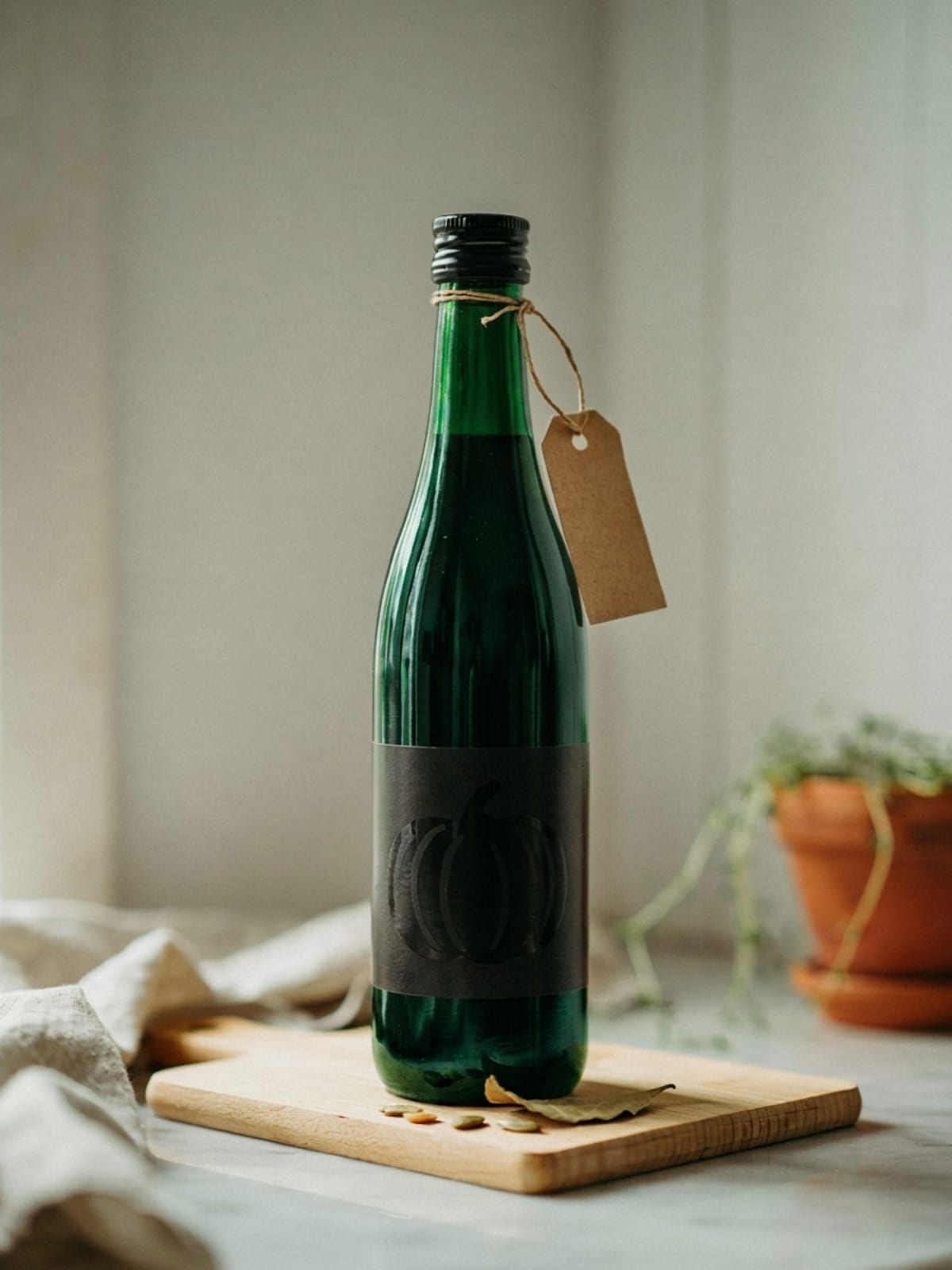
Eventually the bottle leaves the shelf for your own counter, the cap already opened once, the roasted smell already filling the kitchen. This is exactly where it shows whether reading the label paid off: the organic leaf and its code number together, not just a marketing word with no legal meaning behind it. Anyone who has checked this consciously once tends to do it almost automatically the next time they reach for a bottle.
So is organic the "better" oil?
Whether organic certification matters to you comes down to your own priorities around farming practice — not to any claim about the finished oil's taste or nutrition. A conventionally grown, PGI-certified oil from a careful, traceable mill can be just as good as an organic one. The two seals simply check different things. Anyone who values both answers is well served by a bottle carrying both marks together — and now knows exactly why that small green leaf sits there.
Get roasted Styrian oil for ice cream
Shop now