The Styrian
Pumpkin Seed Oil Journal
The Styrian
Pumpkin Seed Oil Journal
- The Styrian Pumpkin Seed Oil Journal
Shop EN
pumpkinseedoil.ccShop DE
kuerbiskernoel.cc
About
This website also contains some content created with the support of AI.
The Styrian Oil Pumpkin
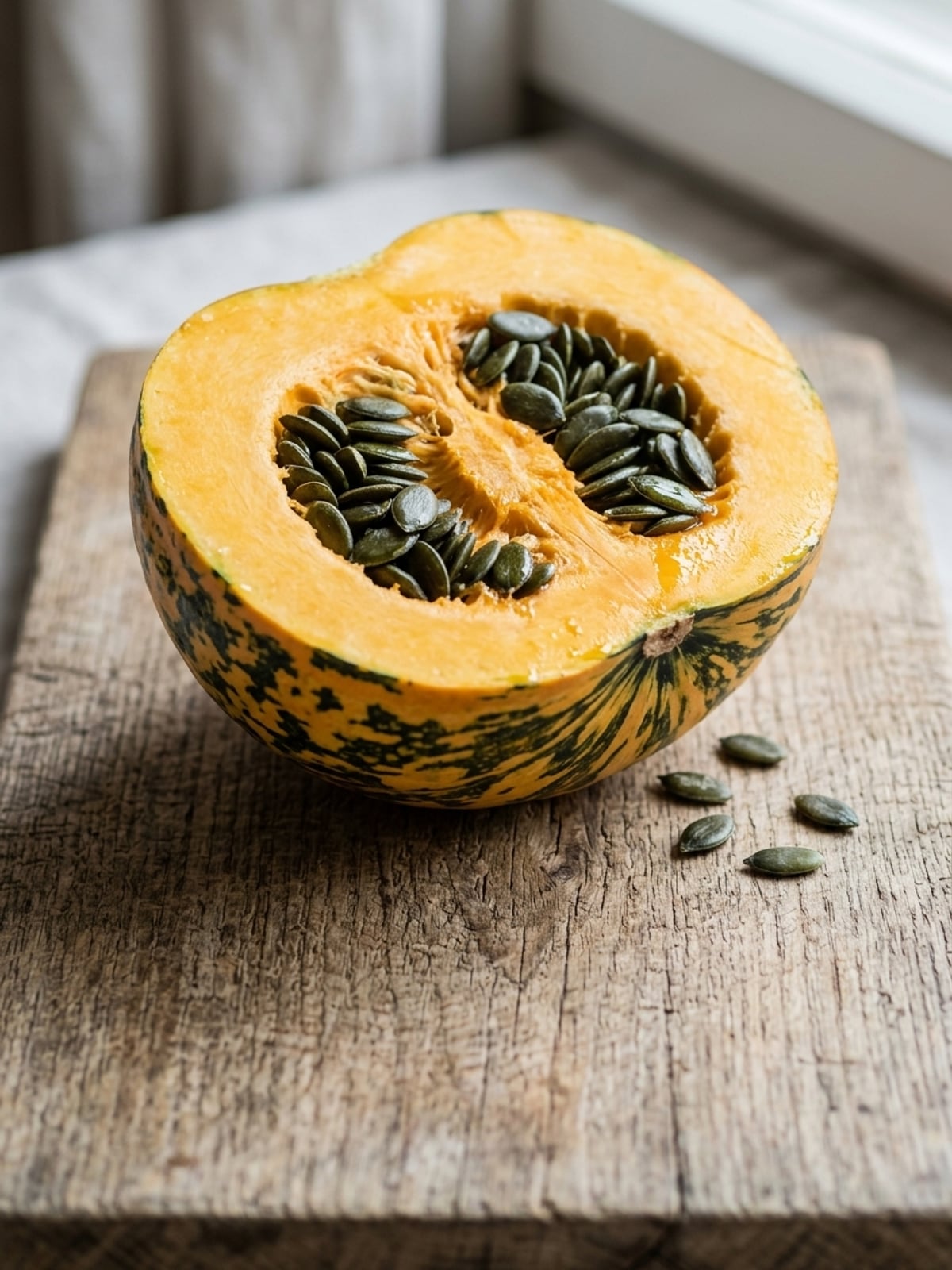
A small, dark green shape rests in an open palm. Almost soft to the touch, barely heavier than a coin. No hard casing, no pale rim — just a thin, deep green skin. What looks so unremarkable is where everything starts. Without this particular seed, there would be no Styrian pumpkin seed oil at all — and it explains most of what you notice the moment the bottle is opened.
A Plant That Grew Only Here
The Styrian oil pumpkin carries its origin in its own name: Cucurbita pepo var. styriaca. The "styriaca" points to Styria, where generations of growers kept back the seeds that turned out best formed — hull-less, oil-rich, deep green — and planted those again the following year. No single decision shaped this plant; hundreds of harvests did. It grows nowhere in the wild. It is the outcome of patient agricultural selection stretched across more than a hundred years. Courgettes and many table pumpkins share the same species — but what makes this particular Styrian variety distinct is hidden inside, and only shows itself once the fruit is split open.
When the Field Begins to Rustle
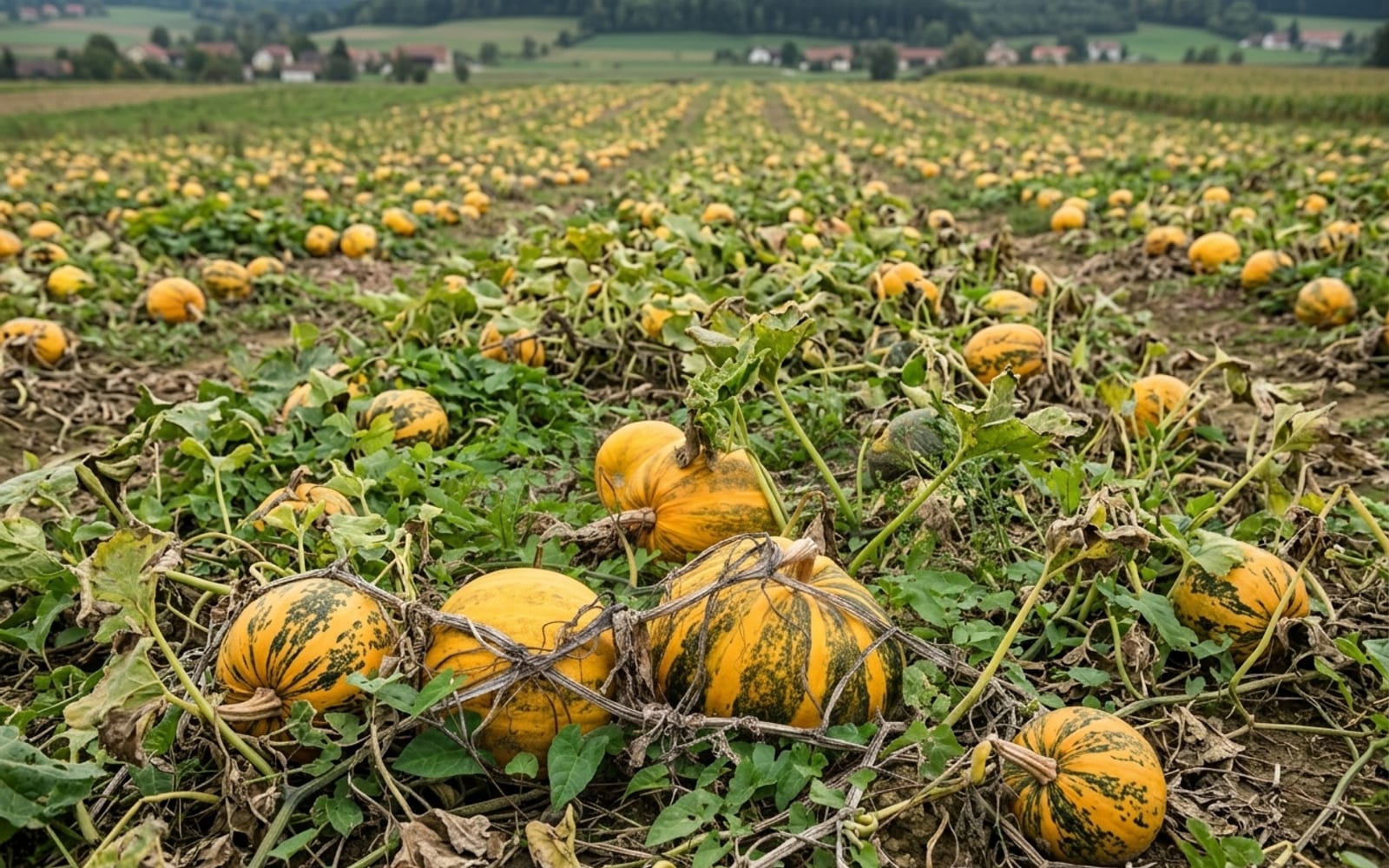
Early summer changes the field completely. Long vines spread out, broad leaves turn toward the sun, and yellow-orange blossoms open for a few hours each morning. Then the long, quiet ripening begins. Much of Styria offers good conditions for it: free-draining soil, warm summers, rain arriving roughly when it's needed. The plant needs room — its vines sprawl wide — which is one reason real oil is never a cheap bulk product. Walk through a field like this and you hear the leaves rustle low in the wind. The smell is cool and green, with a faint edge of freshly cut grass underneath. No trace of oil yet. Everything is still waiting on autumn.
A Seed Without a Shell
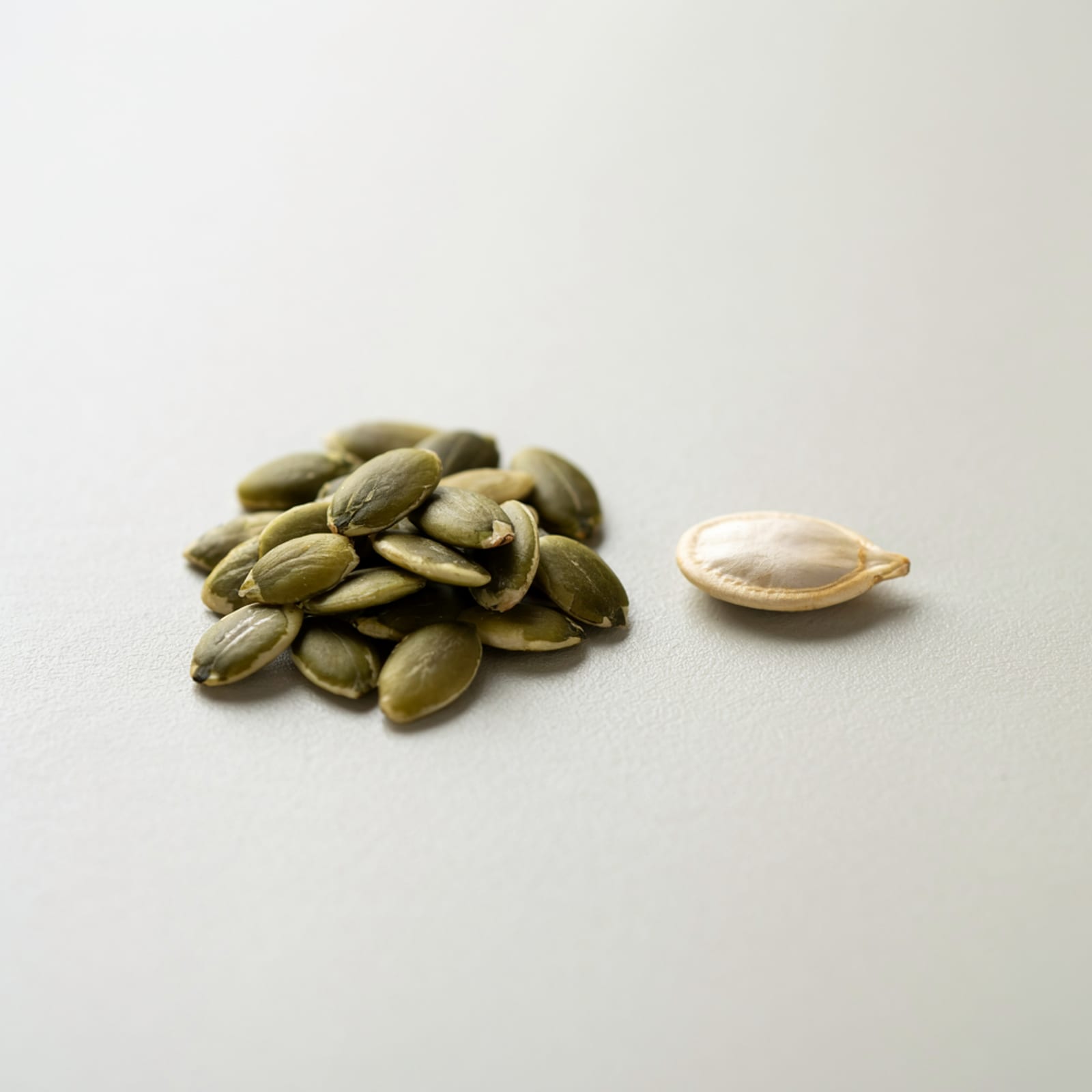
Set a Styrian oil pumpkin seed beside an ordinary pumpkin seed and the difference is obvious at a glance. One side: cream-coloured, tightly wrapped, with a pale rim. The other: deep green, almost olive, no hard outer casing at all — just that thin, dark skin holding the kernel together. It feels different, looks different, smells different. That missing shell is the whole distinction. The oil pumpkin seed does not need to be freed from a fibrous casing before it reaches the press. It carries its oil, its colour, and its aroma with it directly, concentrated just beneath the green skin.
What the Green Skin Carries
Chlorophyll and carotenoids sit densely in that fine seed skin. Pressing releases both into the oil and gives it its signature colour: almost black-green in the bottle, deep ruby when held to the light. The nutty aroma has its roots in the raw seed too — the natural precursors for that roasted depth are already there long before the seed ever reaches the mill. A well-ripened seed already smells faintly of fresh nuts, even raw. You often hear it said: "The oil is decided out in the field." Meaning exactly that: whatever the seed carries inside eventually arrives in the bottle.
Vintage, Soil, and Weather
People who know real pumpkin seed oil sometimes talk about vintages, much like wine — and the comparison holds up better than it sounds. A warm, wetter summer lets the seeds ripen fuller and richer in oil. A drier year can concentrate the aroma, sometimes even sharpen it. Different lines of the Styrian oil pumpkin have been developed over a long stretch of time: higher yield, stronger resistance to fungal disease, more oil per seed. What soil, position, and weather add up to in any given year shapes how the finished oil tastes. Growers who know their fields well watch them closely — and they know that no two years are quite the same.
Autumn: When the Fruit Breaks Open
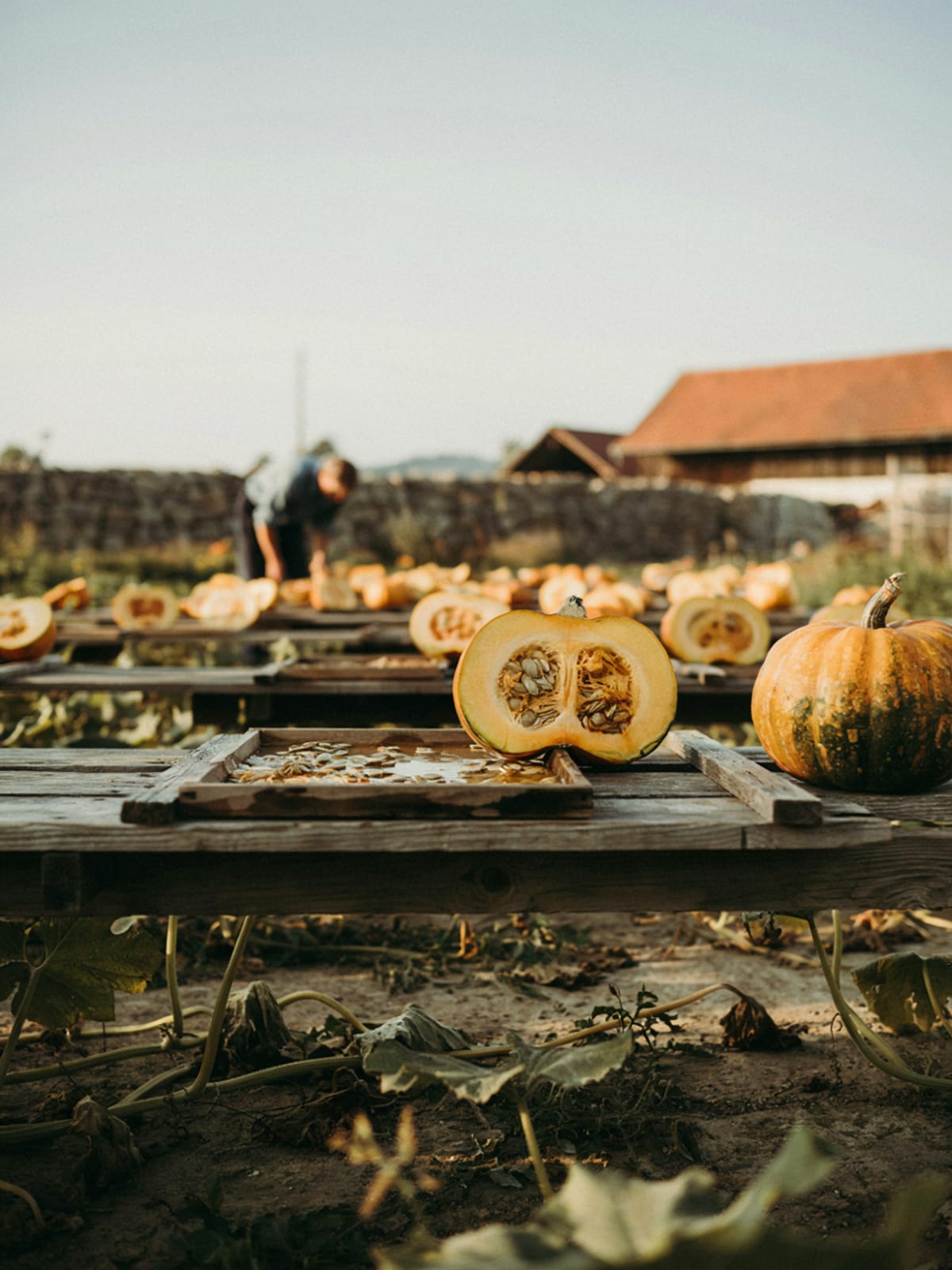
In autumn, once the pumpkins lie ripe on the ground, the real work starts. The fruit is cut open, the orange flesh laid bare, dark green seeds embedded inside. The seeds are pulled free and spread out to dry. Whoever does this work knows the smell of those hours: fruity, earthy, faintly sweet. But rushing is risky. Seeds that are too damp store and press badly. Dried too fast under too much heat, and the aromatic compounds vanish before the mill ever gets a chance at them. Part of the later quality is decided right here — quietly, almost invisibly, still out on the field.
From Harvest to Bottle
The dried seeds travel, protected, to the oil mill. Some producers press soon after the season; others work through the whole winter. How fresh the raw material was and how carefully it was handled — both show up later in the bottle. In the smell, the moment you twist off the cap. In the taste, when the dark green oil runs over a salad or settles onto fresh bread. What you experience then — that nutty, faintly earthy depth — began with a small green seed on a Styrian field. It has come a long way. You can taste it. How that seed becomes oil is covered under what is Styrian pumpkin seed oil, and the different styles it can take are under types of pumpkin seed oil.
Order Styrian oil from Austria’s mills
Shop now