The Styrian
Pumpkin Seed Oil Journal
The Styrian
Pumpkin Seed Oil Journal
- The Styrian Pumpkin Seed Oil Journal
Shop EN
pumpkinseedoil.ccShop DE
kuerbiskernoel.cc
About
This website also contains some content created with the support of AI.
Pumpkin Seed Oil for Salad
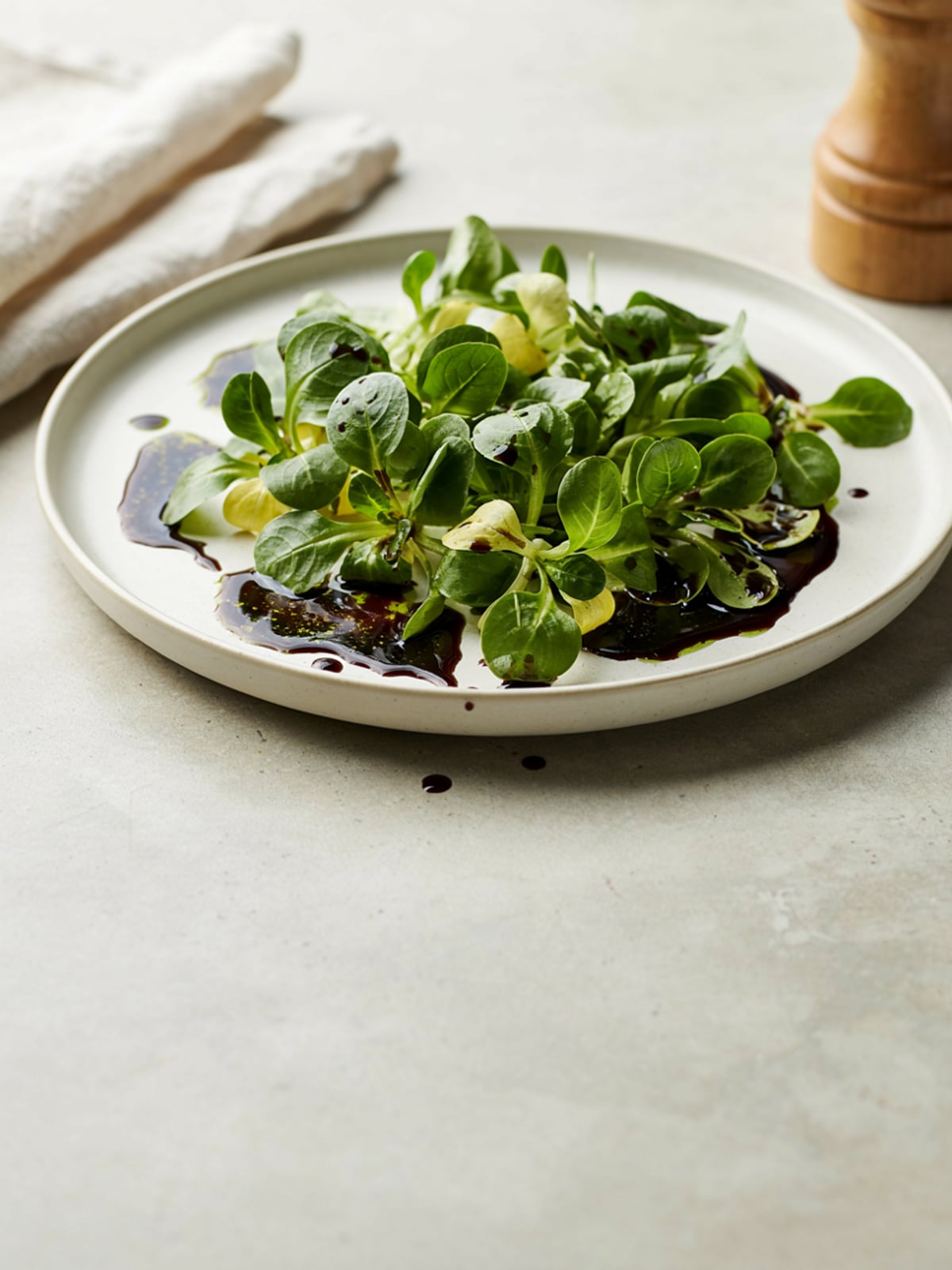
Few dishes show what good pumpkin seed oil for salad can do as clearly as a simple bowl of leaves. A little dark oil, a mild vinegar, fresh ingredients — that is really all it takes. The only thing that matters is quantity: Styrian pumpkin seed oil tastes intense, and used sparingly it ties the ingredients together instead of drowning everything else out.
Vinegar Brings the Balance
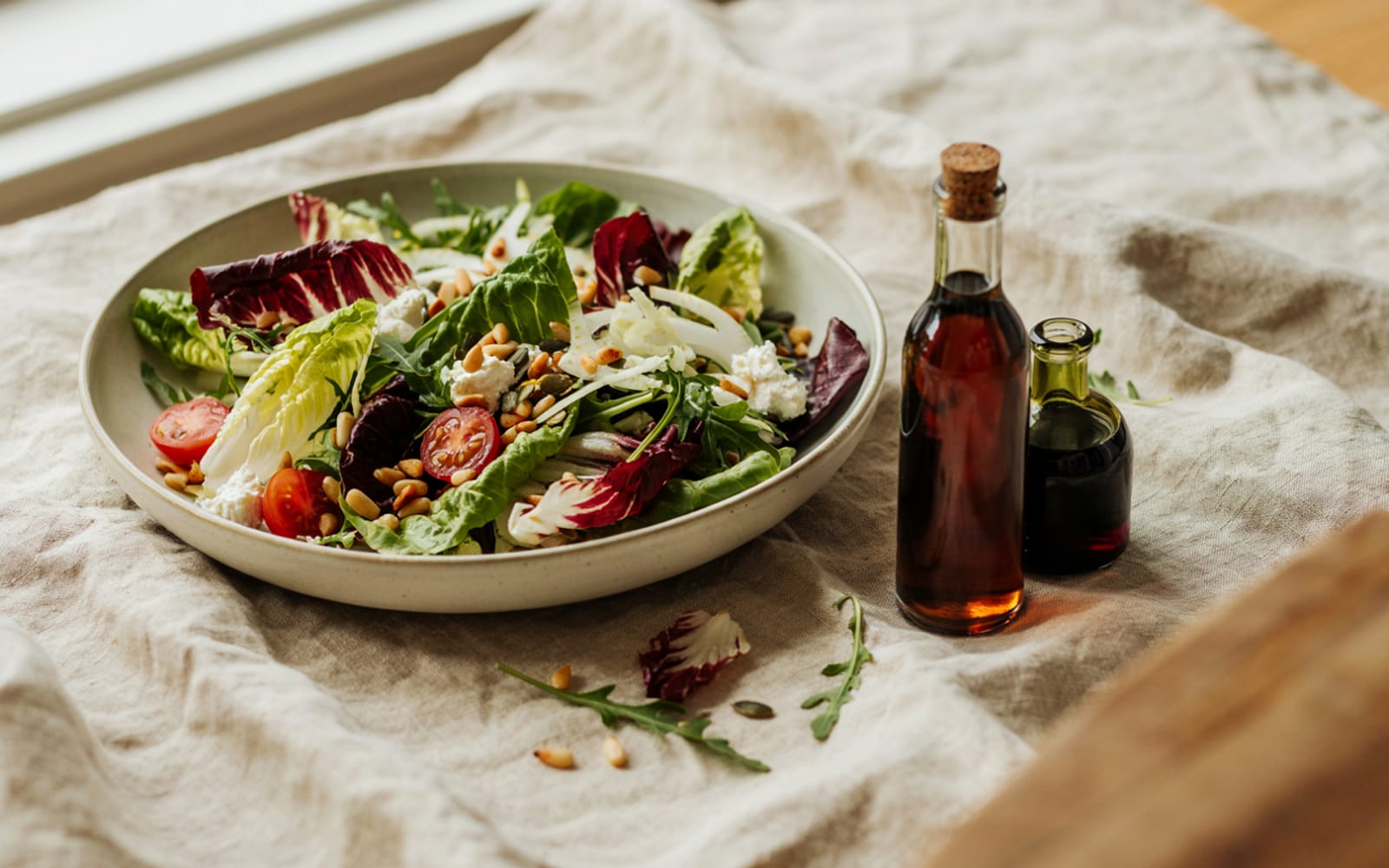
Without acid, pumpkin seed oil turns heavy fast and starts to taste a little flat. Mild apple cider vinegar is the traditional choice — its fruitiness rounds out the oil's nutty depth. As a rule of thumb, two teaspoons of vinegar to one tablespoon of oil works well. White wine vinegar is a solid alternative, and lemon suits bean, lentil or fish salads especially. A very sweet, dark balsamic tends to push too hard into the foreground and leaves the oil almost no room.
How Much Oil Does a Salad Need
For a salad for two with about a hundred grams of leaves, one tablespoon of pumpkin seed oil is a good place to start. Once tossed, it coats every surface, so more turns heavy fast. For a heartier salad with potatoes, cheese or legumes, that can rise to one and a half tablespoons. Even then, nothing gets poured on blindly — taste first, then decide.
Styrian Potato Salad
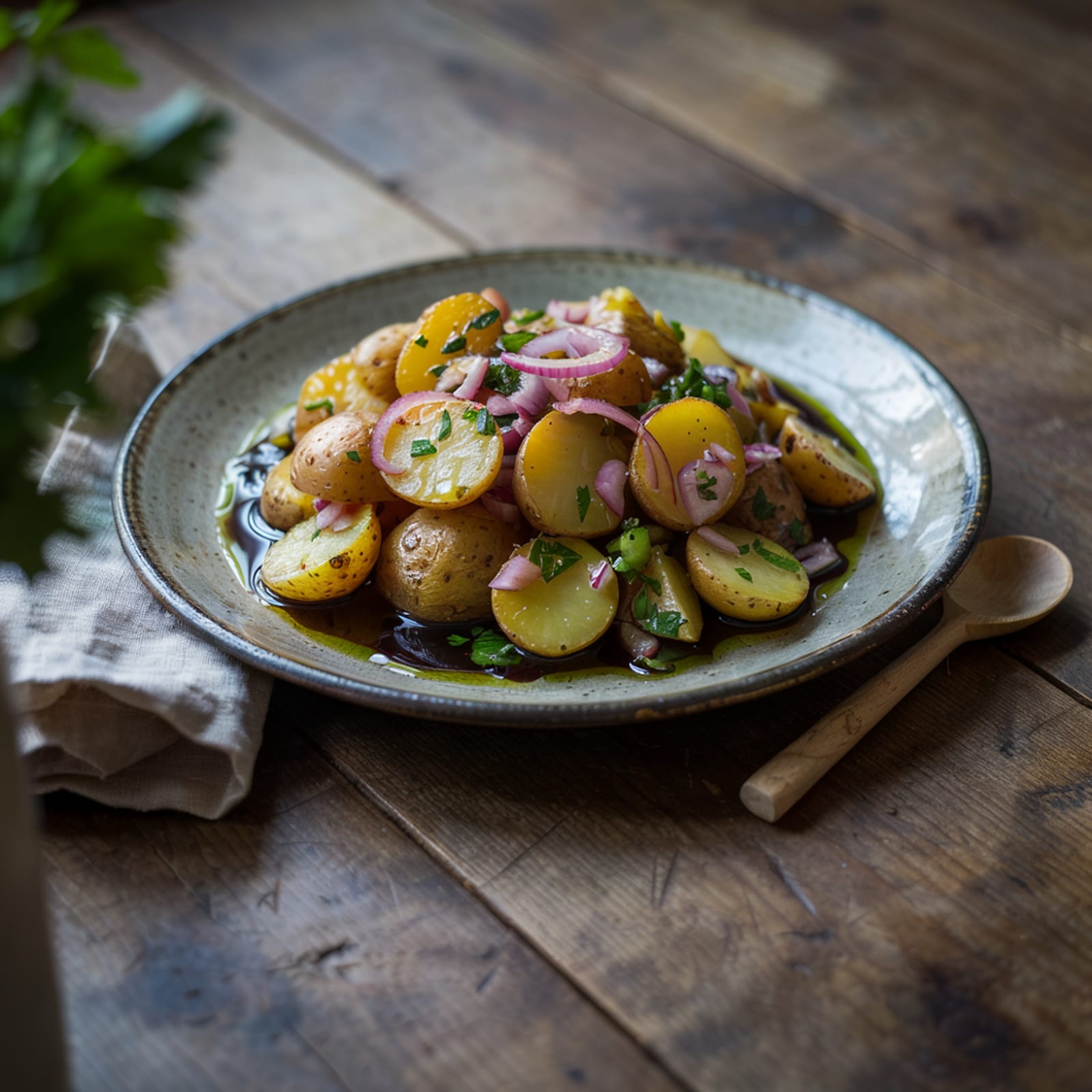
For five hundred grams of waxy, still-warm potatoes, whisk two tablespoons of pumpkin seed oil with three tablespoons of apple cider vinegar, two tablespoons of warm vegetable stock, finely diced red onion, salt and pepper into a dressing, then pour it over the sliced potatoes. Folded through carefully, it only needs a short rest after that: after fifteen minutes the dressing has soaked in, and the potatoes have taken on the flavour instead of leaving it pooled at the bottom of the bowl.
Which Leaves Work Best
Lamb's lettuce is the classic partner — its soft, slightly earthy note suits the oil's roasted character perfectly. Rocket brings pepper and freshness, radicchio and endive add a pleasant bitterness. Butter lettuce and romaine work too, best with an especially light hand. Iceberg, on the other hand, usually offers too little flavour of its own and fades next to such a strong oil.
Good Additions
Hard-boiled eggs, feta or mild goat's cheese give salads substance, roasted pumpkin seeds add crunch, and apple or pear slices bring freshness back. White beans and lentils turn a side salad into a full meal. Caution is only needed with heavily smoked ingredients and blue cheese — they compete with the oil's roasted character instead of supporting it.
The Last Step: Dressing and Serving
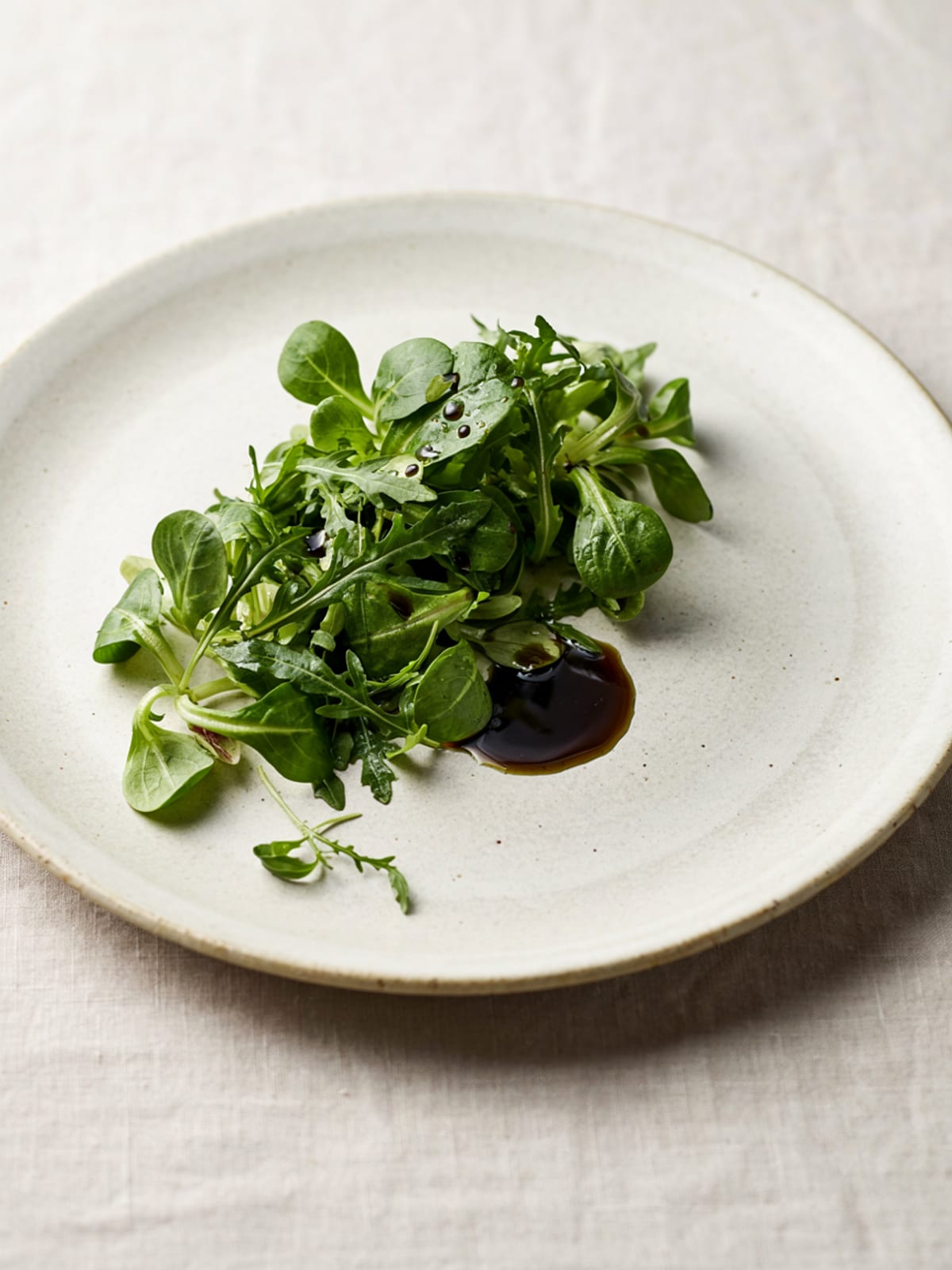
The nearly black-green oil looks striking on pale leaves, so it is allowed to sit visibly rather than being stirred through completely. The leaves should be washed and genuinely dry beforehand, since leftover water dilutes every drop and makes it slide off instead of clinging. Oil and vinegar go in at the very last moment, the salad is tossed only a few times, and it goes straight to the table — that is the only way the leaves stay crisp and every drop stays visible.
A Salad for Every Season
Spring suits radish, cress and young leaves; summer brings lightness with cucumber, tomato and basil. Autumn and winter call for beetroot, apple, lentils or warm potatoes. The underlying idea stays the same throughout: one fresh element, a pleasant sharpness, and a small amount of oil. That makes it easy to shop with the seasons while keeping a recognisable flavour on the table — just as good alongside pan-fried fish as it is as a light main with egg and bread.
Preparing Salad Without the Stress
Leaves and vegetables can be washed earlier in the day, as long as they are stored separately and kept dry. Potatoes can be cooked ahead too, but they should still hold a little warmth when the dressing goes on. Vinegar, salt and oil come out only right before eating — after that, it takes just a few minutes to bring everything together. This order keeps the flavour clear and stops the leaves from turning soft and limp. For more ideas, see dressings with pumpkin seed oil and the introduction to using pumpkin seed oil in the kitchen.
Buy genuine Steirisches Kürbiskernöl
Shop now