The Styrian
Pumpkin Seed Oil Journal
The Styrian
Pumpkin Seed Oil Journal
- The Styrian Pumpkin Seed Oil Journal
Shop EN
pumpkinseedoil.ccShop DE
kuerbiskernoel.cc
About
This website also contains some content created with the support of AI.
How Much Pumpkin Seed Oil per Salad?
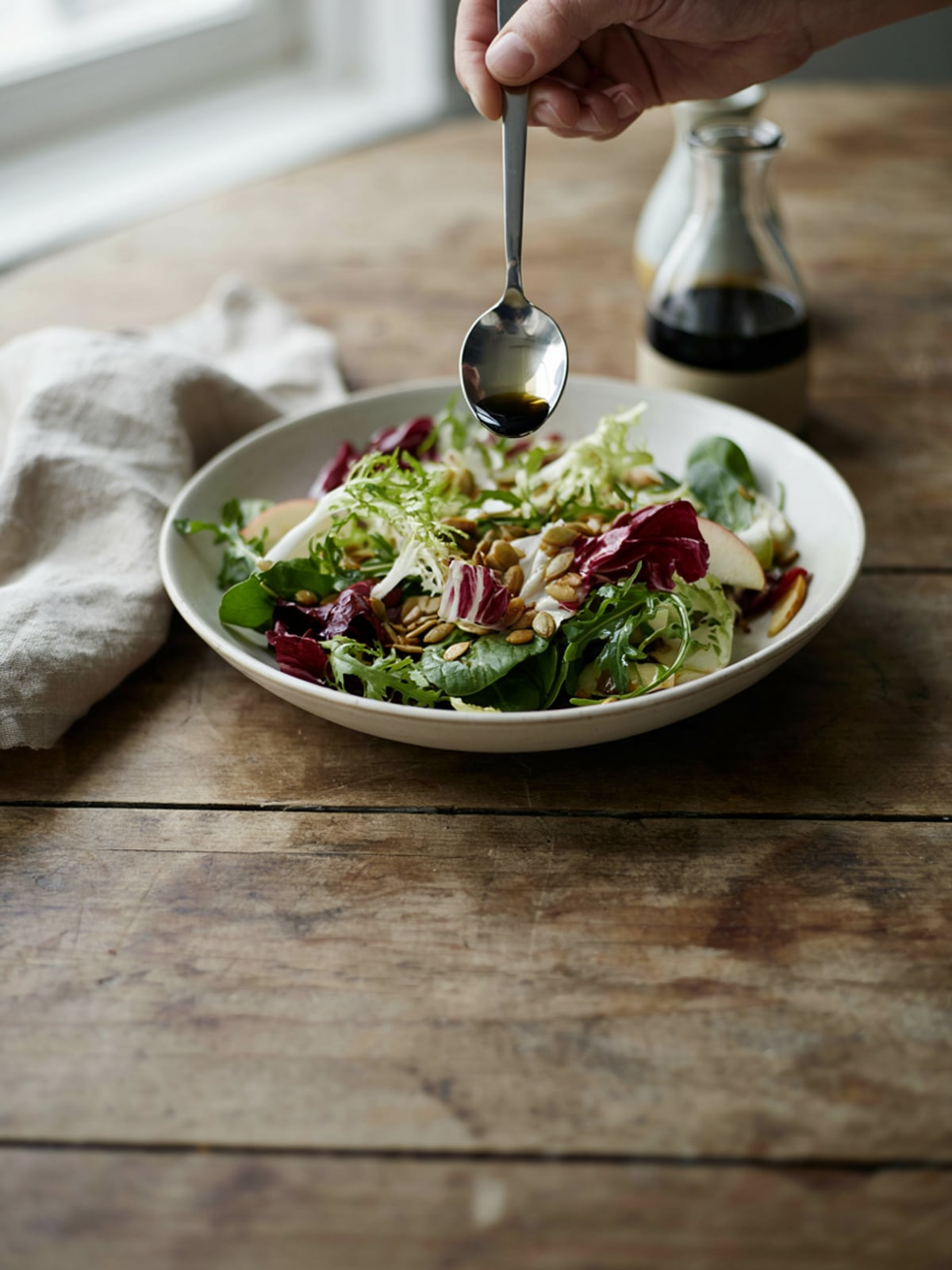
Over the salad bowl, the hand pauses for a moment. How much of this dark, intense oil does a plate actually need? Too little, and the salad stays silent. Too much, and suddenly only the oil itself speaks. The short answer sits somewhere in between: a teaspoon per person for a side salad, one to two for a large bowl. Styrian pumpkin seed oil is concentrated — more is rarely automatically better.
Why Less Is Enough
This oil is roasted specifically for aroma, not pressed for volume. Even a thin spiral over tomatoes, cucumber, or mixed greens carries further than a neutral salad oil ever could. Flood the bowl instead, and it drowns out every other ingredient — wasting a bottle that's anything but cheap (why so expensive?). Pairings that respect this intensity: flavour pairings and cold plates.
Dressing Style
At many Styrian tables, the oil arrives straight and simple: a splash over the salad, vinegar or apple vinegar alongside, a pinch of salt — done. Others prefer to whisk a light vinaigrette from a milder oil and finish only at the end with the pumpkin seed oil. Both paths reach the same place. Anyone building a whole vinaigrette from it alone should keep the fat modest — the roasted flavour concentrates faster than expected.
Portion Guide
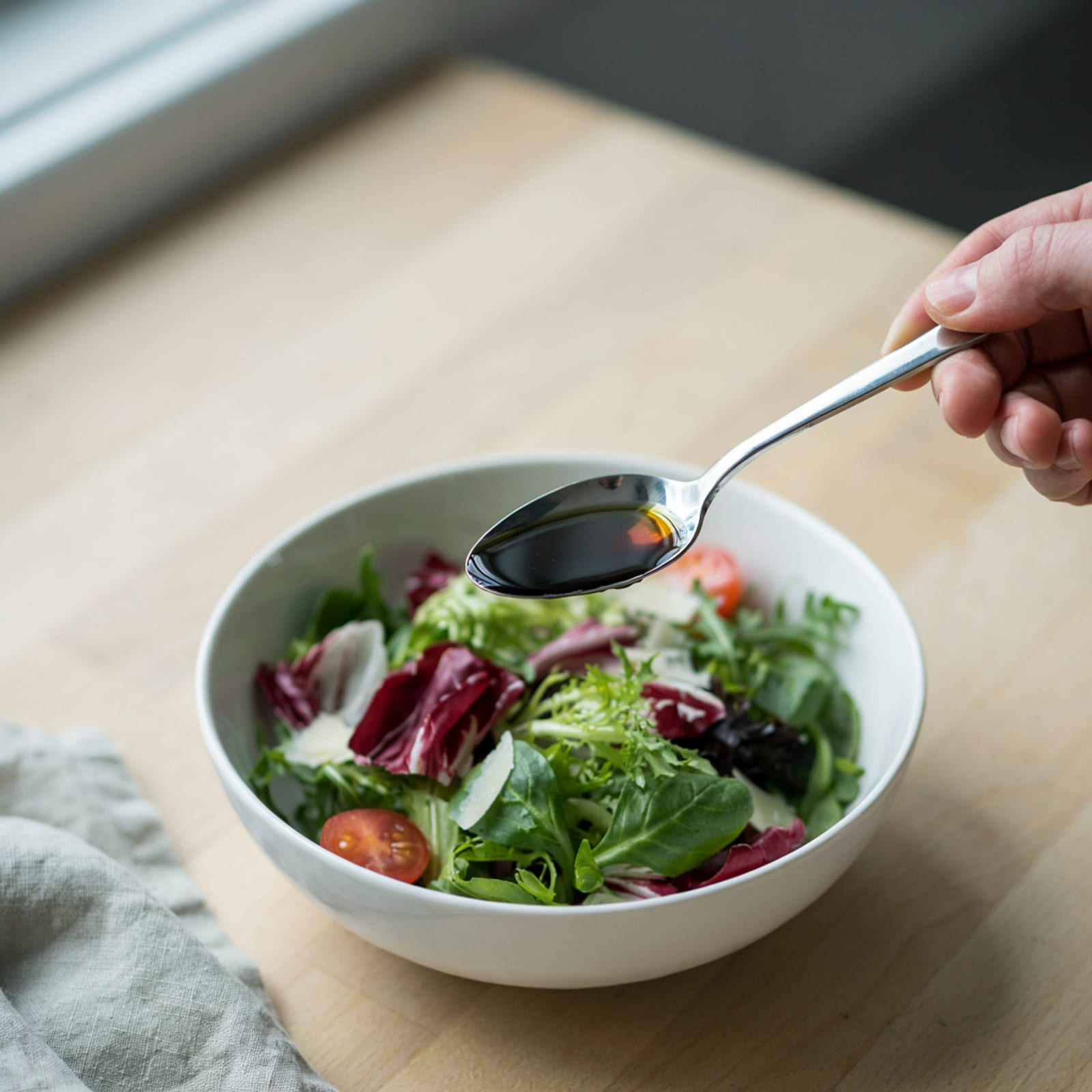
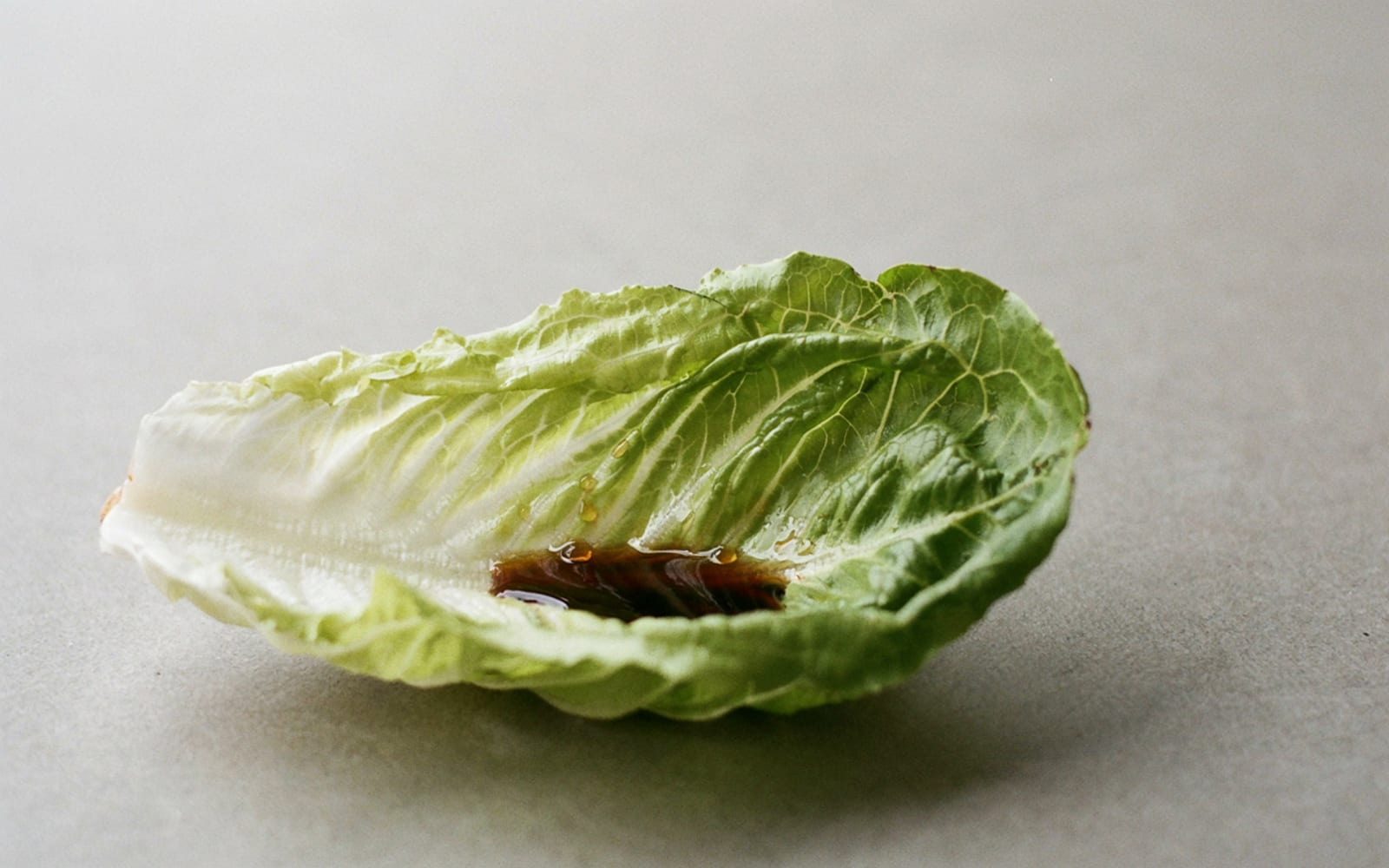
As a rule of thumb: about one teaspoon covers a single side salad. A large bowl as a main course can take one to two teaspoons. For a shared platter for four, start with one tablespoon total, toss, taste, and add more if needed.
- Side salad for one: about 1 teaspoon
- Large bowl as a main course: 1–2 teaspoons
- Shared platter for four: 1 tablespoon to start, then taste and adjust
Seeds on top add crunch without needing more oil. And as always with heat: finish cold or warm plates, never fry the dressing fat itself (can you cook with it?, cooking).
When It Tastes Too Strong
If the last salad tasted too intense, the fix is simple: use a little less next time, or whisk most of the dressing from a mild oil and save the pumpkin seed oil for the final splash only. Freshness plays its own role here too — tired oil tastes sharper than nutty (rancid smell). Anyone also watching dietary questions finds answers at vegan and gluten free?
A Quick Habit
Measure once or twice, and after that a practiced eye is enough. The goal stays green-gold accents on the leaves — not a glossy coat that makes every leaf look the same. More kitchen questions sit in the FAQ hub and on the kitchen page.
Acid and Salt Help
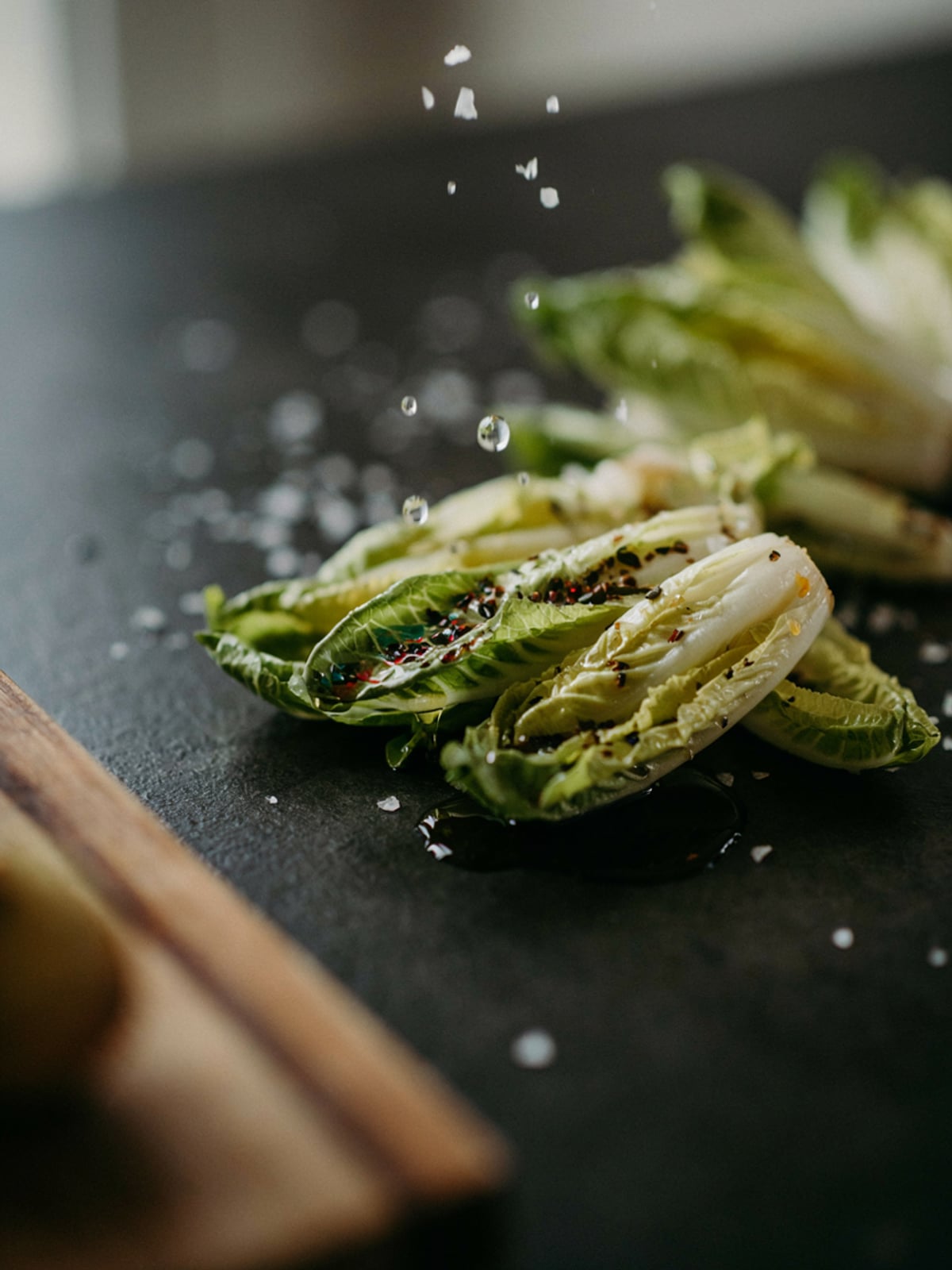
A splash of vinegar or lemon and a pinch of salt let even modest amounts of oil show their full effect. Skip that acidity, and some cooks instinctively reach for more oil because “there's still not enough flavour” — drowning out exactly the green note that was meant to lead. The better path: find the balance of acid and salt first, then raise the oil amount gently only if still needed.
Buffet Bowls
For a shared bowl serving many guests, a light initial dressing and a quick taste test are enough — after that, the bottle simply belongs on the table so everyone can drizzle their own. That way even the leftovers don't end up buried under a heavy coat of oil, and still taste as fresh as the first plate.
Read next
If this answer only settles half the question, glance at neighbouring FAQs — rancid smell, can you cook with it?, does it need the fridge? — and the kitchen storage pages storage and shelf life, instead of guessing. Freshness, heat and portion size usually travel together. When a new question pops up mid-cooking, start again from the FAQ hub.
Get roasted Styrian oil for ice cream
Shop now