The Styrian
Pumpkin Seed Oil Journal
The Styrian
Pumpkin Seed Oil Journal
- The Styrian Pumpkin Seed Oil Journal
Shop EN
pumpkinseedoil.ccShop DE
kuerbiskernoel.cc
About
This website also contains some content created with the support of AI.
Styrian Oil Mills and Producers
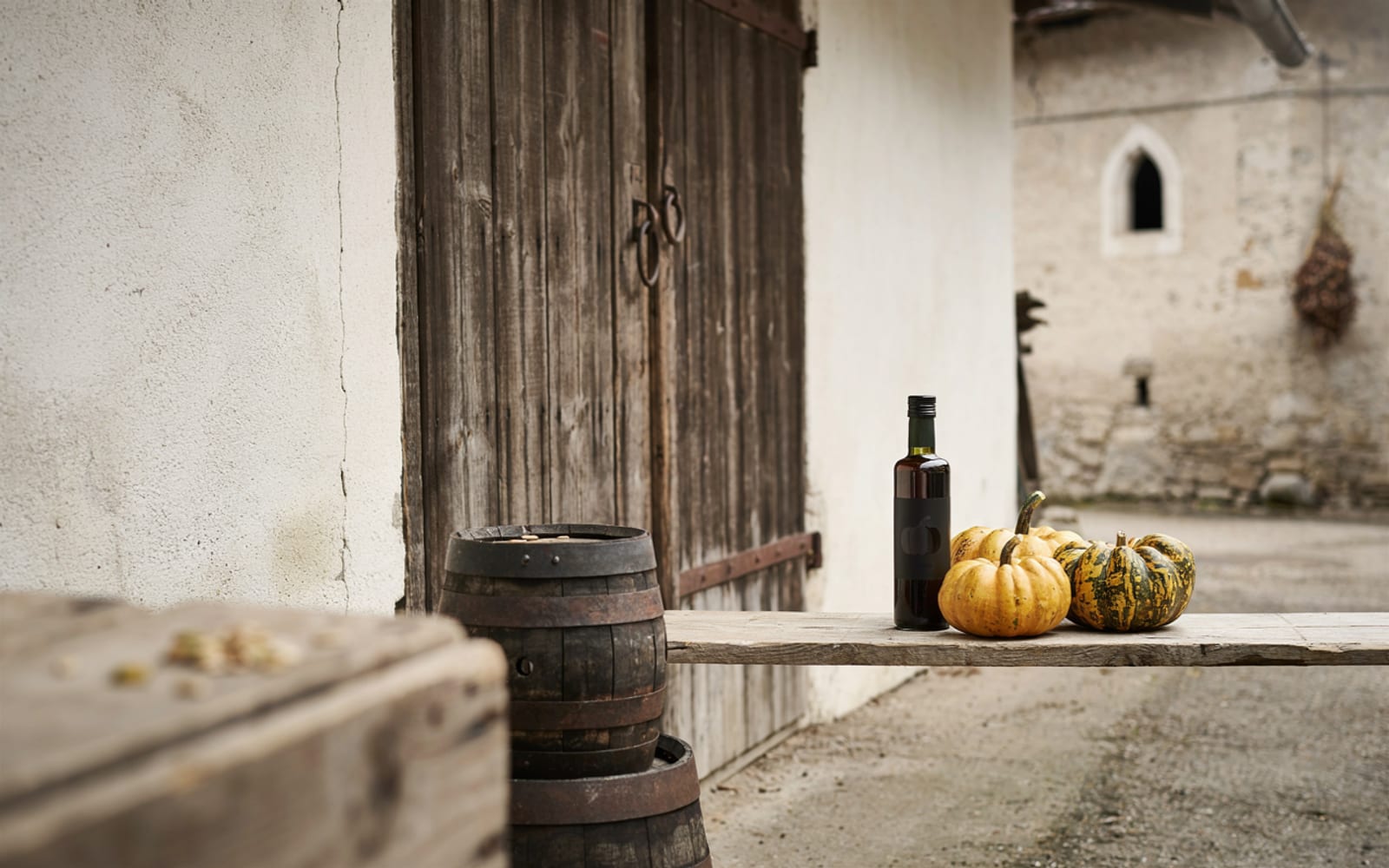
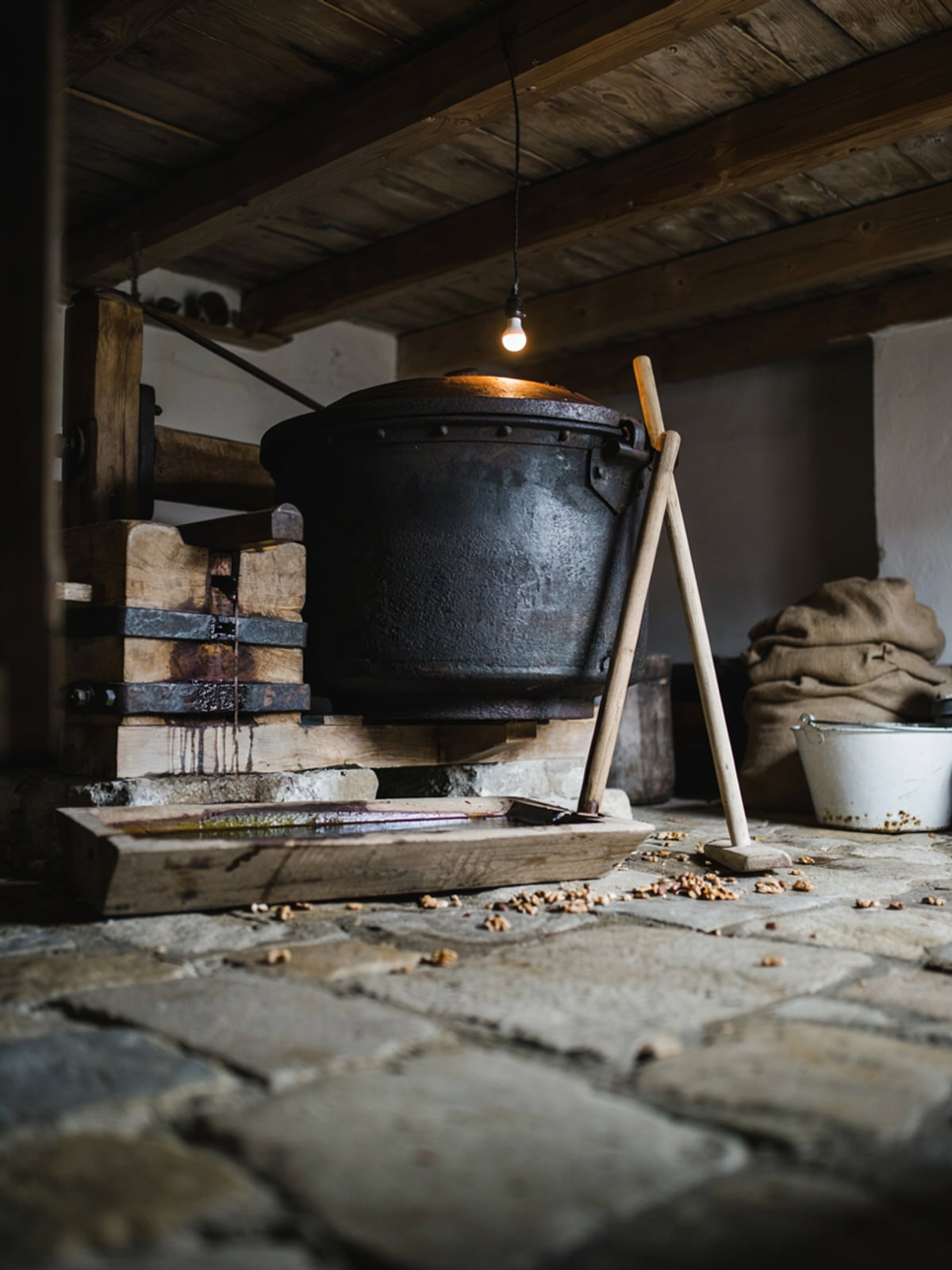
Ask ten people what an oil "producer" looks like and you get ten different pictures — factory halls, conveyor belts, a logo on the side of a truck. With Styrian pumpkin seed oil the picture is almost always the same, just smaller and quieter: a mill. Sometimes it stands right beside the field where the seeds grew. Sometimes it sits a few villages over, and the harvest travels there by trailer. Anyone who has seen that difference once never reads a shelf of bottles the same way again.
A mill that stays in the family
Many of these mills have stayed in the same hands for generations, often built right on the farm where at least part of the seeds still grow. Others work as shared operations: neighbouring smallholders bring their harvest in for pressing against a fee, then take the finished oil home for their own table or a small local sale. Both forms share the same character — small, rooted in one place, tied to a specific stretch of land. It has little in common with the large-scale plant-oil industry most people picture first.
When the seeds arrive
A van pulls up outside, sacks come down, and the first step starts immediately: cleaning, checking, sorting. Only then do the seeds move into the mill's grinders and turn into a coarse mass. Nothing about this moment looks dramatic — and yet it already decides how clean the finished oil will taste.
The smell that fills the hall
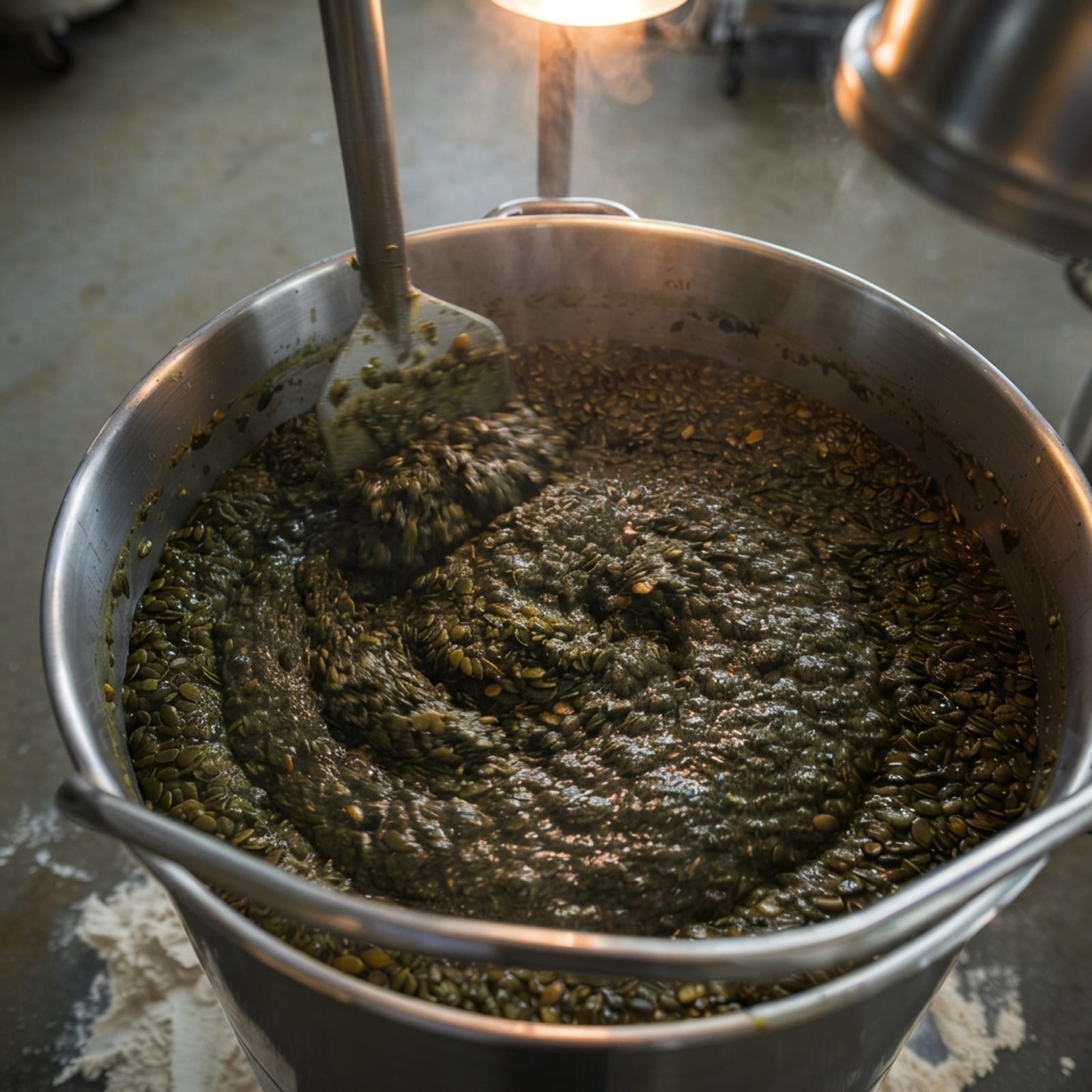
Then comes the step you smell throughout the whole building long before you see it. The ground mass is mixed with water and a little salt, then slowly heated in large kettles under constant stirring. A wide paddle turns through the dark green paste while the smell of roasted seed drifts through every corner of the hall. Anyone who works here will tell you: too hot, and it burns; too gentle, and it stays flat. Somewhere in that narrow space between the two, the dark colour and roasted depth that Styrian oil is known for actually take shape.
From the press to the tank
Once the roasting is done, the paste moves under the press. The oil runs out warm — not into bottles, but first into a holding tank or barrel, where it rests. There, fine sediment settles slowly to the bottom; some mills filter lightly on top of that. Only once the oil is clear enough does it go into dark glass. How finely the seeds are ground, how hot the roast runs, how much filtering happens — every mill decides these details for itself, and those small choices are exactly what gives oils from different houses their own character, even though the core process stays largely the same.
Small is enough, big does no harm
Not every mill presses the same amount, and volume alone says nothing about quality. A small operation producing a few hundred litres a season can turn out excellent oil through sheer care at every step. A larger, more mechanised mill can press far more and still deliver oil that is just as genuine, as long as it follows the traditional process and the Styrian PGI specification. What matters isn't size — it's whether a producer is willing to say plainly where the seeds came from and how the oil was actually made.
Three bottles, three mills
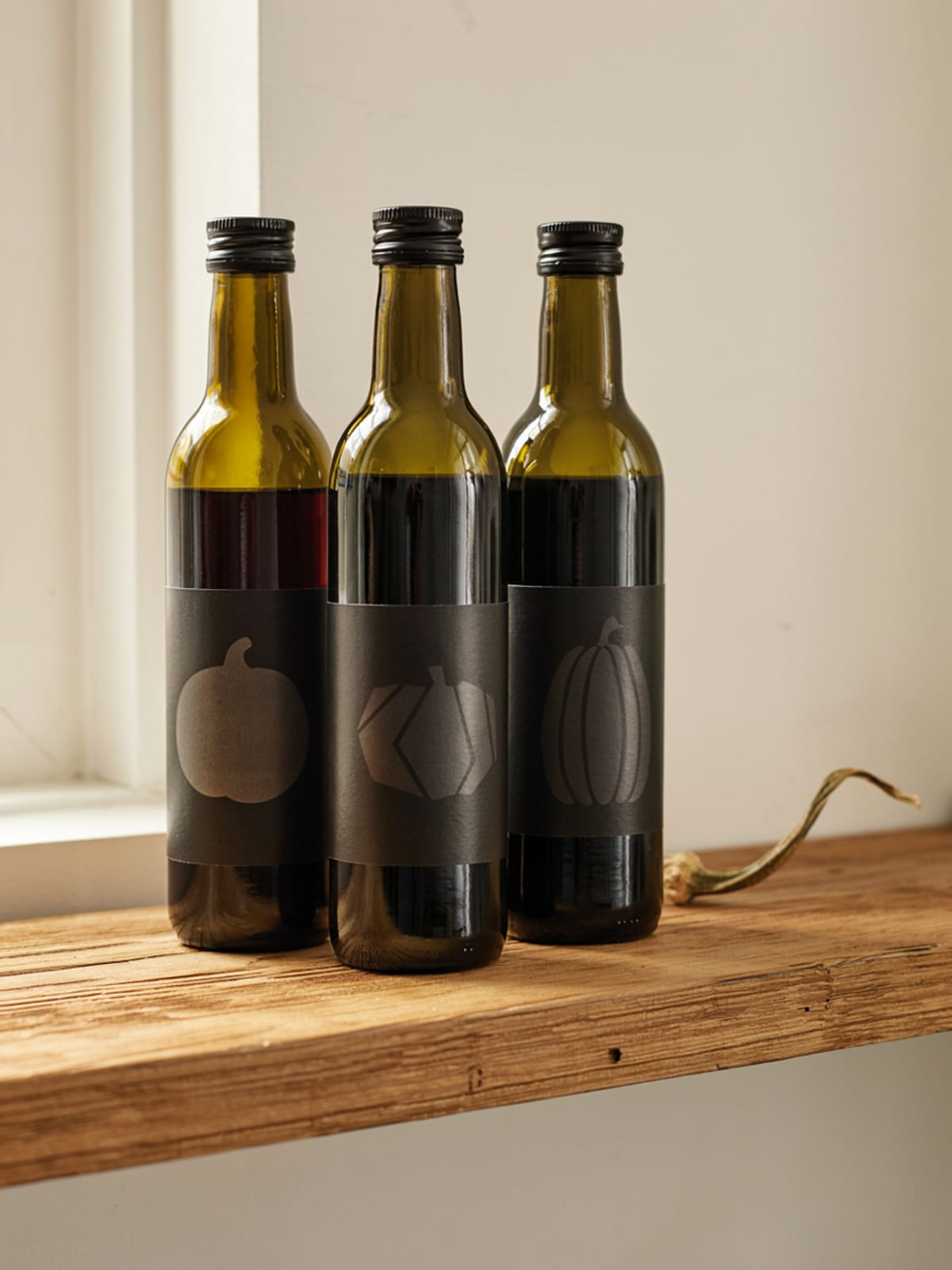
By the end of the season, finished bottles sometimes stand side by side — the same dark colour, the same pumpkin silhouette as a quiet signature, and yet each one comes from a different mill, carrying its own small note in the roast. This is exactly where traceability shows what it really means: a serious producer can name where the seeds grew and roughly when they were harvested, not just gesture vaguely toward "the region." Consistent quality across batches and a named address instead of an anonymous brand belong to that same picture.
What the label gives away in the end
Back on the shelf, that same label carries most of the useful information. The EU PGI mark together with the full protected name is the strongest single signal, and a named mill with a real address makes it verifiable. Dark glass and a note on harvest or bottling year show a producer thinking about the whole journey, not just the moment of sale. A closer walkthrough of these signs lives under checking pumpkin seed oil quality, and general buying guidance sits under where to buy Styrian pumpkin seed oil. None of it takes expertise — just a glance that travels past the front of the bottle to the small print a real mill never needs to hide.
Shop deep-roasted Styrian pumpkin oil
Shop now