The Styrian
Pumpkin Seed Oil Journal
The Styrian
Pumpkin Seed Oil Journal
- The Styrian Pumpkin Seed Oil Journal
Shop EN
pumpkinseedoil.ccShop DE
kuerbiskernoel.cc
About
This website also contains some content created with the support of AI.
What Is Styrian Pumpkin Seed Oil?
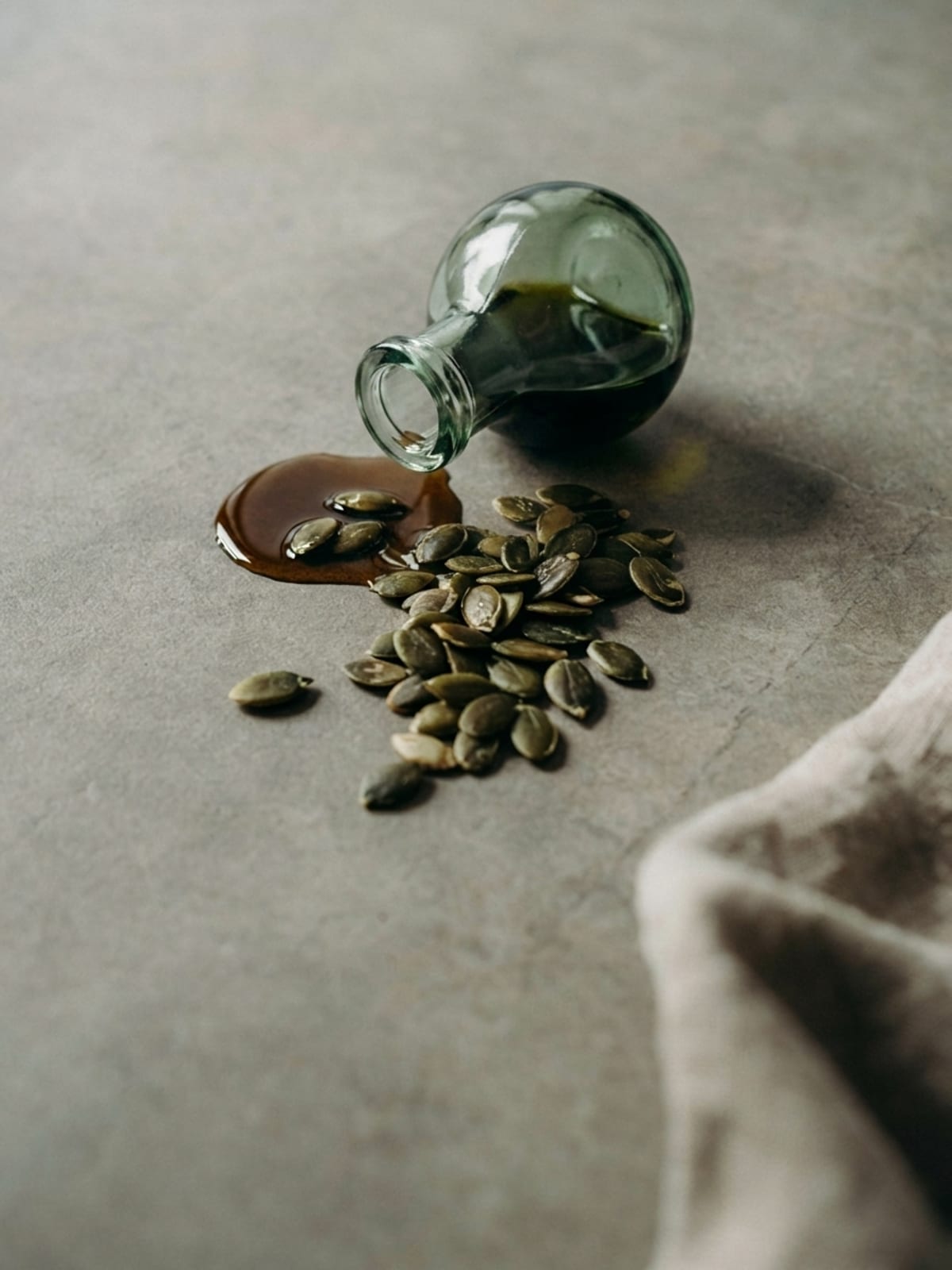
It begins with a smell before it begins with a fact. Someone twists the cap off a dark bottle, and it is there at once: warm, nutty, faintly smoky, like seeds that just came off the heat. Anyone who already knows that smell recognises it in an instant. Anyone meeting it for the first time tends to pause. This is not an oil you use quietly in the background. It has a character that announces itself — on the plate, in the nose, on the tongue.
Not Just Any Pumpkin Seed Oil
The words "pumpkin seed oil" appear on bottles from a great many countries, pressed from different pumpkin varieties, different soils, different methods entirely. In Styria, the term means something exact: oil from the seeds of a hull-less Styrian oil pumpkin, grown across southern Austria and the neighbouring districts allowed under its rules, made following a process tied to a European protected designation. Anyone who wants the full detail behind that seal can read the Styrian PGI explained. For now, the story stays with what is actually in the glass — and why so many people go quiet the moment they first taste it.
A Landscape You Can Taste
Between vineyards, orchards, and wide open fields grows the variety that makes this oil possible. Late summer holds the fruit heavy in the sun; the air smells of warm soil and dry grass. Then autumn arrives, and with it a short, decisive stretch of time. Too damp, and the seeds store badly. Dried too fast, and the aroma fades before it ever reaches the mill. Origin here is not a marketing word — it is the frame that lets the flavour exist at all. More on that frame is under origin: Austria and Styria.
A Seed Without a Shell
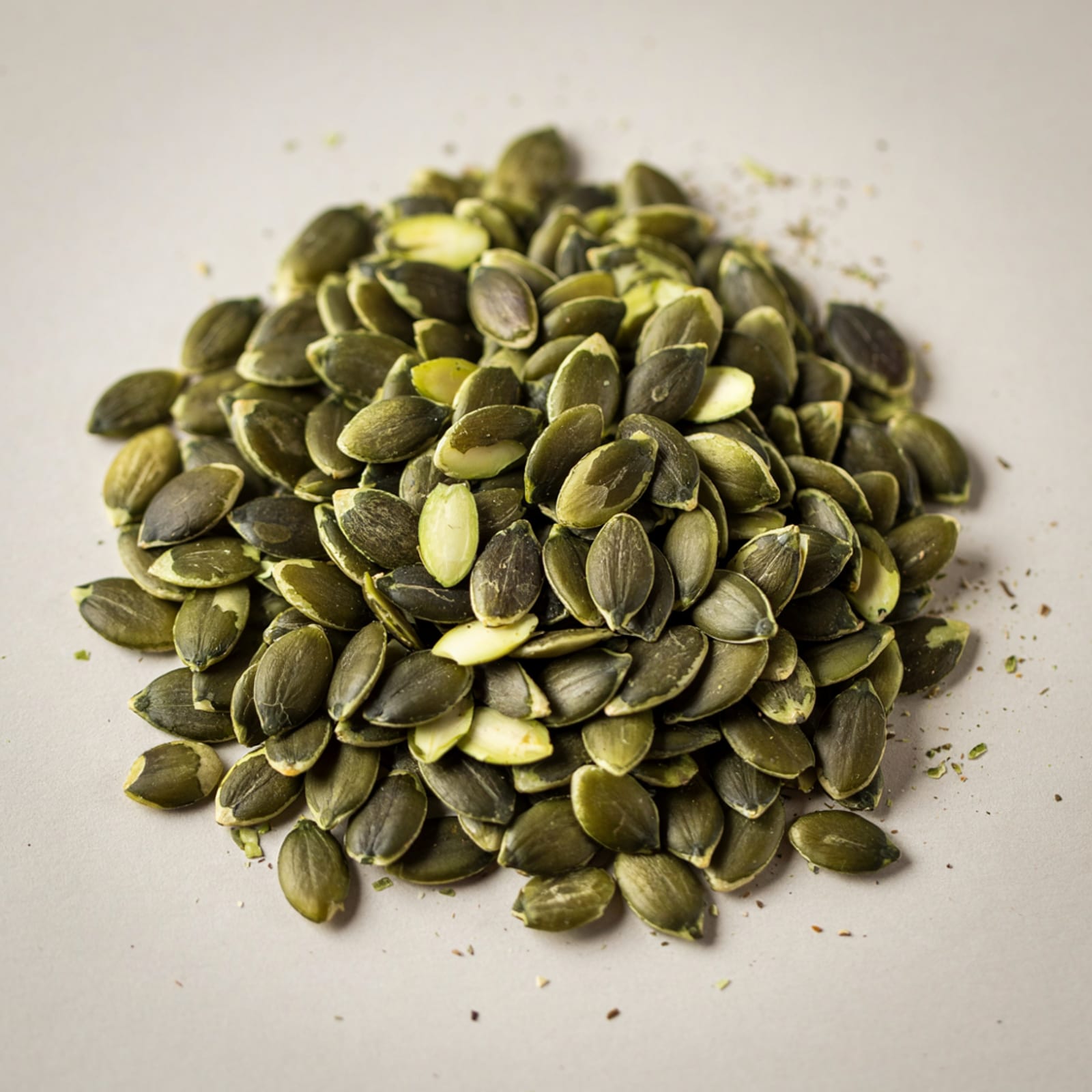
A handful of dark green seeds — flat, oval, missing the hard cream-coloured shell most people picture on a pumpkin seed. That is the raw material behind Styrian pumpkin seed oil: Cucurbita pepo var. styriaca, bred over generations toward seeds that carry no shell and plenty of oil. The missing shell is not a flaw — it is the whole point. The seed goes straight into the press and brings its oil, colour, and aroma with it, undiluted. More on this particular plant is under the Styrian oil pumpkin.
Colour and Flavour in the Glass
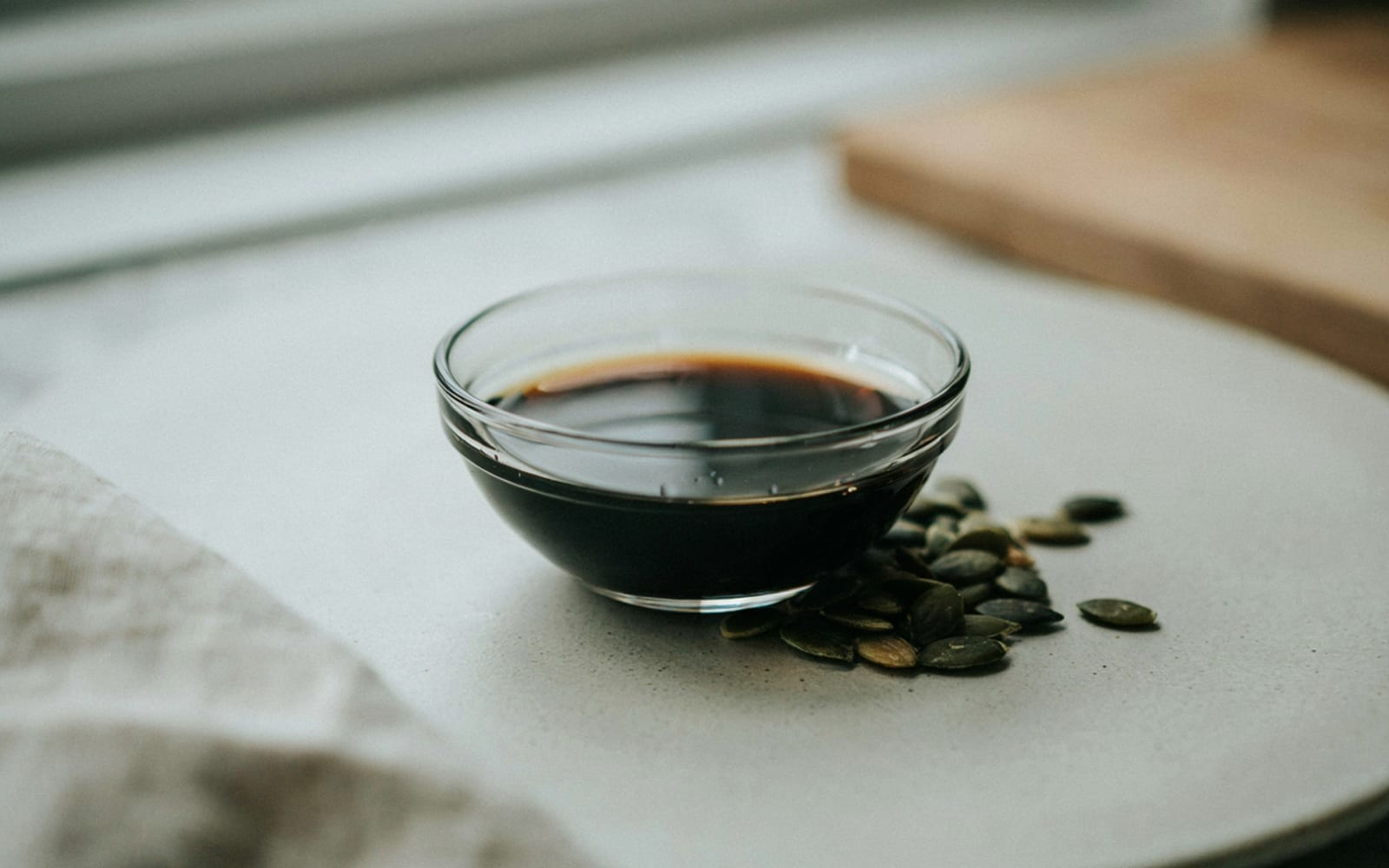
Genuine Styrian pumpkin seed oil ranks among the darkest cooking oils there is. In shadow it looks almost black-green. Held against light, a thin layer glows ruby to garnet. Chlorophyll and carotenoids from the seed's fine skin cause both effects. On the tongue it tastes full and nutty, with notes of toasted sesame and a light sweetness underneath the savoury depth. Cold-pressed versions come out brighter and fresher; traditionally roasted ones sit deeper and rounder. Both are genuinely Styrian — the difference is the road each takes to the press. More detail is under colour and taste of pumpkin seed oil.
What Sets It Apart From Other Pumpkin Seed Oils
Oil from shelled seeds, or from outside the protected zone, can be honest and well made — and still taste like a different product altogether. It often comes out lighter and milder, carrying less of the roasted depth that many regional dishes are built around. The easiest way to feel the gap is a side-by-side taste: real Styrian PGI oil next to a paler pumpkin seed oil. The difference explains itself in seconds — and explains why the name on the label matters. What the oil is called elsewhere is covered under pumpkin seed oil in other languages.
From Roasting to the Press
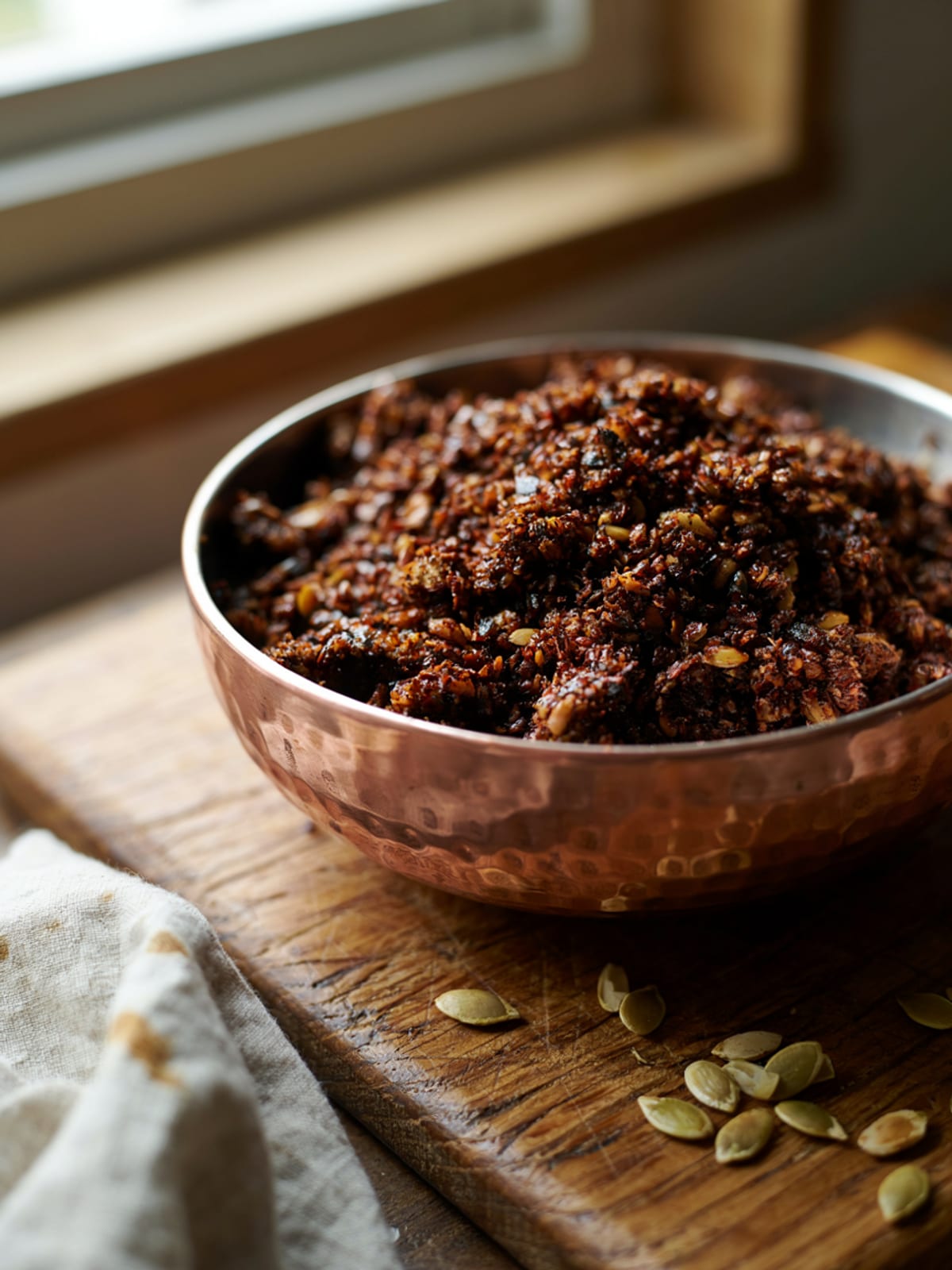
Inside the mill, a transformation starts that you hear and smell before you ever see it. Dried seeds are ground, mixed with a little water and salt into a dark paste, and roasted slowly over moderate heat with constant stirring. The smell that rises is the same one you get opening a finished bottle — just closer, rawer, more direct. You often hear it said: "Too hot, and it burns. Too gentle, and it stays flat." Only after roasting does the paste go under the press. The oil runs out warm into a holding vessel, rests there while fine sediment settles, and only then gets bottled into dark glass. Cold-pressing skips the roasting step entirely and gives a lighter, fresher oil. Both paths are allowed under the PGI rules.
Recognising the Real Thing
The European PGI mark on the label is the clearest signal. Beyond that, look for the name of an actual mill and a smell of seeds and roasting — not solvent, not staleness. If a price sits well below the usual range, a second look at the origin and the seal is worth it. The surest way to know authenticity is to have tasted the original once, deliberately: dark colour, full nutty flavour, a long finish. That same smell that rose when the bottle was opened — it was there from the start, from the field, through the roasted paste, to the drop now on your plate.
Shop nutty roasted Styrian seed oil
Shop now