The Styrian
Pumpkin Seed Oil Journal
The Styrian
Pumpkin Seed Oil Journal
- The Styrian Pumpkin Seed Oil Journal
Shop EN
pumpkinseedoil.ccShop DE
kuerbiskernoel.cc
About
This website also contains some content created with the support of AI.
How Pumpkin Seed Oil Is Made
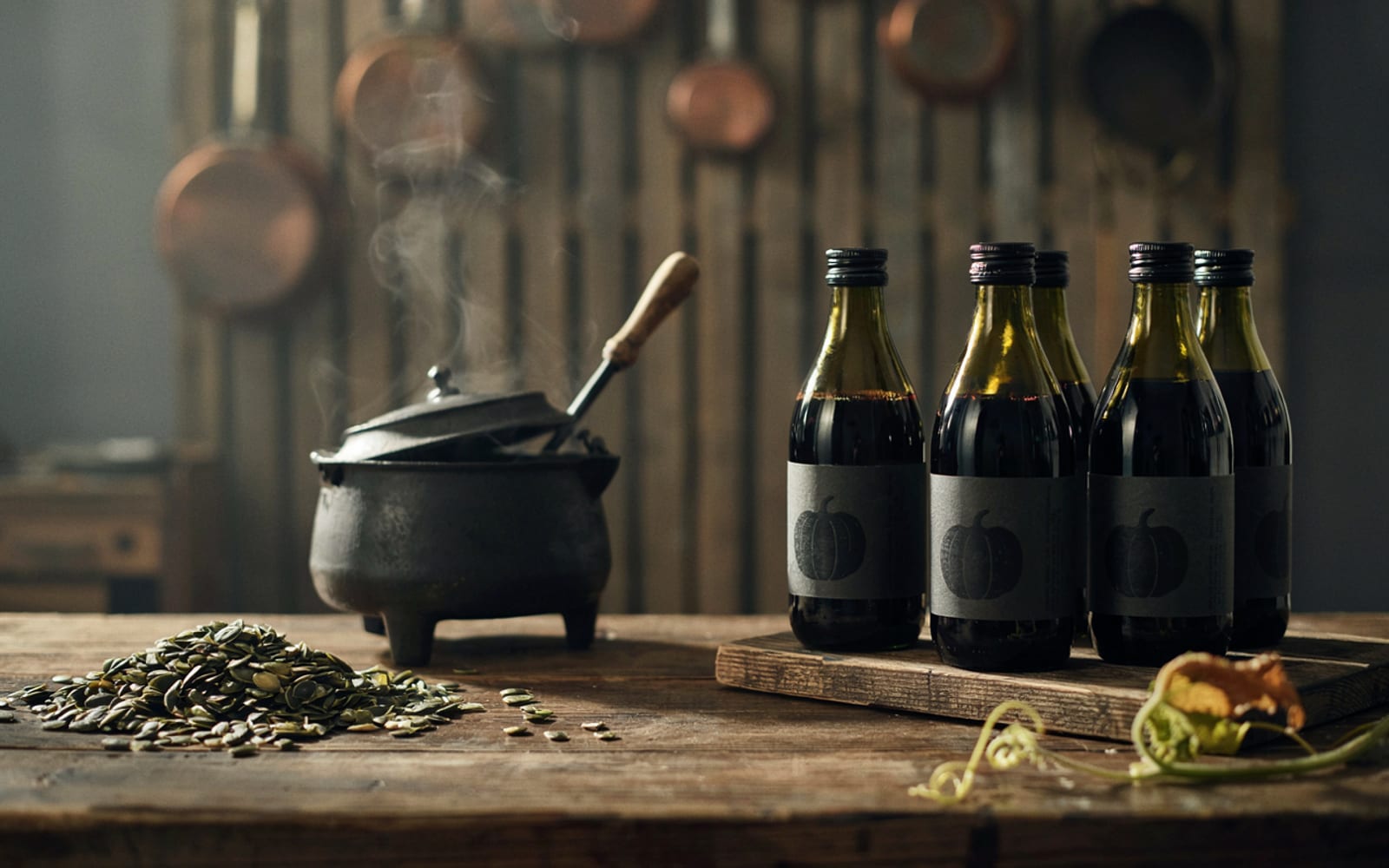
It starts not with oil but with a sack. Dried, hull-less pumpkin seeds, unremarkable green-brown, wait in a Styrian oil mill for their turn. What happens to them over the next few hours follows, at heart, the same sequence whether the mill is a small family operation or a larger business — a sequence barely changed across generations. Follow it step by step once, and it becomes clear why this oil tastes so distinctly different from mild, industrially processed vegetable oils.
Cleaning and grinding
First, any remaining debris and bits of fruit flesh get removed from the seeds. Then they head into the mill mechanism, which turns firm seeds into a coarse, damp mass with a steady crunching sound. This step looks unremarkable but matters enormously: only once the seeds' cell structure has broken open does the oil trapped inside become accessible for every step that follows. Whole, unground seeds would release barely any oil under the press.
Salt, water, and the roasting paste
The ground mass now gets mixed with water and a little salt into a damp paste — a step that looks like an afterthought at first glance. In fact, that exact moisture level decides the texture of the next few hours: correctly balanced, it lets the mass heat through evenly during roasting, without burning or drying unevenly.
Roasting
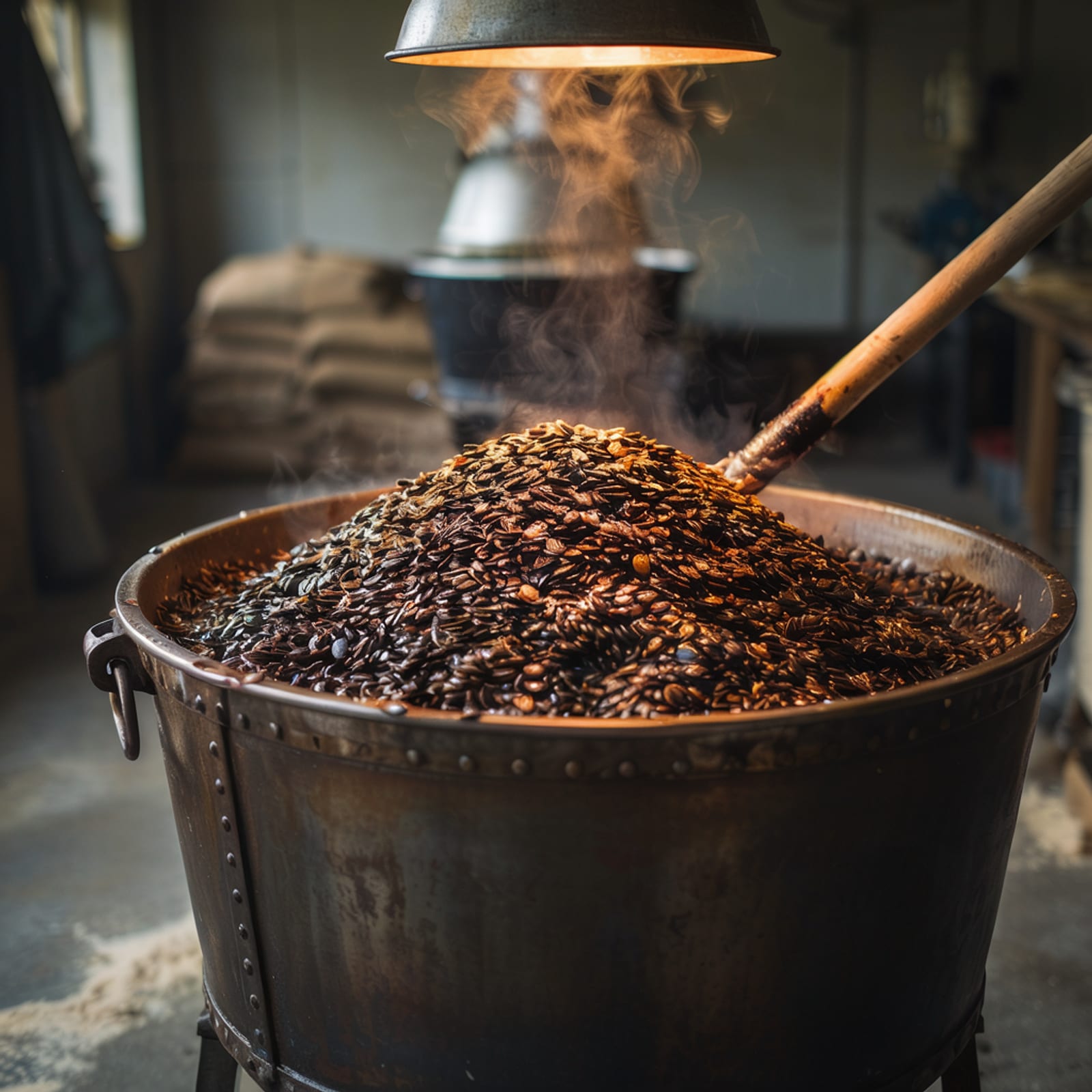
Then comes the moment you smell throughout the whole building long before you see it. The paste moves into large pans or roasting kettles, heated slowly under constant stirring — usually to somewhere between 100 and 160 degrees Celsius, over roughly 30 to 45 minutes. Light, mild seed mash turns, piece by piece, into the dark, intensely nutty oil the region is known for: sugars and amino acids react together in the so-called Maillard reaction, the same one that browns bread crusts and gives coffee beans their colour. Anyone who's watched this kettle often enough judges by smell and colour rather than the clock. You'll often hear it put plainly: too short, and it stays flat; too long, and it tips bitter. That narrow window holds the small tension of every roast — until the smell is suddenly just right.
Pressing
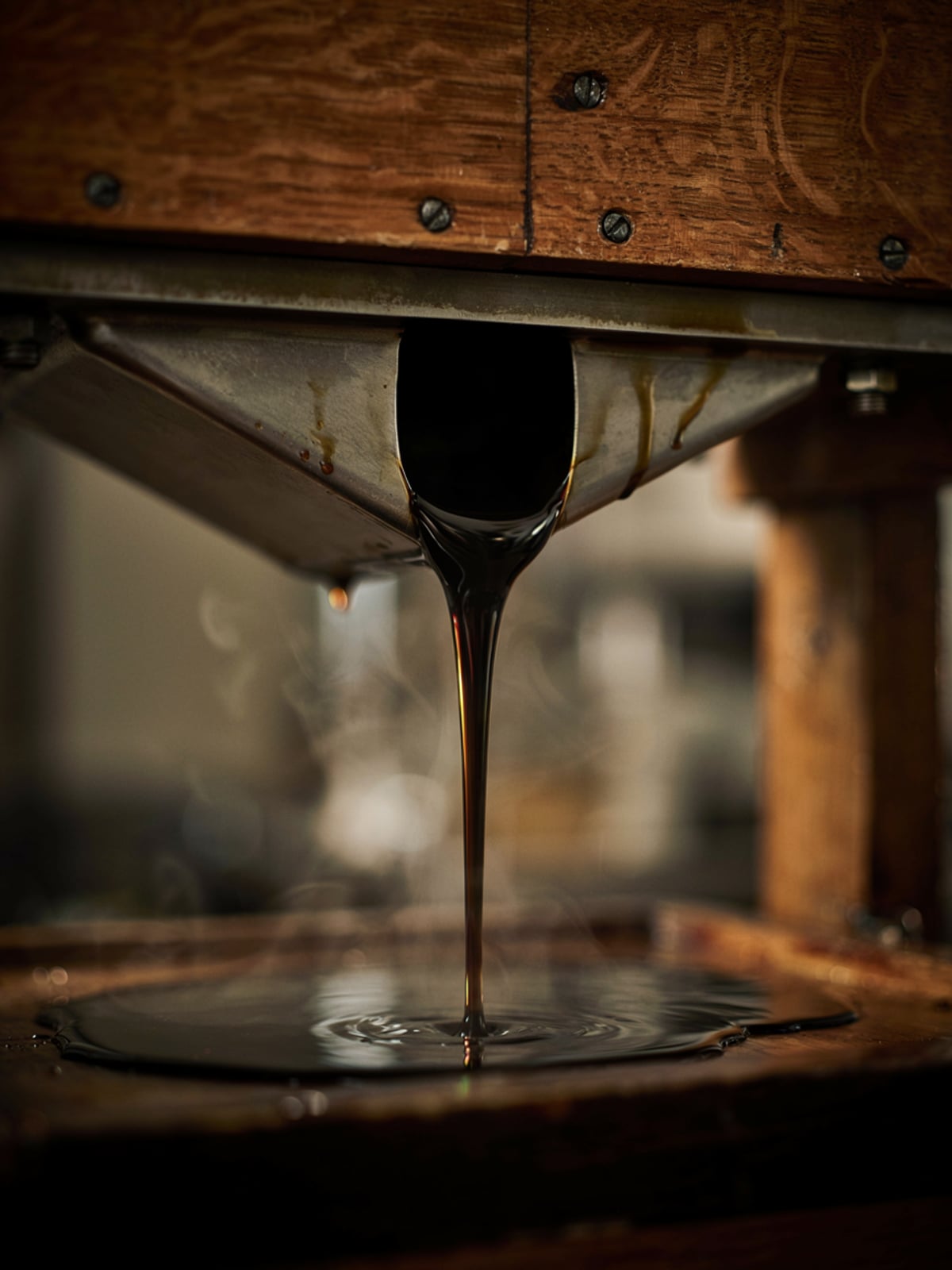
Still warm from roasting, the paste moves on to the press, usually hydraulic or a screw press. The first pressing gives the highest yield and the best quality — that's the oil that ends up on the label. Whatever could still be squeezed from the remaining press cake afterward is lower grade and not sold as the main product by serious mills. The press cake itself doesn't simply disappear: it usually finds a second life as protein-rich animal feed, so that almost nothing from the harvest goes unused in the end.
Settling, filtering, and bottling
Out of the press, the oil runs warm into a holding tank or barrel — not straight into the bottle, but first to rest. There, fine sediment settles out on its own; some mills filter lightly on top of that for a clearer result, while others deliberately leave some natural sediment behind. Both are a matter of style, not a question of right or wrong. Only once that settling period is complete does the oil go into dark glass — dark, because light would speed up oxidation, and that's exactly what should wait as long as possible.
Why the process matters
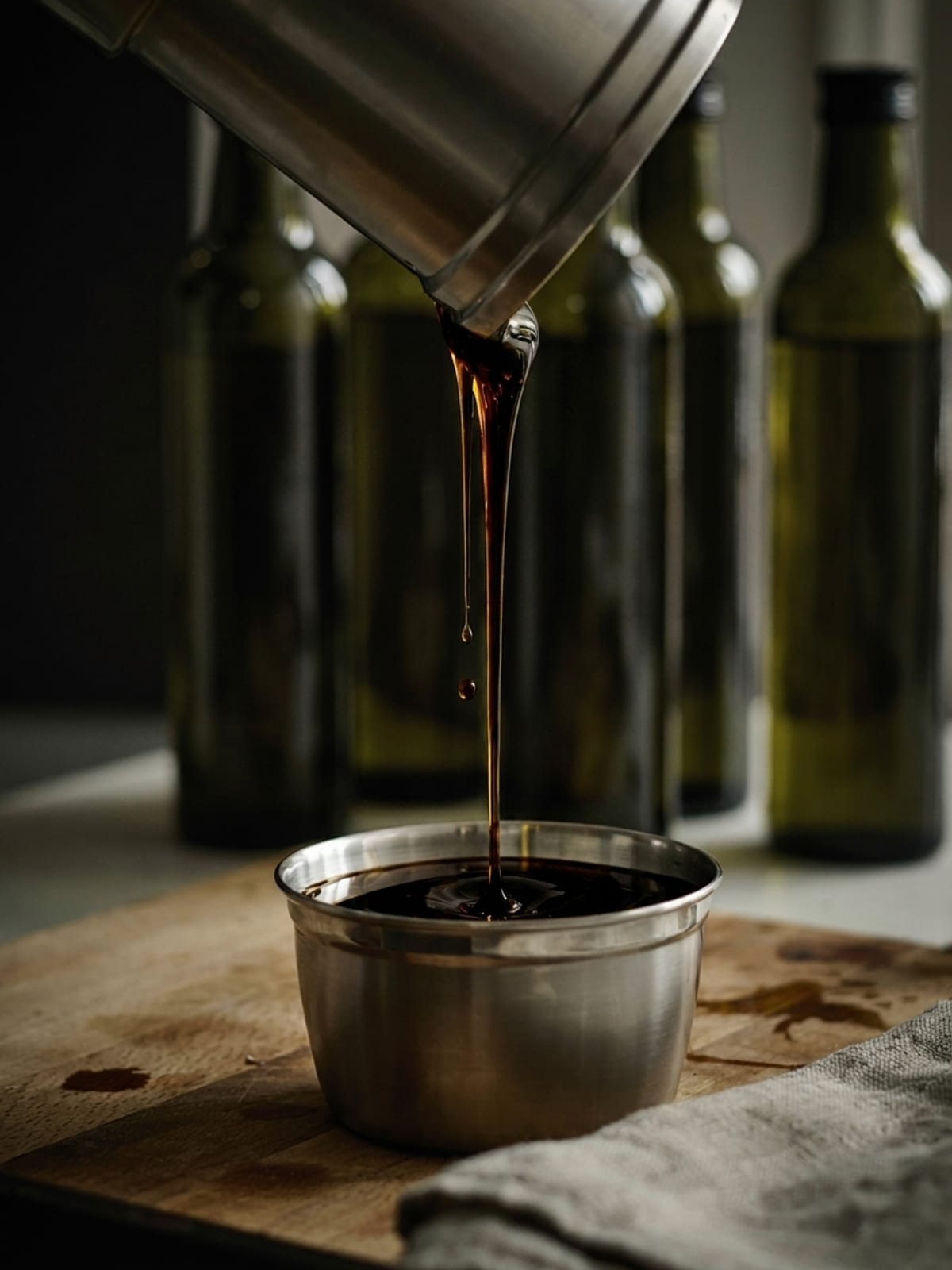
Grinding, roasting, pressing, settling — every one of these steps leaves a noticeable trace in the finished flavour. That's exactly where the difference lies between a carefully made PGI oil and a cheaper, industrially processed alternative. How genuine oil differs from poorly made or stretched products is explained under checking pumpkin seed oil quality, while cold-pressed versus roasted lays out the two fundamental paths side by side. How this process developed across generations in Styria is told from the start in the discover section of this journal.
Craft, not factory
Despite all the equipment, making Styrian pumpkin seed oil stays, at its core, a craft — carried by experience, a trained sense of smell, and the practised eye of individual mill operators, not by fully automated conveyor lines. Exactly when the roast is done, how hard the press runs, how much sediment stays in the finished oil: these small, human decisions are a good part of why oils from different mills can taste noticeably different even from very similar starting harvests — and why it's worth finding the mill whose style you like best.
Shop the classic Styrian salad oil
Shop now