The Styrian
Pumpkin Seed Oil Journal
The Styrian
Pumpkin Seed Oil Journal
- The Styrian Pumpkin Seed Oil Journal
Shop EN
pumpkinseedoil.ccShop DE
kuerbiskernoel.cc
About
This website also contains some content created with the support of AI.
Pumpkin Seed Oil and Osteoarthritis: Sensible Expectations
Health notice: This page discusses topics related to health research and tradition. It is not medical advice. Do not use it to diagnose, treat, cure, or prevent any disease. Talk to a qualified healthcare professional before changing your diet or supplements.

Osteoarthritis — the gradual, mechanical wear-and-tear joint condition most common with age — is a frequent search pairing with anti-inflammatory foods, pumpkin seed oil included. It is worth being upfront: osteoarthritis is a structural, degenerative condition, and no food oil reverses cartilage wear. What follows is an honest look at what pumpkin seed oil's studied properties can and cannot reasonably offer someone managing this condition.
Who This Topic Tends to Attract
Interest in this pairing tends to come from two directions: people already managing a diagnosed joint condition who are looking for anything that might ease day-to-day discomfort, and people who noticed stiffness creeping in with age and are curious whether diet can help before things progress further. The honest research picture below is the same for both groups, but the practical takeaway differs — the first group has a diagnosis to work from, and the second may want to raise the topic at a check-up rather than self-manage a condition that has not been formally assessed.
Osteoarthritis Is Different From Inflammatory Arthritis
Osteoarthritis involves the gradual breakdown of joint cartilage through mechanical stress and age-related change, whereas conditions like rheumatoid arthritis are autoimmune and primarily inflammatory in origin. This distinction matters because pumpkin seed's research angle is almost entirely about antioxidant and mild anti-inflammatory properties — relevant to the inflammatory component that can accompany osteoarthritis flare-ups, but not to the structural cartilage loss that defines the condition itself. The rheumatism and arthritis article covers the more inflammatory end of this spectrum in more detail.
What the Research Actually Suggests
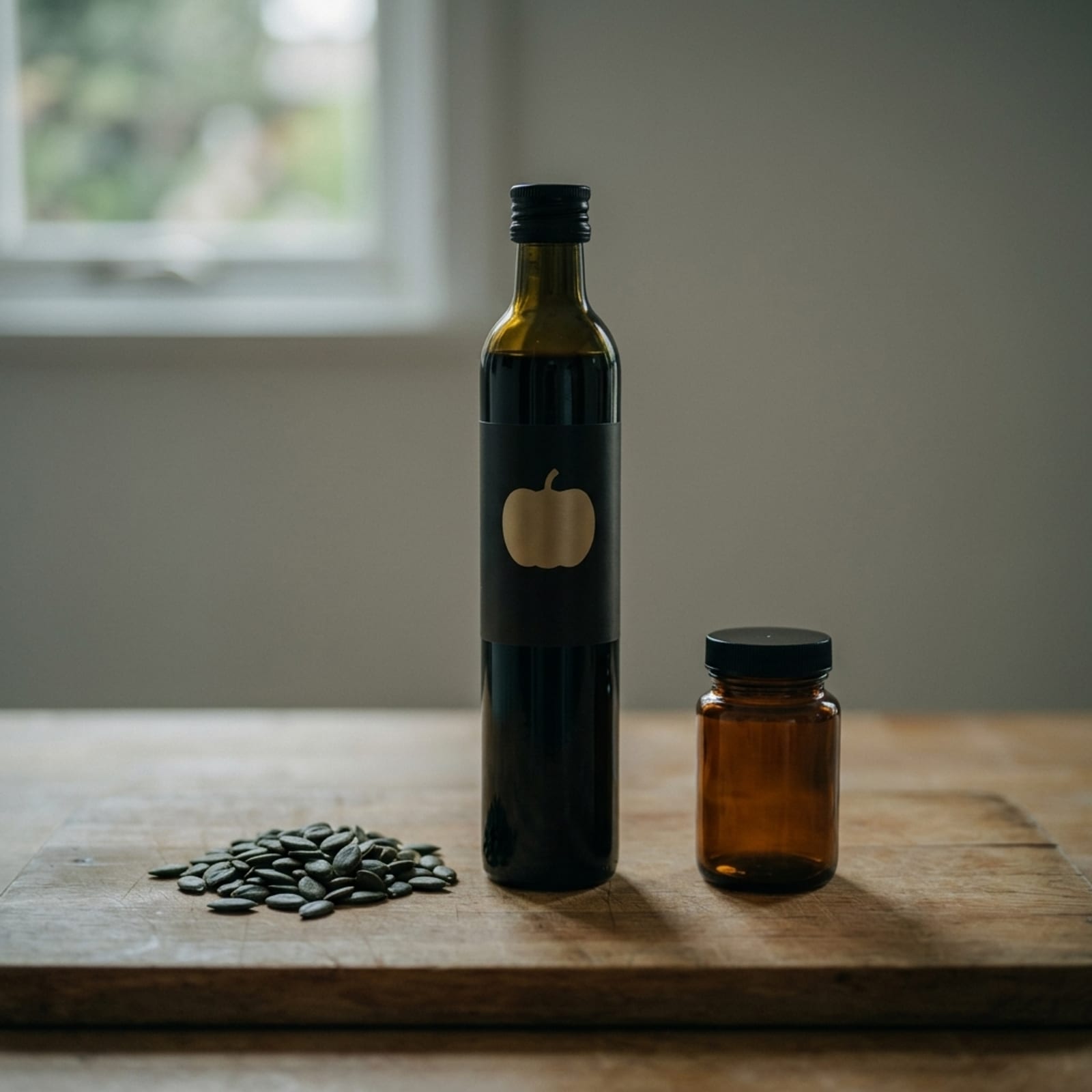
Some studies on pumpkin seed extract, often combined with other plant compounds in joint-health supplement blends, have reported modest improvements in joint pain or stiffness scores in people with mild osteoarthritis. These trials are generally small, often use combination products rather than pumpkin seed oil alone, which makes it hard to isolate its specific contribution, and measure symptom relief rather than any change to the underlying joint structure. That is a real but limited finding — closer to "may help some people feel somewhat more comfortable" than "treats osteoarthritis."
The Antioxidant Angle in Context
The vitamin E and antioxidant content discussed on the inflammation page is the most plausible mechanism connecting pumpkin seed oil to any joint-comfort effect, by potentially reducing oxidative stress associated with joint inflammation. This remains a mechanistic hypothesis supported by limited direct human evidence for osteoarthritis specifically, rather than a demonstrated clinical outcome — a distinction worth holding onto when reading more enthusiastic marketing elsewhere.
Diet, Weight and Joint Load
One of the most consistently evidence-backed levers for osteoarthritis, particularly in weight-bearing joints like knees and hips, is simply carrying less weight — even modest weight loss measurably reduces joint load and reported pain in clinical studies, far more reliably than any single food or oil. Where pumpkin seed oil fits into that picture is the same way any unsaturated fat fits into a calorie-aware, otherwise balanced diet: as a flavourful, reasonable choice rather than as a targeted joint remedy. Readers weighing weight management alongside their joint symptoms may find the weight loss article a useful, equally honest companion piece.
Where This Fits
For someone managing diagnosed osteoarthritis, evidence-based approaches — weight management to reduce joint load, physical therapy, appropriate exercise, and medical pain management where needed — remain the primary tools, and pumpkin seed oil is, at most, a small dietary addition alongside them, not a replacement for any of them. Persistent or worsening joint pain, swelling, or loss of function should be evaluated by a doctor, who can distinguish osteoarthritis from other joint conditions that need different treatment. The evidence overview shows how this topic compares to the oil's other, sometimes better-studied research areas.
Get PGI-certified Styrian pumpkin seed oil
Shop now