The Styrian
Pumpkin Seed Oil Journal
The Styrian
Pumpkin Seed Oil Journal
- The Styrian Pumpkin Seed Oil Journal
Shop EN
pumpkinseedoil.ccShop DE
kuerbiskernoel.cc
About
This website also contains some content created with the support of AI.
Protein: Seeds vs. Oil
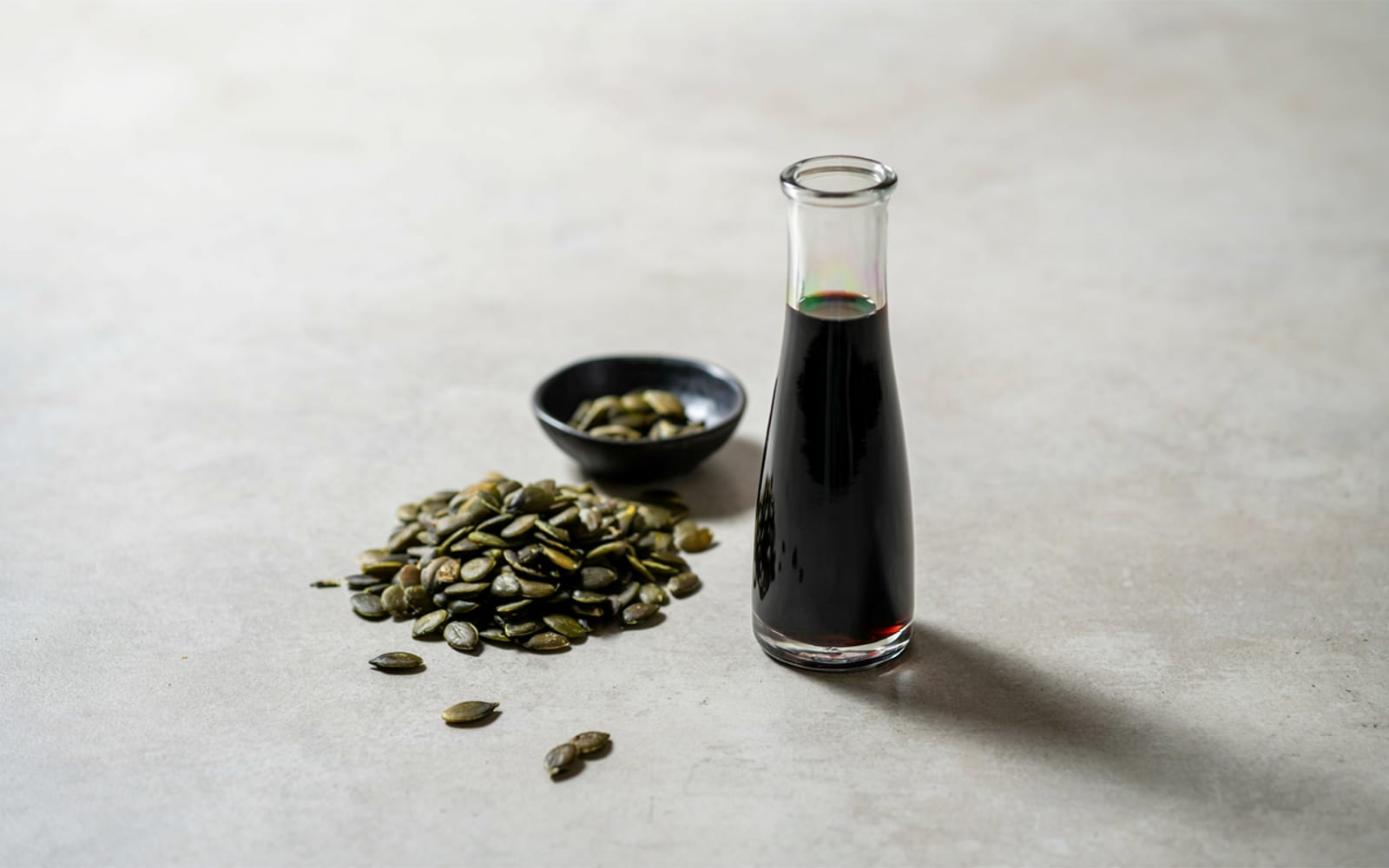
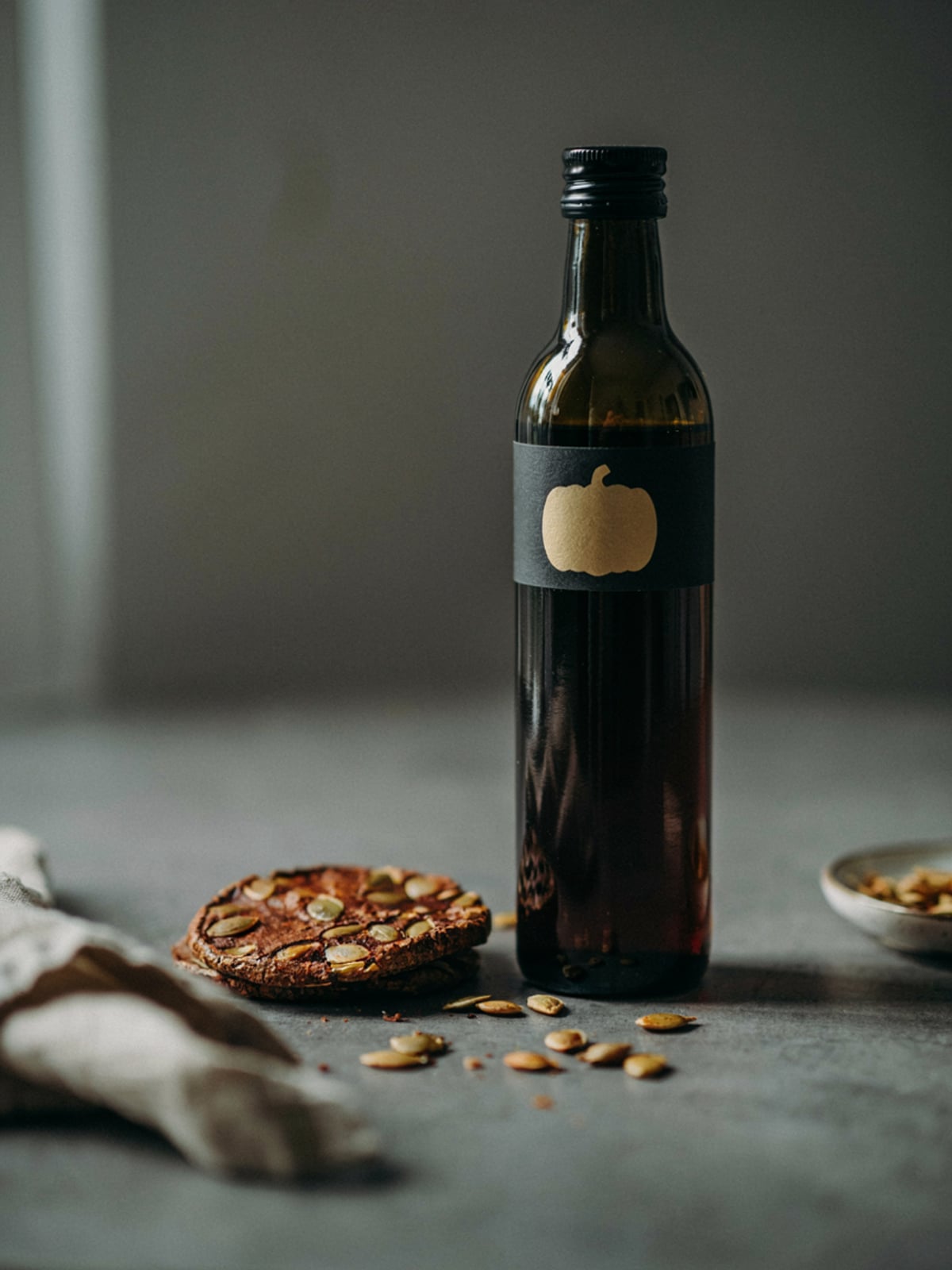
"Protein-rich pumpkin seed oil" reads well on packaging. The claim just doesn't hold up once you look closer. Pumpkin seeds are, without question, a recognisable plant protein food. The oil pressed from them is not — and once you understand where the protein goes during pressing, you know exactly what your Styrian oil is for, and where to reach instead when grams of protein on the plate are what matter.
Two Products, One Seed
It always starts with the same seed: flat, dark green, with an oily skin between the fingers. Whole pumpkin seeds hold fat, protein, fibre, and minerals together in one single package. That is exactly why roasted seeds work so well as a snack or as a topping with real substance on salad and soup. So when people talk about protein-rich pumpkin seeds, they mean the seed itself — not the oil that later comes from it. The full nutrient comparison is covered in seeds or oil.
The Moment the Two Split
At the mill, the difference begins with a single step: the press. What was one seed a moment before becomes two separate paths — fat flows out as oil, while protein and fibre stay largely behind in the solid residue, the press cake. The bottled oil ends up overwhelmingly pure fat. Individual traces of other compounds may travel along, but they do not turn a tablespoon of oil into a protein serving. Traditional roasting before pressing does not change this either — it shapes colour and aroma, not the oil's protein content. What this working step looks like in practice is shown in a day inside a Styrian oil mill.
A Bowl Full of Substance
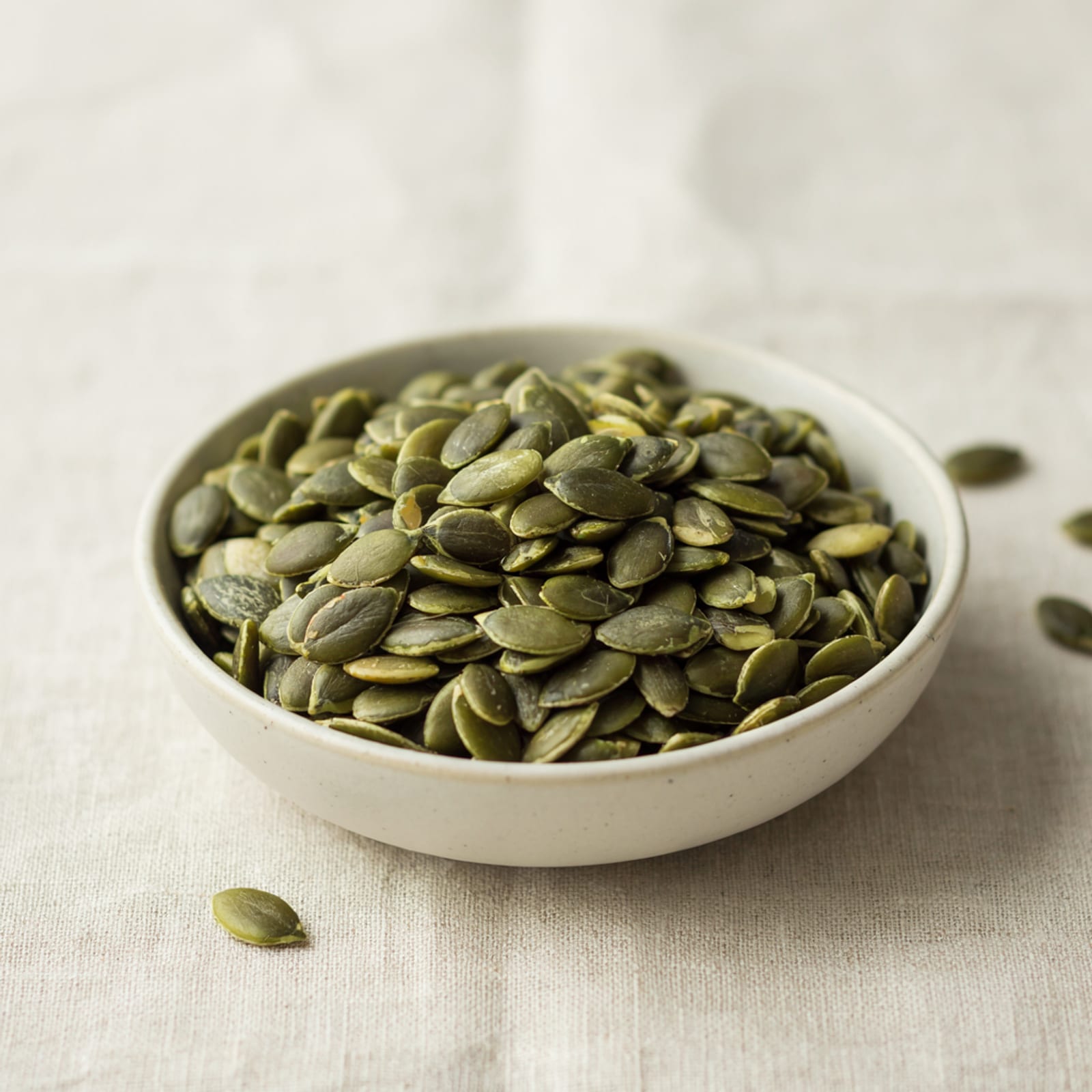
A bowl of shelled, dark green seeds makes this difference tangible: densely packed, with a faint sheen on every single seed. That bowl is exactly where the protein missing from the oil actually sits. Raw or roasted pumpkin seeds supply several grams of plant protein per 30-gram serving — about a handful — along with fibre and minerals that make the seed a genuinely well-rounded small food. Anyone looking for that substance reaches for the bowl of seeds, not the bottle beside it.
What the Nutrition Table Really Shows
On a typical pumpkin seed oil label, the protein value per 100 millilitres sits at or near zero, while energy and fat dominate the table — just as with olive oil or walnut oil. For a pure cooking oil, that is the normal case, not a shortcoming. If a product nonetheless claims a high protein content while listing only oil as an ingredient, the numbers deserve a critical second look. What the oil brings instead of protein is covered in fatty acids and omega-3 and omega-6 — and the full overview is in ingredients.
Two Roles in the Kitchen
In practice, the two products complement each other rather than replacing one another. Styrian pumpkin seed oil belongs at the end of preparation, as a finishing oil for flavour and roasted aroma — not as a protein source. For a plant-forward dish with noticeably more protein, build the meal instead around legumes, grains, tofu, or whole pumpkin seeds, and only then finish it with the oil. This division of roles is also why the oil so often shows up in vegan cooking alongside protein-rich ingredients, rather than in place of them.
The Drop That Stays Honest
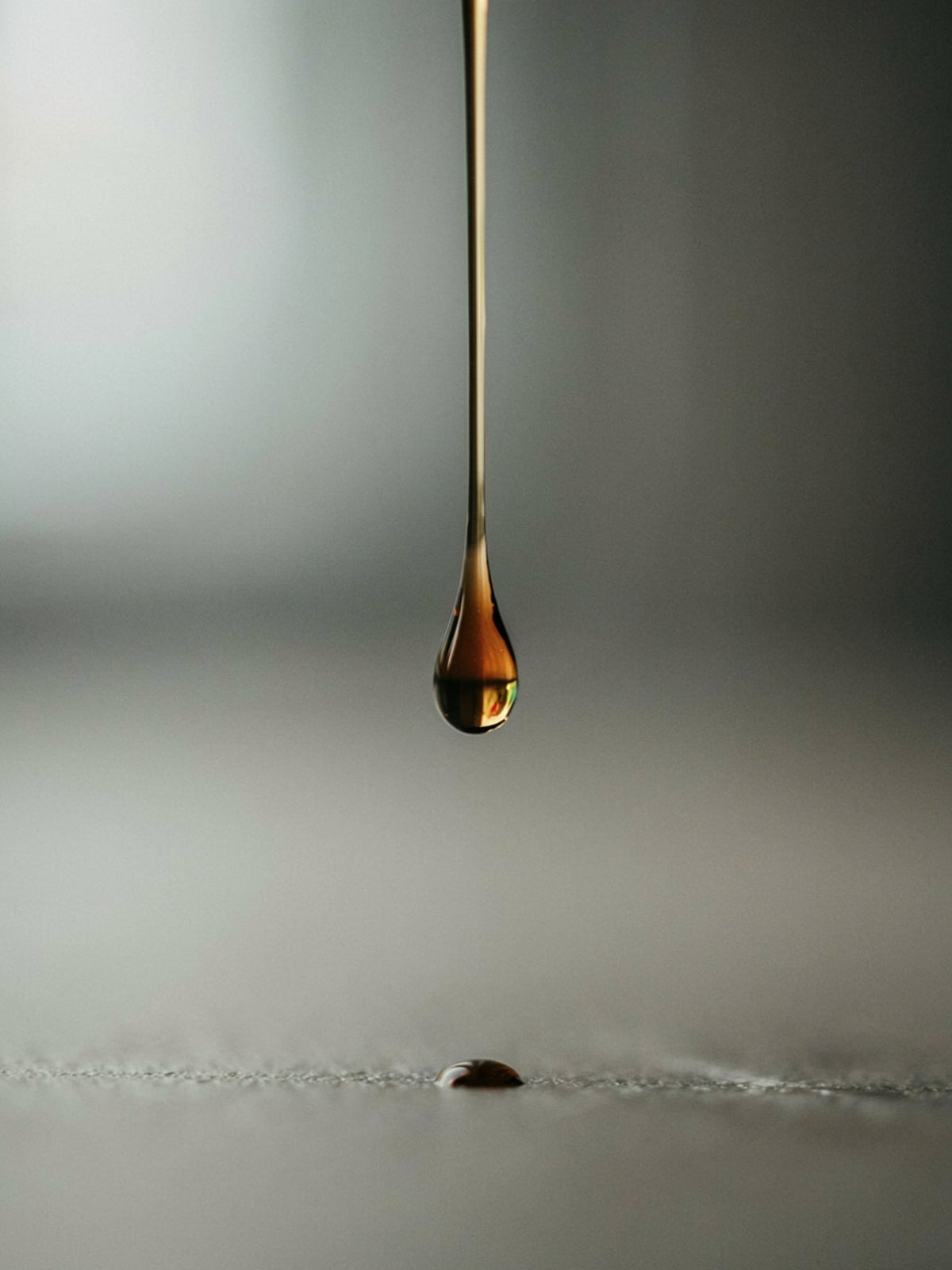
A single drop breaks free from the bottle's opening, hangs in the air for a moment, then falls clear and dark onto the surface. That drop is pure fat — nothing that even faintly resembles protein, and nothing meant here as a substitute for a balanced diet or as a treatment for any condition. It simply shows, plainly and without detour, what the oil actually is: flavour and fat, nothing more and nothing less. The category error many labels encourage — that oil must contain protein because the seed does — dissolves in exactly that one drop.
Both Roles at the Same Table
In the end, there is no need to choose between seed and oil — only clarity about which one does which job. A few roasted pumpkin seeds over a salad supply crunch and protein; a drizzle of oil on top supplies the aroma the seeds alone don't bring. Anyone who knows both roles reads every label afterward with different eyes — and knows exactly when the bowl of seeds is called for, and when it's the dark bottle.
Nutrition notice: Nutrient figures are indicative and depend on product and portion. They are not health claims under EU Regulation 1924/2006.
Order dark-roasted Styrian seed oil
Shop now