The Styrian
Pumpkin Seed Oil Journal
The Styrian
Pumpkin Seed Oil Journal
- The Styrian Pumpkin Seed Oil Journal
Shop EN
pumpkinseedoil.ccShop DE
kuerbiskernoel.cc
About
This website also contains some content created with the support of AI.
Pumpkin Seed Oil vs Flaxseed Oil
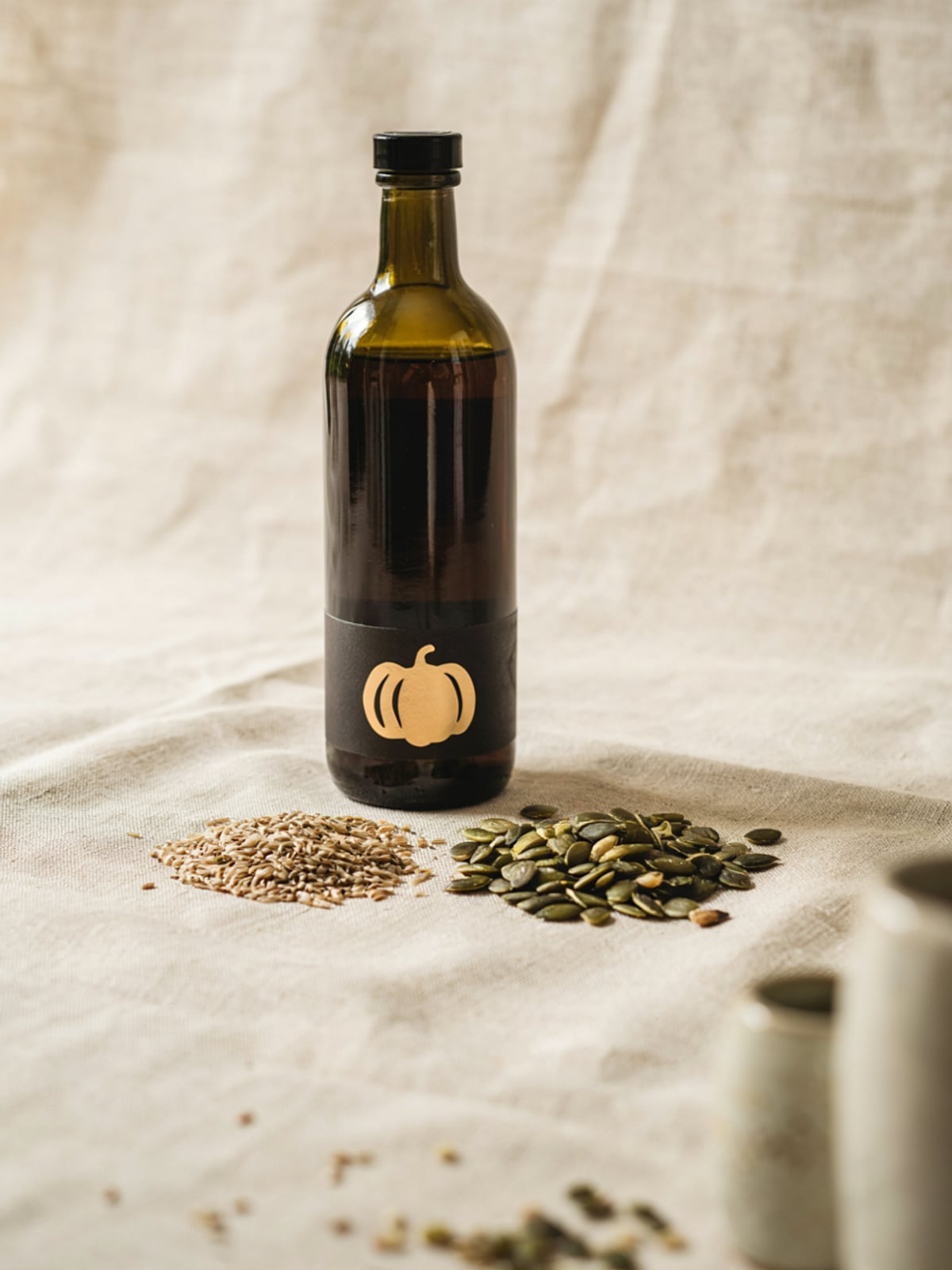
In the fridge door or the dark kitchen cupboard, they often end up neighbours: flaxseed oil and Styrian pumpkin seed oil, both filed under “specialty oils.” That neighbourhood invites mix-ups. Neither likes heat. Both arrive in drops rather than a generous pour. Swap one for the other, though, and the difference shows up fast — they are two entirely different characters that simply happen to share a shelf.
Two Neighbours on the Oil Shelf
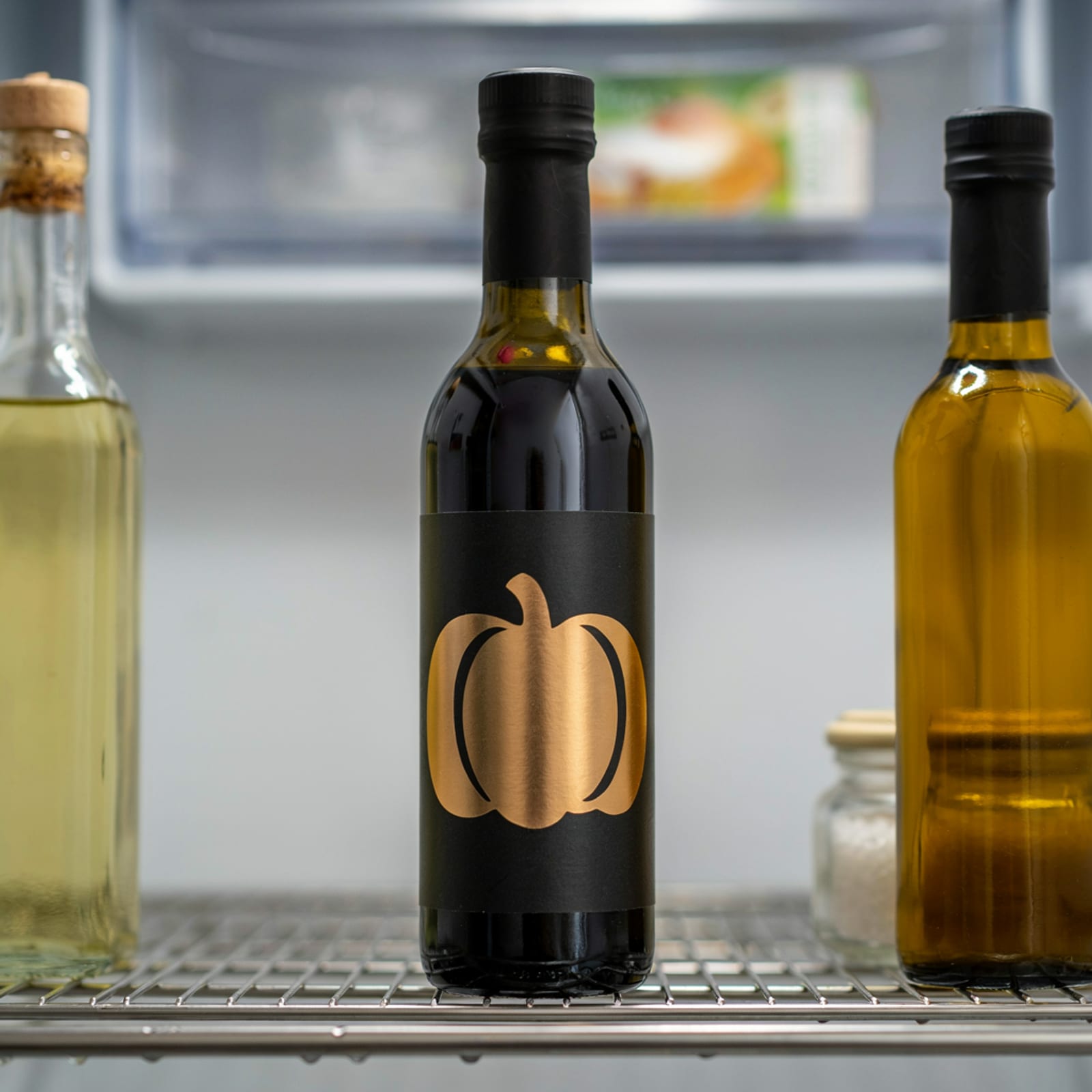
Pick up both bottles. One is usually opaque, often tinted dark, sometimes even sold refrigerated. The other holds clear glass, through which a deep red-black shimmer shows. That first grip already tells you something: flaxseed oil is delicate and wants to be used up quickly. Styrian pumpkin seed oil has more patience — not unlimited, but noticeably more.
Grass or Roast — What Hits First
A drop of flaxseed oil tastes mild, green, faintly bitter — closer to a soft seed note than a toasted nut. A drop of pumpkin seed oil tastes deep and roasted, almost cocoa-like when the roast has gone well. Drizzle a tomato salad with flaxseed oil and it still tastes mainly of tomato. Drizzle it with pumpkin seed oil and the oil itself becomes the main character. That intensity is exactly why Styrian kitchens use smaller amounts. Process background: roasting the seeds and what is Styrian pumpkin seed oil?
Why Neither Belongs in a Hot Pan
Imagine tipping flaxseed oil into a hot pan — its high share of polyunsaturated fats reacts badly there, and the aroma turns bitter fast. With pumpkin seed oil the reason differs but the outcome rhymes: a roasted finishing oil with a low practical smoke point loses exactly the aroma you paid for once the heat climbs. Both bottles stay closed while the stove runs and come out only afterwards. A neutral heat oil handles the frying; flaxseed or pumpkin seed oil finishes off the flame. See cooking with pumpkin seed oil and can you cook with it?
Fatty Acids Without Turning Dinner Into a Prescription
Flaxseed oil is often chosen for alpha-linolenic acid, a type of omega-3. Pumpkin seed oil carries a different fatty-acid balance and stays first and foremost a calorie-dense condiment. The composition pages omega-3 and omega-6 and fatty acids explain the numbers without turning the evening meal into a prescription. Anyone with personal nutrition questions is best served by a qualified professional — this comparison stays with taste and kitchen role.
How Fast the Clock Runs
Open a bottle of flaxseed oil and a clock starts ticking. It oxidises quickly; many bottles are sold refrigerated and are best finished within weeks of opening. With Styrian pumpkin seed oil, that same clock runs slower. Kept cool, dark, and tightly capped, an opened bottle often stays pleasant noticeably longer than flaxseed oil in everyday practice — the exact timing depends on roast, fill level, and storage. Practical guides: storage, shelf life, and how long does an opened bottle last?
Which Role Each Oil Takes
Flaxseed oil suits yoghurt, smoothies, and mild salads — a quiet, green finish in the background. Pumpkin seed oil takes over wherever roasted depth is wanted: Styrian salads, soups, eggs, cheese, and cold plates. For plant-based cooking both are vegan; pumpkin seed oil's status is covered in is pumpkin seed oil vegan? Everyday ideas: flavour pairings.
How to Recognise the Real Thing
Flaxseed oil carries no Styrian PGI story. Pumpkin seed oil that claims Styrian character, on the other hand, should show the PGI / g.g.A. mark and clear origin. Blends sold as “salad oil with pumpkin seed oil” cost less and taste milder — useful for everyday cooking, but not the same as pure oil. See Styrian PGI, blend or pure?, and the wider compare hub.
A Five-Minute Test for Your Own Table
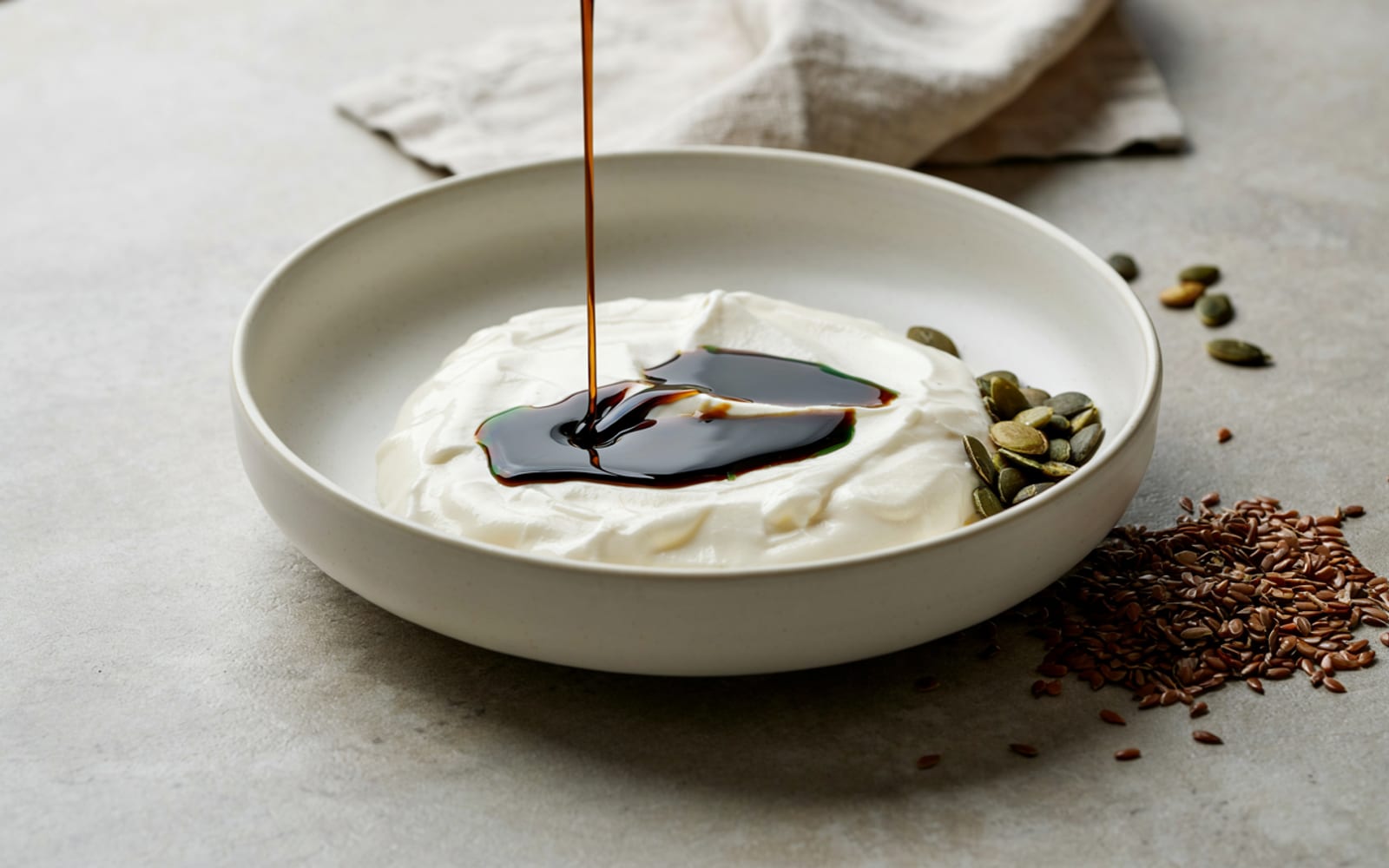
Put a few drops of each oil on separate corners of a white plate or plain bread. Smell first, then taste with a touch of salt. Flaxseed oil should stay soft and grassy; Styrian pumpkin seed oil should announce roast and nut before the spoon even reaches your mouth. That short test teaches more than any nutrient table — and saves a carefully built salad from the wrong expectation. In the end one simple rule holds: flaxseed oil for the quick, green note, Styrian pumpkin seed oil for the evening when the Alpine signature is called for — on eggs, soup, or a vinegar-forward salad from the recipe collection.
Shop deep-roasted Styrian pumpkin oil
Shop now