The Styrian
Pumpkin Seed Oil Journal
The Styrian
Pumpkin Seed Oil Journal
- The Styrian Pumpkin Seed Oil Journal
Shop EN
pumpkinseedoil.ccShop DE
kuerbiskernoel.cc
About
This website also contains some content created with the support of AI.
Phytosterols in Pumpkin Seed Oil
Nutrition notice: Nutrient figures are indicative and depend on product and portion. They are not health claims under EU Regulation 1924/2006.
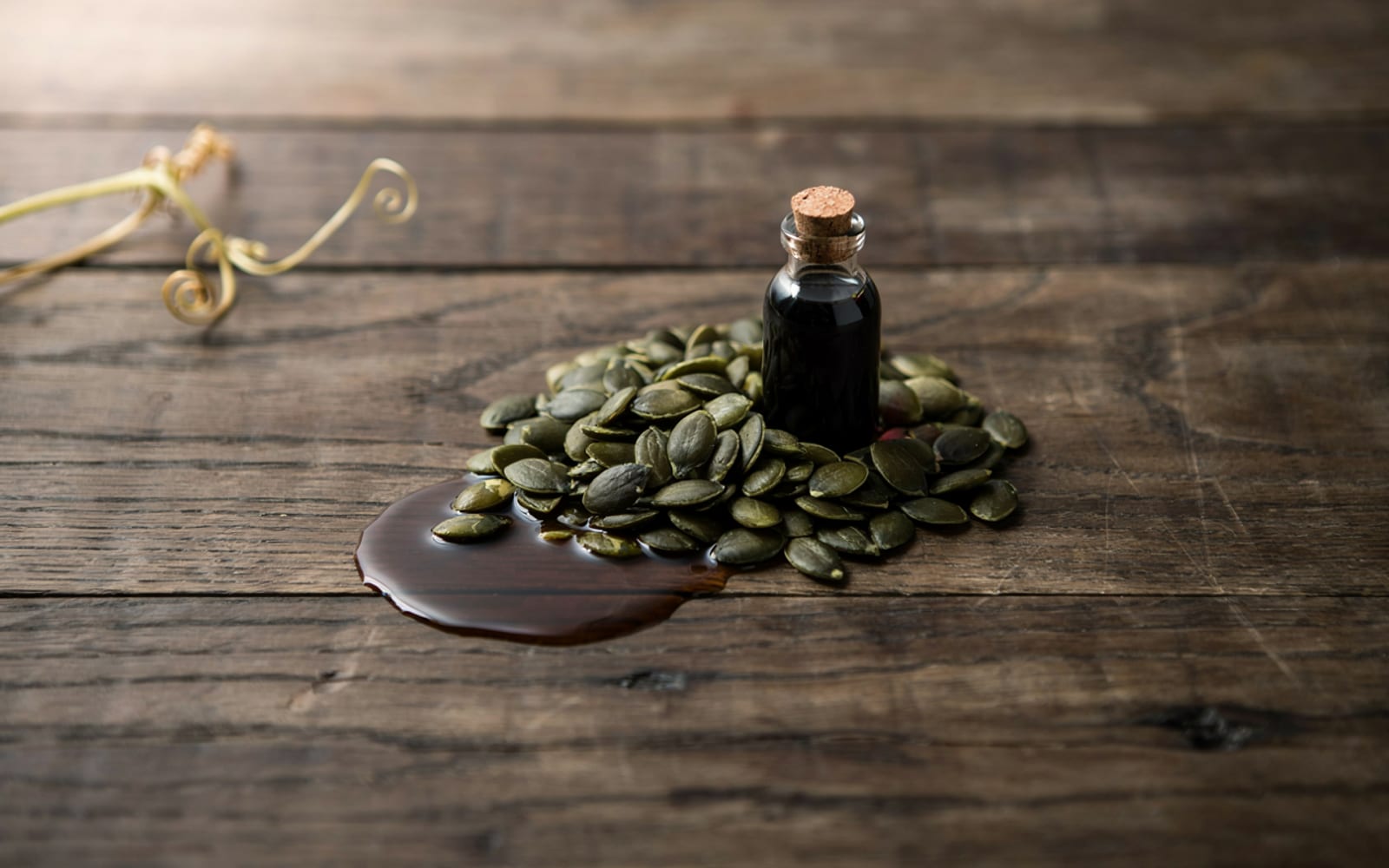
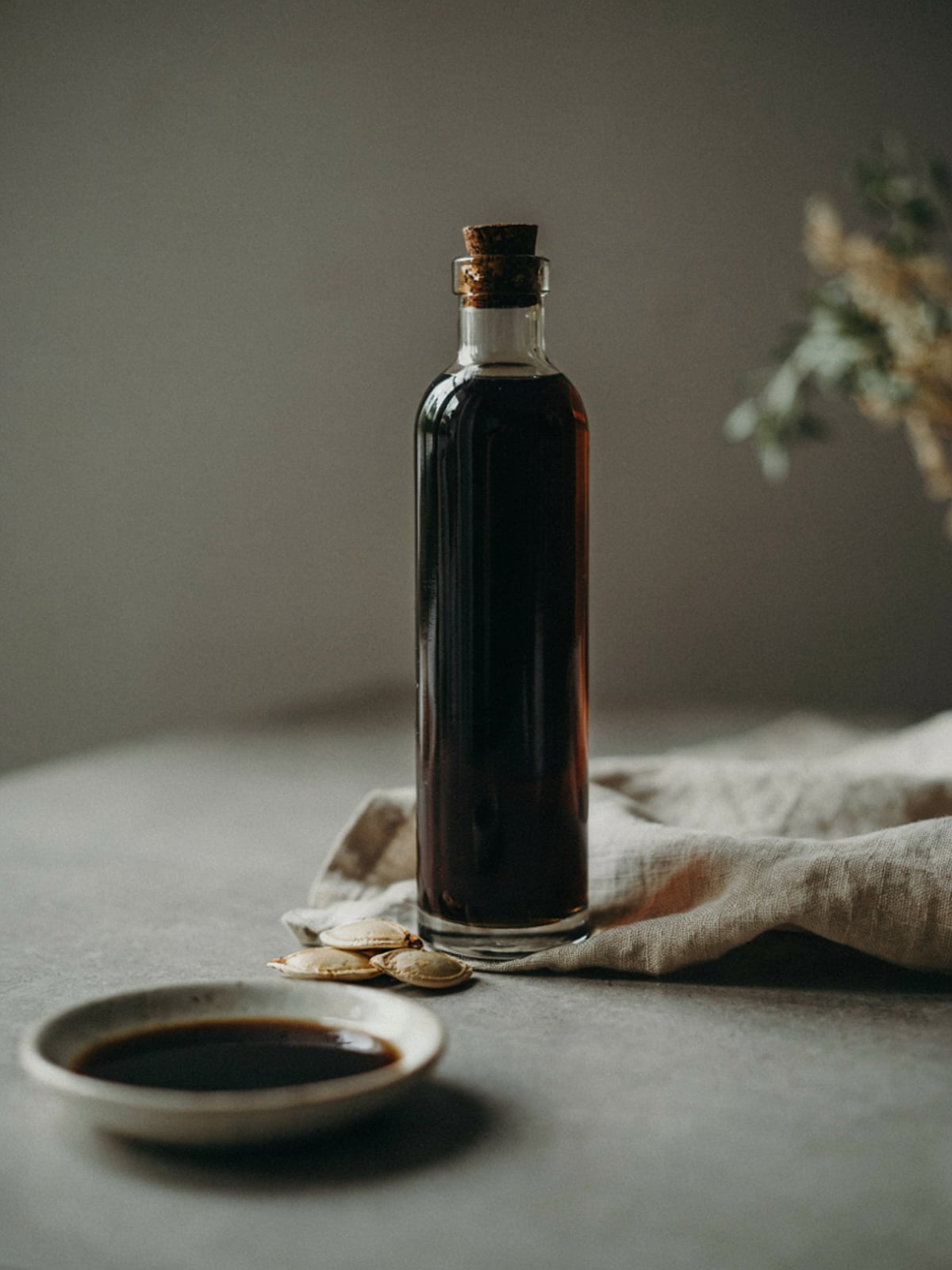
A drop of fresh pumpkin seed oil lands on a narrow strip of paper and spreads — a matte, dark sheen slowly growing wider. Anyone checking, in a Styrian mill, whether a batch has pressed well knows this short moment: look at the colour, take a quick sniff, hold it to the light at its thinnest edge. What nobody sees in that moment sits deeper. It is a chemical pattern within a group of compounds called phytosterols — and pumpkin seed oil carries a signature in that pattern that almost no other cooking oil has.
Phytosterols: An Invisible Pattern
Phytosterols are plant compounds. They share the same basic structure as cholesterol but differ in small details of their side chains — and occur exclusively in plants. Cooking oils, nuts, seeds, and legumes all carry them, each in its own mixture. At the press, nothing of this pattern is visible. It only shows up in the lab, where a single drop turns into a full profile: in most common oils, the same three compounds dominate — beta-sitosterol, campesterol, and stigmasterol — in shifting proportions.
The Oil Pumpkin's Fingerprint
With pumpkin seed oil, the picture looks different. A notable share of its phytosterols consists of so-called delta-7 sterols — mainly delta-7-stigmastenol, plus smaller amounts of delta-7-avenasterol. No sunflower, olive, or soybean oil shows this pattern at a comparable strength. That is exactly why it counts as one of the more reliable fingerprints for telling genuine pumpkin seed oil apart from oil that has been stretched or blended. The oil pumpkin does not carry this trait entirely alone — related gourd plants show it too — but among the oils sitting in an ordinary kitchen, it remains rare.
Before the Seed Reveals Its Secret
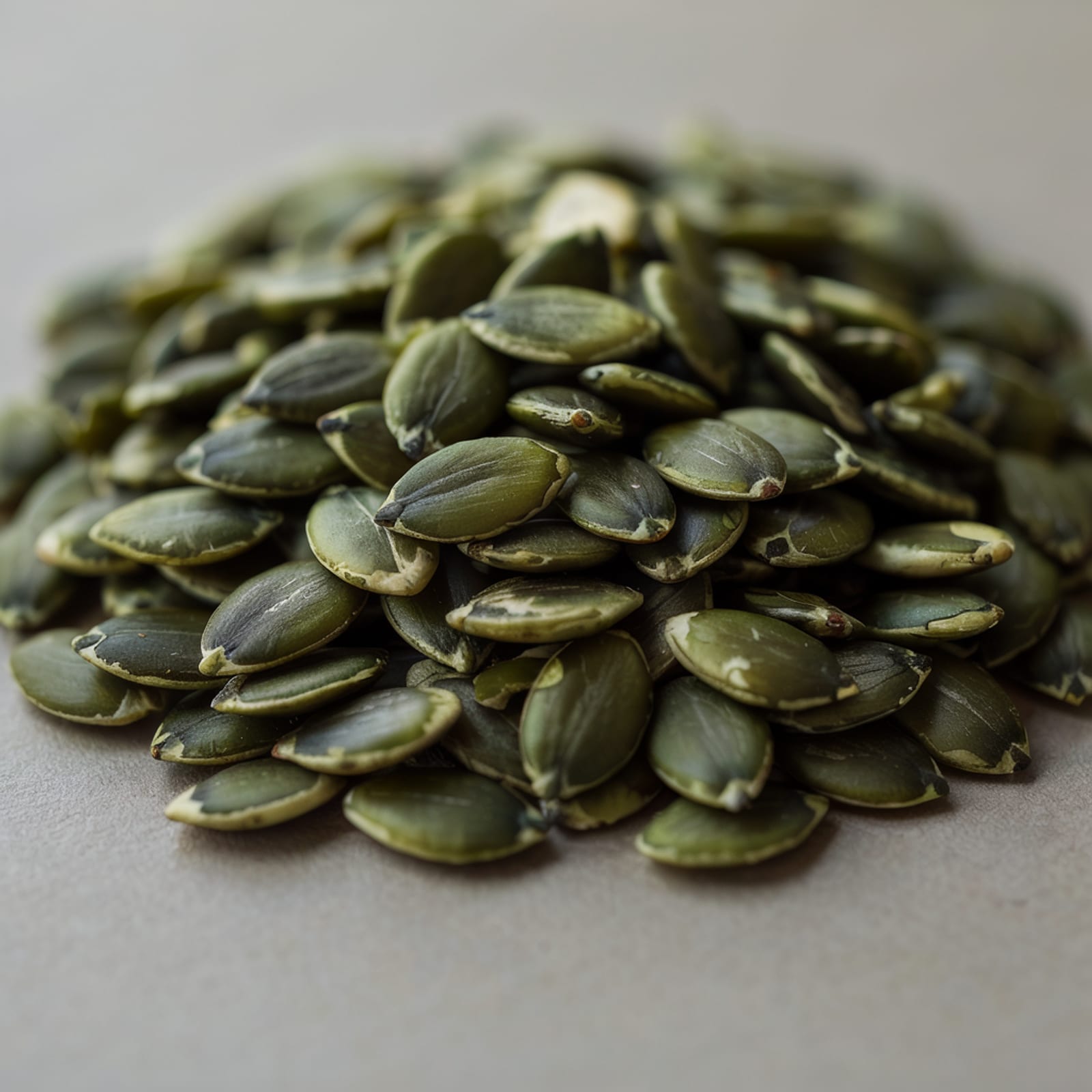
This fingerprint begins long before the press. It is already present in the freshly dried seeds, before anyone has even thought about roasting them. Pick up a handful and what you notice first is their weight — flat, dark green, faintly oily between the fingers. Nothing about them looks chemical or remarkable. And yet every single seed already carries the same delta-7 pattern that later turns up in the finished oil. What begins in the field changes in colour, smell, and texture through roasting and pressing — but the sterol pattern stays largely as it was.
An Old Assumption, Tested Again
Delta-7 sterols are usually mentioned together with the seed's gamma-tocopherol content when the topic turns to lower urinary tract complaints — symptoms linked to benign prostate enlargement or an overactive bladder, for instance. Several controlled studies have looked at standardised pumpkin seed extracts in this context, some with noticeable improvements. That fits a centuries-old habit: Central European folk medicine turned to the seed for exactly these complaints. Anyone staying cautious here has good reason to — the studies work with concentrated extract capsules, in amounts a few tablespoons of cooking oil could never supply. A drizzle of oil over a salad is a different thing from a supplement protocol. The broader, regional side of this reputation is covered in the discover section of this journal.
Two Numbers, One Difference
Separate from the prostate research, phytosterols as a group have their own solid body of evidence: at a daily intake of roughly 1.5 to 2.4 grams, they measurably block cholesterol absorption in the gut and lower LDL levels as a result. That effect is documented well enough that specially fortified foods exist purely to deliver this dose. Pumpkin seed oil contributes to overall phytosterol intake through diet — but ordinary kitchen amounts only reach a fraction of what these studies tested. To be honest about it: it is part of a phytosterol-rich diet, not a substitute for fortified products or supplements.
At the Table, Where It All Shows
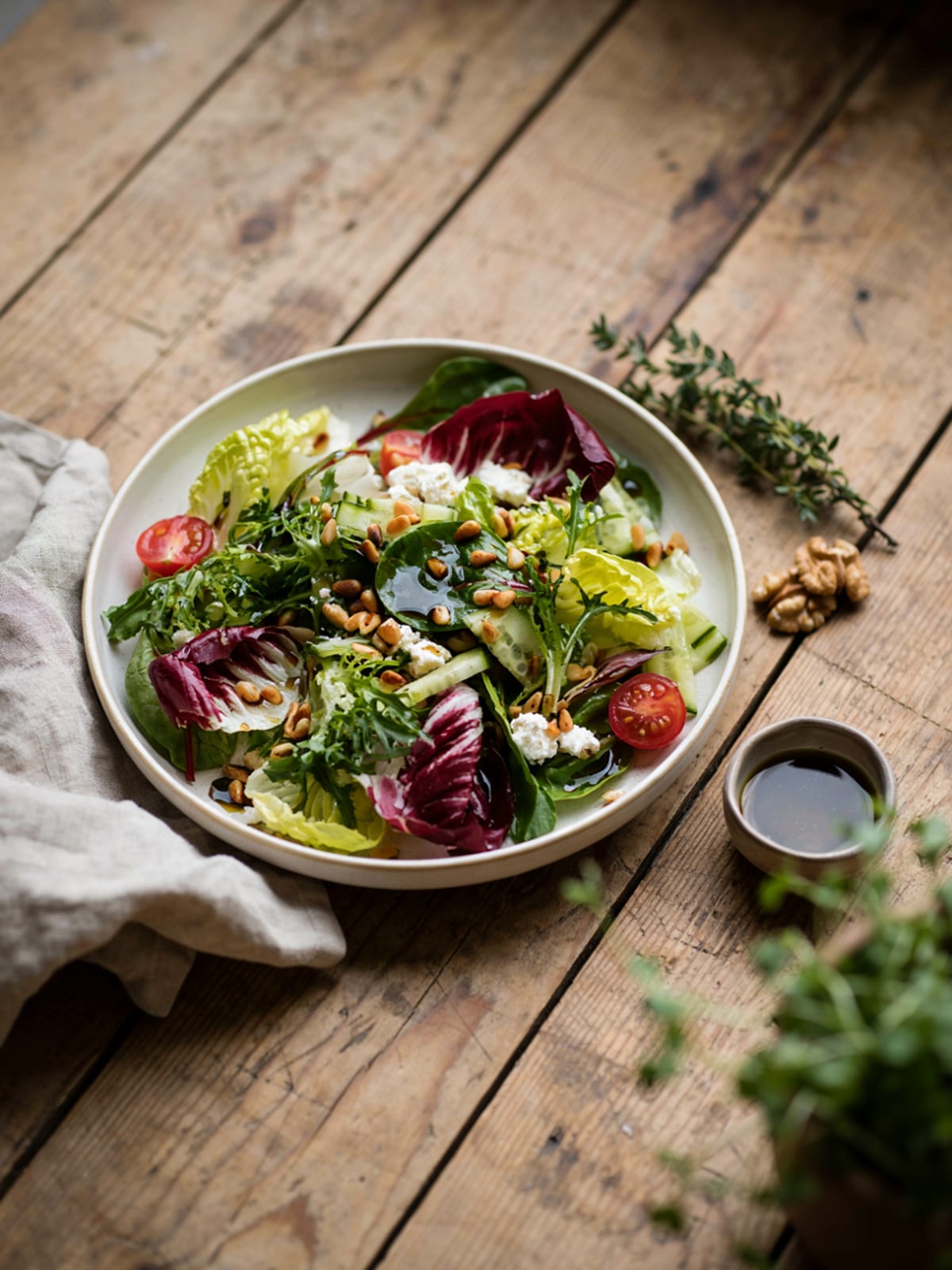
Eventually the oil lands where it makes the most sense: over fresh leaves, just before serving. A thin thread falls onto the salad, and the same scent rises that was already there on the test paper — nutty, warm, faintly roasted. Whether this oil was roasted before pressing, at roughly 100 to 160 degrees Celsius, or stayed cold, barely changes the fingerprint. Delta-7 sterols are heat-stable and survive roasting almost unchanged, while some pigments and tocopherols decrease more noticeably. Roasted and cold-pressed oil differ, then, in colour, aroma, and micronutrient content — but their sterol pattern stays remarkably similar. Just how much the two paths otherwise differ is covered in cold-pressed versus roasted.
One Building Block Among Many
In the end, phytosterols make the most sense when they are not viewed in isolation, but as one building block alongside several others — together with the fatty acids, the tocopherols, and the pigments that make up the overview of pumpkin seed oil's composition, and the fatty acid profile they travel alongside without chemically belonging to it. Rightly understood, the delta-7 fingerprint stays exactly that: a genuine scientific detail, a plausible link to an old reputation — and a quiet marker that travels unchanged from the first handful of seeds to the dark bottle on the shelf.
Buy Styrian pumpkin seed oil worth tasting
Shop now