The Styrian
Pumpkin Seed Oil Journal
The Styrian
Pumpkin Seed Oil Journal
- The Styrian Pumpkin Seed Oil Journal
Shop EN
pumpkinseedoil.ccShop DE
kuerbiskernoel.cc
About
This website also contains some content created with the support of AI.
Pumpkin Seed Liqueur and Regional Specialties
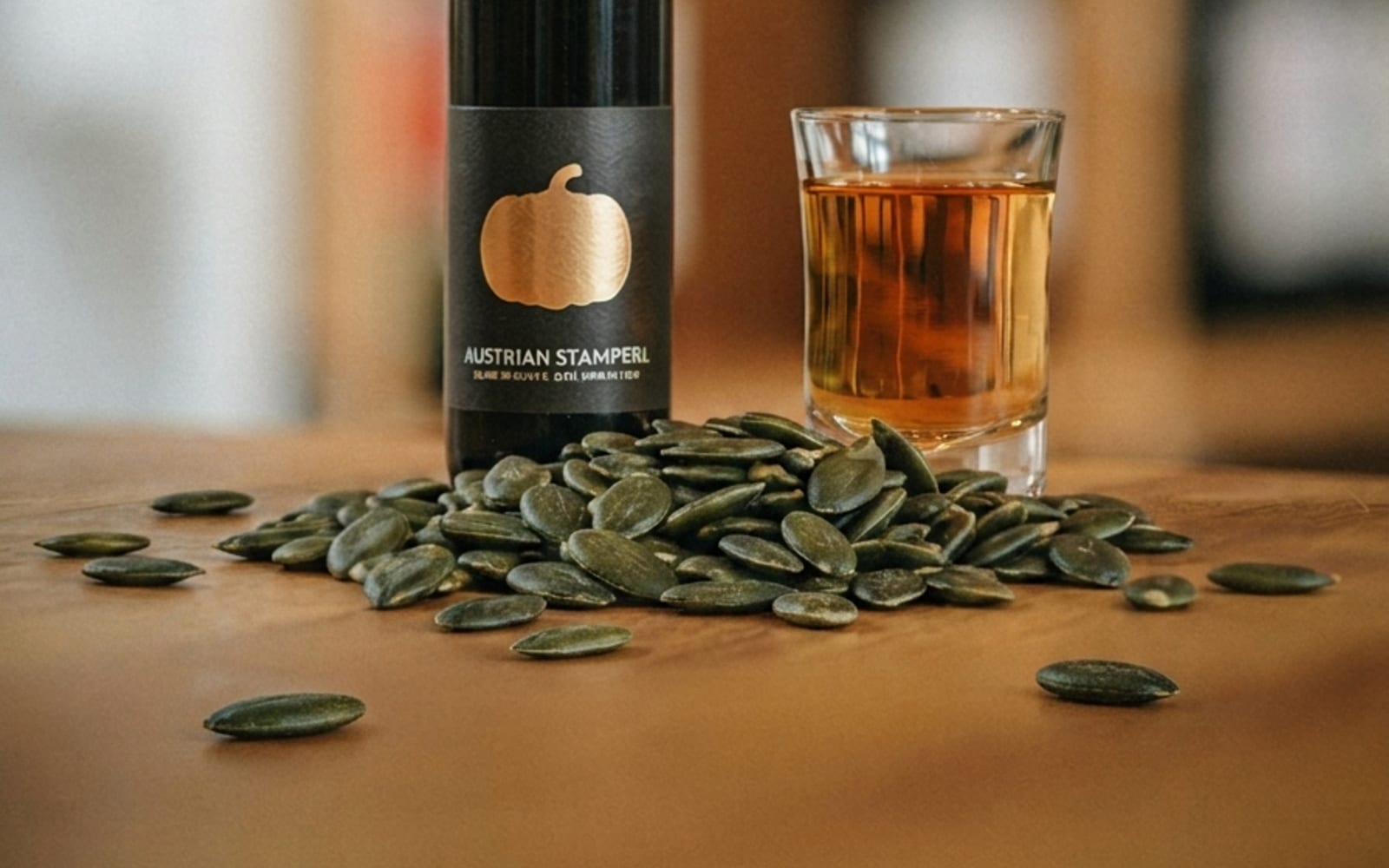
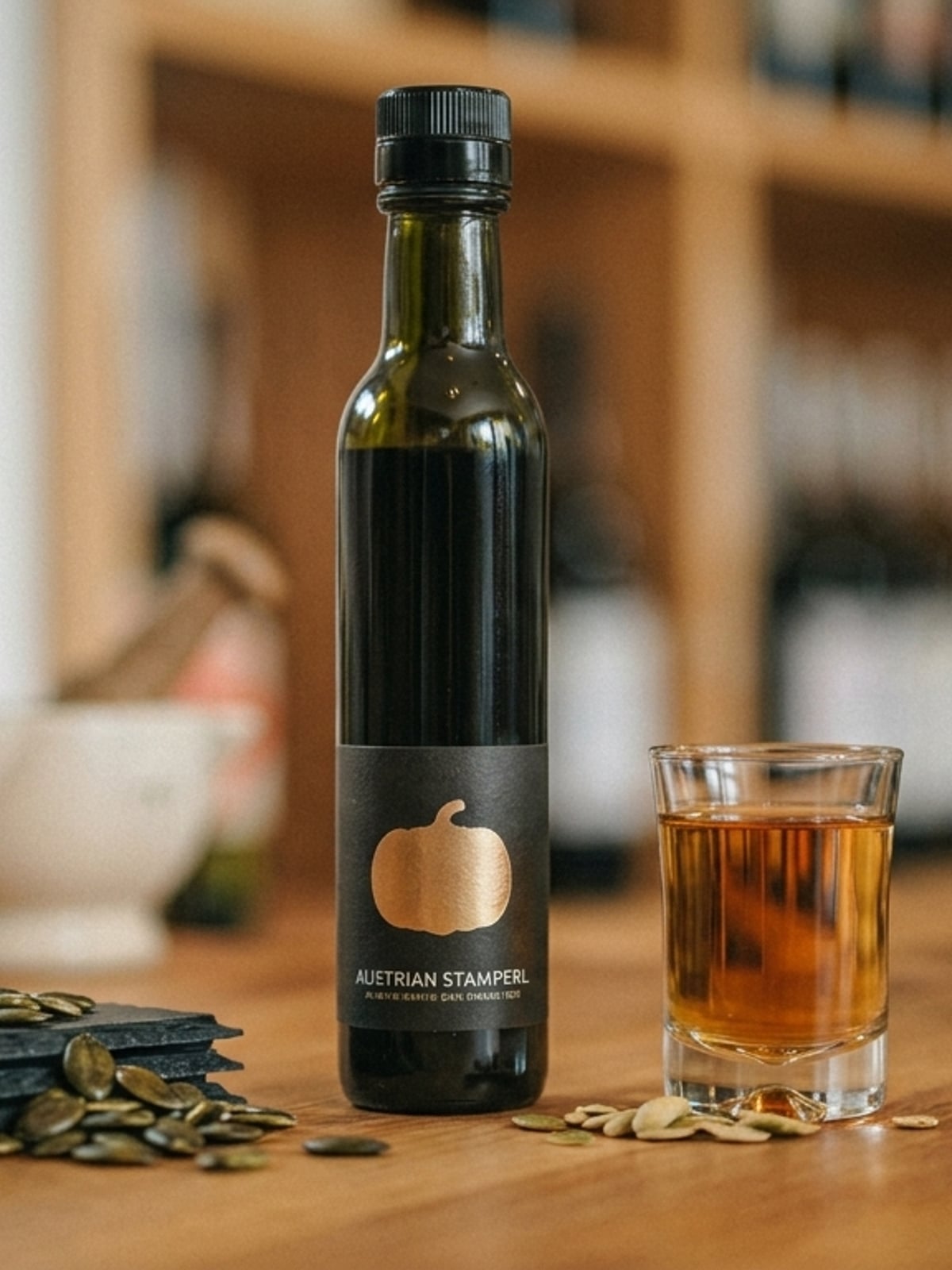
Anyone standing in a Styrian farm shop for the first time quickly sees more than just the familiar dark oil bottle. Beside it often shines a liqueur in gold or greenish-brown, bags of toasted seeds, brittle, sometimes a jar of pesto. The region's reputation for pumpkin seed oil runs so deep that some visitors expect everything made from the oil pumpkin to taste like the dark bottle from the salad table. That is only partly true — and the difference is worth a closer look.
In the Farm Shop, Between the Oil Bottle and the Liqueur Glass
Liqueur, sweets, and snack seeds are connected to the oil through the harvest and the region — not through their role in the kitchen. They are traditional curiosities and popular gifts, worth tasting once with an open mind. What they cannot do is replace a real finishing oil on eggs, soup, or salad. The culinary star stays cold-pressed, roasted Styrian pumpkin seed oil carrying PGI status where labelled — everything else belongs to the wider farm and farm-shop culture built around the same plant. On the oil itself: Styrian PGI pumpkin seed oil and cooking with pumpkin seed oil.
What Actually Sits Inside the Liqueur Glass
Pumpkin seed liqueur is a sweet, alcoholic specialty on a spirit base, flavoured with pumpkin seed, sweetened with sugar, and depending on the producer sometimes finished with cream or other softeners. Its colour ranges from golden to greenish-brown, and its aroma can lean toward roasted seeds, caramel, or vanilla — quite different from the savoury oil drizzled over tomatoes. Alcohol content varies from producer to producer; it remains a sipping or dessert drink, not a cooking substitute. It helps to picture it as Styrian hospitality in a glass after the meal, much like other regional digestifs — not as "liquid salad oil." Where a label leans heavily on health claims, the same caution applies as with any sweet liqueur.
Two Products, One Pumpkin, Two Different Paths
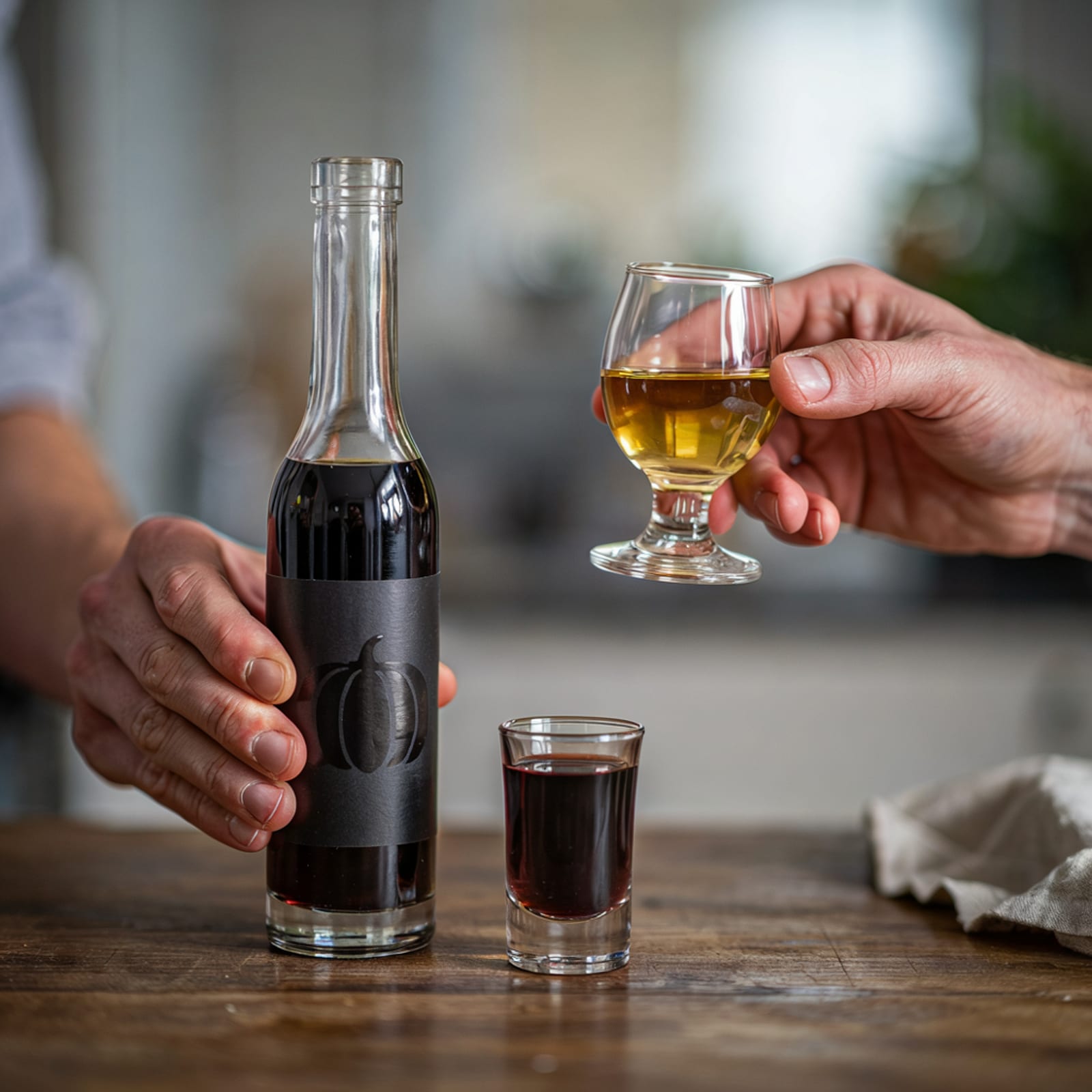
Both bottles begin with the same seeds of the oil pumpkin, and then their paths split. Culinary oil is pressed from roasted seeds and stays a pure fat for cold use. Liqueur, by contrast, is a formulated drink where sweetness and alcohol set the tone. Nobody would finish a potato salad with liqueur, or pour PGI oil into a small glass as a digestif — which is exactly why it helps to keep the two bottles in separate mental drawers. What the oil stands for stays savoury and cold-friendly: flavour pairings, cold plates, salad.
Seeds, Brittle, and the Real Bridge to the Kitchen
Roasted, salted pumpkin seeds are a Styrian everyday snack and a salad garnish at once. Seed brittle, chocolate bars with seeds, and jars of pesto sit quite naturally next to the oil bottle in the farm shop. The real bridge into the kitchen, though, is not the liqueur but the pesto made from pumpkin seeds and pumpkin seed oil — see pumpkin seed pesto and pasta with pumpkin seed pesto. The seeds bring crunch, the oil brings aroma and colour, and the liqueur offers, at most, a sweet final note. Combining all three in one dish rarely works well.
A Small Glass After the Meal
The liqueur is served lightly chilled or at a cool room temperature, depending on the producer's style — in small glasses, after coffee or alongside a plain biscuit, matching its sweetness. On a tasting board it can appear as a regional extra, once bread, vinegar, and oil have already done their educational work. Guests who have only known the liqueur sometimes need a small reset at this point: one spoonful of real oil on bread teaches more about Styrian flavour than a whole bottle of sweet specialty. For that particular ritual with the real oil: bread dip with pumpkin seed oil.
What Actually Lands on the Plate Every Day
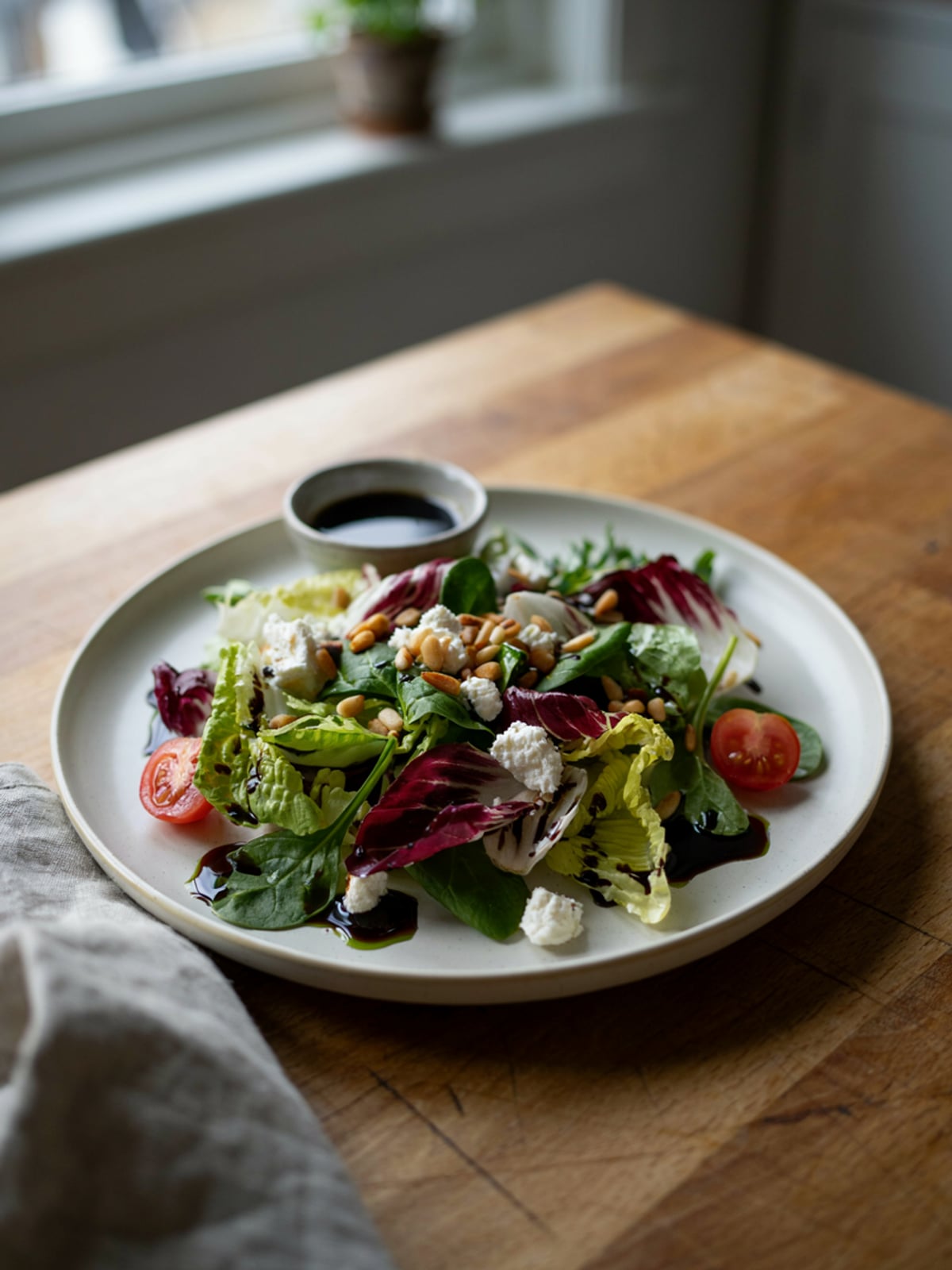
Cooking with liqueur remains, at best, a niche dessert trick — a spoonful in cream, perhaps an ice cream experiment. Everyday Styrian cooking, by contrast, almost always reaches for the oil bottle in the end: over eggs, in soup, in a dressing, in a yoghurt breakfast. Practical routes there: eggs, muesli and yoghurt, recipes. And yes — the dark oil still stains, so keeping a cloth within reach pays off, as removing pumpkin seed oil stains shows.
Souvenirs, Travel, and What Belongs on the Label
Liqueur travels well as a souvenir; oil travels well when packed upright and shielded from heat and light — storage. On the label, the categories should stay clearly separate: oil, liqueur, seed snack are three different things. PGI language belongs to the oil category where it appears at all — a greenish-tinted drink does not automatically share the same protected origin. Oils get compared internationally under comparing oils, not against spirits.
Curiosity, Kept in Proportion
Pumpkin seed liqueur stays a friendly regional aside: sweet, traditional, optional. Styrian pumpkin seed oil, on the other hand, is the daily kitchen tool — a finishing oil with a roasted voice, no deep-fry fat and no digestif. Anyone curious is welcome to taste the oddity once; cooking and dressing still happens with the oil. That small distinction keeps both products honest — and keeps the dark bottle exactly where it belongs: on the table, not in the liqueur glass.
Taste the flavour of Styrian pumpkin seeds
Shop now