The Styrian
Pumpkin Seed Oil Journal
The Styrian
Pumpkin Seed Oil Journal
- The Styrian Pumpkin Seed Oil Journal
Shop EN
pumpkinseedoil.ccShop DE
kuerbiskernoel.cc
About
This website also contains some content created with the support of AI.
Nutrition Facts of Pumpkin Seed Oil
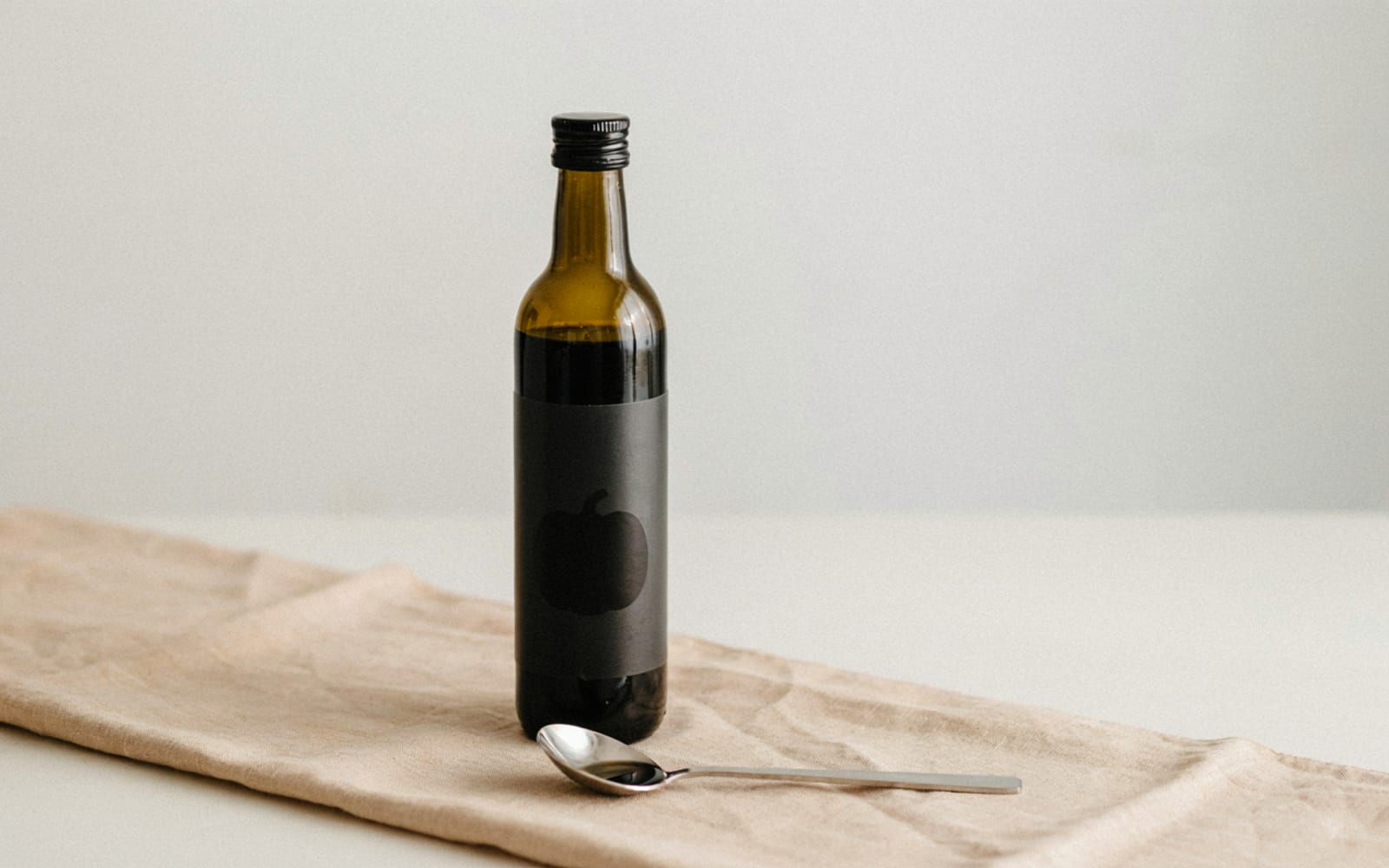
Anyone reading the nutrition table on a bottle of pumpkin seed oil is holding something both simple and slightly misleading. At first glance, everything looks obvious: fat, and barely anything else. Only a closer look reveals that this one line hides a whole bundle of stories — and that it is the composition of the fat, not merely its presence, that gives the oil its nutritional character.
One Label, Two Stories
The first story is that of the macronutrients — short, clear, quickly told. The second begins exactly where the first ends: in the fine structure of the fat itself, in the vitamins that dissolve within it, and in the plant compounds no label lists in detail. Both stories belong together if you really want to understand what a spoonful of pumpkin seed oil brings to the plate.
What the Nutrition Table Shows
Per 100 millilitres, pumpkin seed oil contains around 88 to 90 grams of total fat, no carbohydrates, no sugar, and no measurable protein. Its calorie content sits at roughly 884 kilocalories per 100 millilitres — comparable to other pure plant oils. A tablespoon, about 15 millilitres, works out to roughly 13 grams of fat and 120 to 130 kilocalories. Fibre is entirely absent from the oil: it stays behind in the press cake, not in the pressed-through liquid. The link to portion sizes and energy values is covered in calories in pumpkin seed oil.
The Drop That Changes Everything
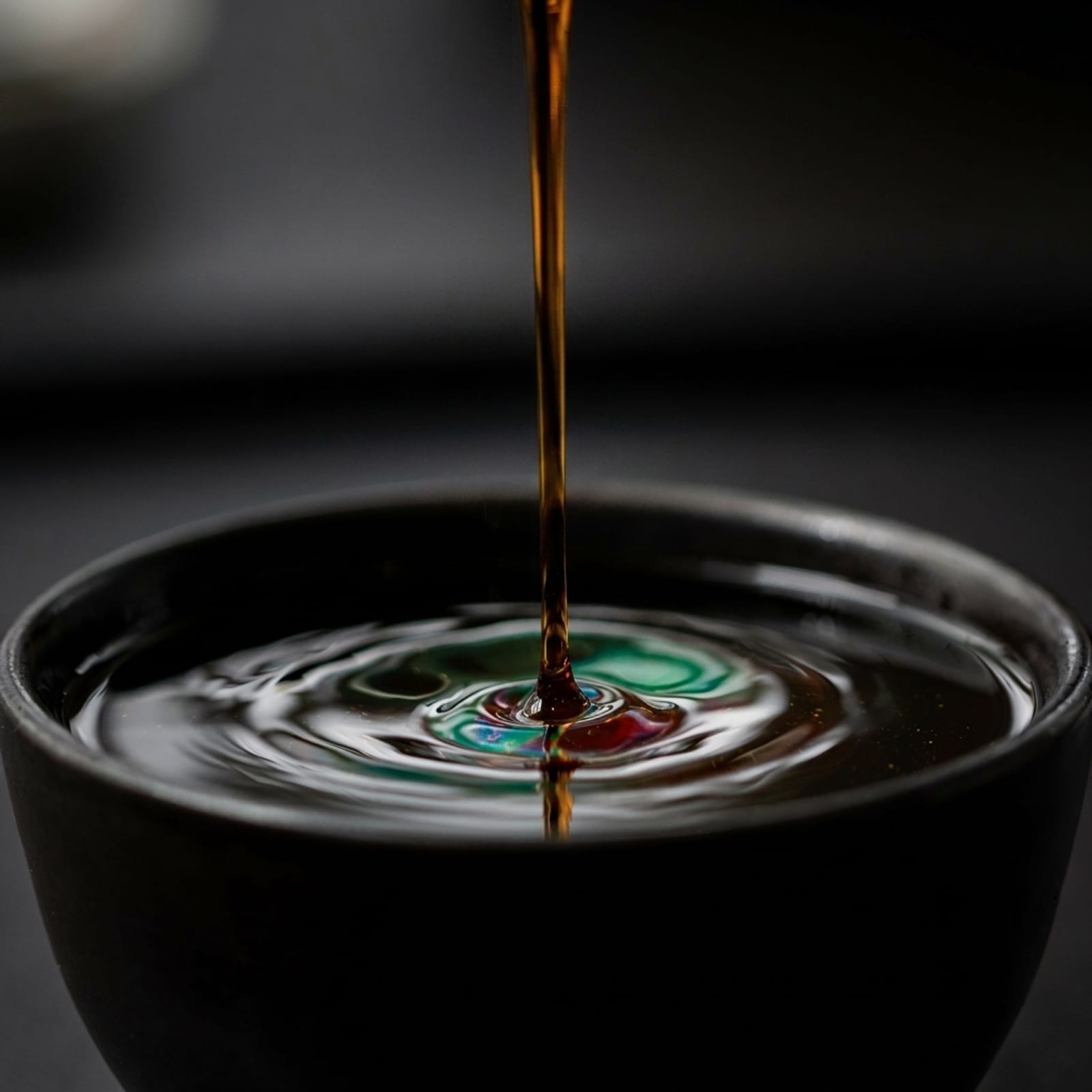
Tip the oil into a dark bowl and a small swirl forms for a moment before the surface settles again. That very motion holds the genuinely interesting story of the fat: its internal composition. Roughly 55 to 60 percent of the total fat is polyunsaturated fatty acids, dominated by linoleic acid, an omega-6 fatty acid. Oleic acid, a monounsaturated omega-9 fatty acid, makes up about 18 to 22 percent. Saturated fatty acids — mainly palmitic and stearic acid — contribute the remaining 15 to 20 percent. That fatty acid pattern makes pumpkin seed oil closer to sunflower oil than to olive oil, even though every oil has its own face. How the balance between omega-3 and omega-6 plays out is explored further in omega-3 and omega-6.
A Vitamin That Stays a While
Within this fat, vitamin E dissolves, mostly as gamma-tocopherol, accompanied by smaller amounts of alpha- and delta-tocopherol. As a fat-soluble antioxidant, it is one reason well-stored pumpkin seed oil stays comparatively stable for an oil rich in polyunsaturated fatty acids. How much of it sits in a particular bottle varies by producer and harvest: typical figures fall between 5 and 20 milligrams per 100 millilitres, depending on the analytical method and how fresh the oil is.
A Quiet Passenger
Less well known, but present too: vitamin K. Some analyses of pumpkin seed oil show measurable amounts of vitamin K1, and smaller amounts of K2 as well. Vitamin K is fat-soluble and plays a role in blood clotting and bone metabolism. What a typical tablespoon supplies is modest next to concentrated sources such as dark leafy greens — but not zero. For people on blood-thinning medication who keep an eye on their vitamin K intake, that is a detail worth knowing.
At the Table, Where the Bottle Sits
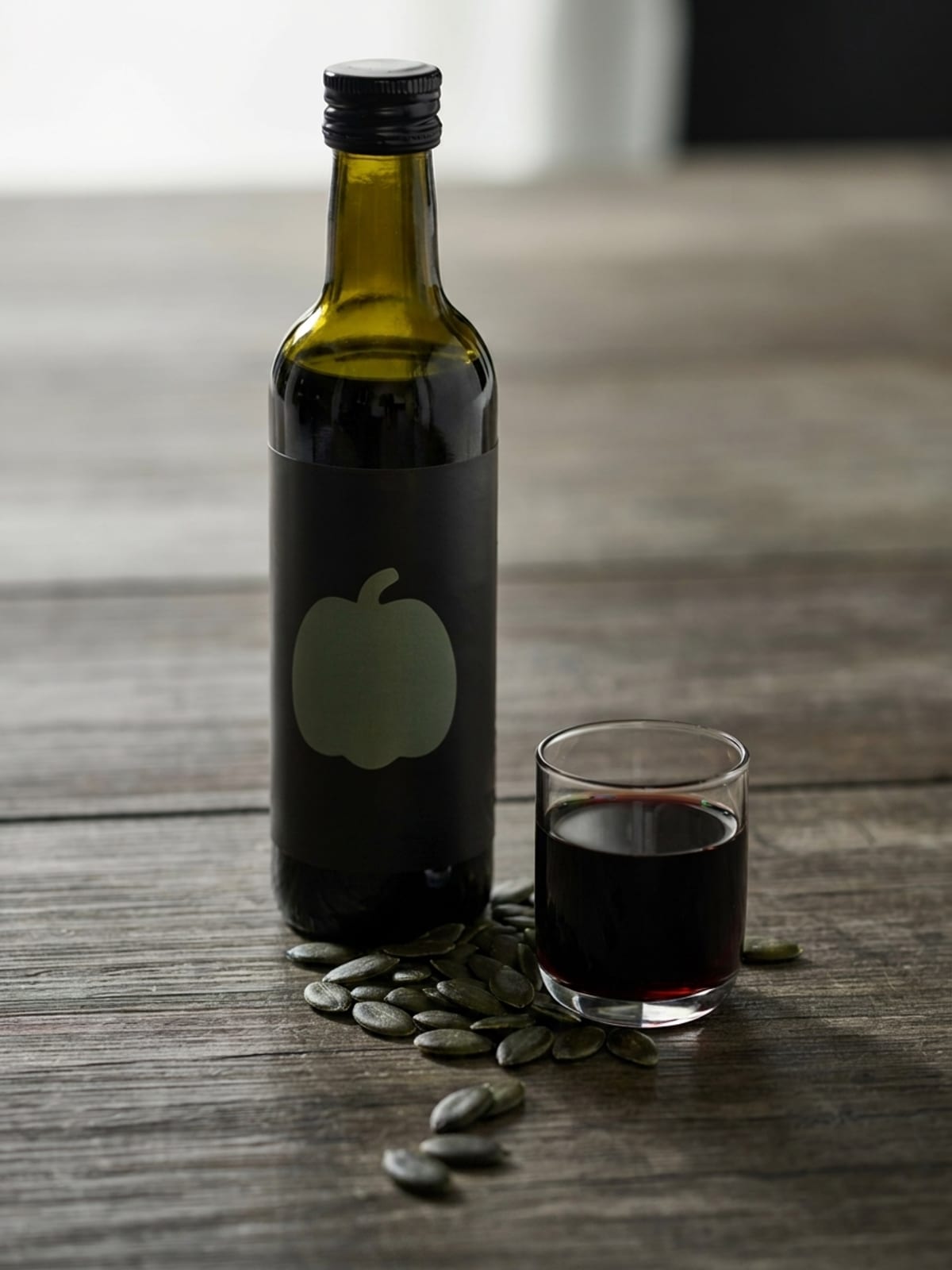
When the bottle later sits quietly on the table, its dark colour hides a third, often-overlooked story: that of the minerals. Unlike the whole seed, pressed pumpkin seed oil contains only trace amounts. Zinc, magnesium, iron, and phosphorus — the minerals that make pumpkin seeds nutritionally interesting — stay largely behind in the press cake. A tablespoon of oil makes practically no meaningful contribution here. The difference between seeds and oil on this point is covered in seeds or oil, and zinc specifically in zinc in pumpkin seed oil.
A Familiar Face: Phytosterols
Between the lines of the nutrition table sits one more notable fraction: phytosterols, plant compounds with a structure similar to cholesterol. The most striking are beta-sitosterol and the delta-7 sterols, the latter relatively rare in other oils and therefore a characteristic marker of pumpkin seed oil chemistry. They are credited with inhibiting cholesterol absorption in the gut and are among the most intensively researched components of this oil. The amount in one tablespoon is relevant but modest — whole pumpkin seeds supply a more concentrated dose here.
The Profile as a Whole
Taken together, the nutrition profile of pumpkin seed oil is that of a predominantly unsaturated plant fat with a decent vitamin E content, a notable phytosterol fraction, and the trace mineral values you would expect from a quality cold-pressed oil. It is not a concentrated vitamin or mineral source the way seeds, nuts, or vegetables are — and it should not be treated as one. What it offers is an interesting fat with a composition that sets it apart from mass-produced industrial oils, in an intensely aromatic form that invites measured use. That exact combination — a good fatty acid pattern, small portion sizes, high flavour return — is, in the end, the honest reason the bottle earns a regular place on the table.
Nutrition notice: Nutrient figures are indicative and depend on product and portion. They are not health claims under EU Regulation 1924/2006.
Taste regional Styrian pumpkin seed oil
Shop now