The Styrian
Pumpkin Seed Oil Journal
The Styrian
Pumpkin Seed Oil Journal
- The Styrian Pumpkin Seed Oil Journal
Shop EN
pumpkinseedoil.ccShop DE
kuerbiskernoel.cc
About
This website also contains some content created with the support of AI.
Baking with Pumpkin Seed Oil
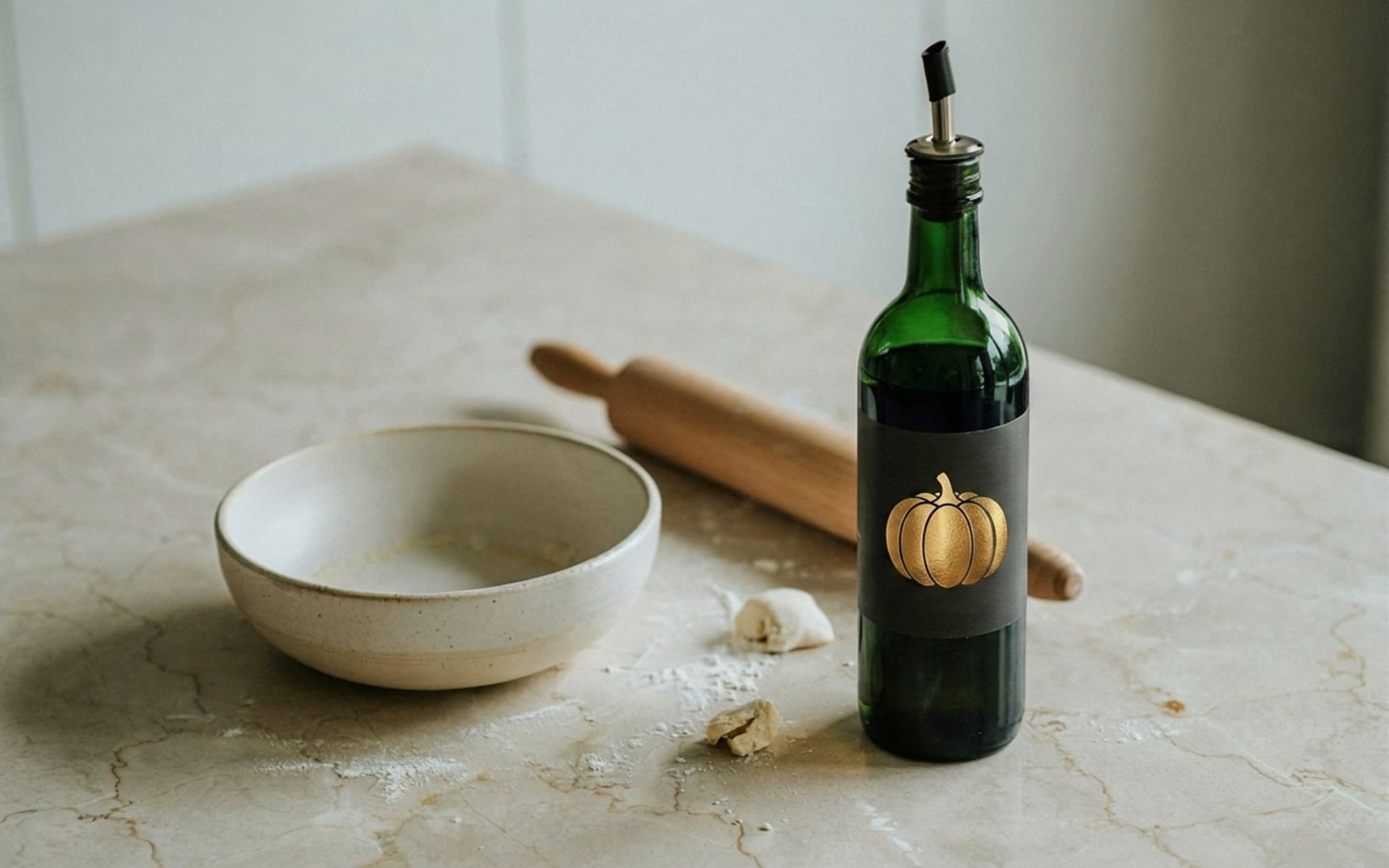
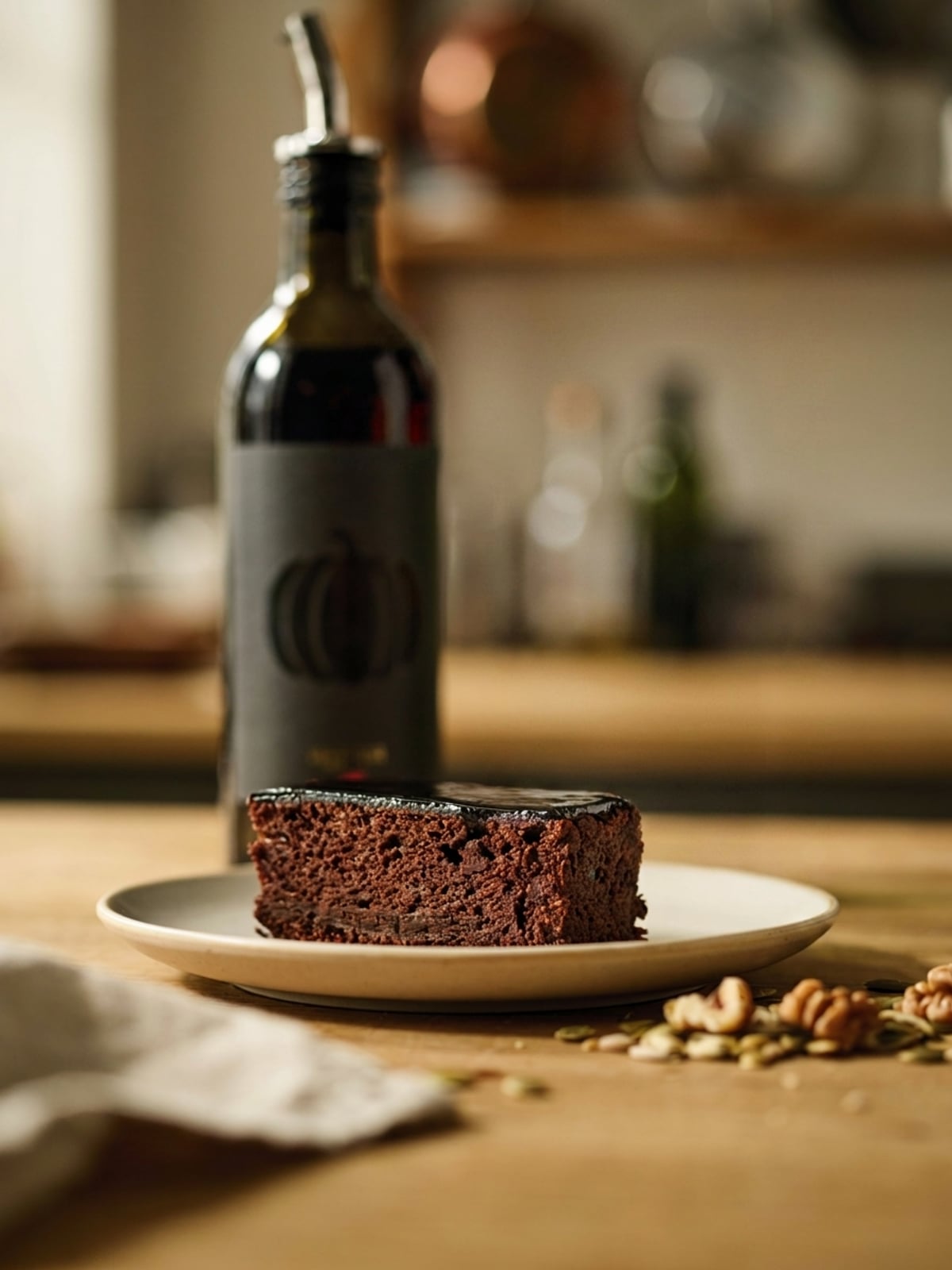
Baking with pumpkin seed oil is a niche corner of Styrian cooking — but a rewarding one, once you know what the oil can do there and what it can't. Swap it in for butter one-to-one and you'll be disappointed: the two play different roles, and the results show it. Used in the right spot, though, it brings moisture, aroma, and a particular warmth to a batter that no other fat quite reproduces.
Not a butter swap, a path of its own
Butter and pumpkin seed oil do different jobs in a bowl of batter. Butter carries structure and air; the oil carries moisture and a deep, roasted aroma. Mix the two up and you land somewhere between, satisfying neither. Put the oil where a recipe already wants liquid fat, though, and it gives a cake something a neutral oil never could.
What happens to the aroma in the oven
The roasted compounds that give the oil its intense smell are volatile at high heat. Some of them drift off in the oven, so a batter that smells strongly of pumpkin seed oil raw turns quieter after forty minutes at 180 degrees. Nothing disappears completely, though: the more stable aromas survive the heat and fold into the crust and the browning, landing closer to toasted seeds and warm grain than to the raw oil from the bottle.
A cake you can taste
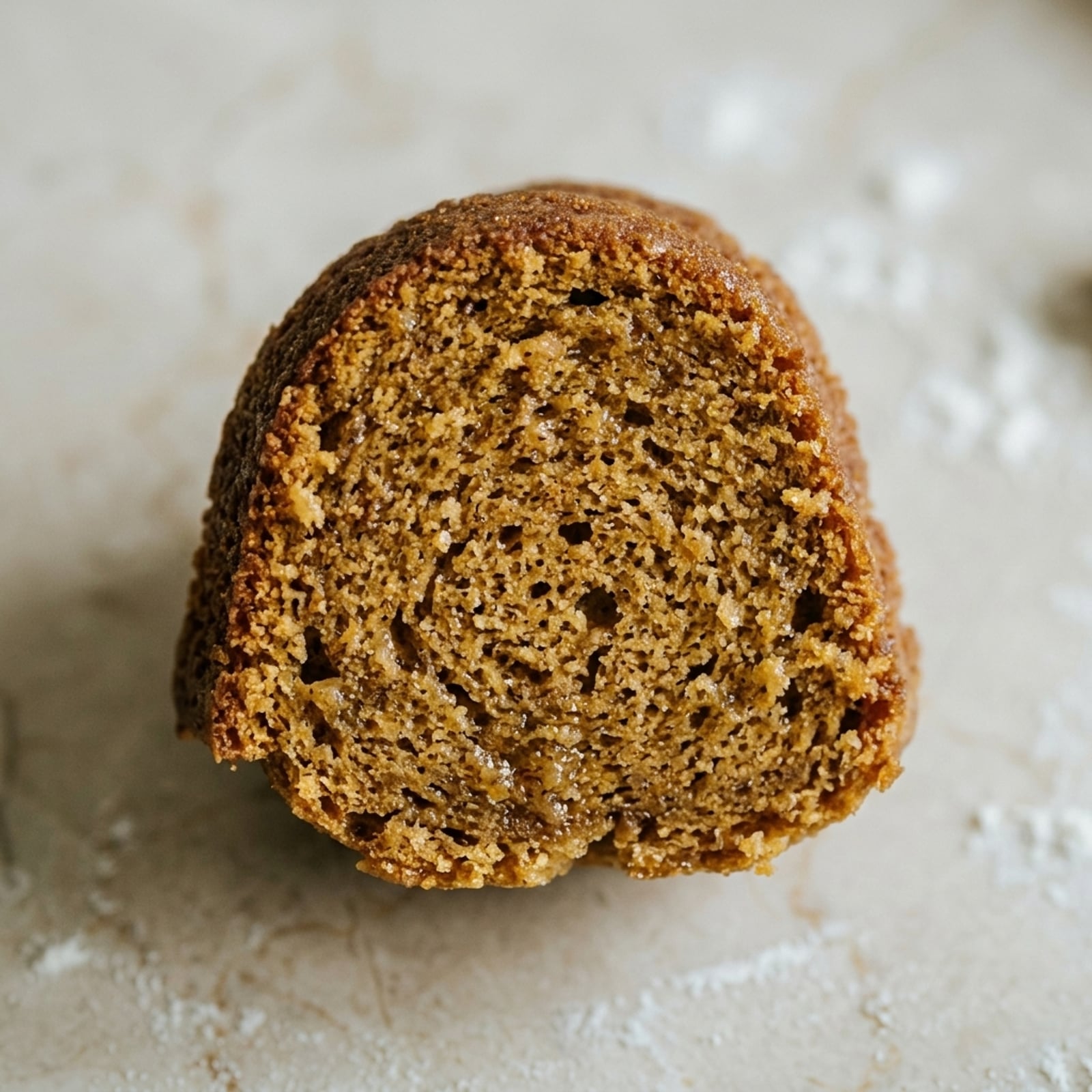
Pumpkin seed oil does its most reliable work in dense, moist cakes and muffins — the kind that already call for oil rather than butter. Carrot cake, courgette bread, spiced loaf cakes: cut the first slice and the crumb shows fine, even pores, dark enough that you can almost guess where the fat came from. Cinnamon, nutmeg, and clove sit especially well alongside it, since they carry the same warmth the oil already brings.
Bread, the walnut-oil way
In bread, pumpkin seed oil behaves much like walnut oil in a French bakery: a small amount in the dough is enough for aroma and a slightly tender crumb, without changing the bread's structure. Two to three tablespoons per 500 grams of flour is plenty to notice in the finished loaf, especially in a hearty wholemeal or rye dough. Working in whole or roughly ground pumpkin seeds alongside the oil strengthens the effect and adds texture besides.
The right moment to stir it in
In most recipes, pumpkin seed oil joins the other liquid ingredients — with the eggs and milk, before the flour and dry ingredients go in. One difference is worth keeping in mind: because its flavour carries further than a neutral oil's, it helps to start with about eighty percent of the amount stated, then taste the batter, if eggs allow it, before adding the rest. That way the oil stays noticeable without taking over.
A loaf still warm
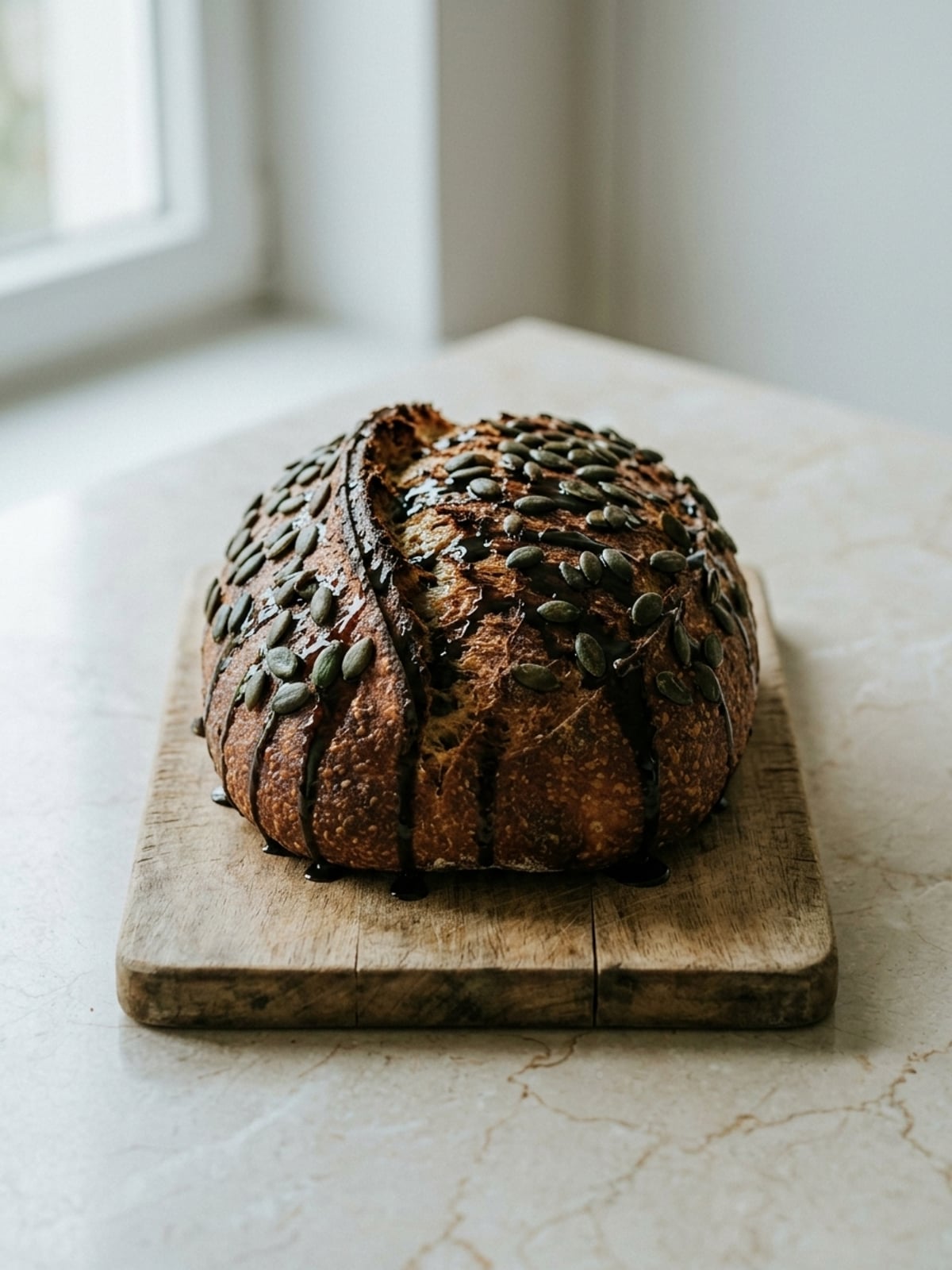
There is also a use for after baking. A loaf fresh from the oven, still warm, takes well to a thread of pumpkin seed oil poured straight over the crust. The lingering heat opens the oil's aroma without the full heat of baking, and it soaks gently into the surface with a character nothing like butter or olive oil. The same idea works cold: a splash of pumpkin seed oil over vanilla ice cream is a surprisingly good Styrian habit, explained in full under pumpkin seed oil on ice cream.
Where the pan draws the line
For all it can do in a batter, pumpkin seed oil keeps a firm line at the stove. The moment direct, high heat gets involved — a hard sear in a hot pan — the oil loses its character fast, and heat and frying explains exactly why. For the full picture of when and how the oil belongs in a kitchen, see how to use pumpkin seed oil, and for how it behaves with direct heat rather than an oven, see cooking with pumpkin seed oil.
Order authentic Styrian culinary oil
Shop now