The Styrian
Pumpkin Seed Oil Journal
The Styrian
Pumpkin Seed Oil Journal
- The Styrian Pumpkin Seed Oil Journal
Shop EN
pumpkinseedoil.ccShop DE
kuerbiskernoel.cc
About
This website also contains some content created with the support of AI.
Pan-Fried Mushrooms with Pumpkin Seed Oil
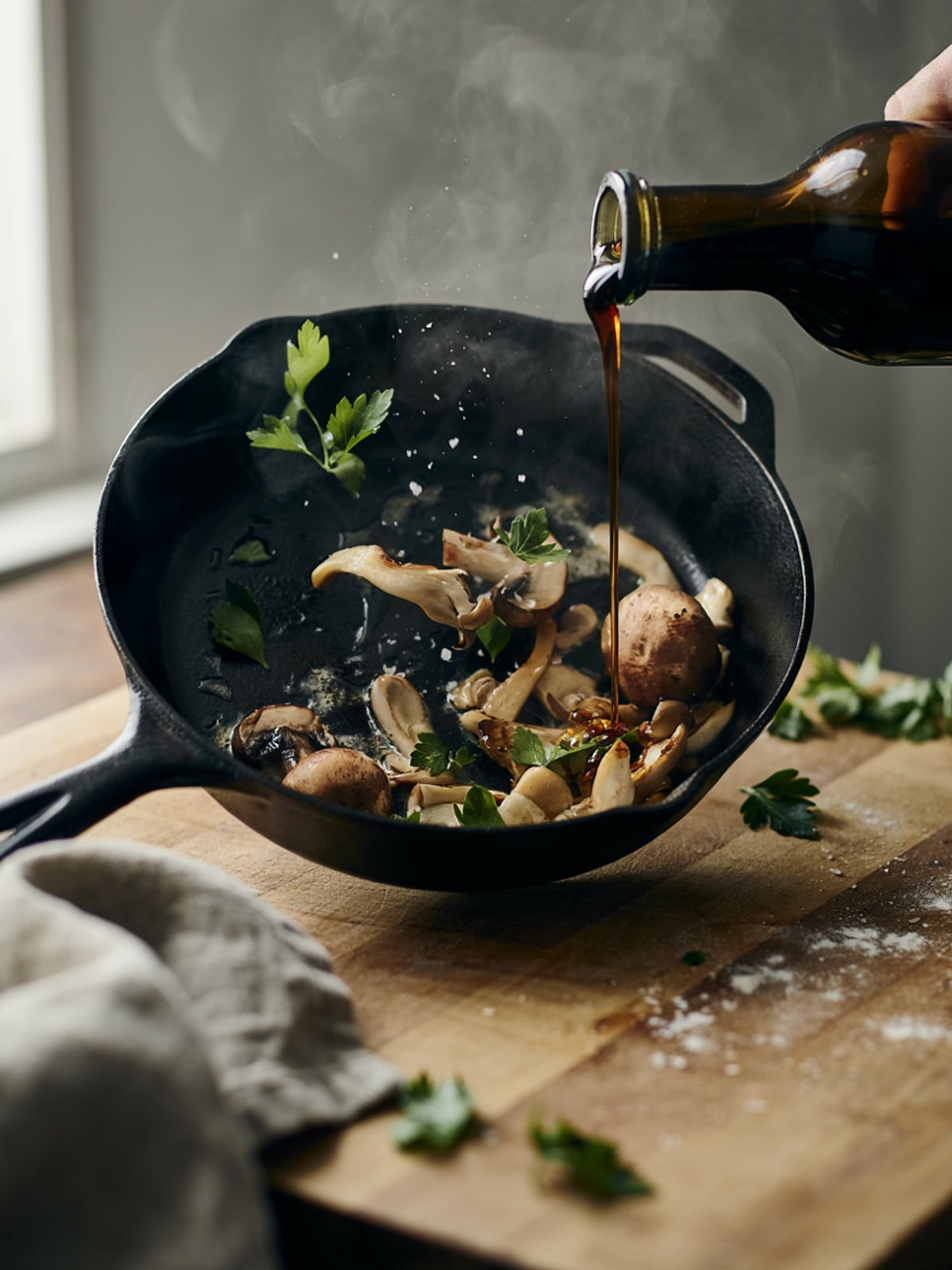
Mushrooms crave fat and heat, but Styrian pumpkin seed oil has no business near a sputtering pan. Cook the fungi hard in butter or a neutral oil first, browning them until the water they release has cooked away and the edges turn deep gold. Then, and only then, does the flame go off.
A spoon of dark pumpkin seed oil folds in once the pan has gone quiet, together with a scatter of chopped parsley. The same rule holds for roasted vegetables and fish finished this way: cook with a fat that can take the heat, then finish with the one that cannot. More on that logic sits under heat and frying, and the everyday version of the habit lives in cooking with pumpkin seed oil.
Mushrooms that need room
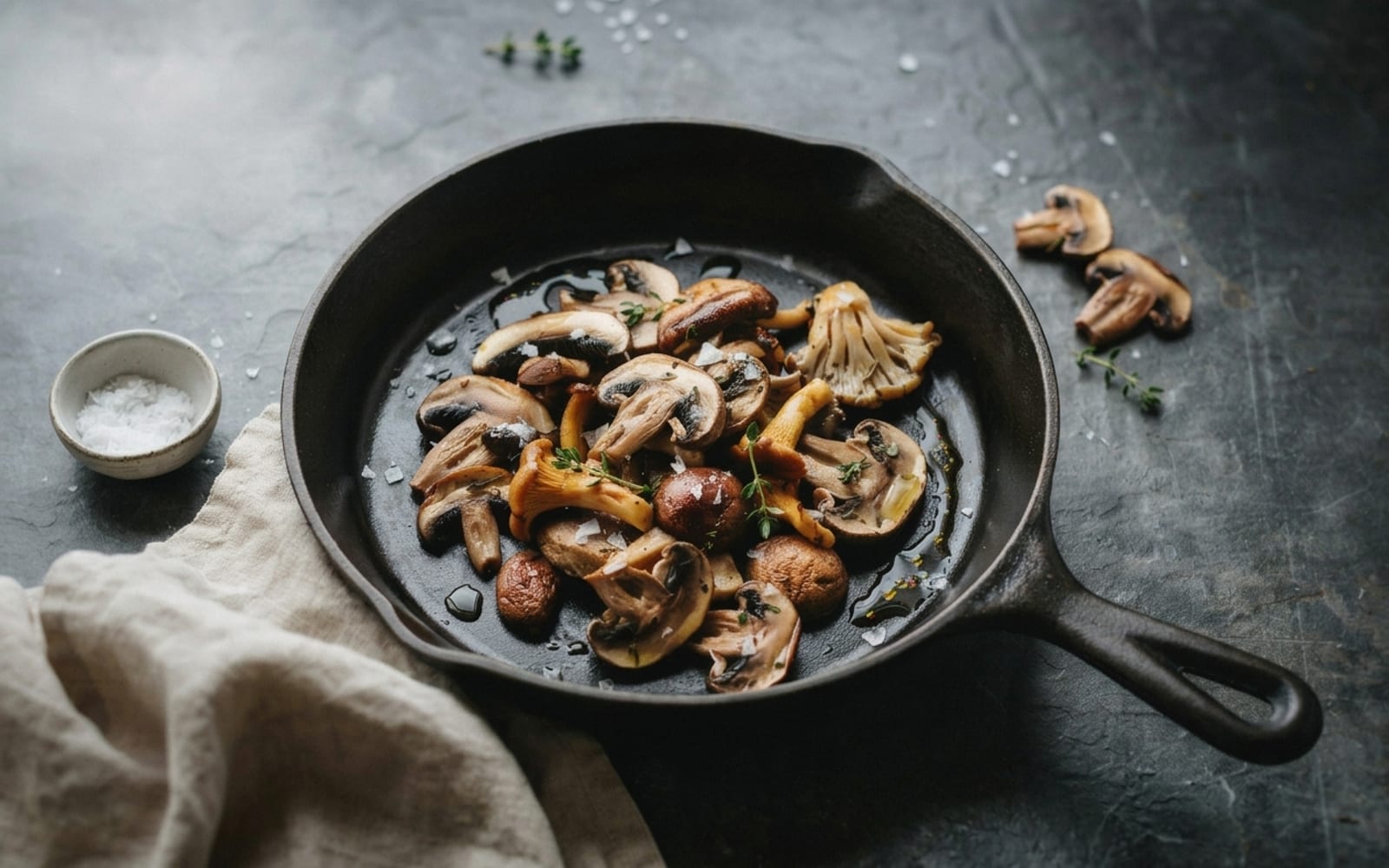
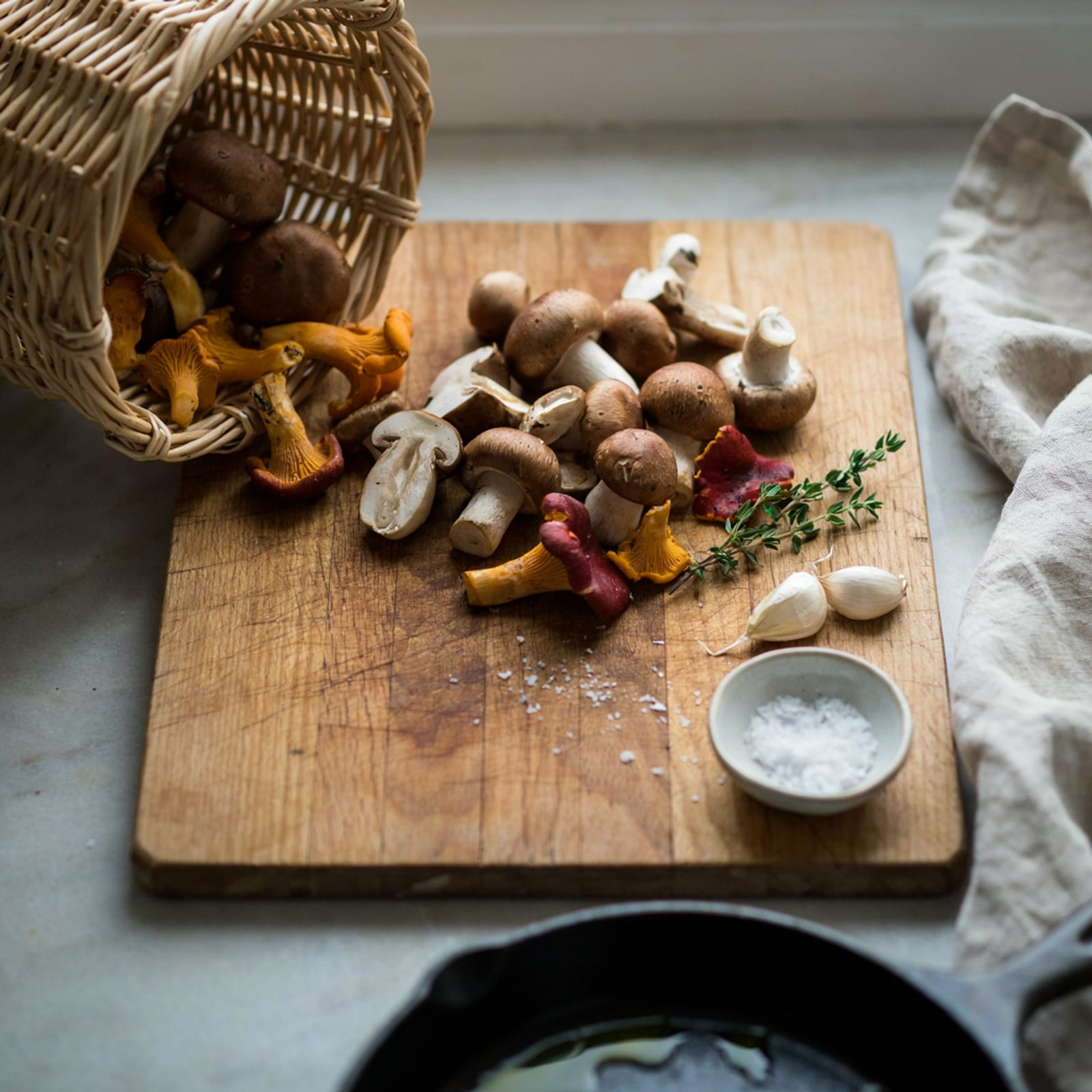
Button, cremini, oyster, or chanterelle when the season allows — cut them thick so they keep some bite. Crowd a pan with wet mushrooms and they steam instead of brown, turning grey and rubbery before any real colour shows. A wide pan or two smaller batches fixes that in seconds. Wipe the mushrooms or rinse them briefly, then dry the pieces well; damp mushrooms hiss and spit rather than sear.
Butter for the browning
Melt butter or a neutral oil in a wide pan over medium-high heat, tip in the mushrooms, then leave them alone for a full minute. That short pause lets contact browning begin before anyone starts stirring. After that, keep the pan moving for six to ten minutes, until the liquid the mushrooms release has boiled away and the smell turns nutty and roasted. Garlic, if you want it, goes in during the last minute — long enough to soften, too short to burn.
Off the heat, out of danger
The pan comes off the burner and sits for a few seconds until the fat stops sputtering. Only now does pumpkin seed oil get poured in — dark, glossy, unmistakably roasted against the pale mushrooms. Stir through the parsley, taste, and add a squeeze of lemon if the dish wants lift. Serve at once, while the oil is still perfuming the plate rather than cooking on it.
Ingredients
Serves two as a side or a light main with bread.
- 400 g mixed mushrooms (button, cremini, oyster, or chanterelle when in season), cleaned and thickly sliced
- 1 tablespoon butter or neutral oil, for frying
- 1 small garlic clove, finely chopped (optional)
- ½ teaspoon fine salt, plus more to taste
- Freshly ground black pepper
- 2 tablespoons flat-leaf parsley, chopped
- 1½–2 tablespoons Styrian pumpkin seed oil
- Optional: a squeeze of lemon
Method
- Prepare the mushrooms. Wipe or briefly rinse and dry well. Slice thickly so they keep texture. Crowding wet mushrooms steams them — work in two batches if your pan is small.
- Sear. Heat the butter or neutral oil in a wide pan over medium-high heat. Add the mushrooms and leave them undisturbed for a minute so contact browning can start.
- Cook dry. Stir and keep cooking 6–10 minutes until the liquid evaporates and the mushrooms smell nutty and browned. Season with salt and pepper. Add garlic in the last minute if using.
- Off the heat. Take the pan off the burner. Wait a few seconds so the fat stops sputtering.
- Finish. Drizzle in the pumpkin seed oil, add parsley, and toss. Taste; add lemon for lift. Serve at once, while warm.
Oil and parsley, last of all
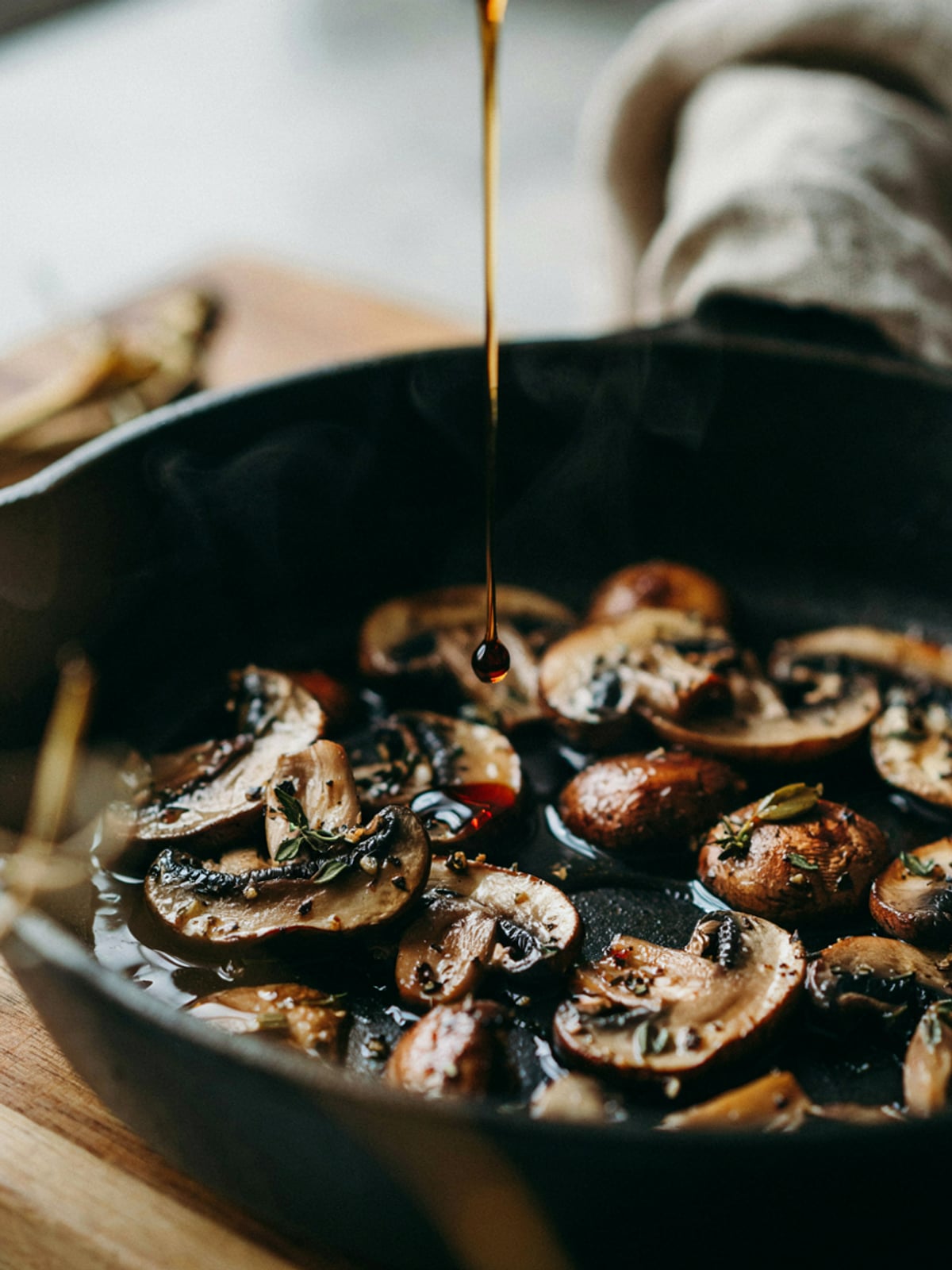
Real Styrian oil announces itself in colour long before the first bite — a green-gold ribbon threading through pale mushrooms is part of the pleasure, not an accident; see colour and taste. If a Thermomix does the herb-chopping or keeps a side warm in your kitchen, save the oil itself for the plate rather than the hot bowl — more in the Thermomix notes. Next to a finish made only with butter or olive oil, pumpkin seed oil brings a roasted, seed-forward layer that reads as distinctly local rather than Mediterranean; the pumpkin seed oil versus olive oil comparison spells out that difference.
What lands on the table
Spoon the mushrooms over toast, soft polenta, or alongside pan-fried trout. They sit comfortably next to roasted vegetables or a bowl of risotto. For a cold contrast on the same table, a sharp leaf salad dressed the Styrian way earns its place — see salad. Bread that mops up the juices is half the pleasure of the dish, a quiet nod to the classic bread and oil dip, only with mushroom fond standing in for the plain dip.
Leftovers and which mushrooms
Reheat leftovers gently in a dry pan or the microwave until just warm, then finish with a fresh half-teaspoon of pumpkin seed oil rather than reheating the oil itself. Never re-fry mushrooms that already carry pumpkin seed oil. Cremini and button mushrooms stay reliable through every season; oyster mushrooms brown fast and take the oil finish beautifully; chanterelles, when you find them, need less salt and a gentler hand with the garlic so their own scent stays clear. The next day, cold leftovers sit well on a plate beside beetroot carpaccio or sour beef salad. More ideas live under recipes and pairings.
Shop deep-roasted Styrian pumpkin oil
Shop now