The Styrian
Pumpkin Seed Oil Journal
The Styrian
Pumpkin Seed Oil Journal
- The Styrian Pumpkin Seed Oil Journal
Shop EN
pumpkinseedoil.ccShop DE
kuerbiskernoel.cc
About
This website also contains some content created with the support of AI.
Fatty Acids in Pumpkin Seed Oil
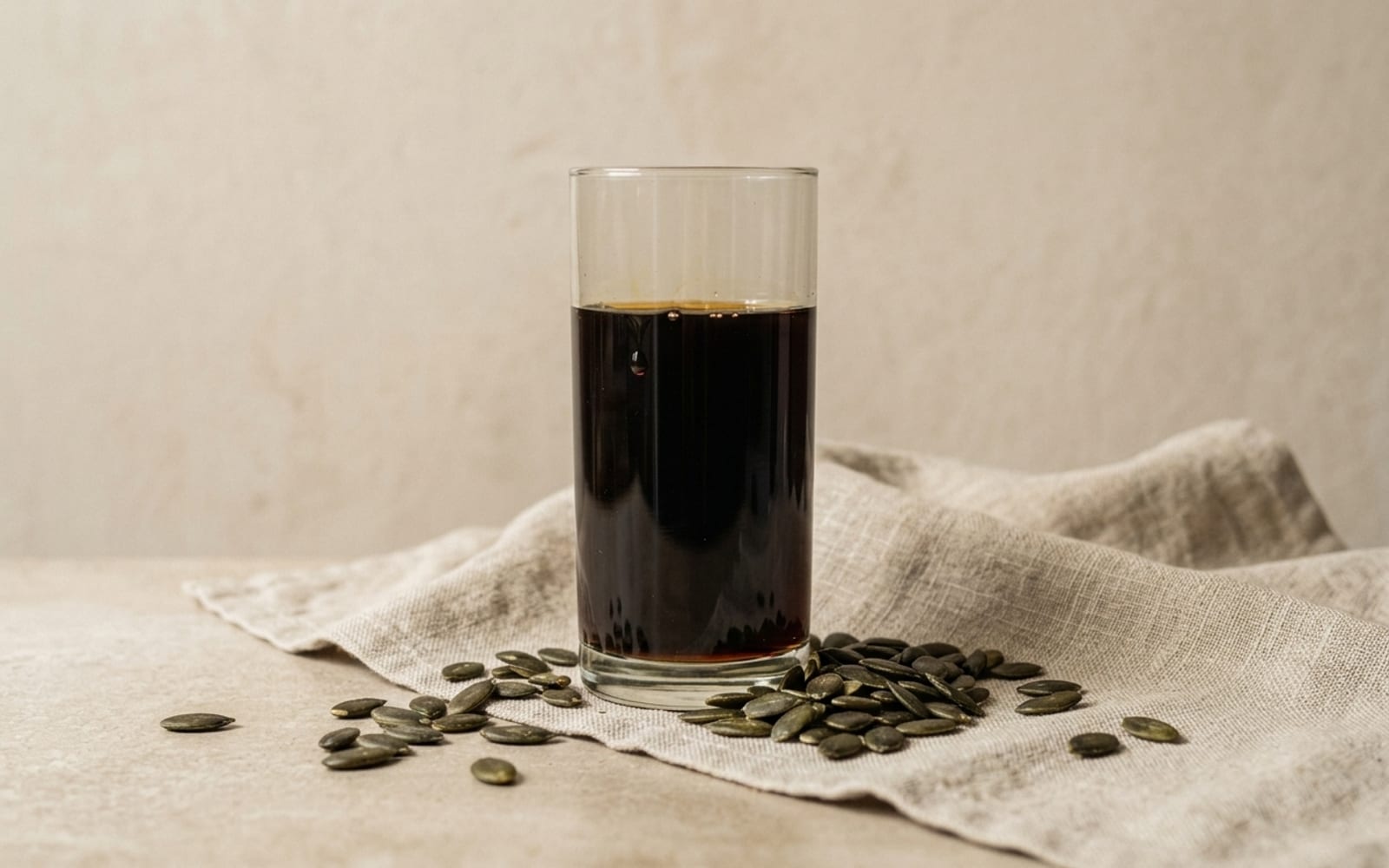
Pumpkin seed oil is almost entirely fat, and every fat is, at bottom, a collection of long carbon chains. Picture each chain as a string of beads: sometimes smooth and straight, sometimes carrying a few kinks. Those kinks are double bonds, and they decide how the oil behaves in the bottle, in the light, and in a hot pan. In pumpkin seed oil, the kinked chains clearly outnumber the straight ones — one reason this oil keeps such a distinct place in the kitchen.
Three Families in One Drop
Fatty acids split into three groups: saturated chains with no kink, monounsaturated chains with one, and polyunsaturated chains with two or more. Every extra kink makes the chain more restless — more reactive to oxygen and heat. That is why oils built mostly from polyunsaturated chains hold up less well under heat than oils leaning on calmer, monounsaturated or saturated ones.
The Majority: Polyunsaturated
In pumpkin seed oil, these restless chains usually make up 60 to 75 percent of all fatty acids. Most of that share belongs to linoleic acid, an omega-6 fatty acid the body cannot make on its own. Alpha-linolenic acid, the plant-based omega-3, shows up only in small traces. The linoleic acid article goes further into how it behaves. This high share is exactly what makes the oil so interesting for cold dishes — and exactly why it needs careful handling: light, air, and heat speed up oxidation in these chains far faster than in most other oils.
Oleic Acid: The Calmer Counterpart
Oleic acid behaves more calmly, an omega-9 fatty acid with only one kink in its chain. Depending on variety, growing conditions, and processing, its share often lands between 20 and 35 percent. It is more stable than linoleic acid and contributes to the soft, faintly viscous texture you feel when the oil glides off a spoon rather than dripping. Its presence does not change the fact that pumpkin seed oil remains a delicate oil overall — and any single fatty acid tells only part of the story; what matters is always the whole pattern of a diet.
Saturated Fatty Acids: The Smaller Remainder
At the calm end of the scale sit the fatty acids with no kink at all: saturated fatty acids, mainly palmitic and stearic acid, usually making up the smaller share of 15 to 20 percent. They appear in many plant and animal fats and shape the character of pumpkin seed oil far less than linoleic and oleic acid do. Their quiet contribution keeps the oil liquid at everyday temperatures and easy to pour in the right amount.
Roasting Changes the Setting, Not the Cast
Traditional Styrian pumpkin seed oil is pressed from roasted seeds. Roasting shapes colour and aroma strongly, while the fatty acids themselves — linoleic and oleic acid above all — largely stay where they are. More delicate companions, such as pigments and individual tocopherols, react more visibly to the heat. The cold-pressed versus roasted comparison sorts out these differences in detail.
Its Moment on the Plate
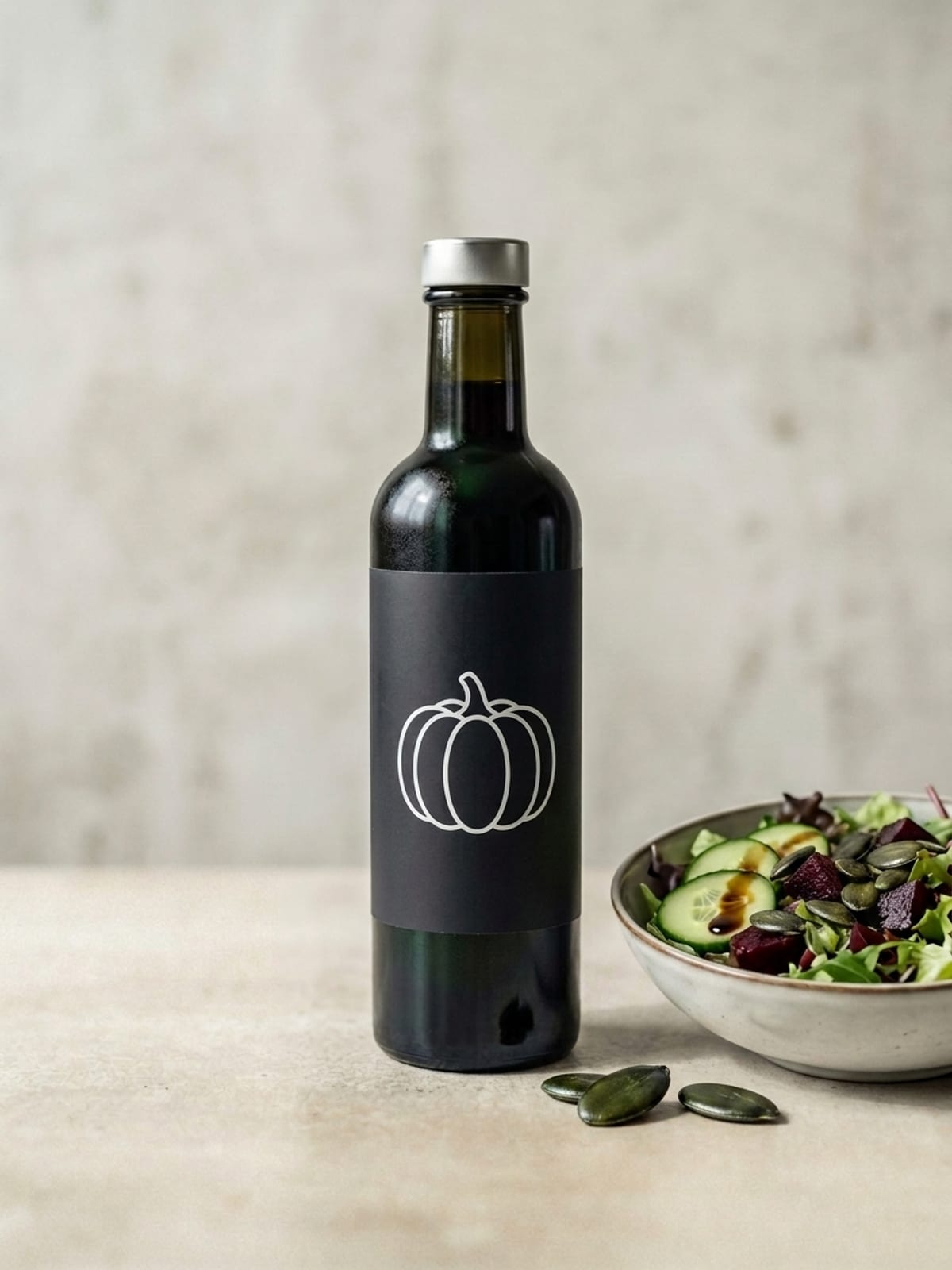
Anyone who has poured this oil into a hot pan learns quickly why that does not work: linoleic acid's many double bonds react fast at high temperature, forming breakdown products that spoil flavour and quality almost immediately. Pumpkin seed oil has no business near a sear or a deep-fryer — it belongs on the plate after cooking is done, over salad, soup, potatoes, vegetables, or even dessert. People who cook with it regularly tend to say the same thing: it goes on last, never first. That is how its nutty aroma survives. The how to use it guide covers the practical side.
A Place Beside Olive Oil
Pumpkin seed oil does not replace olive oil or an omega-3-rich oil — it sits alongside both, with its own fatty acid profile, its phytosterols, tocopherols, and unmistakable flavour. The full picture also includes the ingredients of pumpkin seed oil. Keep the bottle cool and dark, and let the oil do its best work exactly where its calmer and more restless chains shine together: cold, over a finished dish.
Buy real Styrian pumpkin seed oil PGI
Shop now