The Styrian
Pumpkin Seed Oil Journal
The Styrian
Pumpkin Seed Oil Journal
- The Styrian Pumpkin Seed Oil Journal
Shop EN
pumpkinseedoil.ccShop DE
kuerbiskernoel.cc
About
This website also contains some content created with the support of AI.
Pumpkin Seed Oil vs Olive Oil
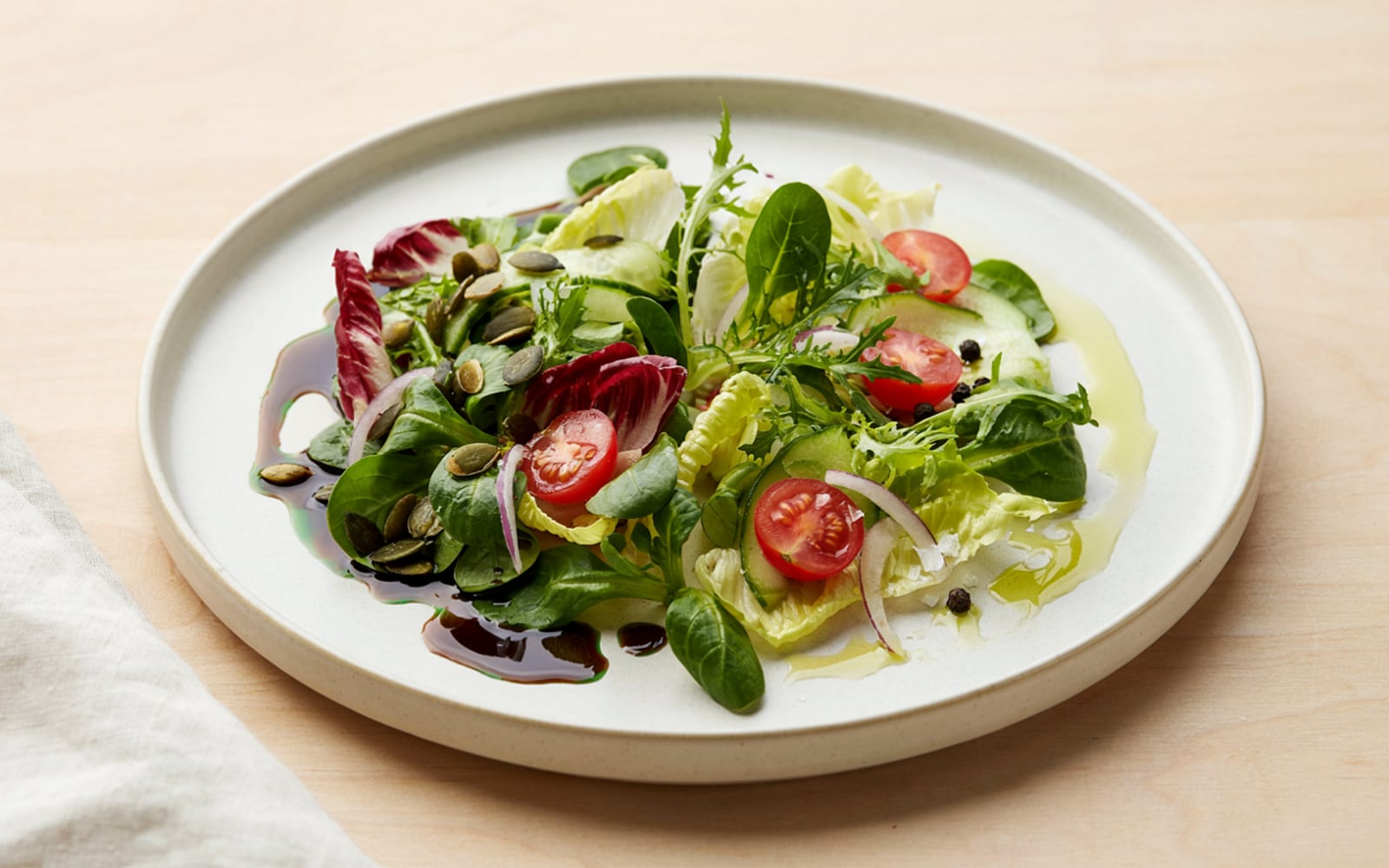
Picture two kitchens a thousand miles apart. In one, midday light falls across a plate of tomatoes while a golden thread of oil runs over the rim. In the other, a soup steams gently, and a dark ribbon spreads across the surface before it slowly dissolves into the broth. Olive oil and Styrian pumpkin seed oil come from entirely different worlds — which is exactly why it helps to set them side by side instead of pitting one against the other.
Two Landscapes, One Table
One bottle comes from hillsides where trees have stood in the sun for centuries. The other comes from fields where heavy, striped pumpkins lie in rows by late summer. Cooks by the Adriatic reach for green fruit and a peppery finish. Cooks in Styria reach for roasted seed and a depth that leans toward cocoa. Both oils carry regional pride to the table — just from very different origins.
What Reaches the Nose First
Open a bottle of good olive oil and something green arrives first, sometimes a hint of grass or freshly cut lawn, with a mild scratch in the throat that signals freshness rather than a flaw. Open Styrian pumpkin seed oil instead and roast comes first: warm, nutty, almost chocolatey. A teaspoon coats the palate more densely than most olive oils manage. If olive oil is a chorus of fruit notes, pumpkin seed oil is a solo with a roasted edge. How that roast character is built in the first place is covered under roasting the seeds.
A Look Through the Glass
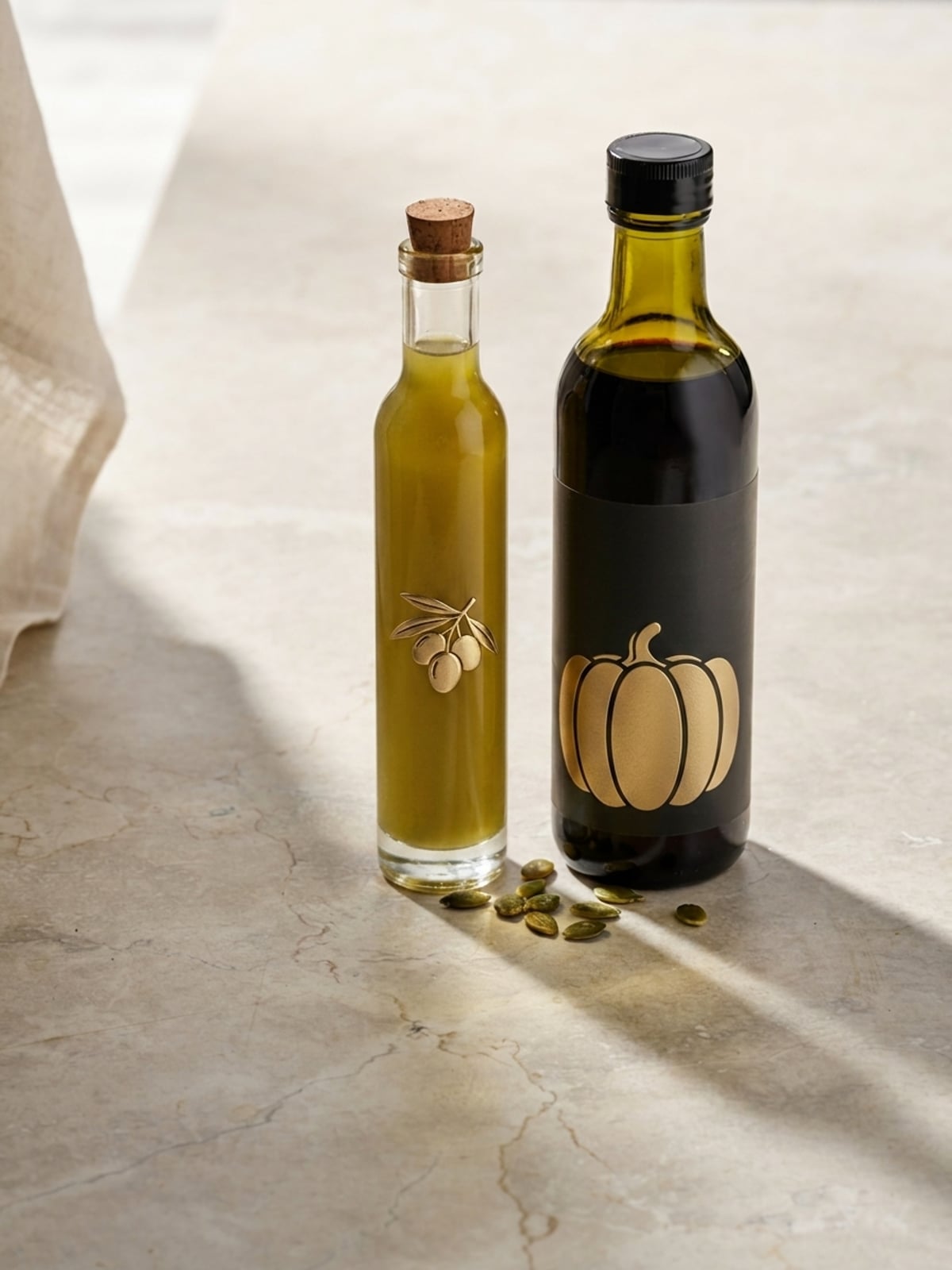
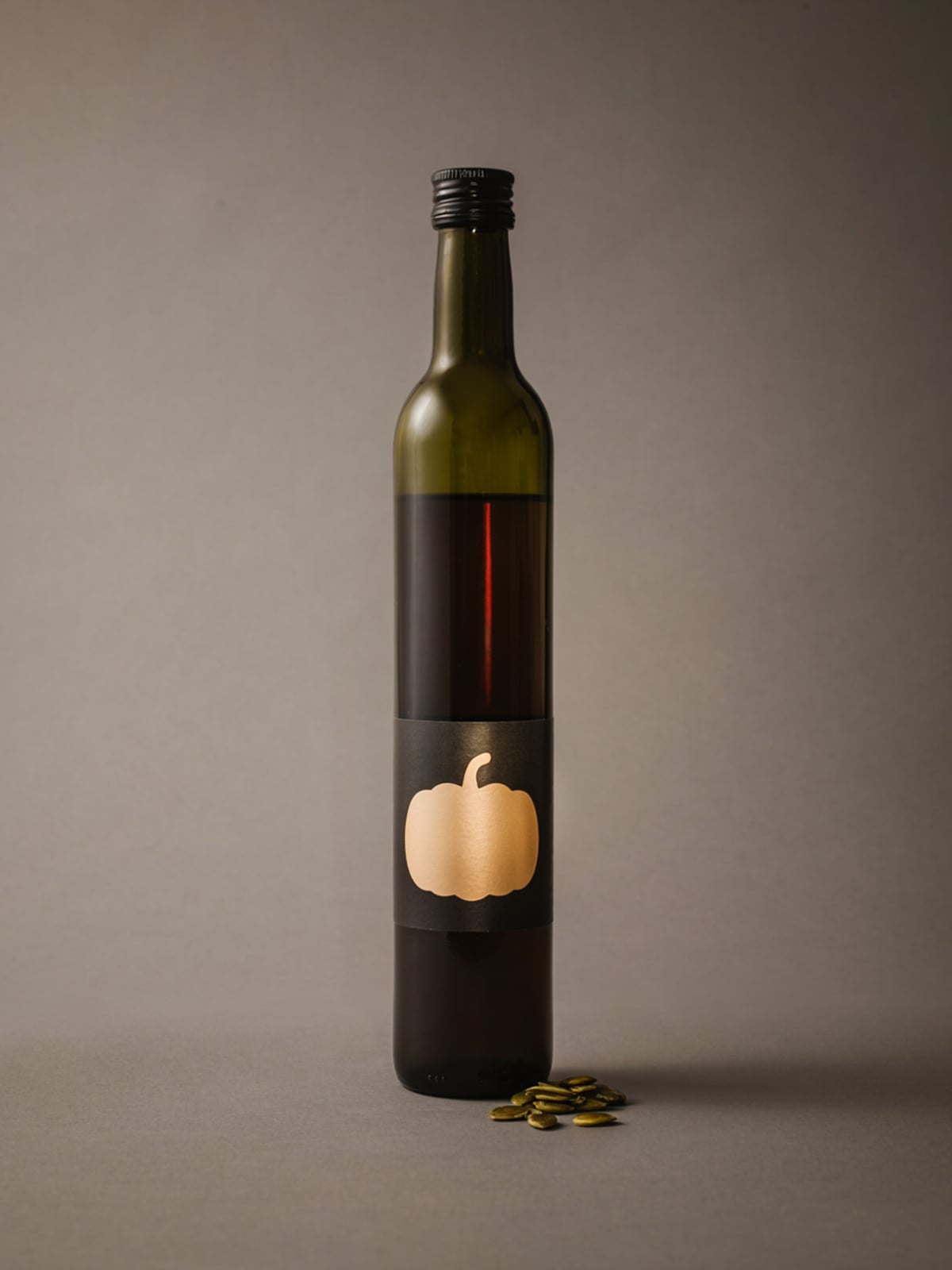
Hold both bottles to the window. Olive oil ranges from pale gold to deep green-gold depending on how ripe the olives were. Pumpkin seed oil looks almost black in the bottle — then, in a thin layer on white porcelain, it suddenly shows a lively green. Anyone who has seen that colour shift once recognises it instantly at the next shop: it helps separate genuine roasted oil from paler, unroasted versions. Colour alone proves nothing about quality, but it is a useful first glance.
When the Pan Heats Up
In one kitchen, olive oil sizzles in the pan while vegetables slowly take on colour — extra virgin tolerates gentle frying, and refined olive oil goes a little further. In the other kitchen, the pumpkin seed oil bottle stays capped as long as the stove is running. Styrian pumpkin seed oil is a finishing oil; its smoke point sits low enough that strong heat wastes the aroma instead of carrying it. Only once the plate is ready does the drizzle arrive. Full kitchen rules live under cooking with pumpkin seed oil and the short answer at can you cook with pumpkin seed oil?
What Lands on the Plate
Olive oil carries Mediterranean salads, bread dips, roasted vegetables, and pasta through the whole cooking process. Pumpkin seed oil arrives only at the end: over Styrian salads, pumpkin soups, soft eggs, potato dishes, cheese boards, and cold plates. Occasionally an oil wanders into the wrong kitchen anyway — a few drops of pumpkin seed oil on a tomato salad sets up a surprising contrast, and olive oil rescues a Styrian salad on an evening when nothing else is on hand. Still, each classic pairing earns its place. Practical ideas sit under flavour pairings and cold plates.
What Sits in the Spoon, Without the Big Promises
Both oils are calorie-dense fats, not miracle cures. Olive oil is often discussed for its monounsaturated fats; pumpkin seed oil brings its own fatty-acid pattern and remains an energy-rich condiment, not a protein food — protein stays mostly in the seeds and the press cake, as protein: seeds vs oil and fatty acids explain. Cooks tend to agree that taste decides first and everything else follows — so choose by kitchen role, not by a promise printed on the label.
The Price of a Drop
Genuine Styrian PGI oil costs more per litre than most olive oils — seed yield is low, and roasting plus pressing takes real labour. It also needs less per serving: a drizzle over soup or salad reaches further than a generous olive-oil dressing. Smaller bottles make sense if you cook for one or two people. Stored cool and dark, the aroma stays alive longest — see storage and shelf life.
Two Bottles, One Cupboard
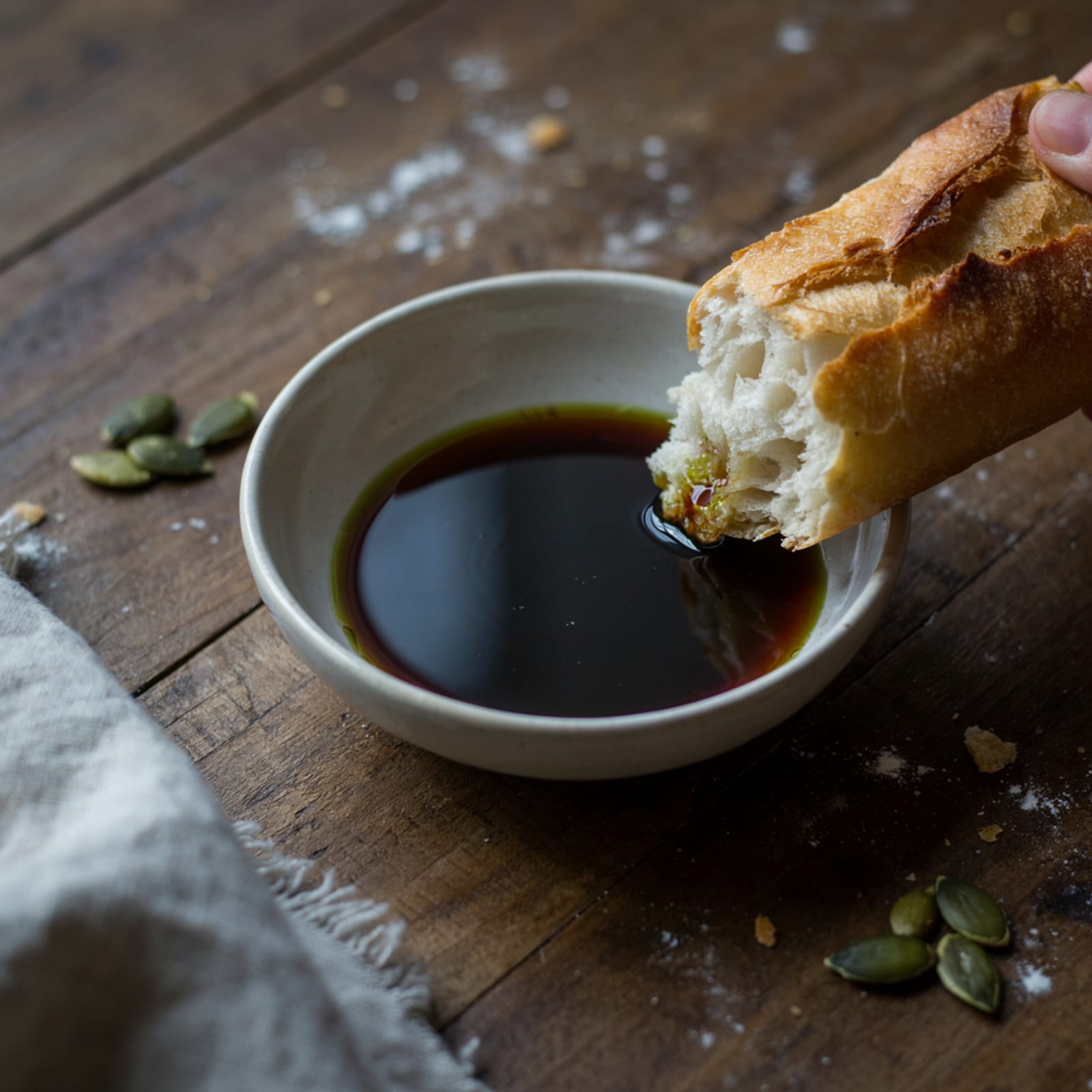
Most kitchens end up with both bottles rather than a choice between them. Olive oil takes the pan and the everyday dressings; Styrian pumpkin seed oil takes the last flourish over soup, salad, and cold plates. Showing guests the difference needs nothing more than two spoons and a piece of bread: fruit on one side, roast on the other — the contrast is obvious within seconds. Confirm origin with the PGI mark, explained under Styrian PGI and what does PGI mean? And when curiosity keeps going, the next bottle is waiting in the compare hub.
Get PGI-certified Styrian pumpkin seed oil
Shop now