The Styrian
Pumpkin Seed Oil Journal
The Styrian
Pumpkin Seed Oil Journal
- The Styrian Pumpkin Seed Oil Journal
Shop EN
pumpkinseedoil.ccShop DE
kuerbiskernoel.cc
About
This website also contains some content created with the support of AI.
Harvest Day in the Pumpkin Field
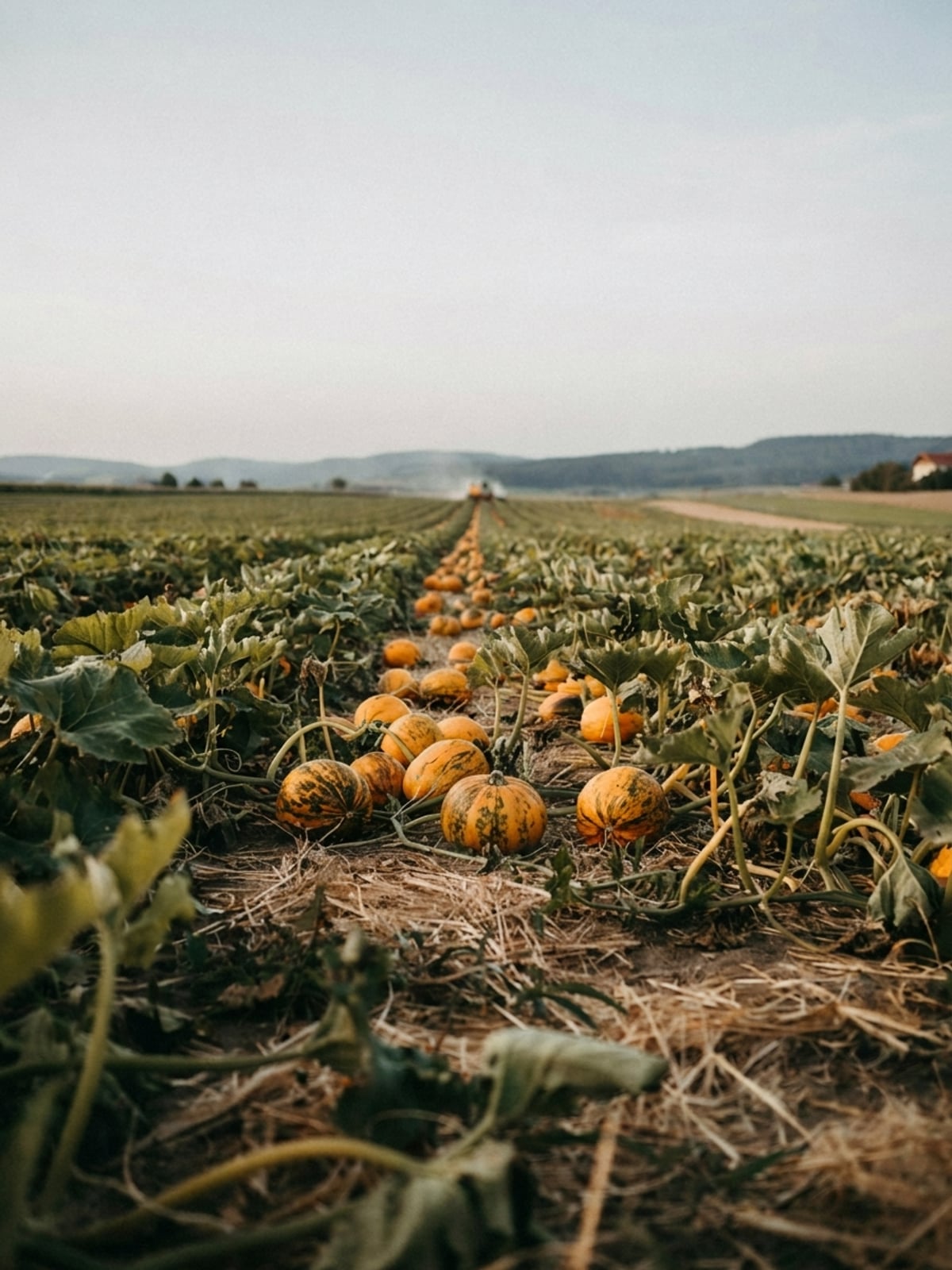
Just before seven, dew still sits on the leaves. Someone walks the first row, turns a pumpkin over in one hand, and lets it drop back. No one says much, just a nod. Pumpkin harvest in Styria never opens with a celebration — it opens with this quiet check: are the seeds ripe, will the ground carry the machine, will the weather hold one more day? Only once the answer is yes does the harvester roll out of the shed.
The Morning Before the Engine Starts
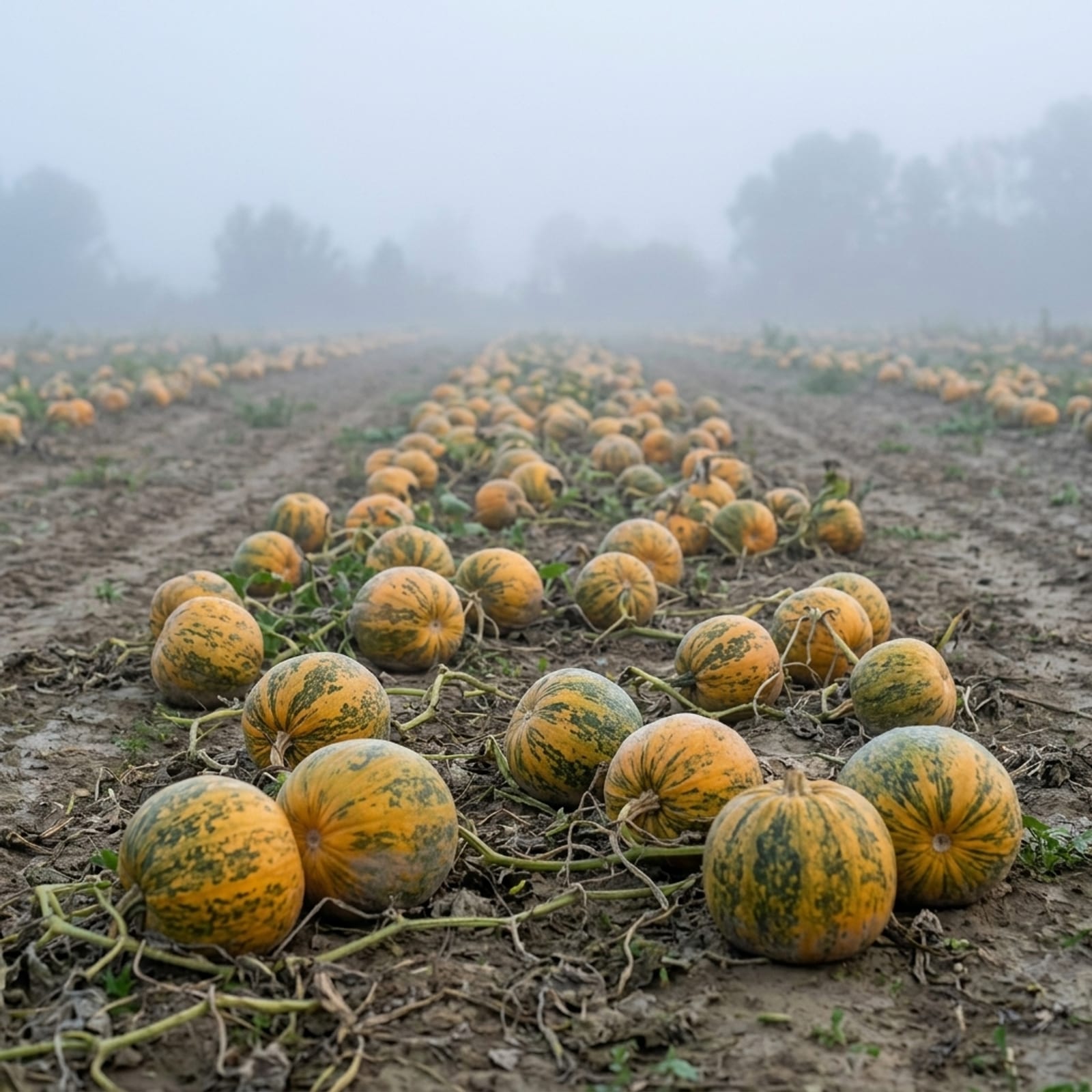
The air is cool and smells of wet grass. A last thread of fog still hangs over the field, and the vines shimmer through it like dark stripes. Whoever works here checks the sky first, then the ground. Rain from the night decides whether today's work can go ahead or whether the machine will sink into soft earth. Only once the ground can bear the weight does the first row start moving.
The Harvester Draws Its First Line
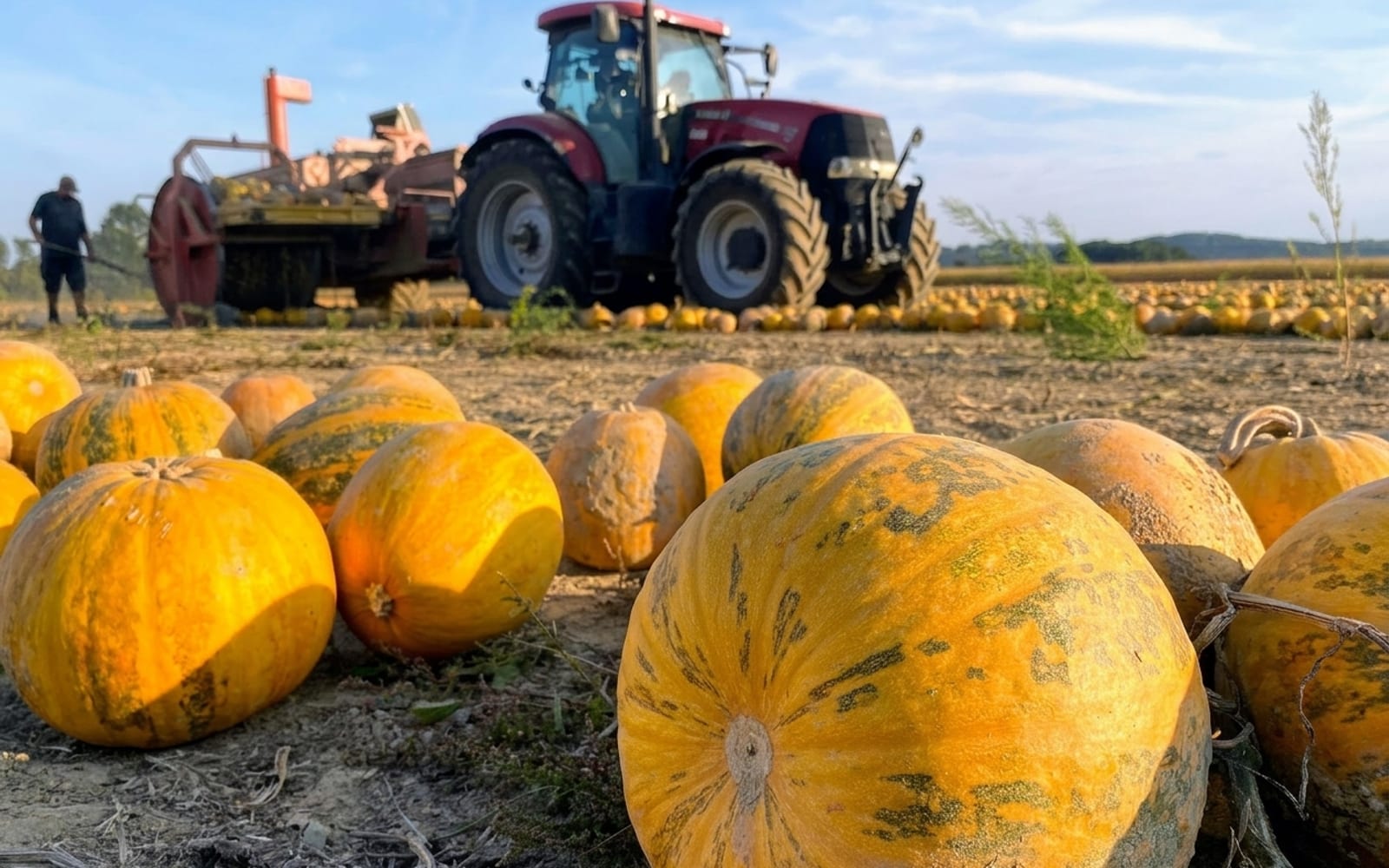
Then the engine takes over. The machine pushes through the vines, lifts the fruit, and crushes it in a single motion. As it rolls across the field, the orange flesh stays behind — only the dark, hull-less seeds continue on into the tank. The smell changes instantly: sweet, earthy, faintly sharp, exactly how a pumpkin smells the moment it is broken open by hand. That smell will hang over the field for the rest of the day.
Cleaning and Drying — the Race No One Sees
What comes out of the machine is wet and still full of flesh residue. Now a race begins that almost nobody watches, yet it decides the whole harvest: seeds must be cleaned and dried quickly before moisture spoils them. Dry them too slowly and they turn musty; rush them and the aroma fades long before a mill ever gets to smell it. You often hear the same line: "Harvest day decides how relaxed the autumn will be." That is exactly what the steps under Roasting the Seeds and Cold Pressed vs Roasted explain in more depth.
Why So Little Is Left at the End
By early afternoon, long empty rows stretch out behind the machine, and the seed bin looks strangely small next to all that ground covered. It takes a striking quantity of pumpkins to fill one sack of clean seed, which will eventually become a single litre of oil. That arithmetic explains a real bottle's price better than any marketing line ever could. Where these seeds go next is described in From Seed to Shop.
The Road to the Mill Begins
Once the seed is dry and stored, harvest day ends — and a different day begins somewhere else. A trailer leaves the farm, sometimes bound for a small press on the same property, sometimes for a mill that serves several growers. The smell slowly shifts from fresh pumpkin toward something that will only reach full strength later, during roasting. What that next chapter feels like is told in A Day Inside a Styrian Oil Mill. The origin protection behind this whole path sits under Styrian PGI.
What Stays at the End of the Day
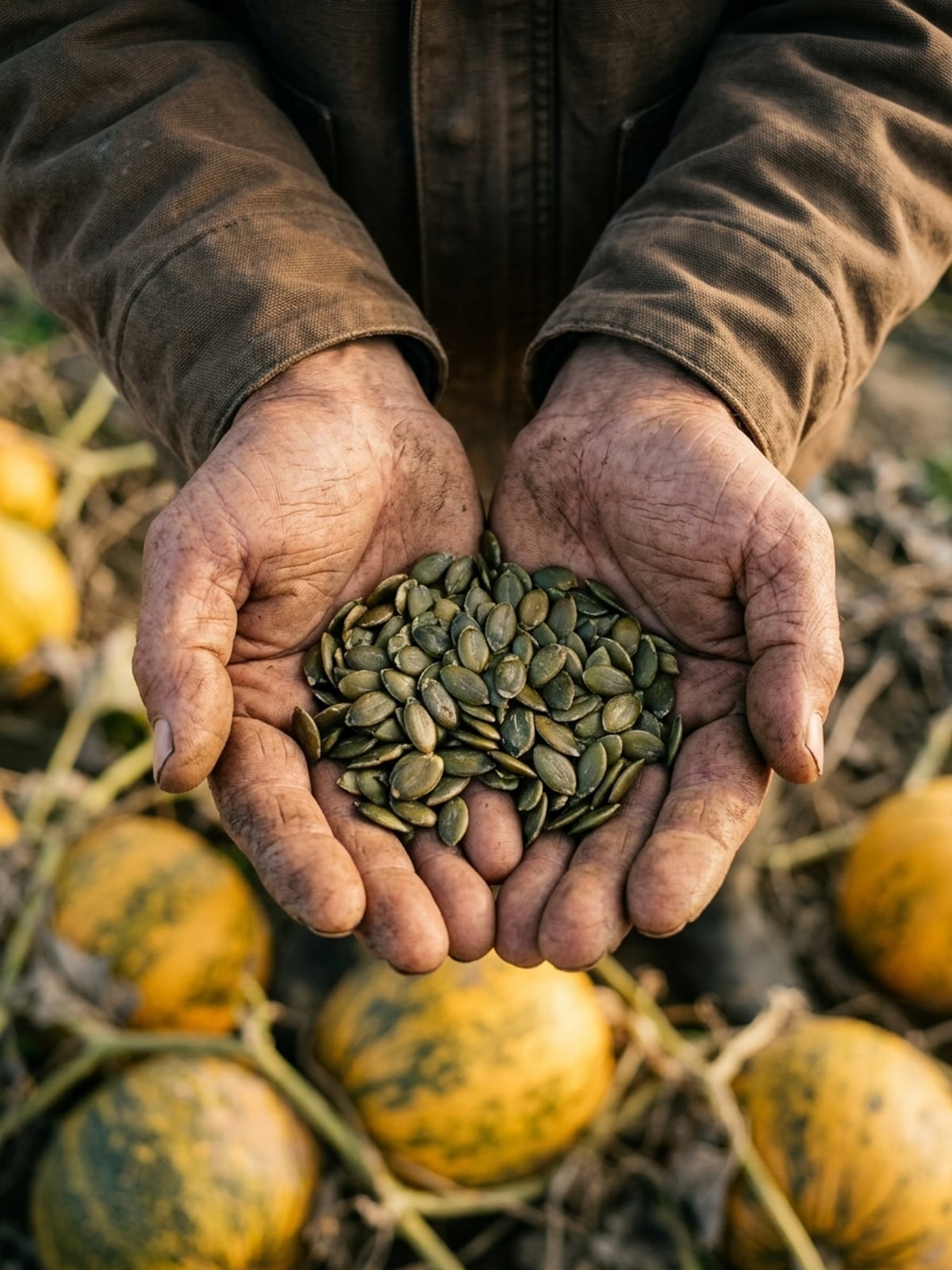
When the engine finally falls silent, the field turns quiet, and only the wind still moves the flattened vines. Hands smell of soil and pumpkin, clothes smell of a long day outdoors. Crushed flesh remains, feeding the ground it grew from, and a feeling settles in that is hard to name exactly — tiredness, but also a little pride. What was harvested today does not become oil right away; roasting, pressing, and settling still lie ahead. But the most important step, separating seed from fruit, is already done.
From Field to Your Spoon
When you open the dark bottle at home and the nutty smell rises, this morning is somewhere inside it: the fog, the engine, the sweet-earthy smell of pumpkin cut open. Cleaning, drying, roasting, and pressing still stand between field and bottle — but it all begins here, with a machine moving through green rows and leaving nothing behind but the question of whether the weather will hold. Practical follow-up for your own kitchen: Cooking and Storage; more field stories wait in the Journal.
Buy genuine Steirisches Kürbiskernöl
Shop now