The Styrian
Pumpkin Seed Oil Journal
The Styrian
Pumpkin Seed Oil Journal
- The Styrian Pumpkin Seed Oil Journal
Shop EN
pumpkinseedoil.ccShop DE
kuerbiskernoel.cc
About
This website also contains some content created with the support of AI.
From Seed to Shop
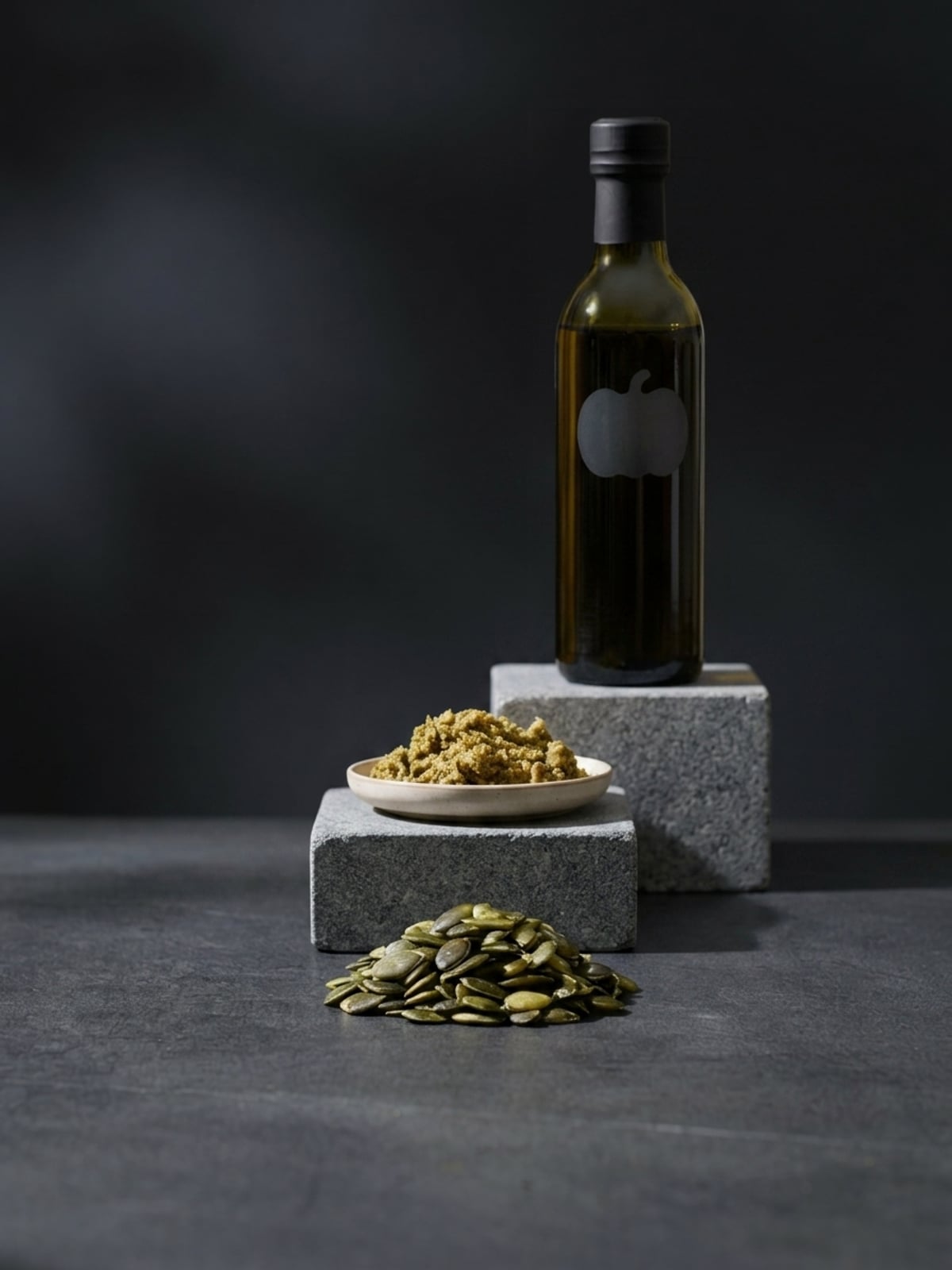
On the shelf, a bottle of Styrian pumpkin seed oil looks like a finished, quiet object: dark glass, a label, a pour spout. What you do not see is the chain of decisions behind it — a full year of growing, harvesting, drying, roasting, pressing, resting, and trading. Follow that chain from start to end, and the price on the label suddenly makes sense.
A Seed Begins in the Field
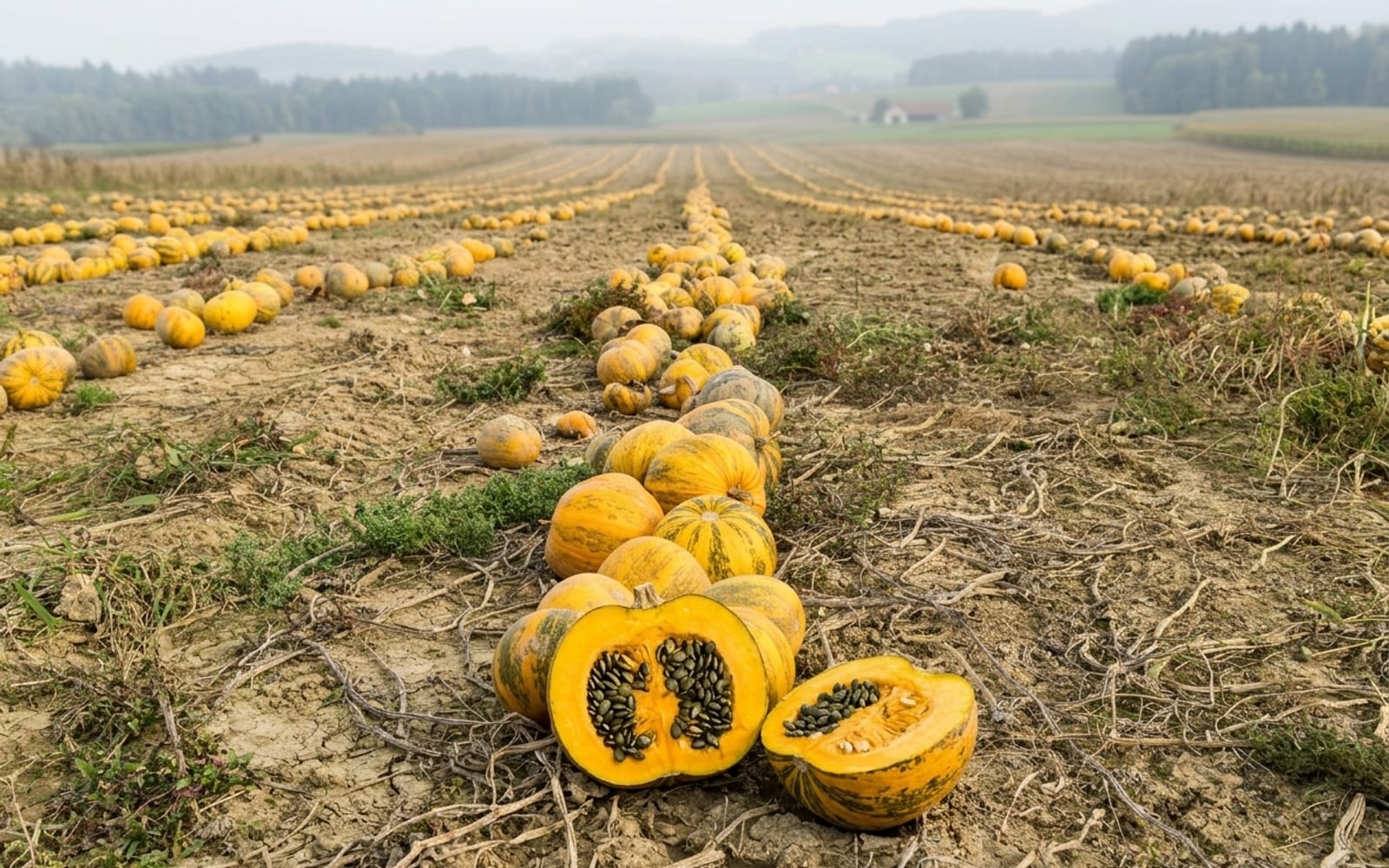
Everything starts with an oil pumpkin grown not for sweet flesh but for its hull-less seed. Across fields in Styria and neighbouring parts of Burgenland and Lower Austria, growers work inside fixed geographic and production rules that carry PGI protection. The plant's purpose is clear from the start: a seed destined to become finishing oil. Origin: Styrian PGI. How a harvest day unfolds: Harvest Day.
Harvest, Clean, Dry
A machine separates seed from flesh in one pass; then a quiet but decisive race begins. Cleaning clears away flesh residue, drying brings moisture down to a level safe for storage and milling. Cut corners here, and the oil loses aroma before it ever reaches the roasting pan. What ends up on your plate as seed rather than oil is covered in Seeds vs Oil.
Roast and Press at the Mill
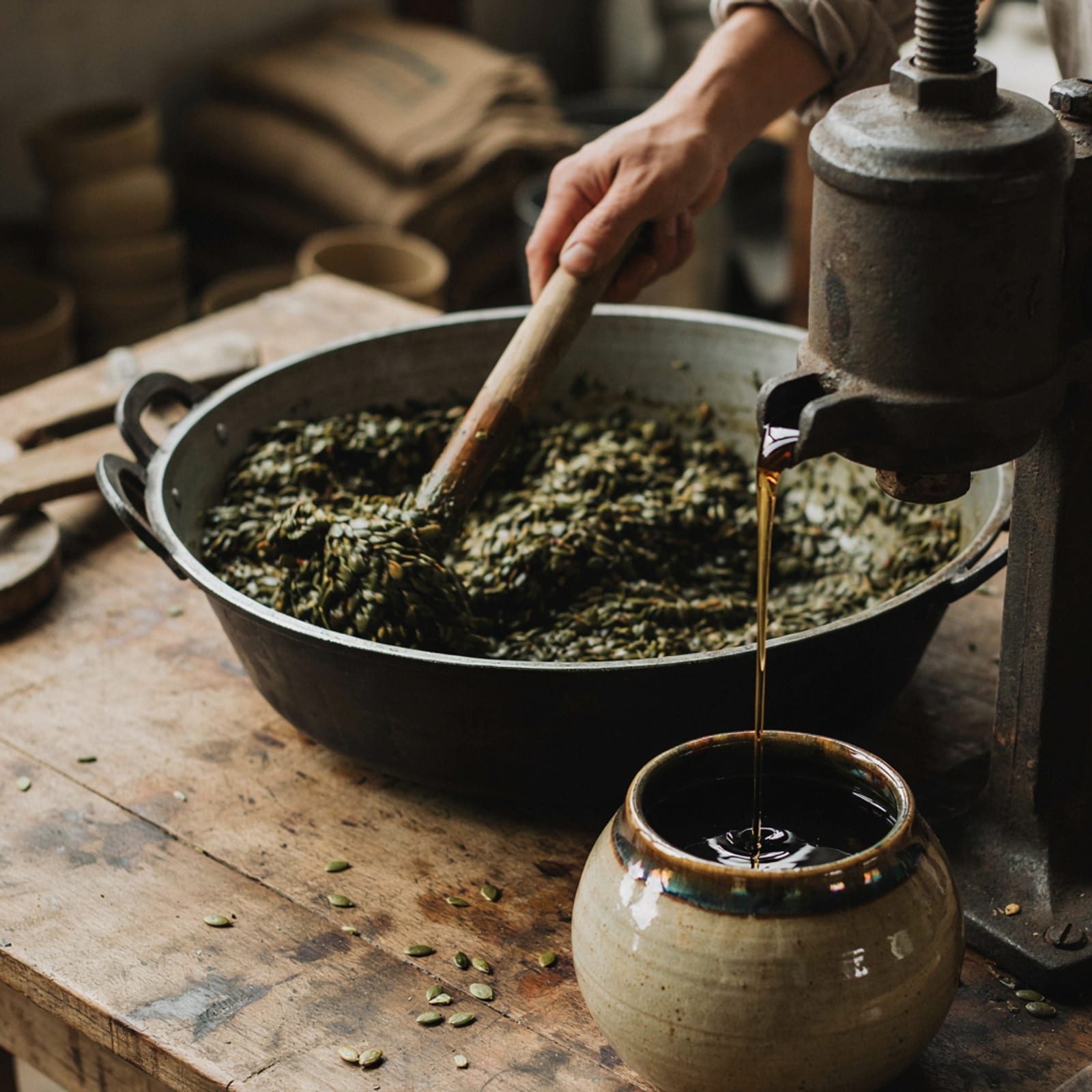
At the mill, dry seed turns into a smell you can catch from a distance: it is ground, mixed with water and salt, and heated slowly until the nutty roast aroma that defines Styrian oil appears. Only then does the paste move to the press. What runs out is already a specialty oil, not a raw frying fat — while the protein-rich solids stay largely behind in the press cake. Mill atmosphere: Mill Visit. Technique pages: Roasting, Cold Pressed vs Roasted, Protein: Seeds vs Oil.
Rest Before the Bottle
Freshly pressed, the oil is still cloudy and much too warm for glass. So it flows first into a tank or barrel, where it rests while particles settle; some mills filter lightly afterward. Only once it is clear enough does it go into dark glass bottles that protect it from light. Labels should say plainly whether the glass holds pure oil or a milder blend: Blend or Pure?, What Does PGI Mean?, Glossary, Blends and Imports.
Trade and the Road to the Shelf
From the mill, the bottle travels to regional shops, export partners, or an online order. The price that results reflects seed yield and craft, not an arbitrary markup. Once it reaches a shelf, a glance at colour, seal, and ingredient list is worth it before comparing against other oils in the compare hub.
Your Kitchen as the Last Stop
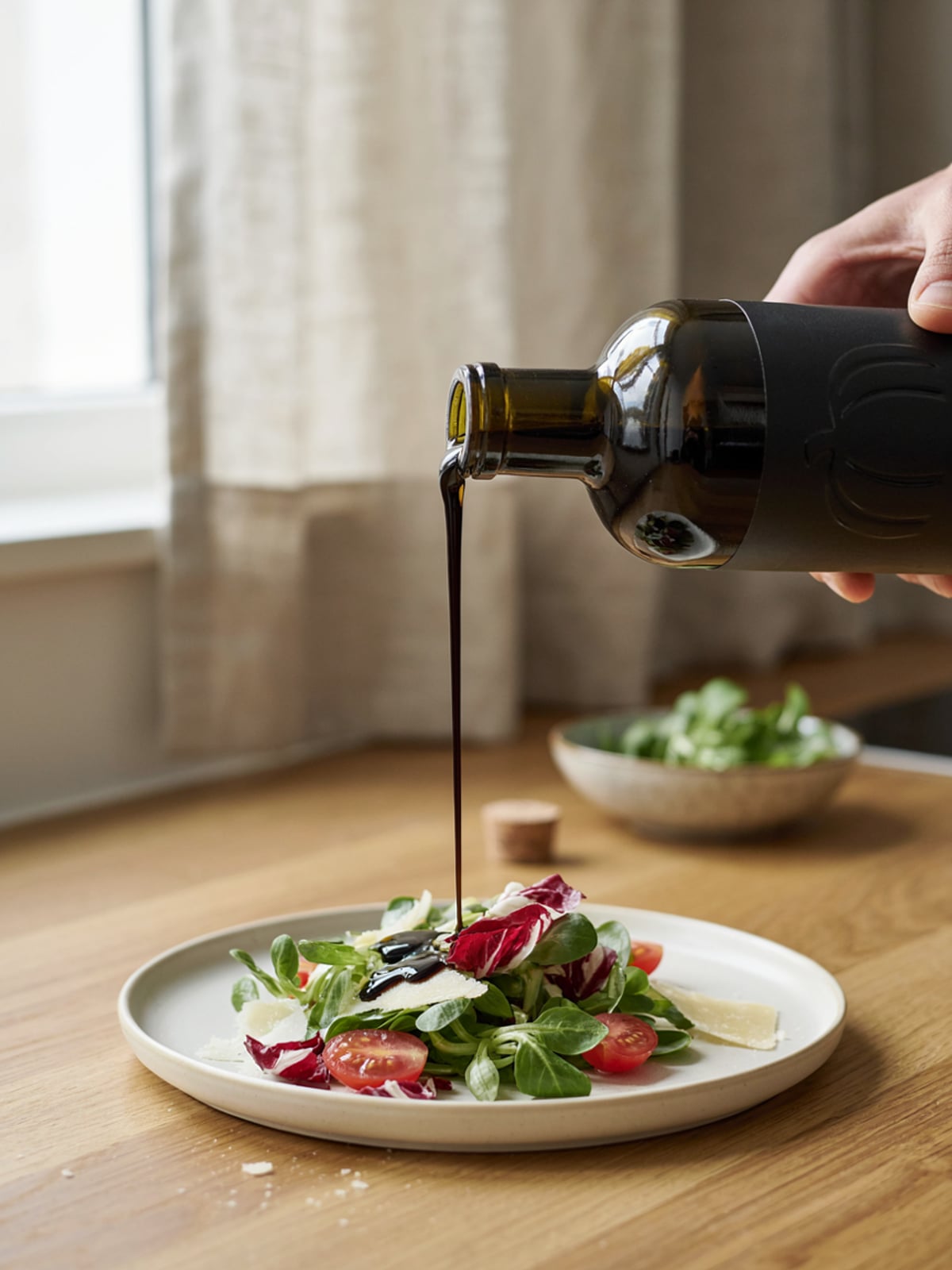
The chain only ends when you pour. As a finishing oil, it belongs on salads, soups, eggs, cold plates, and dishes that welcome roasted depth — never in a hot pan. Store it cool and dark, and empty opened bottles while the aroma is still lively. Guides: Cooking, Storage, Shelf Life, Cold Plates, Recipes.
Why the Path Explains the Price
Once bottles leave Styria, they meet people who may never have smelled a mill. The label and the PGI mark carry that story across languages and borders — and explain why a tablespoon on soup makes more sense than a smoking pan. Price context: Why So Expensive?.
Closing the Loop
When you finally empty a bottle, the chain from seed to shop closes once more. Recycle the glass, remember which producer you liked, and buy a size you will actually use up. The chain stays abstract only while bottles sit unused in a cupboard — it becomes real again the moment salad night turns into a habit. Keep reading: Journal and FAQ.
Find authentic Styrian oil for salads
Shop now