The Styrian
Pumpkin Seed Oil Journal
The Styrian
Pumpkin Seed Oil Journal
- The Styrian Pumpkin Seed Oil Journal
Shop EN
pumpkinseedoil.ccShop DE
kuerbiskernoel.cc
About
This website also contains some content created with the support of AI.
Cold Plates: Aspic, Cheese and Charcuterie
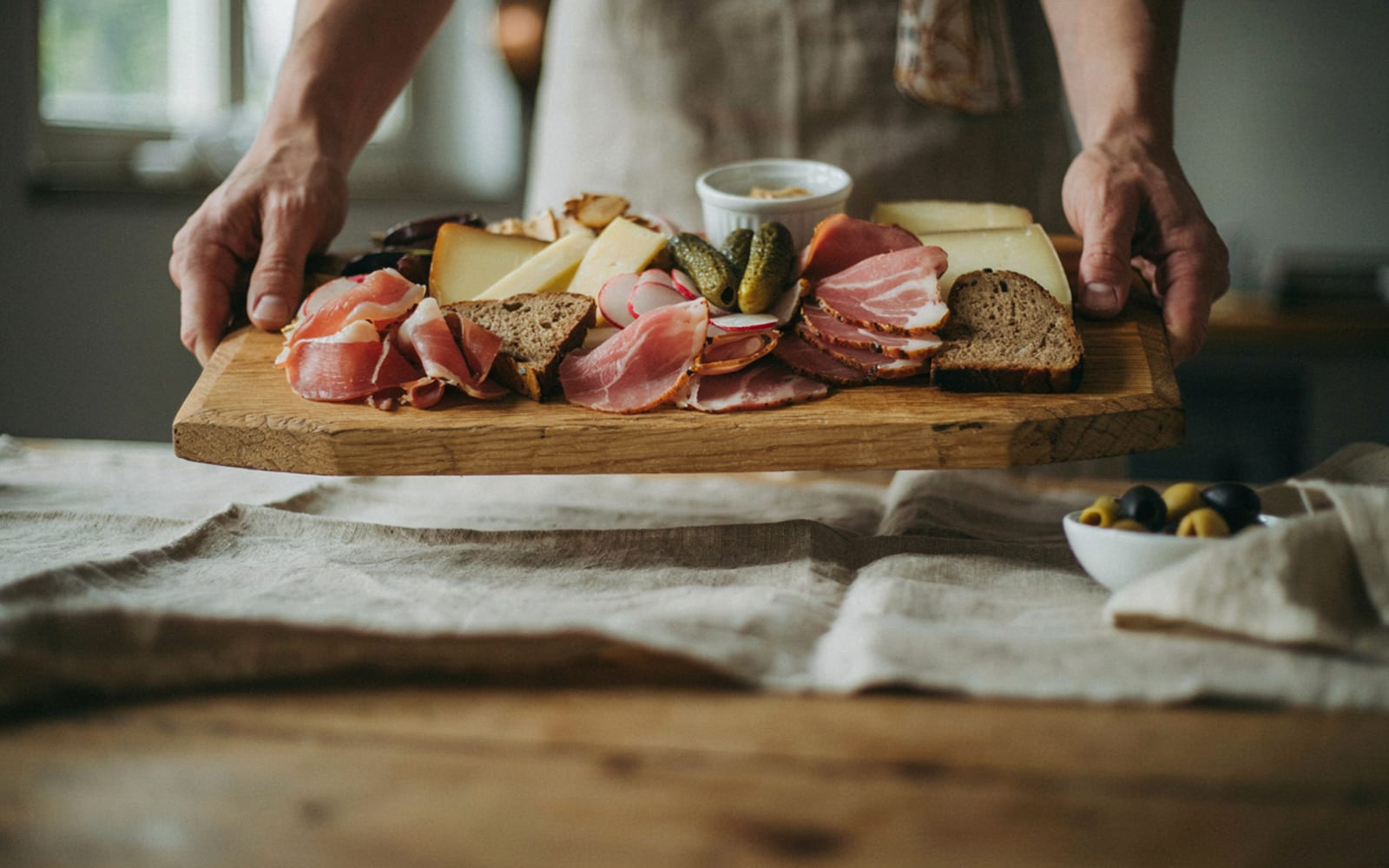
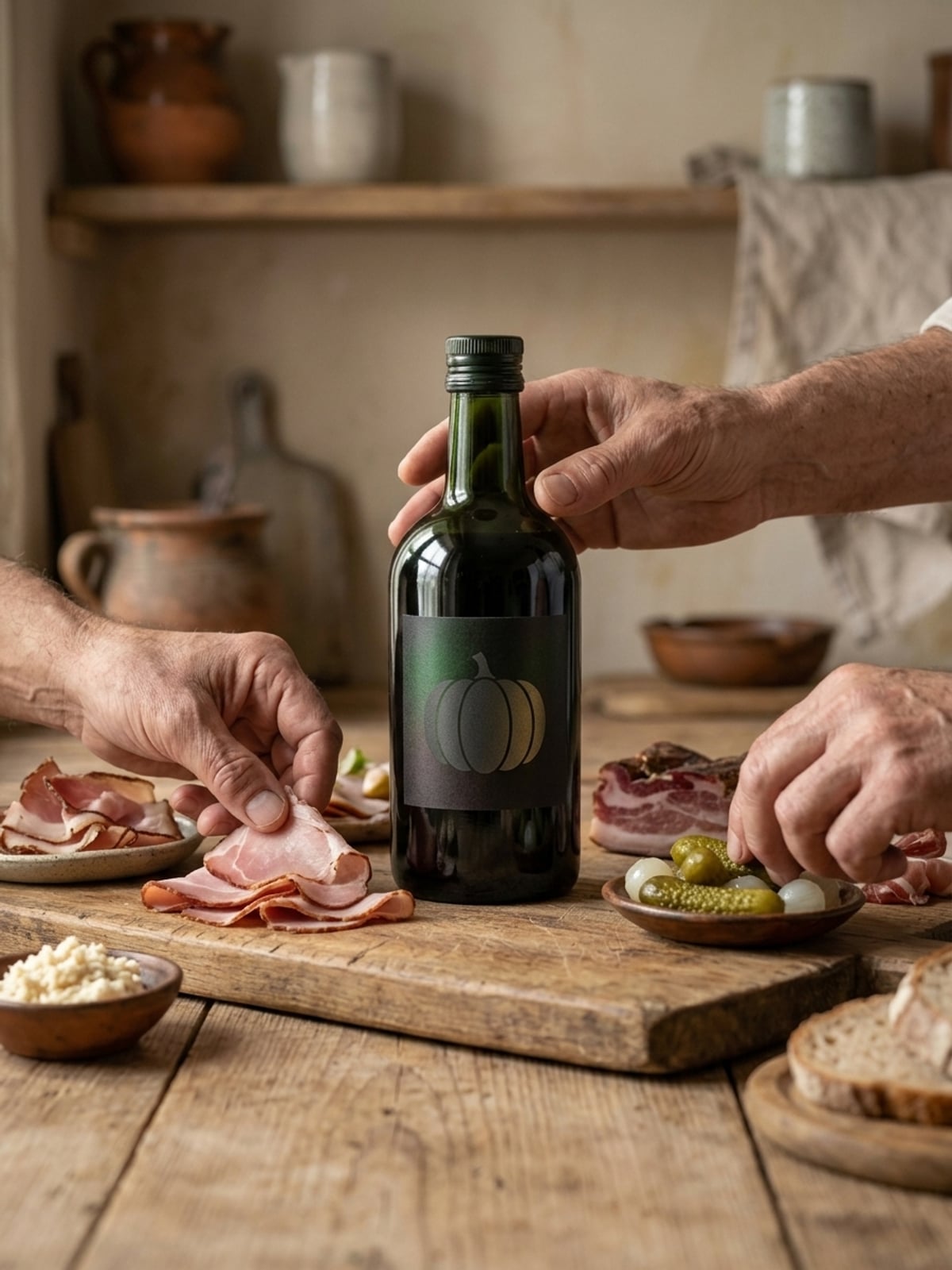
The board arrives at the table before anyone has said a word about food. Cheese in pale, creamy tones, cold cuts in reds, pickles scattered between them, a loaf of bread, a small jug of dark oil. Only once that jug tips and a thin thread runs across the cheese does the spread become a dish. That is where the Styrian cold plate really begins: not a leftovers board, but a small composition where the oil is the last, and most important, ingredient.
When the Board Reaches the Table
Anyone setting a cold plate rarely thinks about a pan. Everything on it is already finished — cured, pickled, or baked. That is exactly why pumpkin seed oil fits so well here: it never has to survive heat, never has to cook anything. It arrives only at the table, gets tasted immediately, and anyone who poured too much simply pours more carefully next time. That keeps the oil doing what it does best: roasted aroma, dark colour, intensity in small amounts. How that same role holds up in cooking is covered under cooking with pumpkin seed oil.
Cheese That Suits the Oil
A soft goat cheese, a young mountain cheese, something creamy from the cow's-milk shelf — all of them take a thin pour gladly. Strong blue cheese is trickier: two intense flavours end up fighting over the same bite, and usually one of them loses. Anyone who wants both anyway pours the oil onto the bread instead, next to the cheese rather than on it. A few toasted seeds on top add the crunch the soft cheese lacks on its own. More combinations that work well are collected under flavour pairings.
Charcuterie, Aspic, and the First Thread of Oil
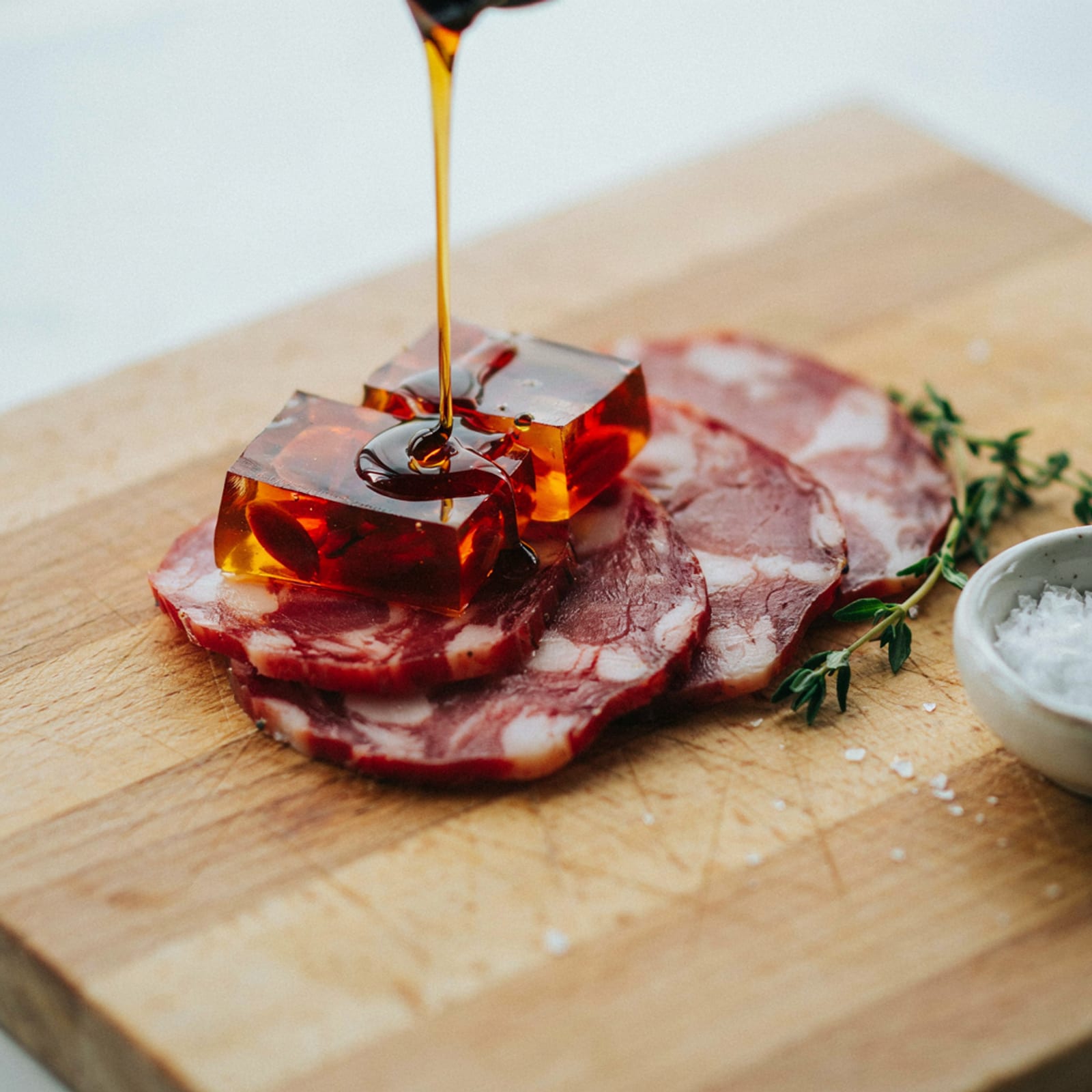
Bacon, cooked ham, a regional sausage — all sit next to the oil bottle as a matter of course in Styrian snack culture. Aspic and other jellied dishes need some acidity, a splash of vinegar or a few pickles, so the richness does not feel heavy. Then comes the thread of oil, dark and clearly visible against the pale jelly. Anyone seeing that much colour on a cold plate for the first time often hesitates — until the first bite shows how well the roasted note cuts through the richness. After that, nobody hesitates again, only pours a little more. Small amounts are enough: the oil should lift the dish, not drown it.
Bread, Vinegar, and a Ritual Before the Salad
Before the main salad arrives, a small ritual often appears first: dense bread, a dish of oil, a splash of apple or wine vinegar alongside, salt within reach. You dip, taste, dip again — and get to know the oil's character long before the first salad plate shows up. Anyone looking for a modern, meat-free version of this ritual will find it in hummus with pumpkin seed oil or avocado toast with pumpkin seed oil — both work equally well as part of a board.
How a Good Board Comes Together
Start with something salty — cheese or cold cuts. Then something fresh: cucumber, tomato, a few radishes. Add something sharp, a pickle or a splash of vinegar. Bread should never be missing. And only right at the end, just before guests reach for it, the oil. Anyone scattering seeds on top gives the board texture — and a small reminder that protein sits in the seed, not the oil itself, as protein: seeds versus oil explains in more detail. More on when seeds and when oil are the better choice is covered under seeds versus oil.
Without Meat: The Plant-Based Plate
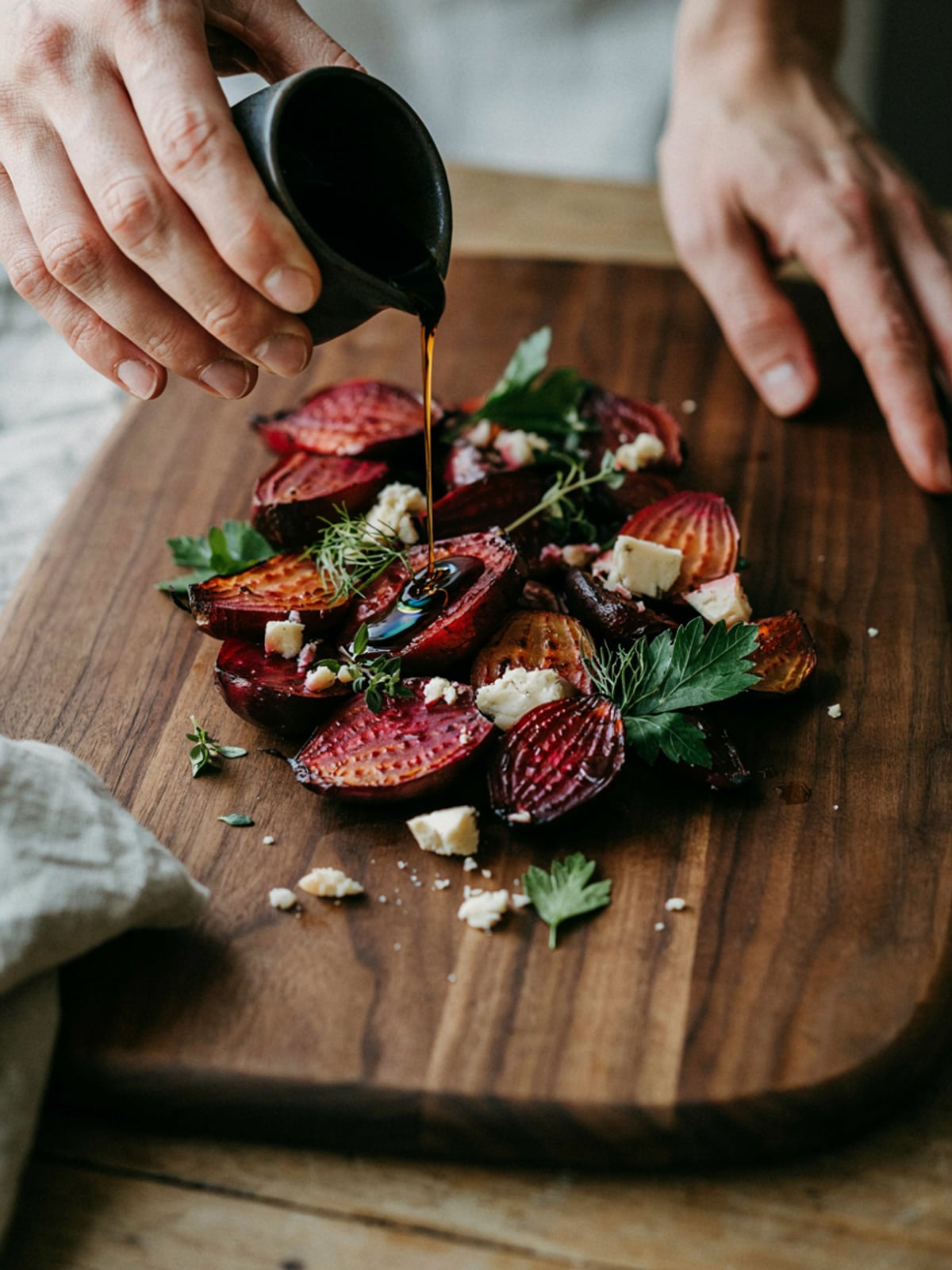
Leave the cold cuts out, and the board barely changes its logic — only its cast. Hummus in the middle, roasted peppers alongside, a few olives, cucumber slices, plus cheese alternatives or no cheese at all. The same final move applies again: the oil poured on top, dark green, glossy, with the same nutty smell as on any other cold plate. Pure Styrian pumpkin seed oil is entirely plant-based — more under is pumpkin seed oil vegan?.
How Much Oil Belongs on the Table
For a board serving four, a small jug or dish with two to three tablespoons of oil is usually enough — plenty for dipping bread and drizzling over cheese, without half of it going to waste or running short. Topping up is easier than taking away: pumpkin seed oil is intense, and guests can always add more but never take any back. Put vinegar or pickles alongside so the richness has something to answer to. If children are at the table, offer a milder dip too, and keep the strong oil for the adults.
After the Evening: Tidying Up and Back to the Bottle
Cheese and cold cuts go onto the board shortly before serving so the edges do not dry out; bread stays wrapped until the last moment. The oil dish only comes out once everyone sits down — not an hour earlier next to a sunny window. Whatever comes back clean can return to the bottle; whatever has seen crumbs or repeated dipping is better left out, for reasons covered under shelf life. In the end, often only the bottle remains from the whole board, heading back into the cupboard: cool, dark, capped, ready for the next one — see storage. For that next board to taste properly Styrian again, the bottle should hold real, roasted PGI oil, not a pale, anonymous seed oil — Styrian PGI pumpkin seed oil, what does PGI mean?, blend or pure?. More kitchen doors for the next evening: eggs, muesli, recipes, and comparing oils.
Get culinary Styrian pumpkin seed oil
Shop now