The Styrian
Pumpkin Seed Oil Journal
The Styrian
Pumpkin Seed Oil Journal
- The Styrian Pumpkin Seed Oil Journal
Shop EN
pumpkinseedoil.ccShop DE
kuerbiskernoel.cc
About
This website also contains some content created with the support of AI.
Roasting the Pumpkin Seeds
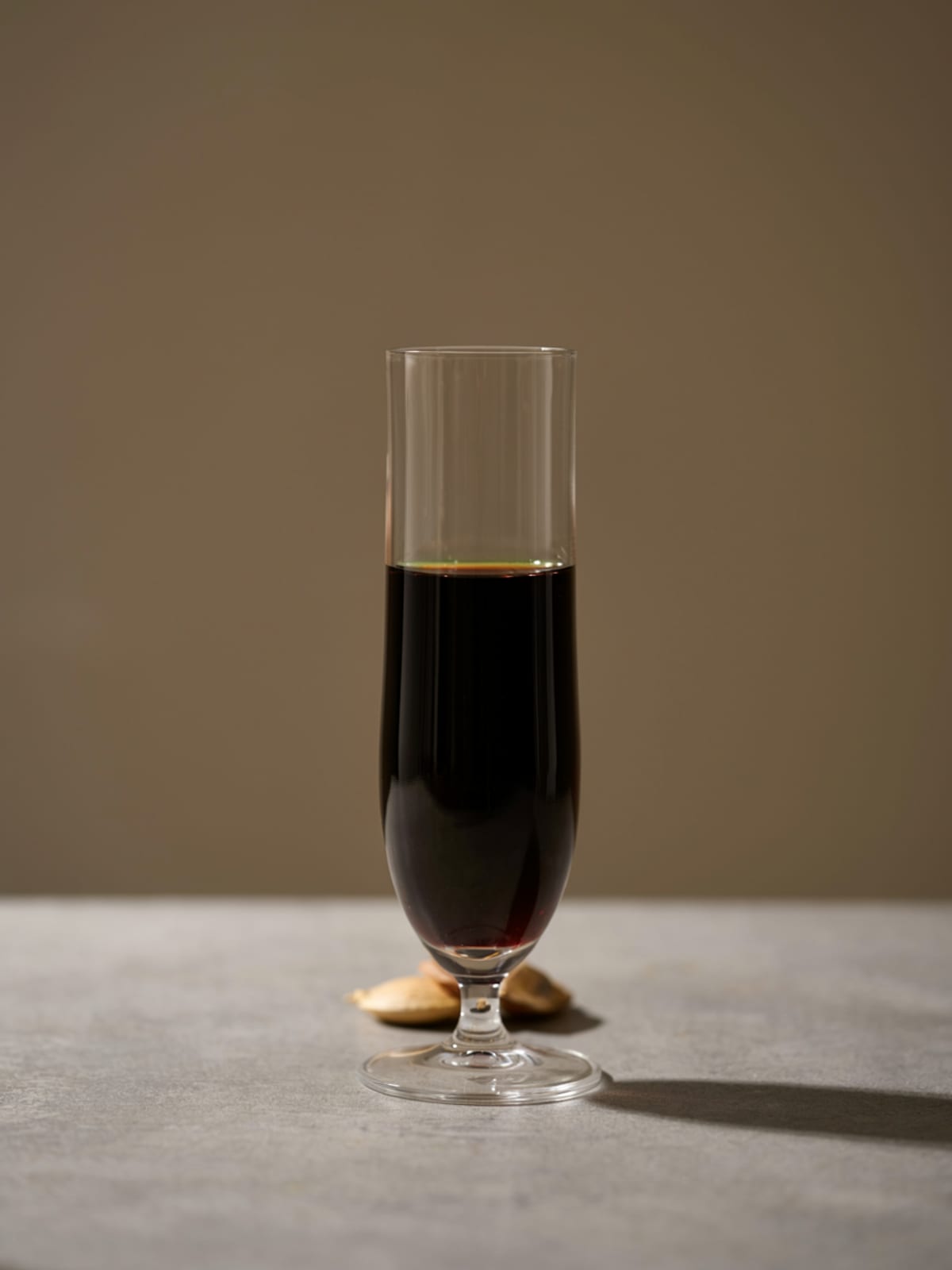
Anyone holding a bottle of Styrian pumpkin seed oil up to the light for the first time almost always wonders the same thing: how can a vegetable oil be this dark? The answer isn't in the pumpkin itself, but in a single step between grinding and pressing. Without it, pumpkin seed oil would stay light and mild, barely different from many other seed oils. With it, that dark, intensely nutty oil takes shape — the one that earned the region its reputation far beyond its own borders.
The smell that drifts through the whole house
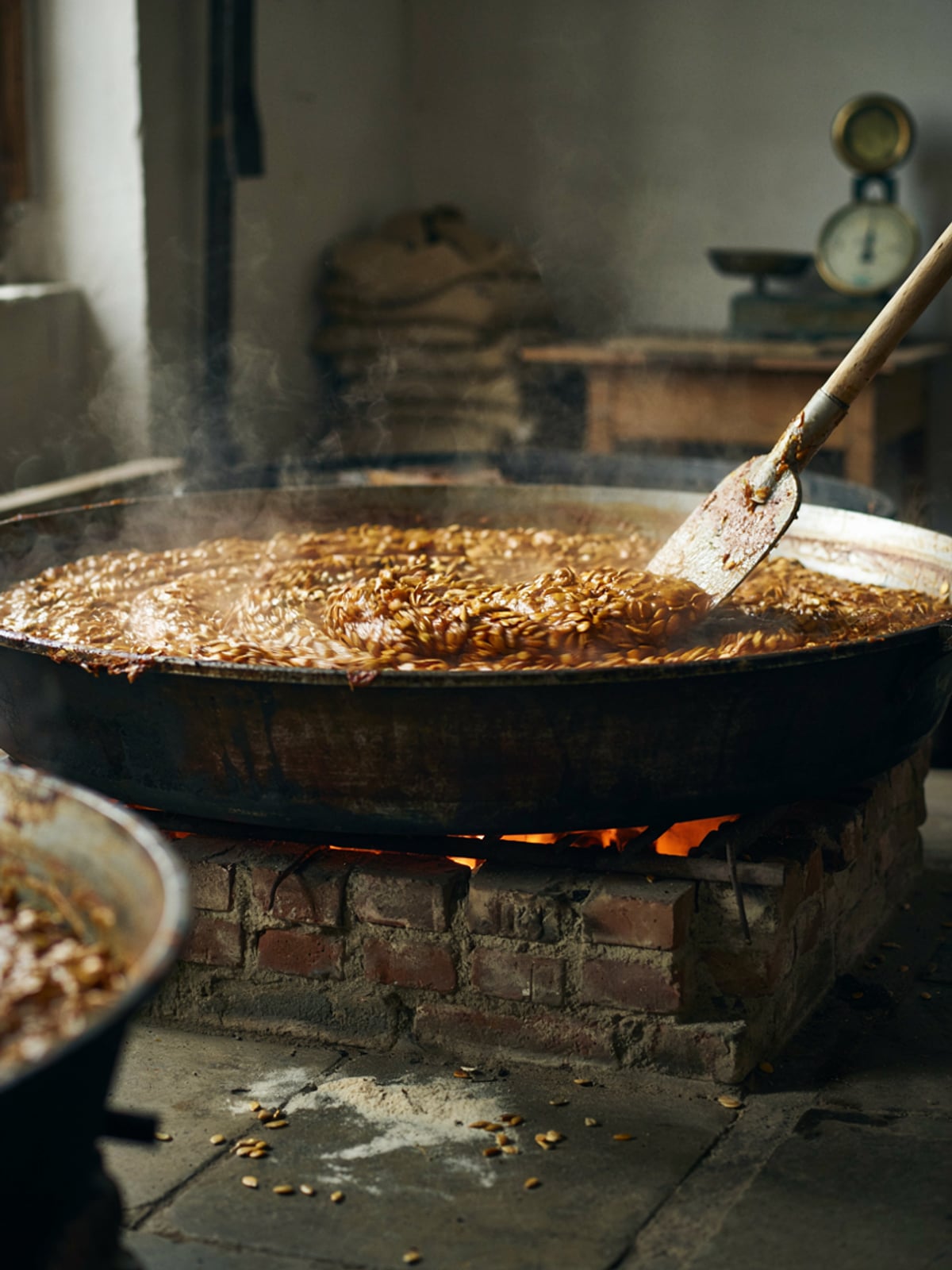
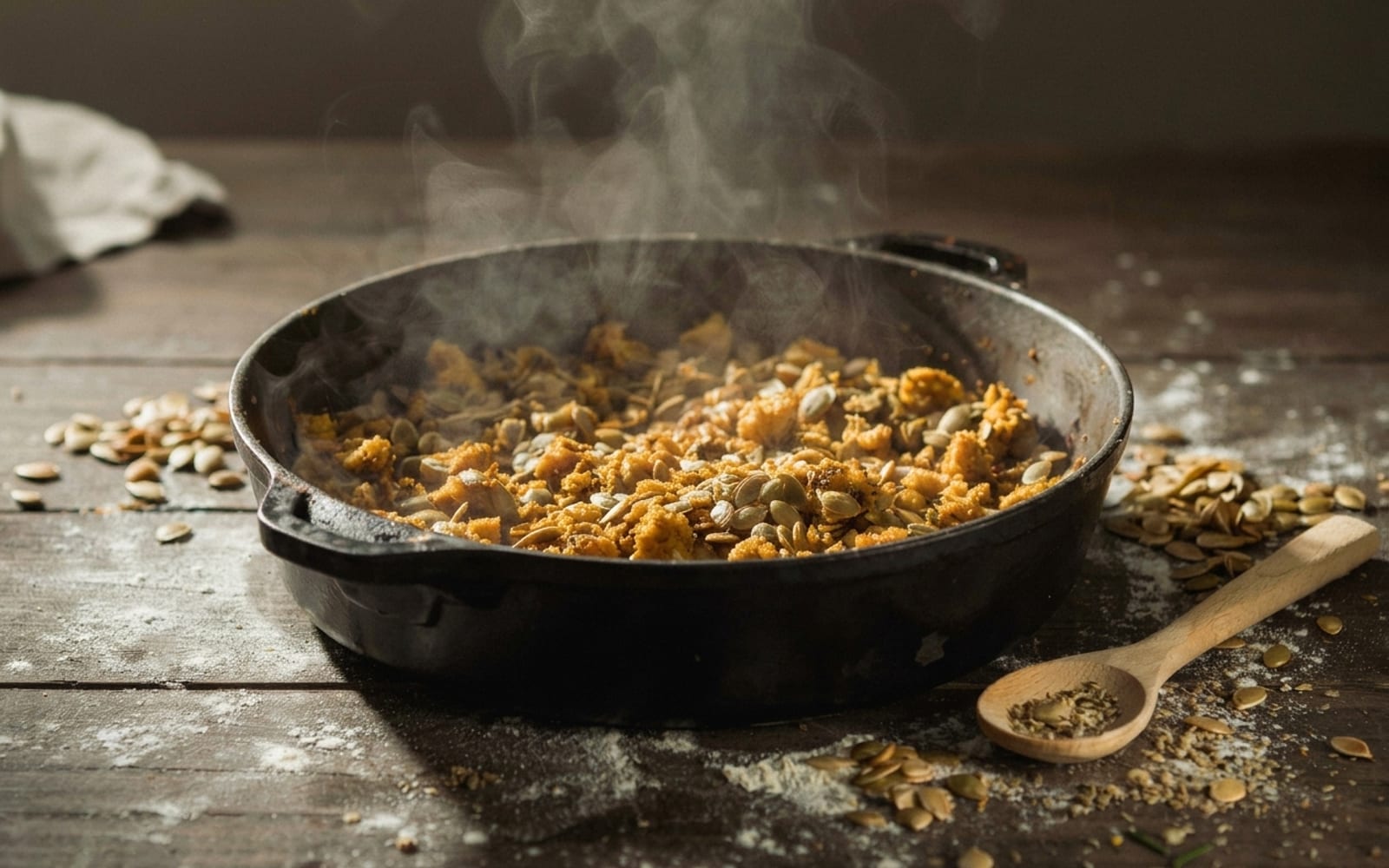
After grinding, the damp seed mass moves into large pans or kettles. The moment heat touches the paste, the air in the room changes. First it still smells like freshly ground seeds, then, slowly, like something warmer, rounder — exactly the smell you'll recognise later on opening the bottle, just more concentrated and immediate.
What actually happens in the paste
Under constant stirring, the temperature climbs to somewhere between 100 and 160 degrees Celsius, over roughly 30 to 45 minutes. During that window, the so-called Maillard reaction runs its course — the same chemical reaction between sugars and amino acids that browns bread crusts and gives coffee beans their dark colour. Inside the pumpkin seed, entire rows of new aroma compounds form, giving the finished oil its unmistakable roasted, nutty character, along with the dark pigments that set it so clearly apart from raw, unroasted oil.
The narrow window of time
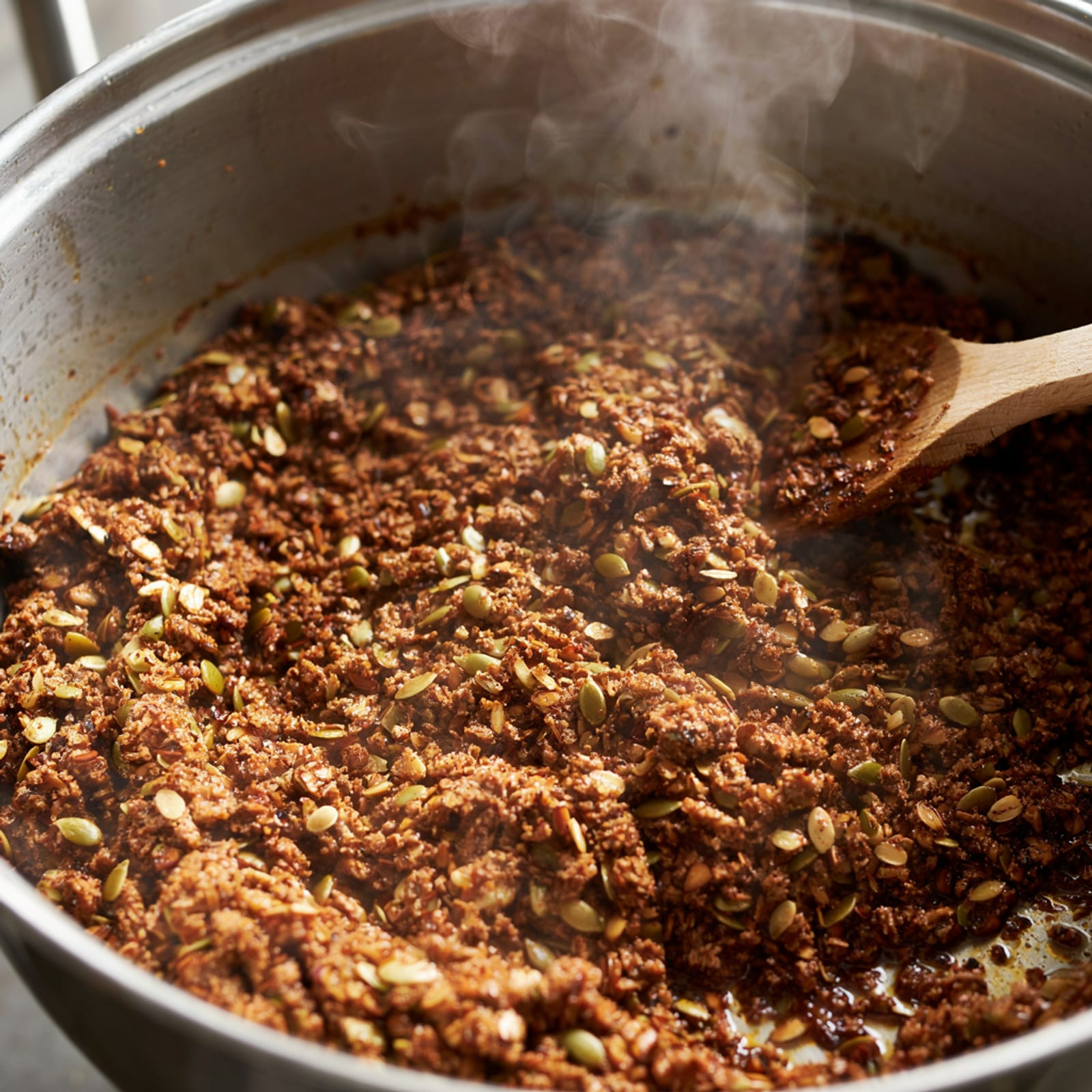
This is exactly where the small challenge sits that makes this step the most demanding in the whole process. Leave the mass too briefly or too cool in the kettle, and the full depth never develops — the oil tastes flat, almost as if the last step had been skipped. Leave it too long or let it get too hot, and the flavour tips into bitterness while valuable delicate compounds get lost needlessly. Anyone who's chased that exact point often enough ends up relying more on the smell and colour of the paste than on a fixed clock. You'll often hear it said plainly: you smell when it's ready, not when the clock says so. That moment between hesitating and calling it stays a small balancing act no matter how much experience you have.
Roasted or cold-pressed — two paths from here
Not every pumpkin seed oil takes this route. Press the raw, unroasted seed mass directly instead, and you get a light, olive-green oil with a restrained, faintly grassy taste rather than the bold roasted note. Both paths are legitimate and both lead to authentic pumpkin seed oil — they're simply two different styles for different uses in the kitchen. The full comparison of both methods sits under cold-pressed versus roasted.
What stays, what changes
Roasting is a genuine heat treatment, and like any heat treatment it changes some of the seed's most delicate compounds without destroying them entirely. The key fatty acids stay largely intact, as does a good portion of the natural vitamin E content — though in somewhat smaller amounts than in unroasted, cold-pressed oil. A detailed look at these fatty acids sits under fatty acids in pumpkin seed oil. For most people, the flavour gained through roasting clearly outweighs the small nutrient loss in the end — after all, that exact flavour is the reason the oil is so prized in the first place.
A step that shapes identity
More than any other single step in production, roasting is what makes Styrian pumpkin seed oil taste so unmistakably different from most vegetable oils on the shelf. Anyone who understands this step also understands why genuine traditional oil should never taste like neutral cooking oil — and why an oil that does exactly that is very likely stretched or mislabelled.
How to recognise the result
In the end, all that's left of the kettle is the smell that turns up again in every bottle that took this path: dark in colour, bold in flavour, carrying that roasted depth that can't be faked without actually going through the step itself. How the entire production process connects from field to bottle is described in full under quality and authenticity of pumpkin seed oil.
Shop Austria’s protected pumpkin seed oil
Shop now