The Styrian
Pumpkin Seed Oil Journal
The Styrian
Pumpkin Seed Oil Journal
- The Styrian Pumpkin Seed Oil Journal
Shop EN
pumpkinseedoil.ccShop DE
kuerbiskernoel.cc
About
This website also contains some content created with the support of AI.
Checking Pumpkin Seed Oil Quality
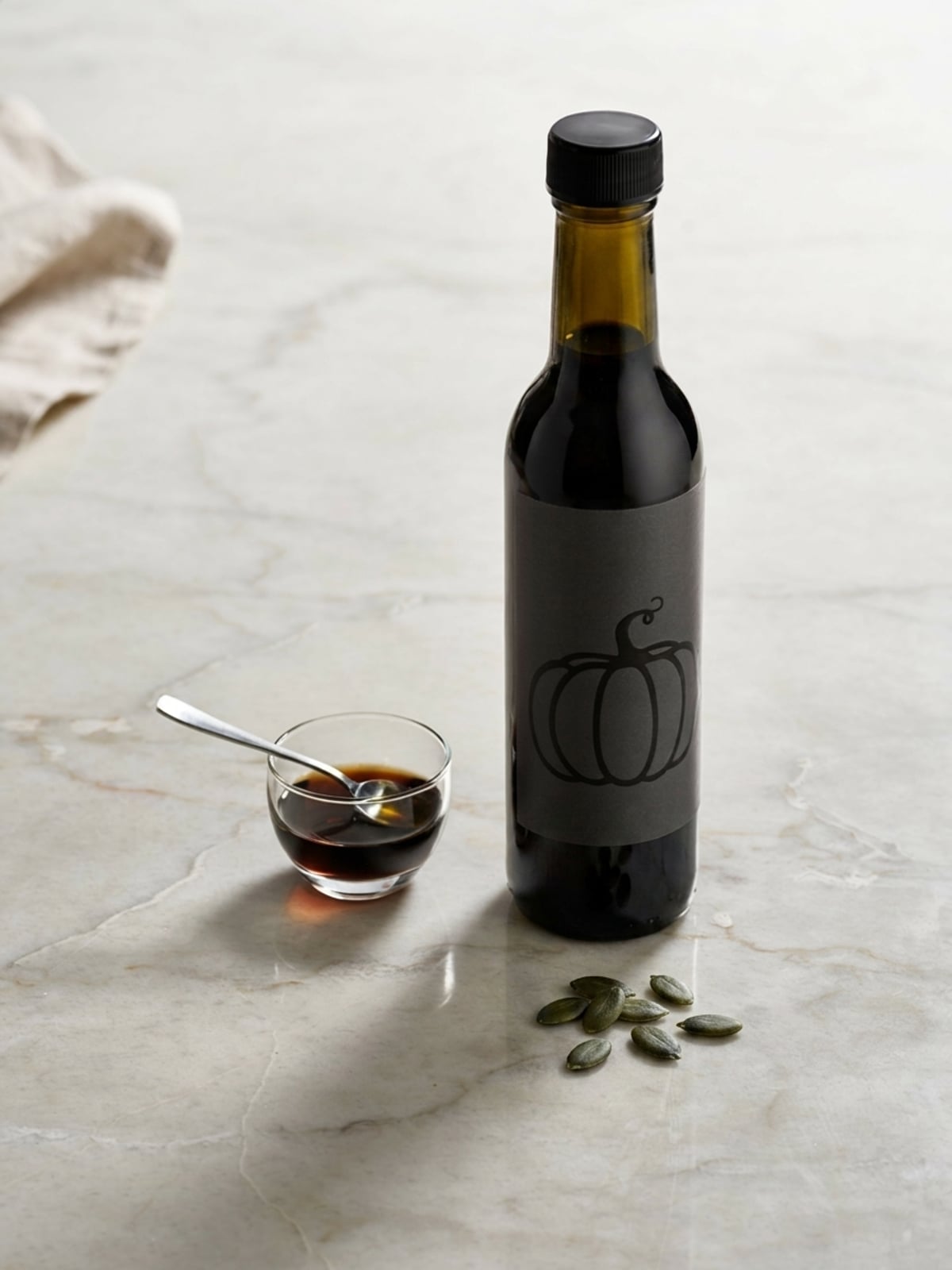
The bottle sits on the counter, still sealed. Maybe a souvenir from a trip, maybe a find off the supermarket shelf. Before the first drop lands on a salad, a brief moment of attention pays off. You can't test pumpkin seed oil down to the last detail without a lab, but eyes, nose, and tongue reveal a surprising amount — once you know what to look for.
The first look through the glass
Held up to the light, genuine traditional Styrian pumpkin seed oil shows a deep, almost black-green tone. Tilt the bottle slightly and a garnet-red shimmer flashes at the edge — an effect only a handful of cooking oils show at all. Anyone holding a lighter, olive-green oil instead has no reason for suspicion: cold-pressed, unroasted versions are naturally lighter in colour. Colour alone doesn't say good or bad — only which path the oil took to get here.
The moment you open it
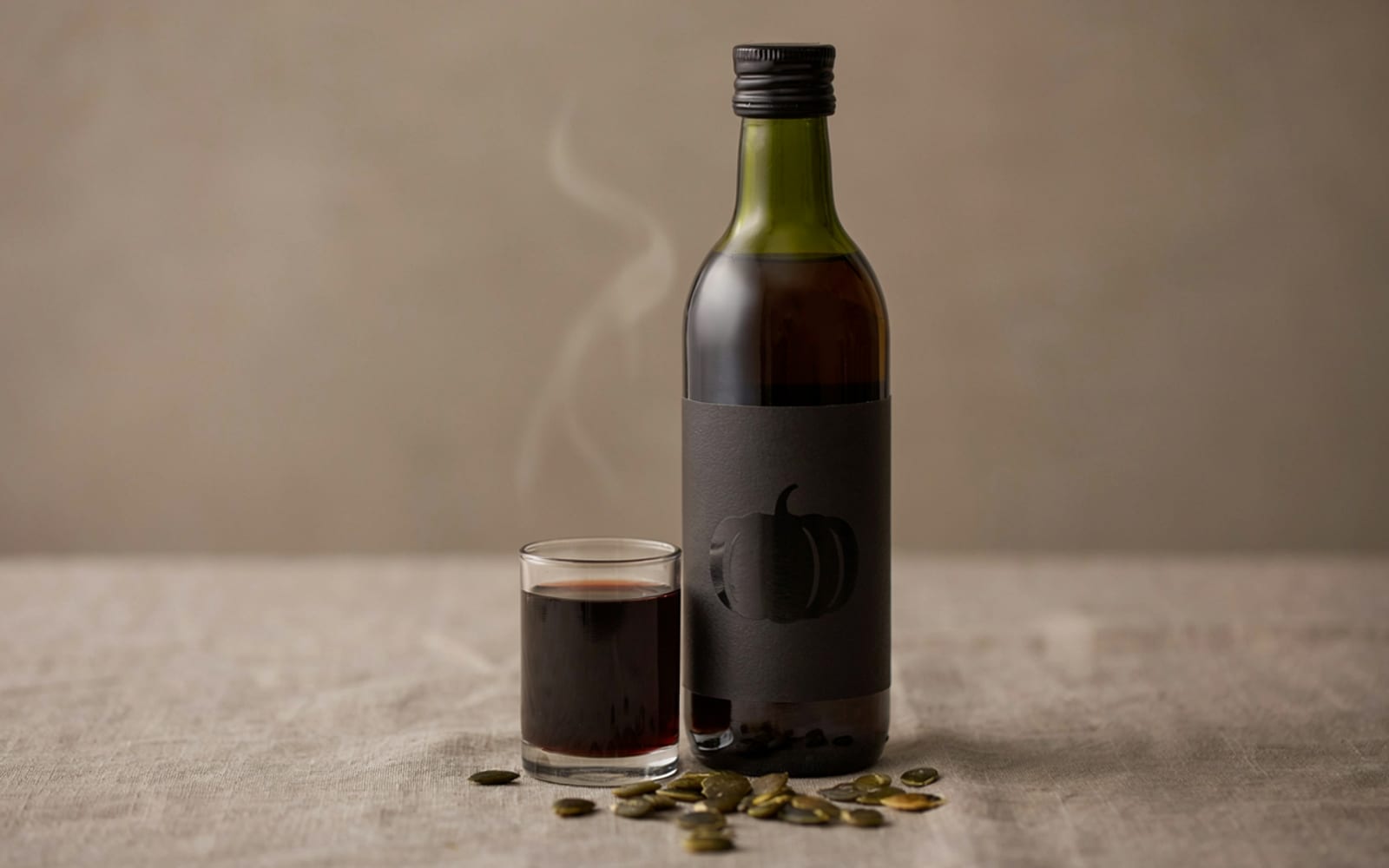
Then the cap, a quiet crack, and the nose usually knows before conscious thought catches up. Good oil smells warm and nutty, almost as if a pan of freshly roasted seeds were still sitting somewhere on the stove. If something sharp, chemical, or musty hits your nose instead, that's a clear warning sign. Anyone who's checked plenty of bottles will often say the nose is wrong less often than the date on the label — a best-before date, after all, only holds if storage before that point was actually correct.
The drop that gives everything away
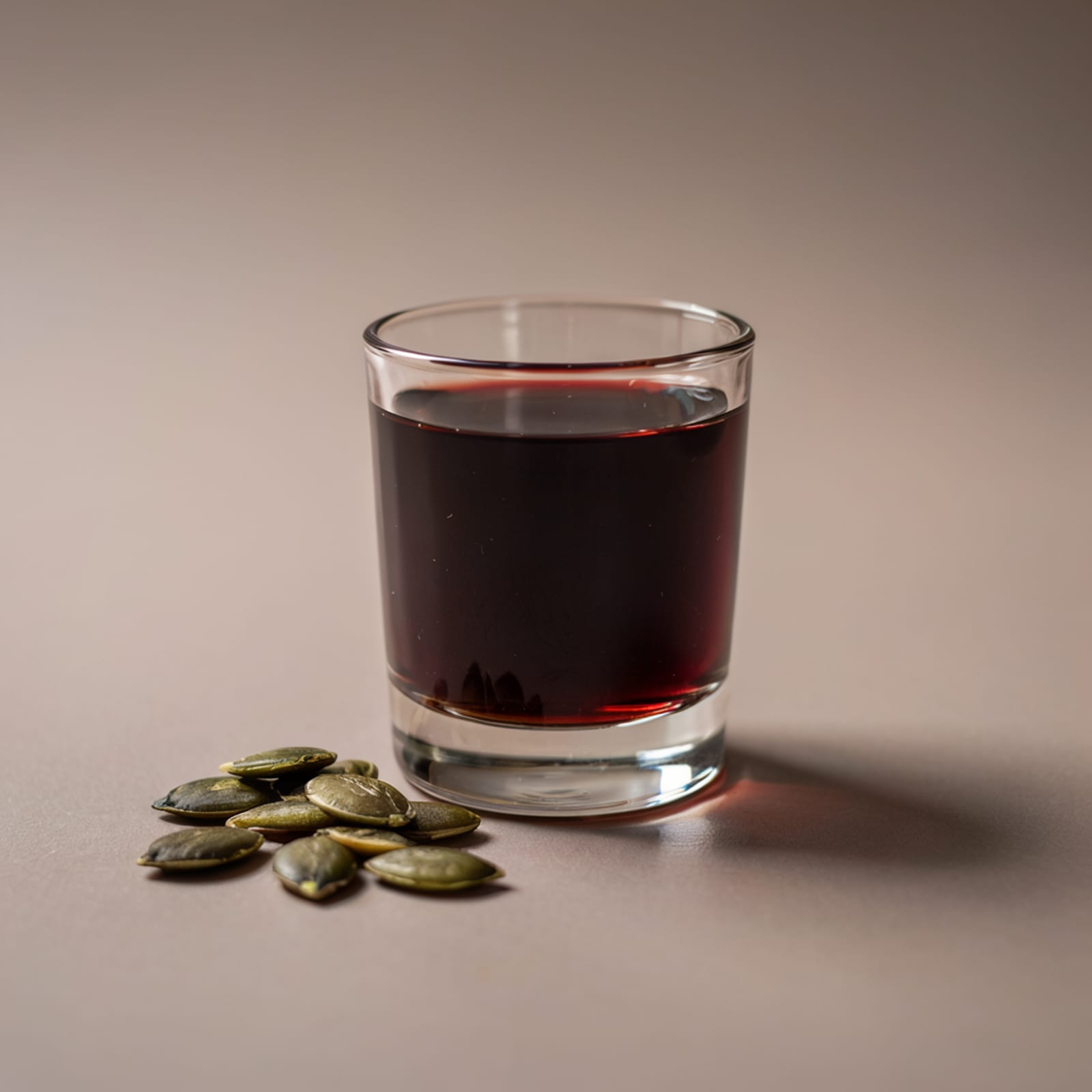
Only now does the tongue come into play. A small drop on the back of your hand or a piece of bread is enough. A good, traditionally made oil tastes full and roasted, with a light bitterness or a fine peppery bite that genuinely belongs there. A flatter, more watery-tasting version isn't a disaster, just a different style. A sharp, rancid, or clearly sour aftertaste is different: that belongs to no good oil, whichever mill it came from. Taste is allowed to vary slightly from vintage to vintage and mill to mill anyway — that's exactly what makes it a natural product.
How the oil moves
Tilt the bottle carefully and something else shows up: consistency. At room temperature, pumpkin seed oil flows easily and leaves an even, glossy film on glass or a spoon. Straight from a cool pantry, the oil looks briefly cloudier and a touch thicker — that settles on its own once it's back at room temperature. If it stays unusually thin or almost syrupy thick over time, though, a second look at origin and label is worth it.
What the label actually says
Now, with colour, aroma, and taste already in mind, the label becomes interesting. For Styrian oil, Styrian pumpkin seed oil PGI is the most reliable sign: a protected geographical indication that ties origin and production to fixed rules. Ideally that includes a stated country of origin, a region, a named oil mill, plus a best-before date and batch number. A bottle without PGI can still be good — it simply makes no equivalently verified claim about origin and method.
Where it lives in your cupboard
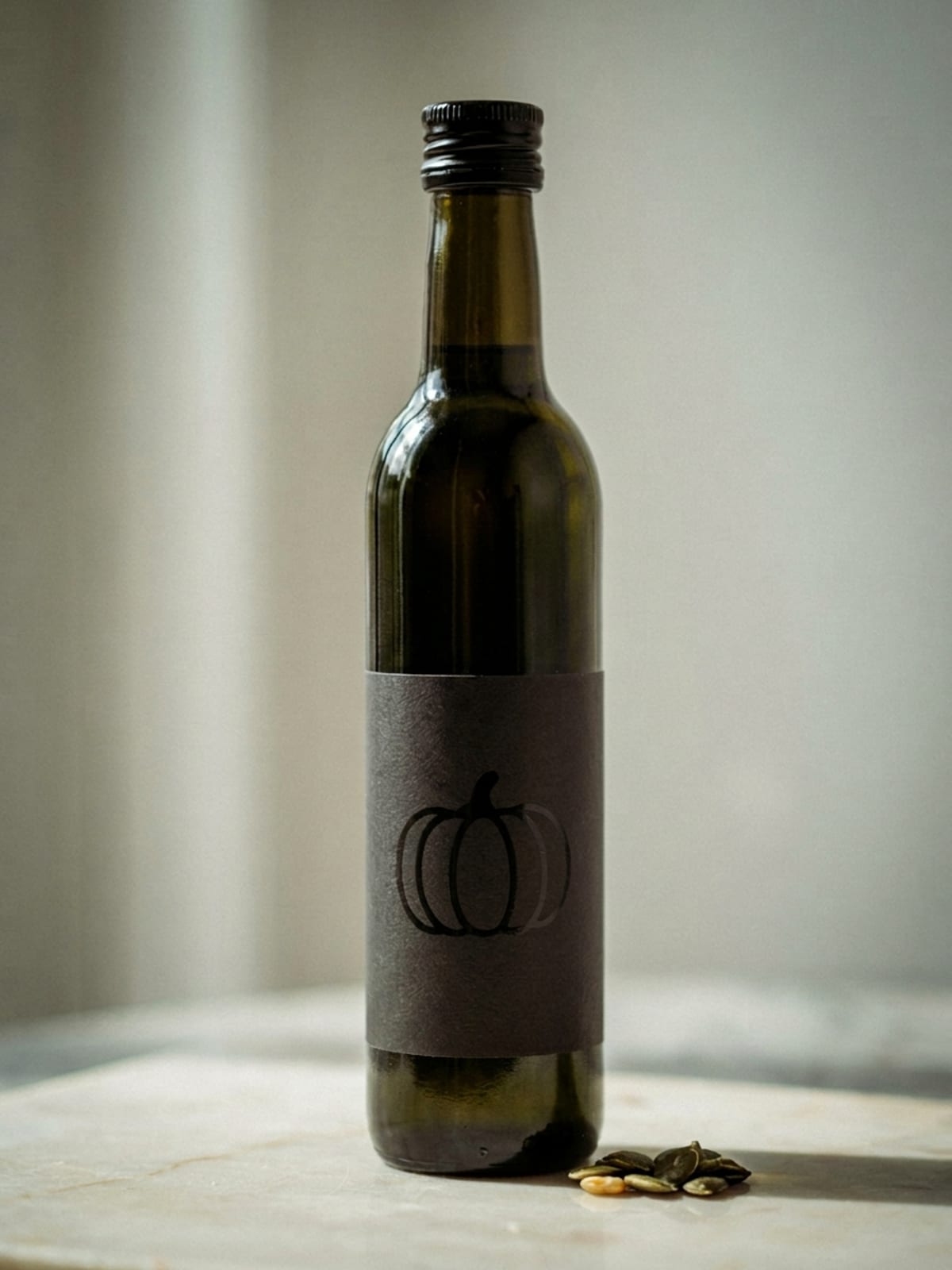
After the first test comes a quieter but equally important question: where does the bottle live now? Dark glass protects the delicate fatty acids from light, a tight-fitting cap from air. Neither helps much if the bottle sits right next to the stove or in direct sun. A cool, dark cupboard is the right spot — and once opened, a small countdown starts anyway: the oil should be used up within a few months. The details sit under storing pumpkin seed oil.
When it's time to say goodbye
Sometimes the decision is easy: if the oil smells sharp, chemical, or rancid, if the colour looks dull and grey-brown instead of rich and deep, or if an unpleasant aftertaste lingers after tasting, the bottle belongs in the sink, regardless of the date on the label. The same smell that decided whether an oil belonged in the kitchen on first opening is, in the end, the same smell that decides when it's time to stop. Anyone wanting to go deeper on origin, production, and quality markers finds it all under quality.
Buy cold-pressed Styrian pumpkin seed oil
Shop now