The Styrian
Pumpkin Seed Oil Journal
The Styrian
Pumpkin Seed Oil Journal
- The Styrian Pumpkin Seed Oil Journal
Shop EN
pumpkinseedoil.ccShop DE
kuerbiskernoel.cc
About
This website also contains some content created with the support of AI.
Cold-Pressed or Roasted: Comparing Pumpkin Seed Oil
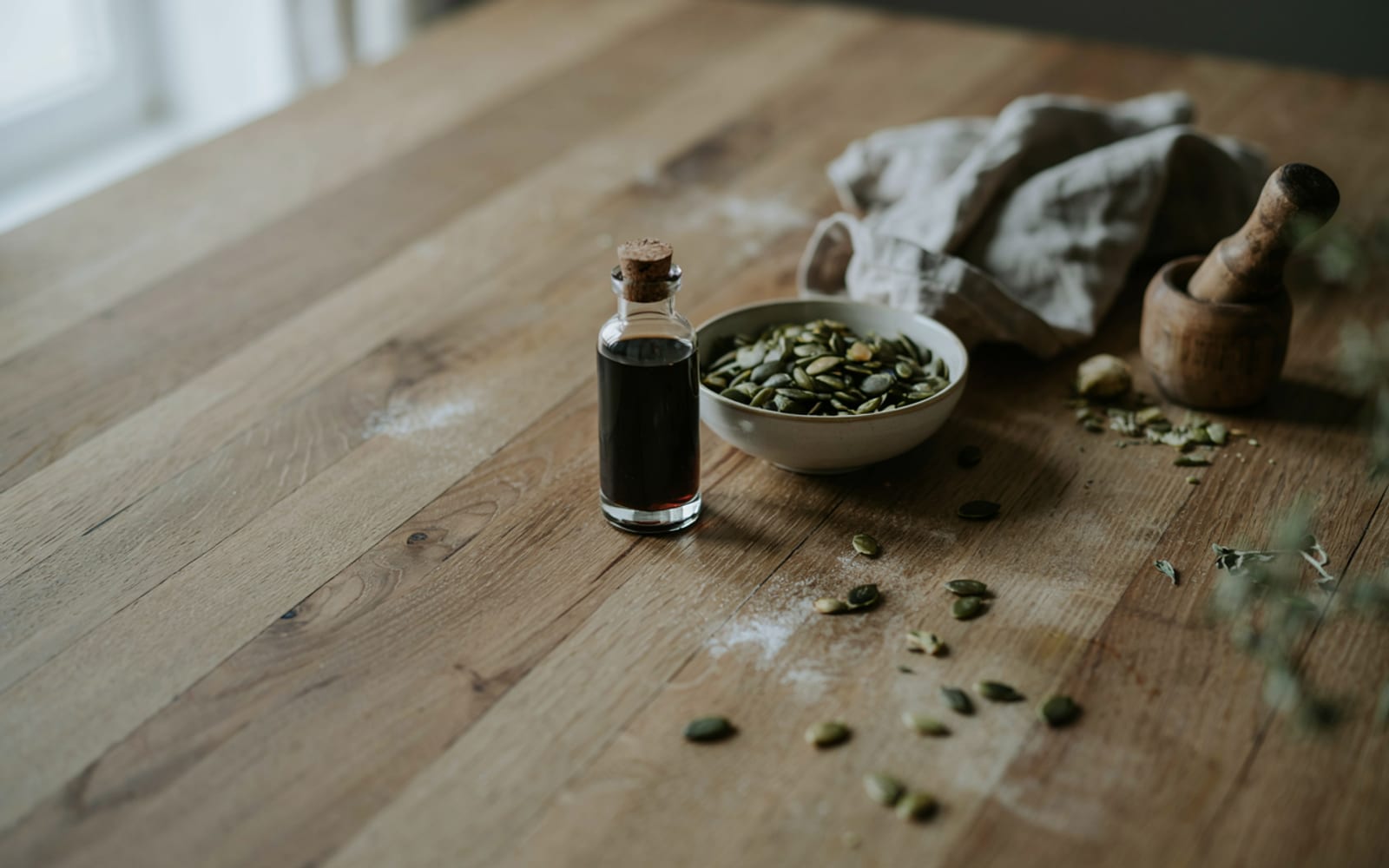
"Cold-pressed" sounds like care and gets used on plenty of cooking oils as a mark of quality. With pumpkin seed oil, though, the phrase deserves a second look. Because classic Styrian oil doesn't actually come out cold at all — it passes through a step beforehand that decides colour, aroma, and character. Understand both paths, and it suddenly makes sense why two bottles with similar-looking labels can taste so different.
What cold-pressed actually means
At its core, this refers to a single step: the press itself. In cold-pressed oils, no additional heat is applied during pressing — the seeds get squeezed out purely mechanically, with no chemical solvents involved. Delicate aroma compounds and accompanying substances survive that process better than they would under industrial methods. Simple enough — except with pumpkin seed oil, the press isn't the only place where heat comes into play.
The path Styrian oil takes
For traditional Styrian pumpkin seed oil PGI, the real transformation starts well before the press. The ground seeds get worked into a damp mass and then roasted — slowly, under constant stirring, until the colour turns and the smell fills the whole room. That heat is no accident and no compromise; it's the actual reason behind the deep, dark colour and bold roasted aroma most people associate with Styrian pumpkin seed oil. Only after that comes the pressing itself — mechanical, yes, but not cold from the first step to the last. What comes out then rests in a tank to settle before it's bottled.
Why labels deserve a close read
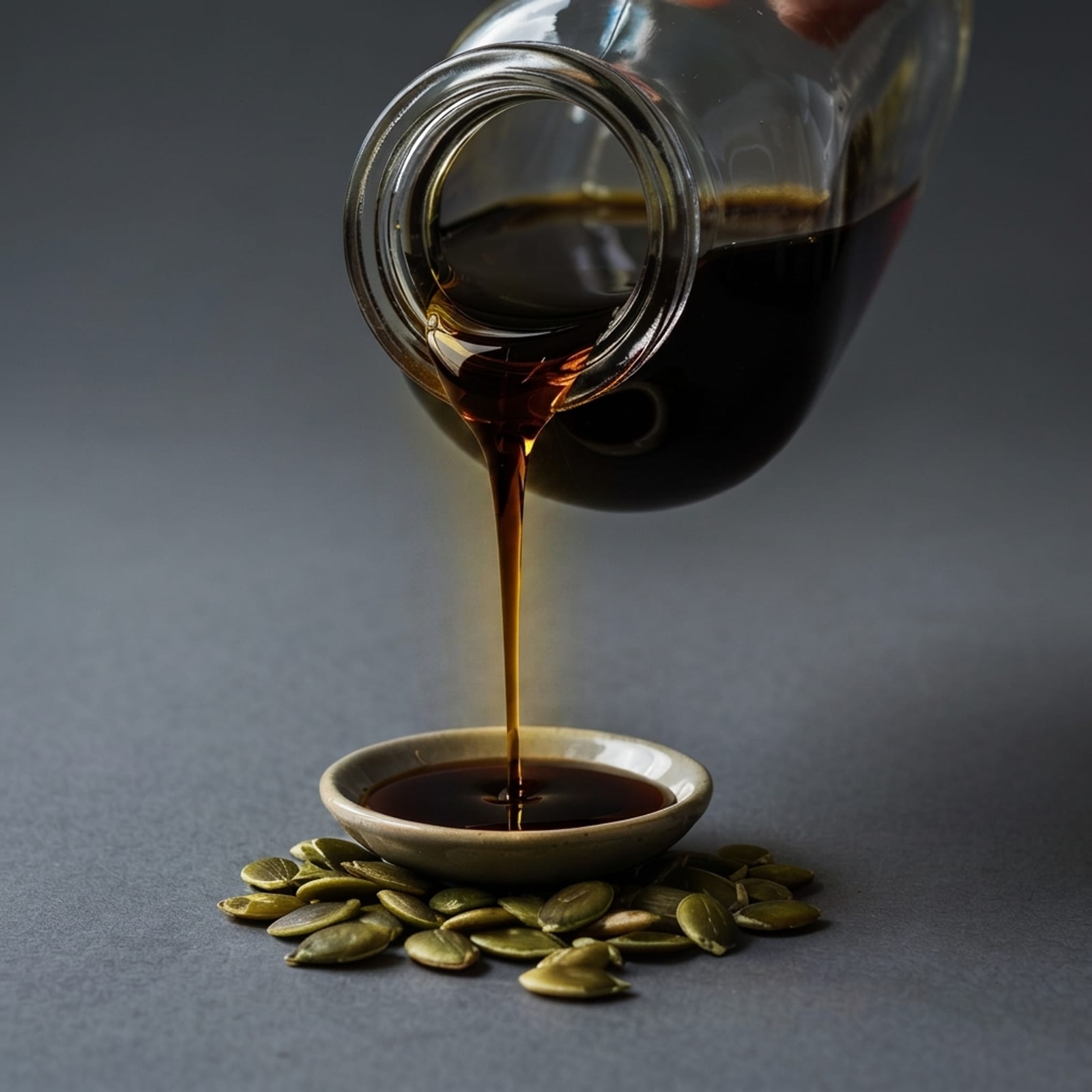
This is exactly where a misunderstanding creeps in, though it's easy to clear up once you know it. If a dark, clearly roasted pumpkin seed oil still carries the word "cold-pressed," that usually just refers to the last step — the press itself, not the path leading up to it. For your own buying decision, one question matters most: were the seeds roasted beforehand or not? A very dark oil with an intense roasted smell practically always comes from roasted seeds; a genuinely unroasted, cold-pressed oil is naturally much lighter.
Taste and appearance compared
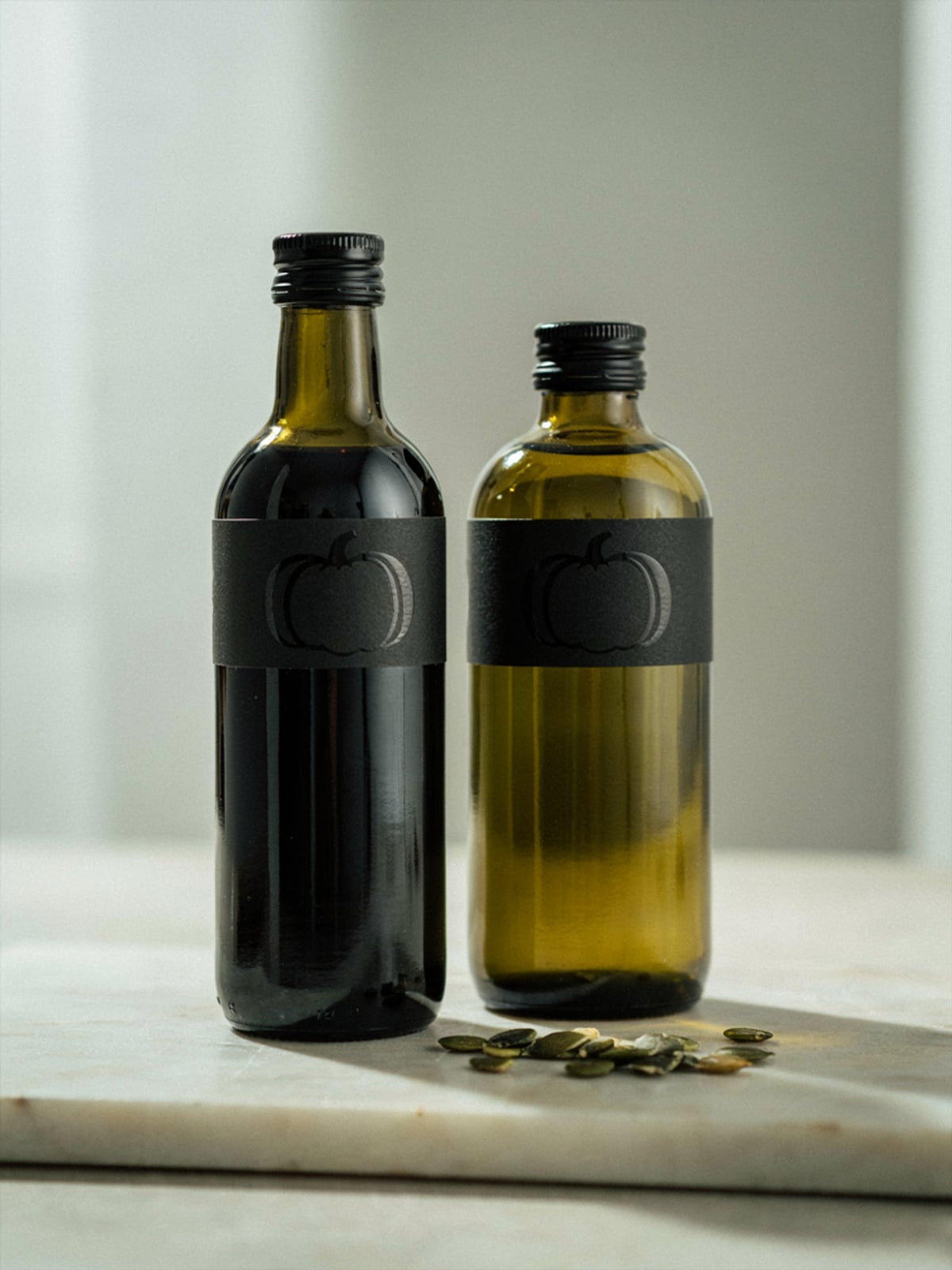
Put both bottles side by side and the difference is immediately visible. Roasted pumpkin seed oil looks black-green, shimmers reddish-brown when poured thin, and unfolds full, nutty, and complex on the palate. Its cold-pressed counterpart from unroasted seeds shows up lighter — greenish to yellowish — and tastes milder, fresher, almost slightly grassy. For a more restrained dressing, that can be exactly the right choice. For classic Styrian cooking, for that bold final drop over soup, most people reach for the roasted oil.
What actually changes in the seed
Roasting changes plenty, though far from everything. Some heat-sensitive compounds and pigments transform during roasting, while entirely new aroma compounds form that a cold-pressed oil would never develop in the same way. The key fatty acids — mainly linoleic and oleic acid — stay largely unchanged in their basic profile throughout. No blanket health ranking follows from these differences. What actually changes concerns mostly taste, colour, and a handful of accompanying compounds. More on this sits under fatty acids in pumpkin seed oil.
Which version suits you
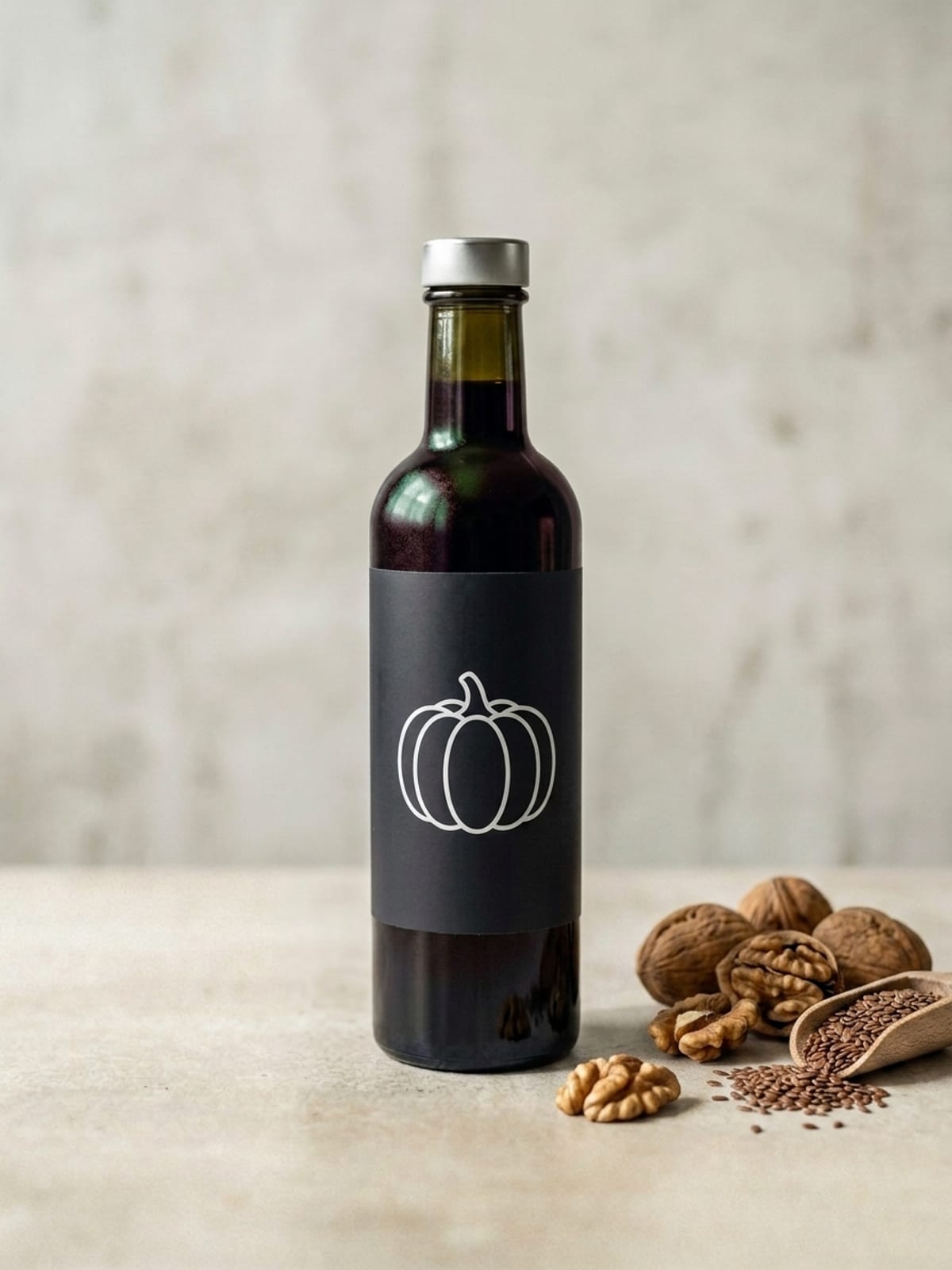
In the end, the choice comes down to personal taste, not quality. Anyone after the bold, unmistakably Styrian flavour reaches for roasted, certified oil. Anyone who prefers a lighter, milder profile is well served by an unroasted, cold-pressed oil. Both should be stored cool, dark, and tightly sealed — neither handles strong heat well.
Making quality visible
Regardless of the style you choose, the same markers help with selection: a traceable label, dark glass, a clear origin statement, and a fresh, coherent smell on opening. When in doubt, colour, aroma, and taste count for more than a single word on the front of the bottle. A step-by-step walkthrough of these markers lives under checking pumpkin seed oil quality.
Shop finishing oil from Styria, Austria
Shop now