The Styrian
Pumpkin Seed Oil Journal
The Styrian
Pumpkin Seed Oil Journal
- The Styrian Pumpkin Seed Oil Journal
Shop EN
pumpkinseedoil.ccShop DE
kuerbiskernoel.cc
About
This website also contains some content created with the support of AI.
The Oil Mill: From Press Cake to Bottle
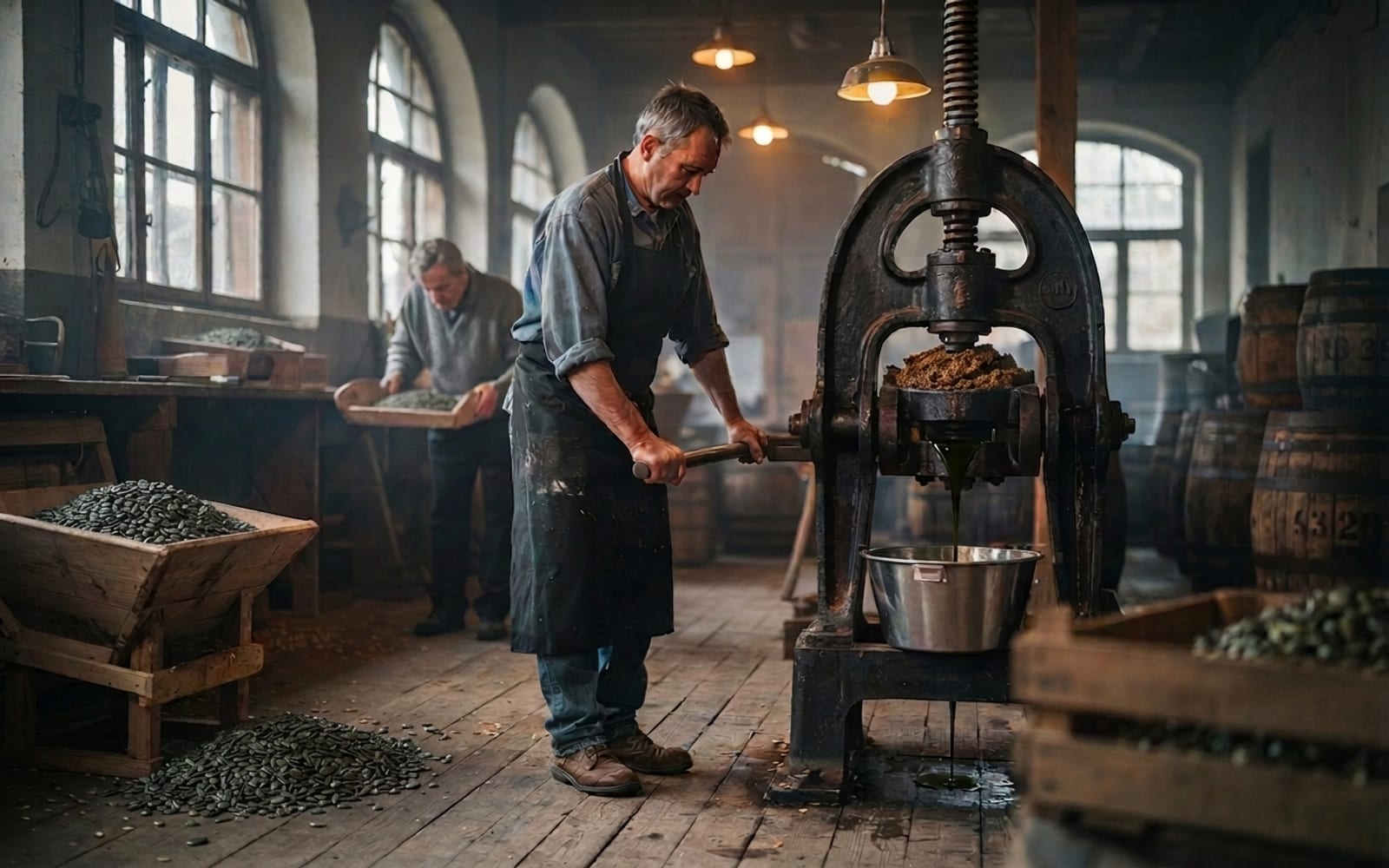
The word "mill" conjures a water wheel and grain for most people — rarely pumpkin seeds and roasting kettles. A Styrian oil mill looks quite different in practice: more of a hands-on workshop than a museum piece, often sitting right next to a farmhouse, kitted out with a mix of traditional roasting pans and more modern hydraulic presses. Seeing what actually happens inside these rooms helps make sense of the value in a good bottle of oil long before it ever reaches a shelf.
Small, but not behind the times
Most Styrian oil mills are small to mid-sized family operations, some in the same hands for several generations. Over a season, a typical mill presses a volume of seeds measured in tonnes rather than the vast quantities of an industrial oil refinery. That comparatively small scale isn't a sign of being behind the times — it's tied directly to the harvest itself: oil pumpkins yield less per hectare than many other oilseeds, which naturally keeps the whole industry smaller in scale.
A walk through the process
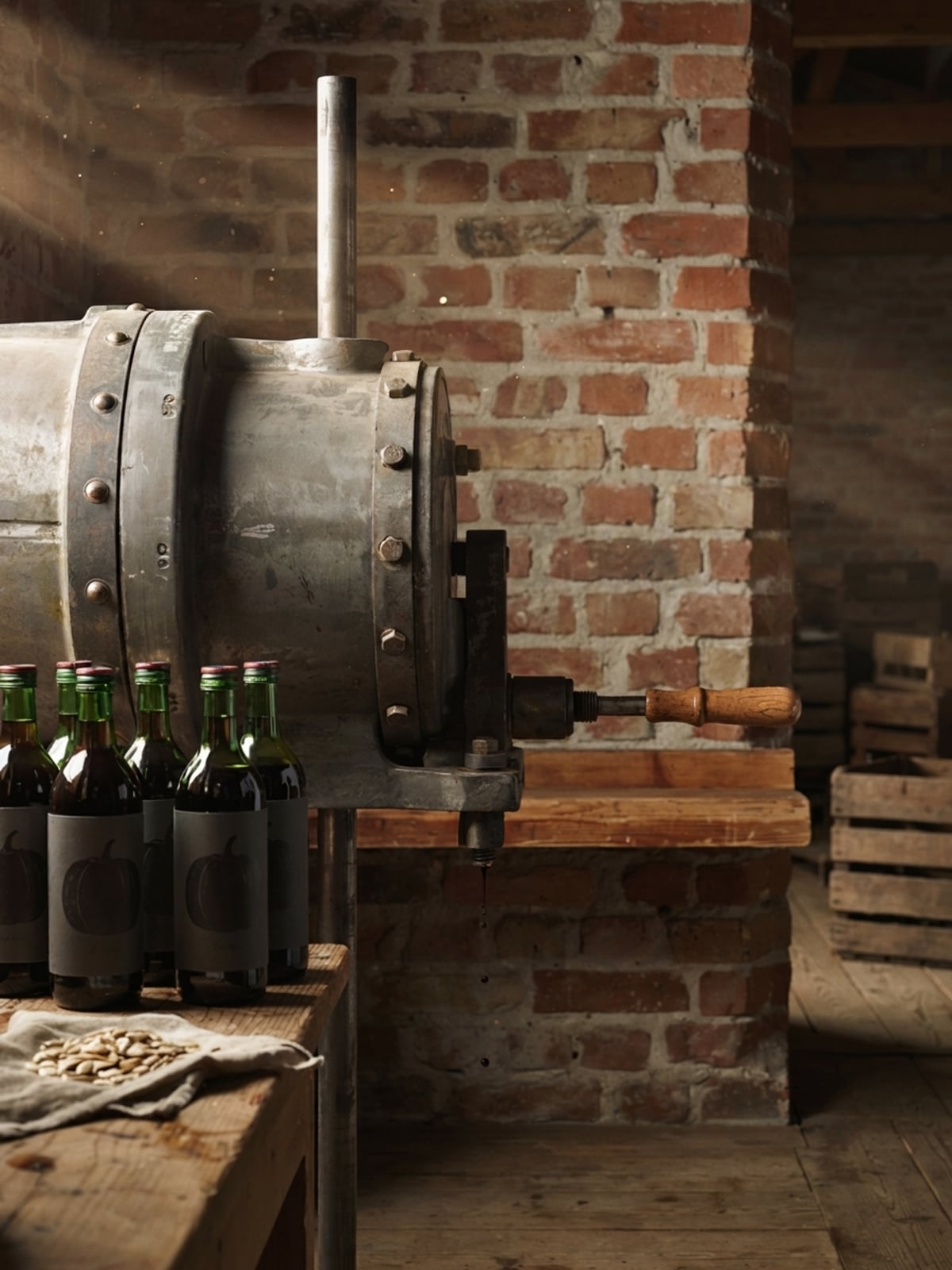
Walk through an active mill during the season and you usually start at sacks and bins full of dried, cleaned seeds waiting their turn. From there the path leads to the grinding mechanism that turns them into a coarse mass, on to the large roasting pans or kettles where the characteristic dark colour and roasted flavour take shape, and finally to the presses themselves — often hydraulic models applying steady, controlled pressure to the roasted mass. Out of the press, the oil runs still warm into tanks or barrels, where it rests first while fine sediment settles out. Only after that does it get filled into dark glass bottles. The whole room typically smells strongly of roasted pumpkin throughout — a smell many mill operators count among the nicest parts of their work.
Where craft meets equipment
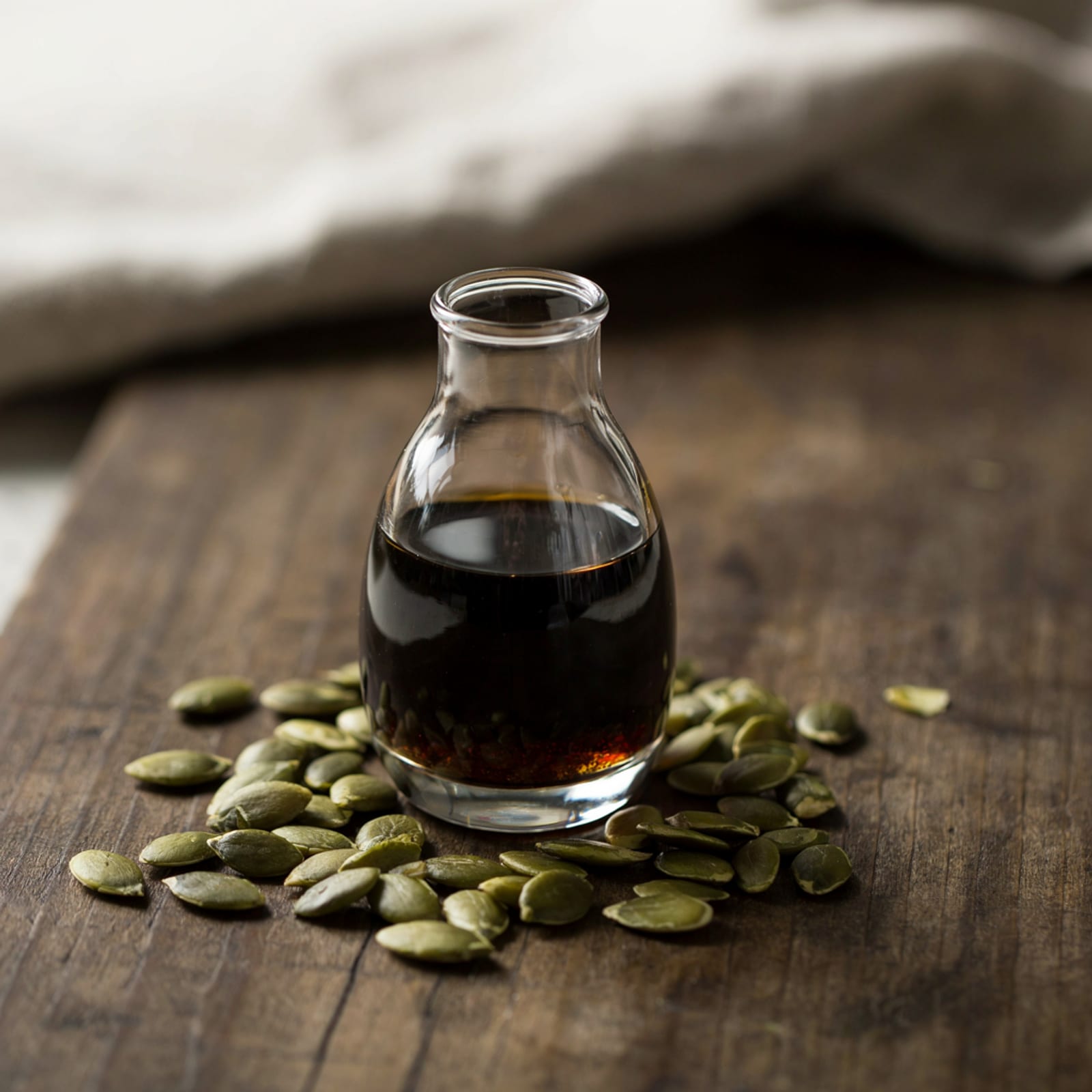
Even with modern technology, much of the work in a Styrian oil mill stays a matter of experience. Knowing exactly when the roasted mass is right, how hard a particular batch should be pressed, or how much natural sediment should stay in the finished oil — these are all decisions built on years of experience, not a fixed formula. Exactly these decisions give oils from different mills their own subtle character, even from very similar starting harvests. The full production process from seed delivery to bottle is described step by step under quality and authenticity of pumpkin seed oil.
From barrel to finished bottle
Between the press and the label sits one last, quiet step that never gets much attention in any brochure but matters enormously. The freshly pressed oil gets time in the tank before it ever reaches a bottling line — rushing this would be a mistake, because only with time do the fine particles settle out that later give a clear picture in the glass. Anyone visiting a mill rarely sees this step in action, simply because it takes time and shows little movement — and that's exactly its purpose.
Why origin from a real mill matters
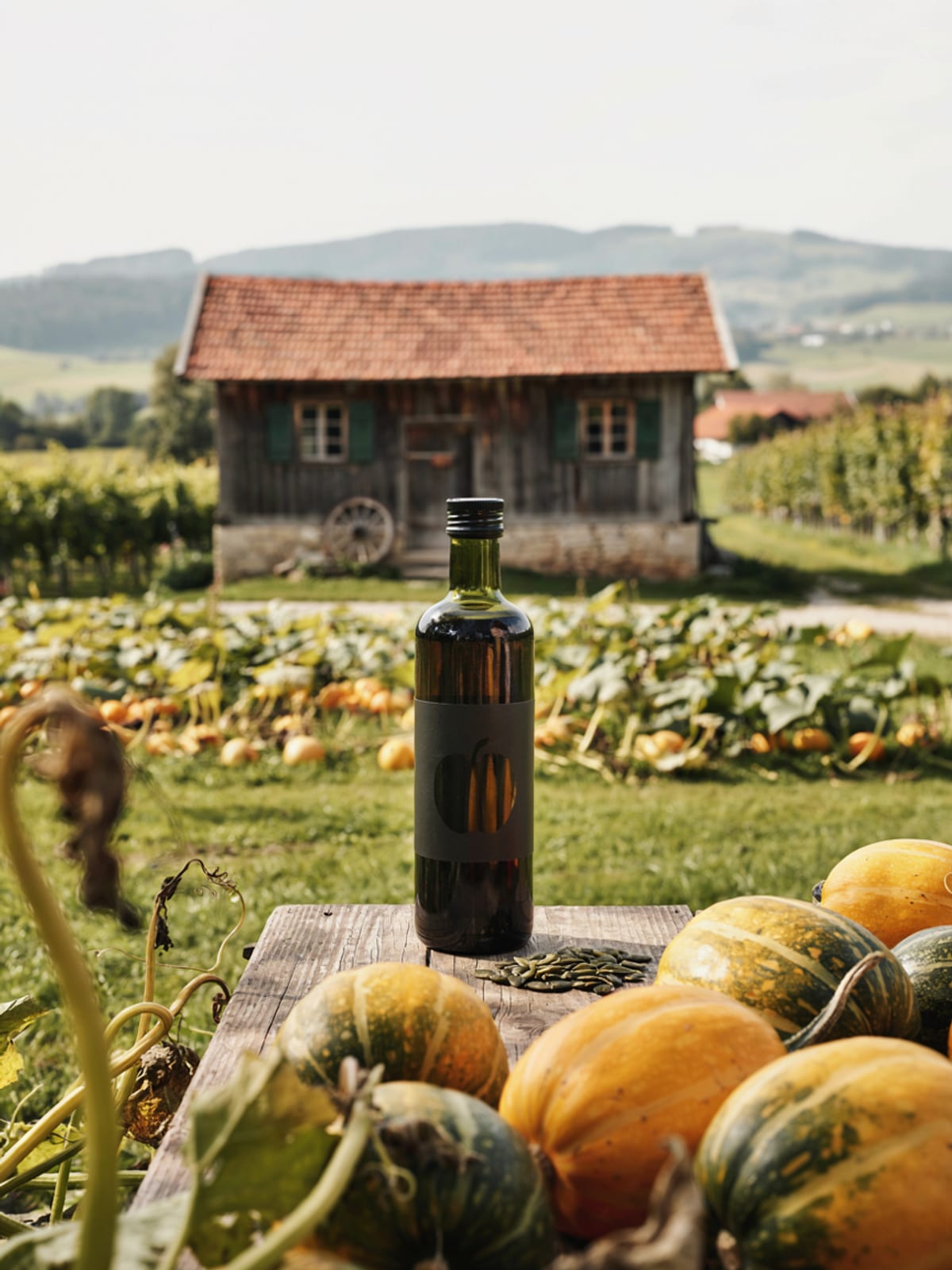
A named mill with a genuine address is one of the most reliable signs of an authentic product, because it creates a concrete, verifiable origin instead of an anonymous brand with no tangible source. Producers proud of their work usually share these details readily; those who aren't tend to keep origin and method vague. That distinction fits the broader signs generally useful for judging an oil's composition — laid out in the overview of pumpkin seed oil composition.
A craft proven in the field
Whether equipped with modern hydraulic presses or tools considerably simpler than two generations ago, Styrian oil mills stay tied to the same agricultural rhythms that have always governed the oil pumpkin harvest. That connection between growing and processing, closer to the farm than the factory, is a good part of what sets Styrian pumpkin seed oil apart from large-scale industrial vegetable oils — and a good reason to read the word "mill" on a label as a genuine quality marker, not just a nice-sounding phrase.
Buy artisanal Styrian pumpkin seed oil
Shop now