The Styrian
Pumpkin Seed Oil Journal
The Styrian
Pumpkin Seed Oil Journal
- The Styrian Pumpkin Seed Oil Journal
Shop EN
pumpkinseedoil.ccShop DE
kuerbiskernoel.cc
About
This website also contains some content created with the support of AI.
Pumpkin Seed Pesto
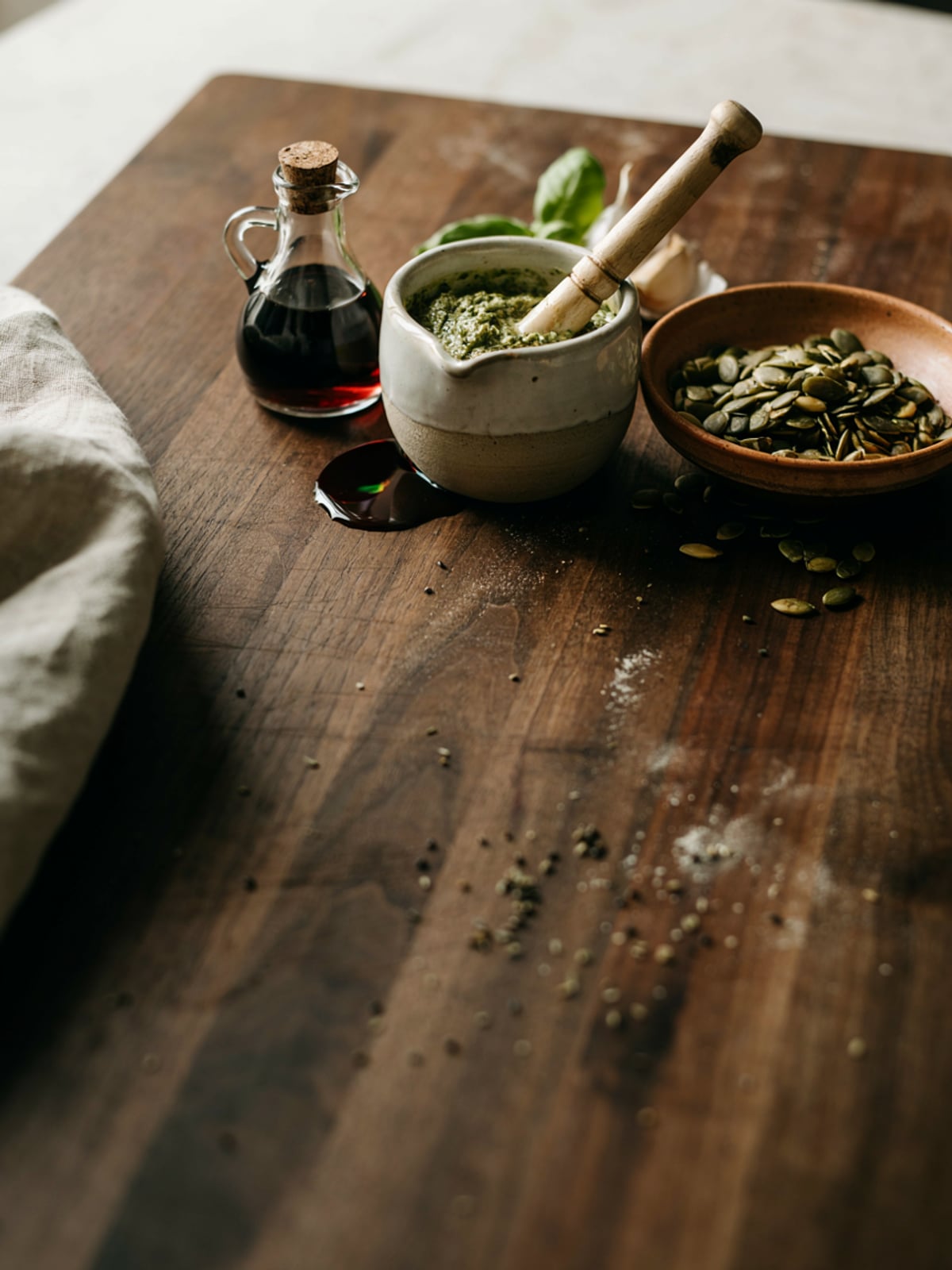
A few pumpkin seeds jump softly in the pan, then the smell arrives: warm, nutty, with a faint trace of smoke. Anyone stirring pumpkin seed oil into pesto for the first time instead of olive oil hesitates right here — the aroma is stronger than a green herb pesto usually promises. That hesitation matters: it decides whether the bowl ends up balanced or simply loud. Get it right, and the pesto tastes darker than any other version — earthier, rounder, with a depth basil pesto alone never quite reaches.
A Swap That Sounds Odd at First
The question always comes first: can you just replace the olive oil in a pesto? At its core, a pesto is little more than greens, cheese, seeds, and oil bound into a spoonable paste — a structure with plenty of room to move once the oil itself changes. Pumpkin seed oil brings no neutral, carrying flavour to that structure; it brings its own strong character instead. So it is worth rethinking a little more than just the oil.
Why the Seeds Already Belong
Pumpkin seeds are already a familiar pesto ingredient in many kitchens, toasted and chopped in place of pine nuts. Add oil from the same seed family, and the two reinforce each other instead of pulling in different directions. Cooks often say it tastes as if everything was always meant to go together. That is exactly why this pesto never feels like an experiment — more like an obvious idea nobody had quite gotten to yet.
The Seeds, Still in the Pan
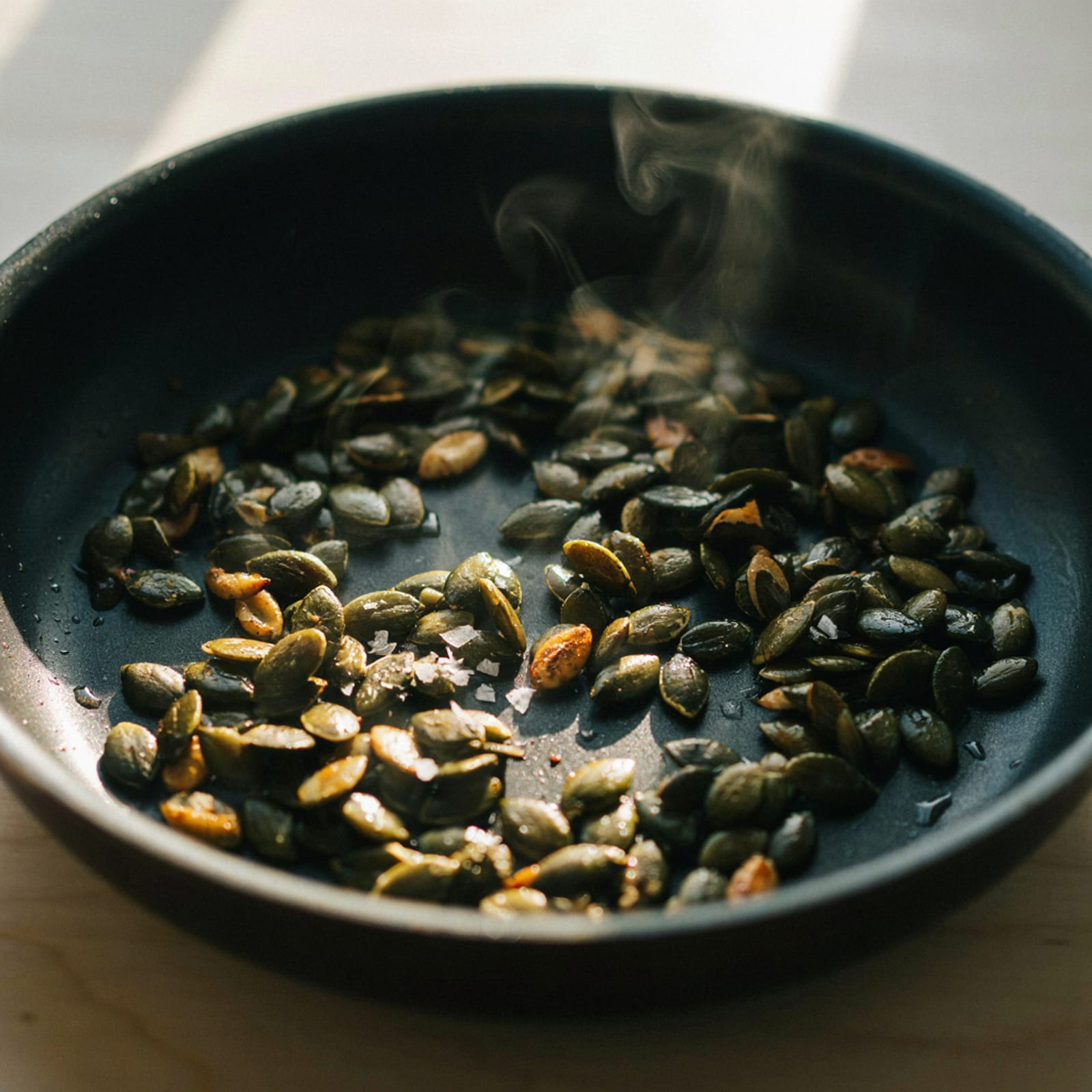
Before anything goes into the blender, the seeds spend a few minutes in a dry pan. At first they lie still, then they begin to jump, their colour shifting from green to a deep brown, and a thin haze of steam rises above the pan. Cooks often say: too hot, and they burn; too short, and they stay flat. A little coarse salt in the last minute is enough, then the seeds come off the heat while their smell is still at its strongest.
A Small Balance, a Big Effect
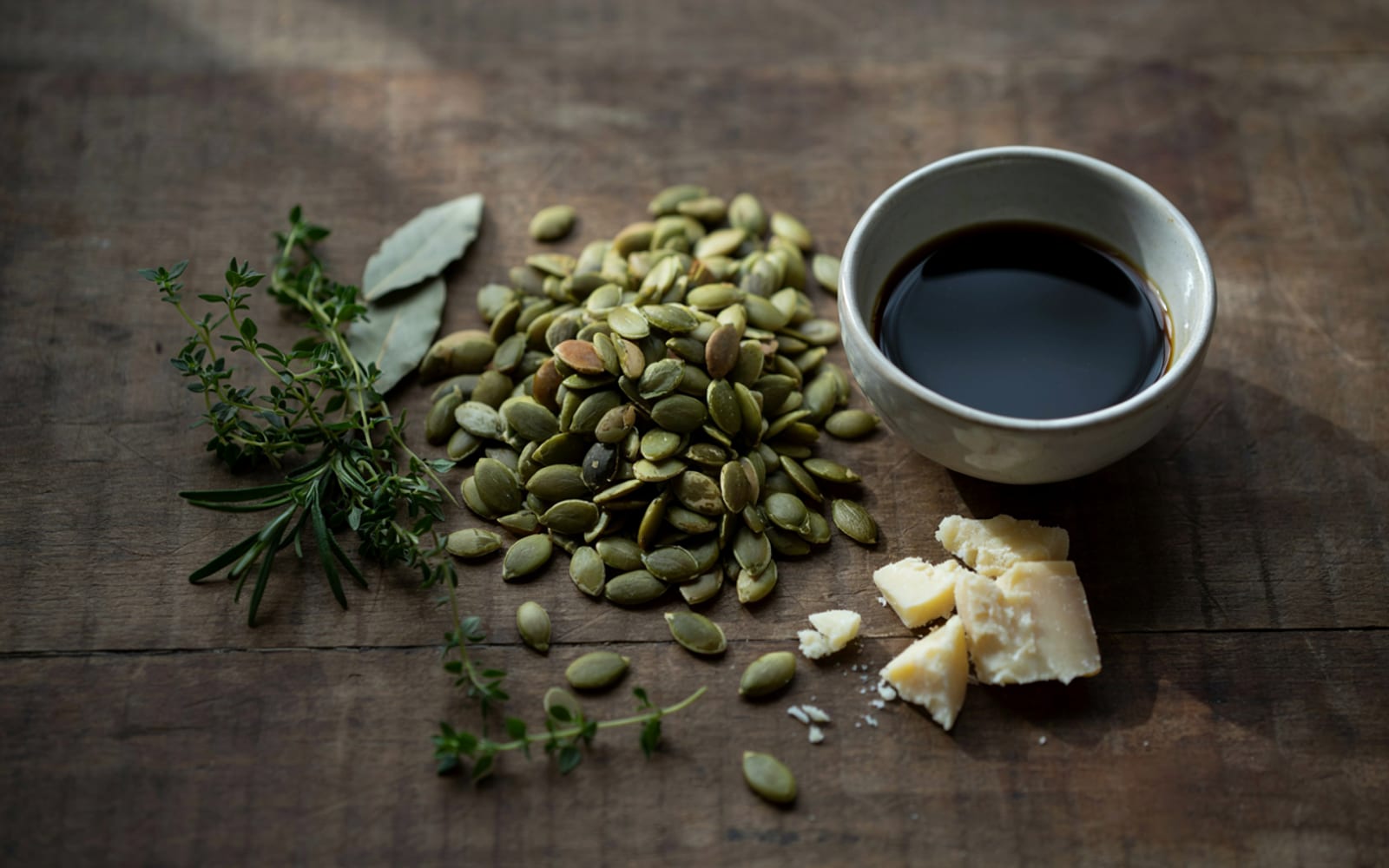
Because pumpkin seed oil tastes stronger than mild olive oil, many cooks blend the two rather than swapping outright — about one third pumpkin seed oil to two thirds mild olive oil. That way the dark oil's character comes through without covering everything else. A firm, salty cheese like Parmesan still earns its place here: its saltiness balances the oil's earthy sweetness before it can take over.
A Recipe That Needs No Scale
A handful of basil — or a mix of basil and parsley — goes into a blender or mortar with the toasted seeds, some grated hard cheese, and a crushed clove of garlic, and gets roughly broken down. The oil blend follows gradually, stirred in until the paste turns creamy but keeps a little texture. Salt comes last, since pumpkin seed oil brings none of its own; the balance has to come from everything else. Keep the blending brief: a long, high-speed spin does the oil no favours, as heat and pumpkin seed oil explains in more detail — a few short pulses are fine, a hot pan is not.
Over Pasta, Still Warm
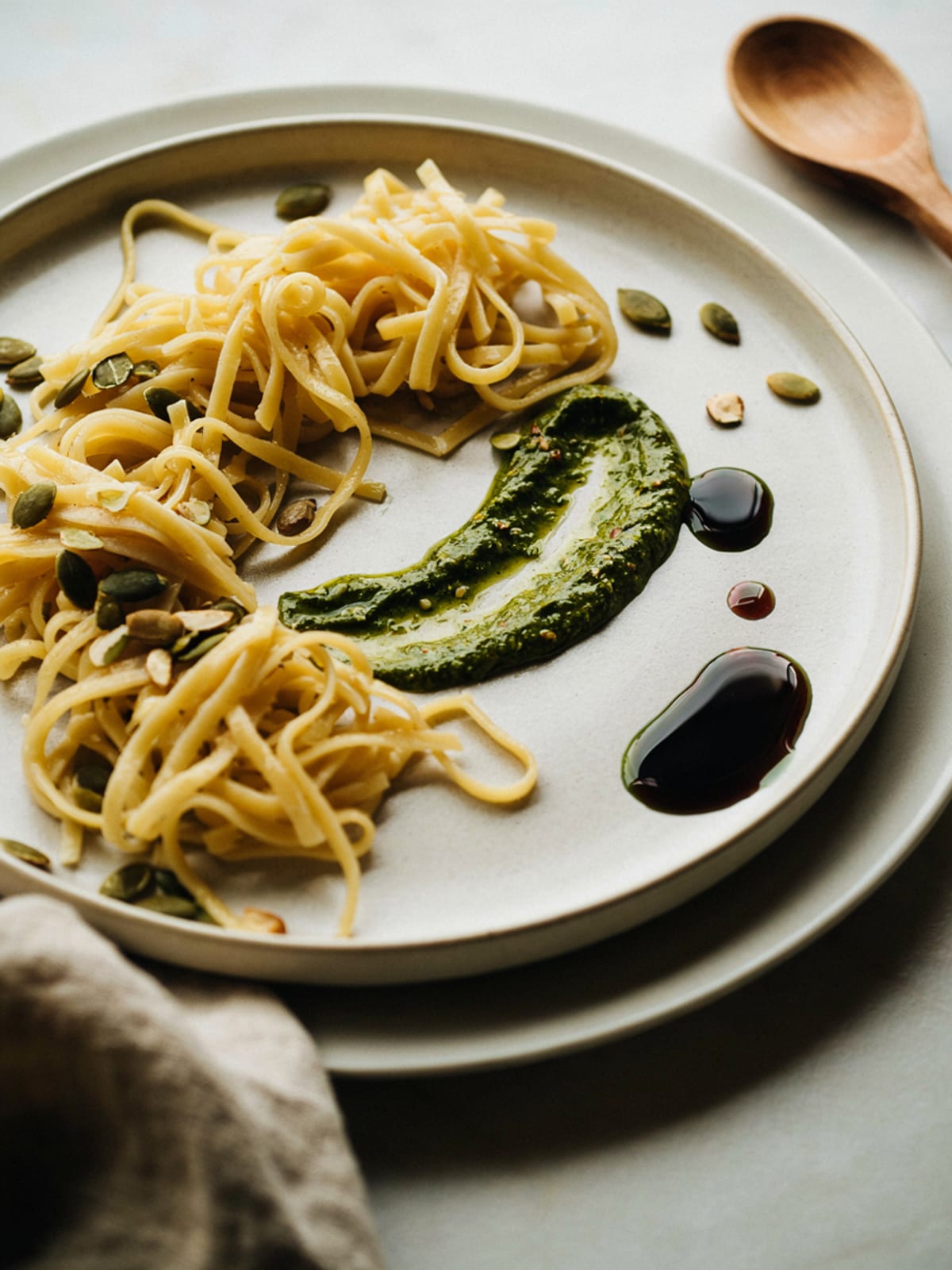
The pesto is usually ready right around the moment pasta starts boiling somewhere else on the stove. Tossed through while warm, the pasta takes on the dark green almost instantly, and the roasted smell rises with the steam. The same pesto works just as well on toasted bread or as a dip for raw vegetables — anywhere a lighter basil pesto would normally sit, this darker, earthier version can take its place. More everyday ideas live under dressings with pumpkin seed oil.
What Is Left in the Jar
Whatever does not make it to the plate keeps well, sealed, in the fridge for a few days — the oil inside the pesto follows the same rules as the pure oil in the bottle, covered under storing pumpkin seed oil. In the end, what remains is the same dark oil that stood in the bottle before the first stir: bold, roasted, hard to mistake for anything else. For more places it turns up, see the full recipe collection.
Taste Styrian oil pressed in the region
Shop now