The Styrian
Pumpkin Seed Oil Journal
The Styrian
Pumpkin Seed Oil Journal
- The Styrian Pumpkin Seed Oil Journal
Shop EN
pumpkinseedoil.ccShop DE
kuerbiskernoel.cc
About
This website also contains some content created with the support of AI.
Pumpkin Seed Oil Compared to Other Oils
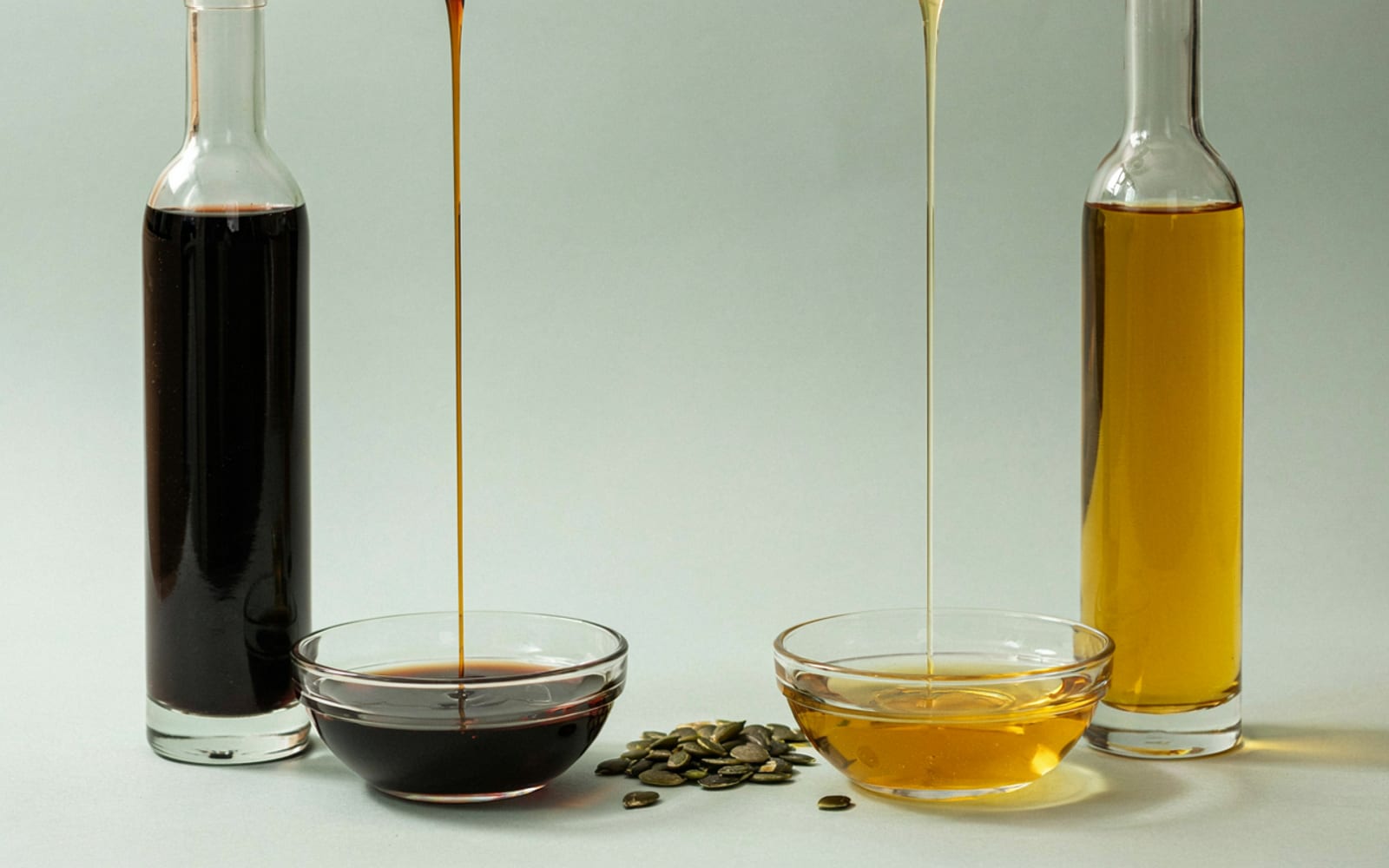
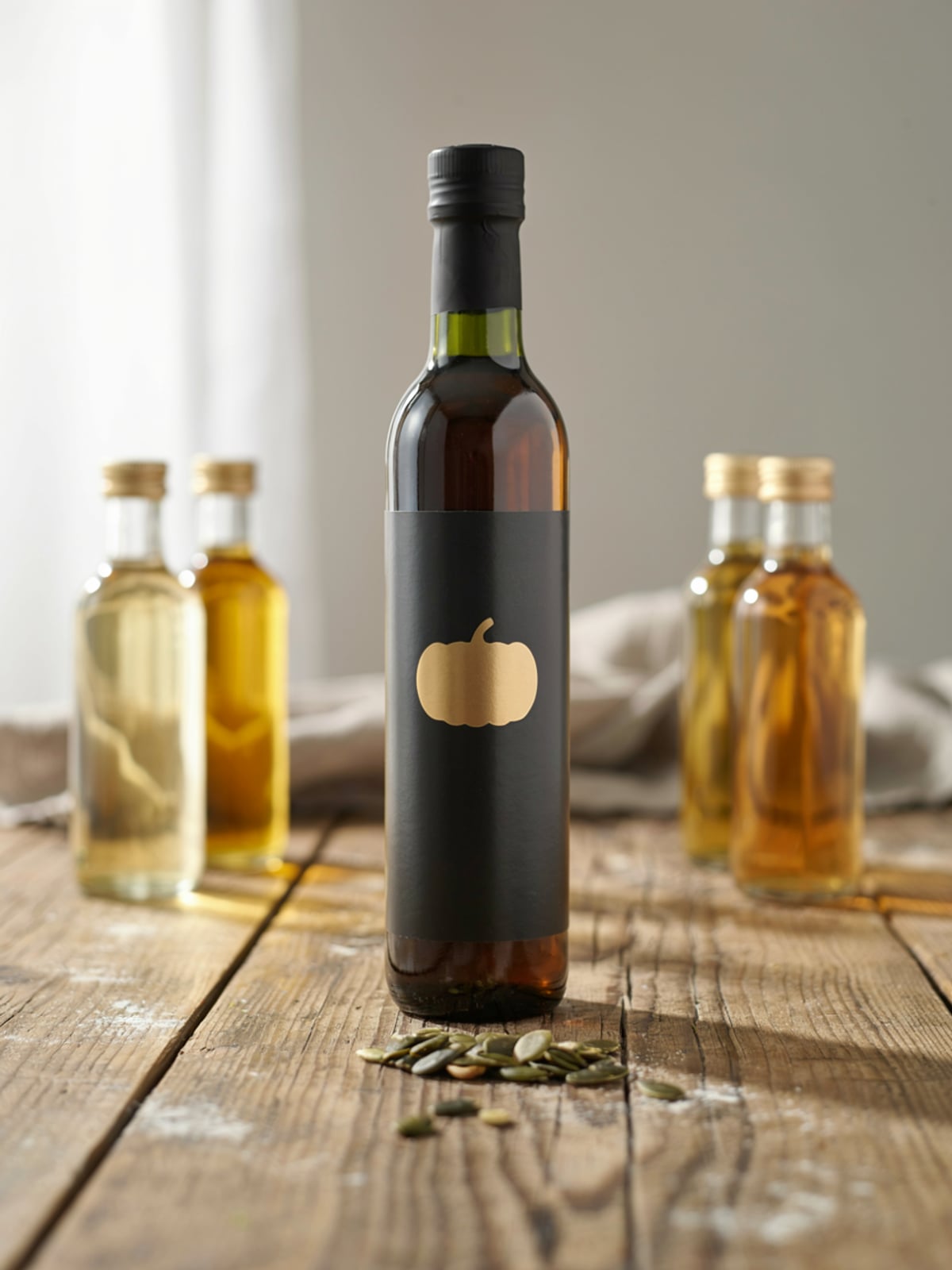
Most kitchens hold more than one oil, and that is sensible. Each bottle earns its place for a different job: some handle high heat, some stay mild in the background, some arrive at the table for flavour alone. Styrian pumpkin seed oil belongs firmly in the last group. It is a roasted finishing oil with a deep nutty aroma, a dark bottle colour that flashes green in thin layers, and a protected origin story under EU PGI rules. It is not a frying fat, and it is not a quiet all-purpose oil. Once you see how it differs from the oils people most often compare it with, choosing the right pour becomes easy.
This hub collects those comparisons in one place. Each child page goes deeper on taste, heat behaviour, cuisine fit, and shelf life. The short sections below give you the overview — then follow the links for the full side-by-side. For a plain introduction to the product itself, start with What Is Pumpkin Seed Oil; for origin labelling, see Styrian PGI.
How to Read These Comparisons
We keep three questions in view on every page. First: what does each oil taste like, and how strong is that taste? Second: where does heat belong — pan, oven, or cold plate only? Third: when would a cook sensibly reach for pumpkin seed oil instead of the other bottle, and when is the reverse true? We do not treat oils as interchangeable “healthy options.” They are kitchen tools with different strengths. Styrian pumpkin seed oil shines on salads, soups, eggs, cheese boards, and cold plates — anywhere you want a roasted, nutty finish without cooking the oil hard. For heat rules in practice, read Pumpkin Seed Oil in the Kitchen.
Versus Olive Oil
Olive oil is the Mediterranean everyday oil: fruity or peppery depending on grade, widely used from dressings to gentle sautéing with extra virgin, and for higher heat with refined grades. Pumpkin seed oil is darker, more roasted, and far more assertive in a single spoonful. Use olive oil when you want fruit and grass; use pumpkin seed oil when you want toasted seed and depth. They can share a table — olive in the pan, pumpkin seed oil on the finished plate — but they are not substitutes for each other. Full guide: Pumpkin Seed Oil vs Olive Oil.
Versus Flaxseed Oil
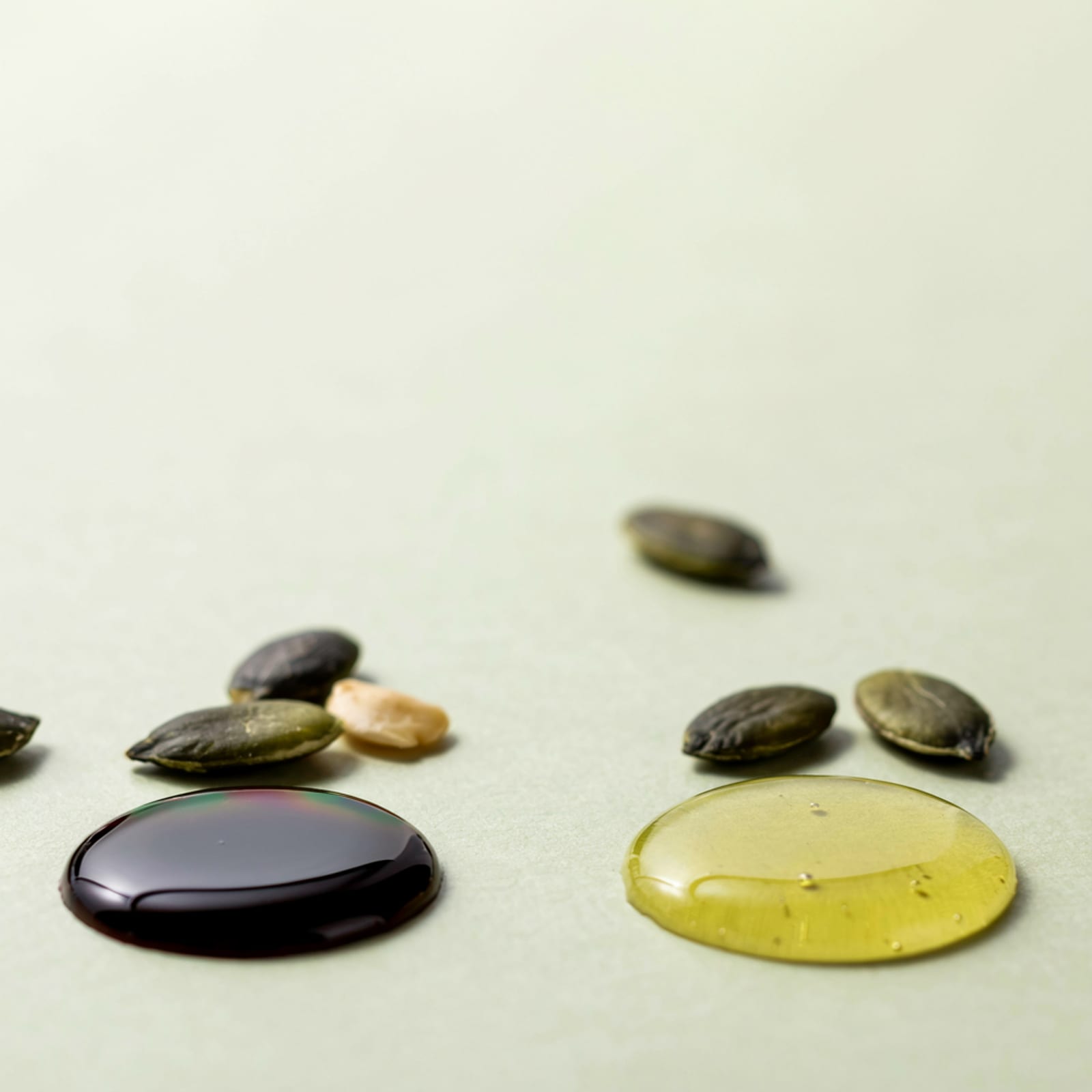
Flaxseed (linseed) oil is mild, grassy, and prized for its omega-3 profile. It is almost always used cold and keeps poorly once open. Styrian pumpkin seed oil is roasted and nutty, with a different fatty-acid balance and a longer kitchen life when stored well. Both are finishing oils; neither belongs in a hot frying pan. Choose flaxseed when you want a quiet, green note; choose pumpkin seed oil when you want aroma that announces itself. Full guide: Pumpkin Seed Oil vs Flaxseed Oil. Background on fatty acids: Omega-3 and Omega-6.
Versus Rapeseed Oil
Rapeseed (canola) oil is the neutral workhorse of many northern European kitchens: light colour, soft flavour, and a smoke point suited to everyday frying and baking. Pumpkin seed oil sits at the opposite end of the spectrum — expensive per litre, intense, and reserved for finishing. Keep rapeseed for heat; keep pumpkin seed oil for the last pour. Full guide: Pumpkin Seed Oil vs Rapeseed Oil.
Versus Walnut Oil
Walnut oil is the closest cousin in mood: another nutty finishing oil for salads and cheese. Classic French walnut oil is often milder and more “fresh nut” than the roasted Styrian pumpkin character. Both spoil if mishandled; both reward dark bottles and cool cupboards. Price, aroma strength, and regional tradition tip the choice. Full guide: Pumpkin Seed Oil vs Walnut Oil.
Versus Sesame Oil
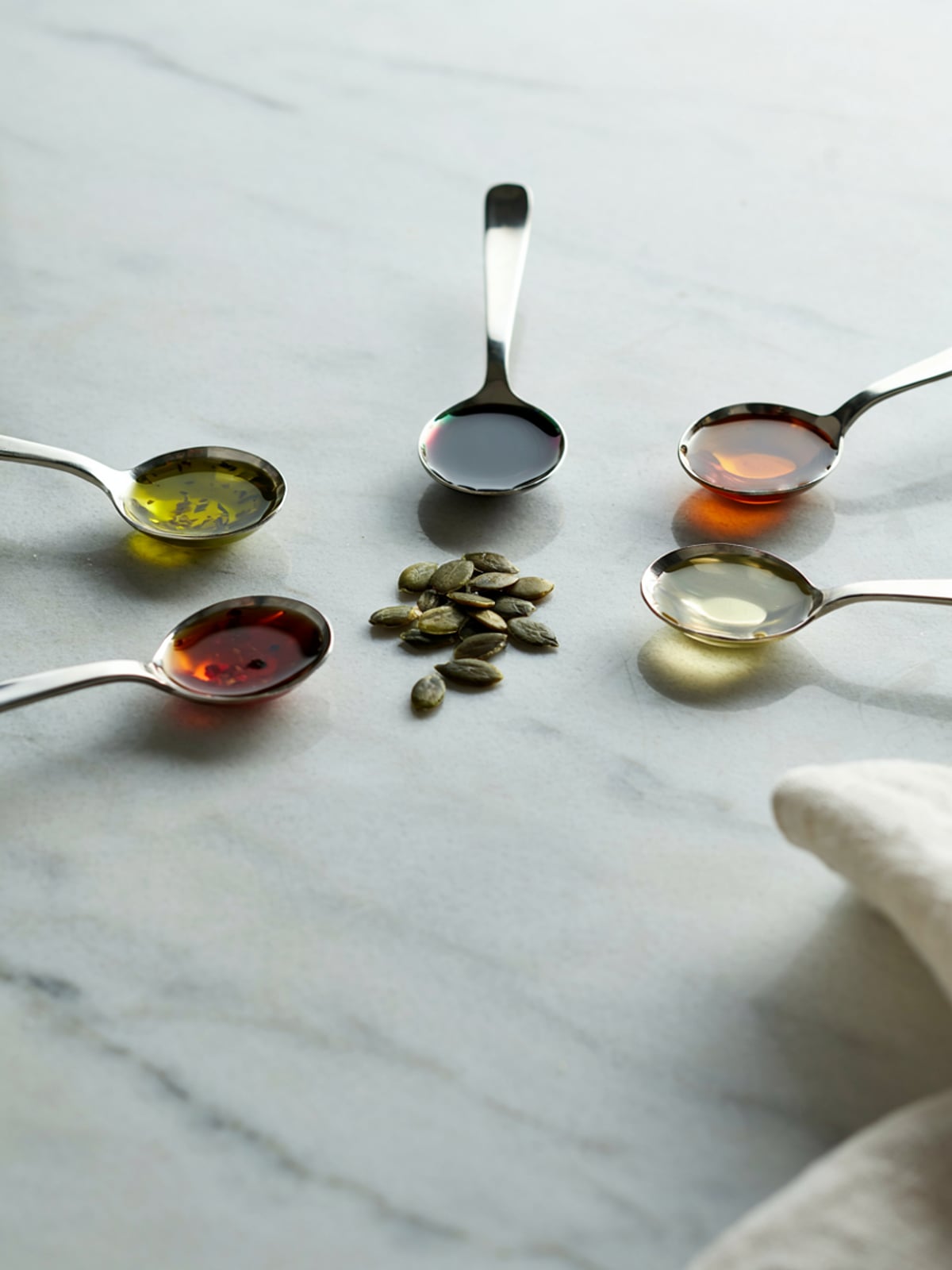
Toasted sesame oil is the aromatic finisher of East and Southeast Asian cooking — powerful, sesame-forward, used in drops. Styrian pumpkin seed oil plays a similar role in Alpine cuisine: small amounts, late addition, big flavour. The aromas are not interchangeable, but the technique is. Raw sesame oil is milder and different again. Full guide: Pumpkin Seed Oil vs Sesame Oil.
Versus Hemp Oil
Hemp seed oil is another green, plant-based finishing oil that people confuse with pumpkin seed oil by colour alone. Hemp oil is usually cold-pressed without the Styrian roasting step, tastes grassy rather than roasted, and has no PGI Styrian tradition behind it. Full guide: Pumpkin Seed Oil vs Hemp Oil.
Versus Black Seed Oil
Black seed (Nigella sativa) oil comes from a different plant, a different culinary world, and a different flavour — pungent, peppery, often used in tiny amounts. It is not a pumpkin product and should not be swapped in Styrian salad dressings. Full guide: Pumpkin Seed Oil vs Black Seed Oil.
Quick Decision Guide
Need high heat? Use rapeseed or a refined oil, not pumpkin seed oil. Need a mild everyday dressing? Olive or a light blend may serve better. Want roasted nut depth on a salad, soup, egg, or cold plate? That is pumpkin seed oil’s job. Want plant-based only? Styrian pumpkin seed oil is vegan — see Is Pumpkin Seed Oil Vegan?. Curious about protein claims on labels? Protein stays in the seeds and press cake, not in the oil — see Protein: Seeds vs Oil.
Authenticity Before Comparison
Comparisons only help if the bottle in your hand is the real Styrian product. Look for the PGI / g.g.A. seal, a declared Styrian (or recognised Slovenian PGI) origin where relevant, and clear labelling that distinguishes pure oil from salad-oil blends. Blends can be useful and cheaper, but they are a different product — details in Blends and Imports and the FAQ Pure Oil or Salad Oil Blend?. Key terms live in the Glossary.
Where to Go Next
Browse every child page from this hub, then return to the kitchen for practical use: Flavour Pairings, Cold Plates, and the recipes collection. For process context — roasting and pressing — see Roasting the Seeds and Cold Pressed vs Roasted. The journal pieces Harvest Day, Mill Visit, and From Seed to Shop show how the oil travels from field to bottle.
Find authentic Styrian oil for salads
Shop now