The Styrian
Pumpkin Seed Oil Journal
The Styrian
Pumpkin Seed Oil Journal
- The Styrian Pumpkin Seed Oil Journal
Shop EN
pumpkinseedoil.ccShop DE
kuerbiskernoel.cc
About
This website also contains some content created with the support of AI.
Origin: Austria and Styria
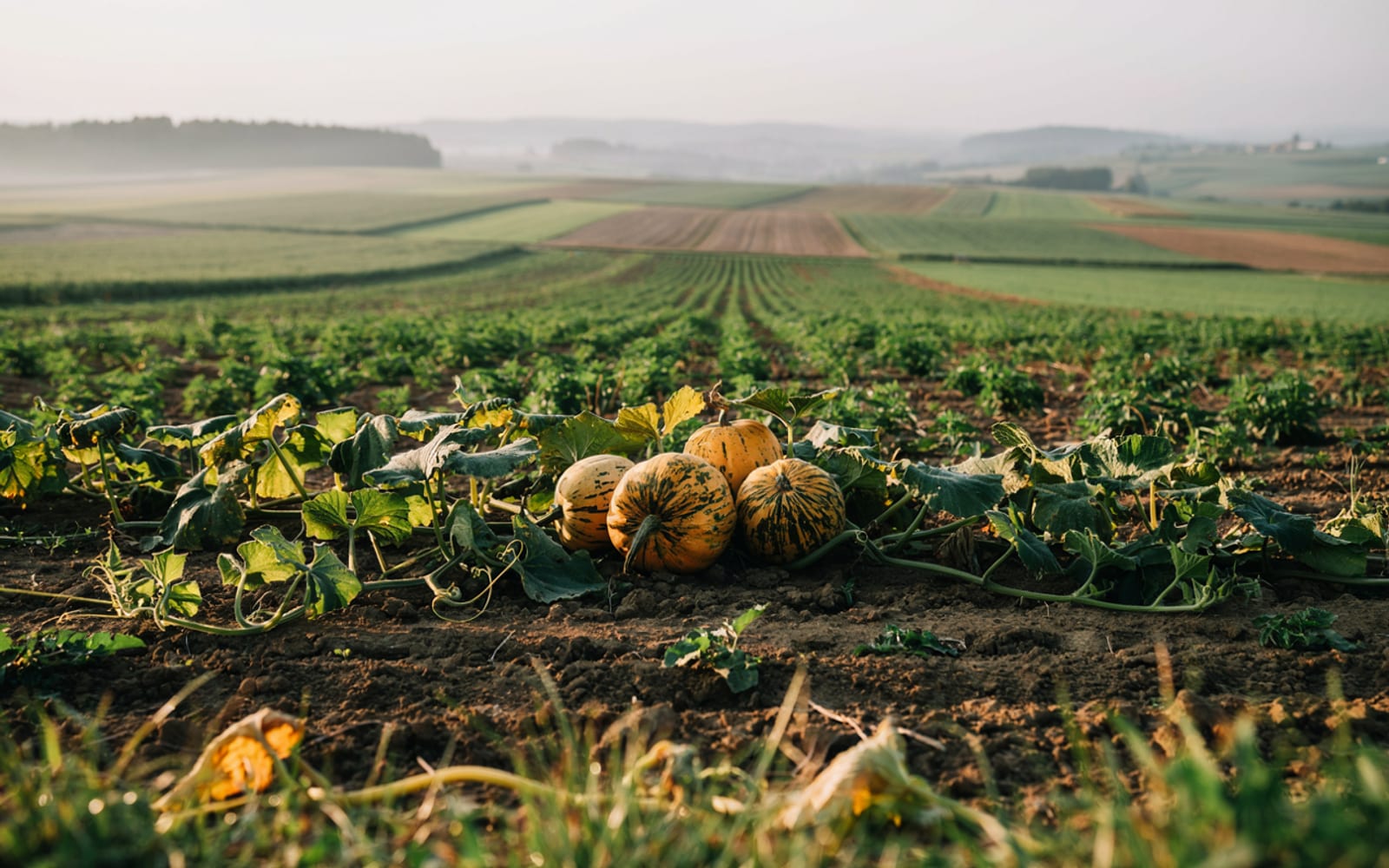
Drive south and east of Graz, and the landscape starts telling its own story: rows of vines, orchards, then suddenly wide fields carrying heavy, pale fruit. The air smells of soil and warm grass. People working here often say something close to: "The oil belongs to us the way autumn does." Ask where Styrian pumpkin seed oil comes from, and this is the landscape people point to. But origin here means more than a province's name on a map — it means climate, soil, generations of work, and a boundary you should be able to read straight off the label.
Styria as the Heartland
This is where the story really sits. Warm summers, enough rain, and soil ranging from loamy to volcanic give the oil pumpkin what it needs. Across western, eastern, and southern Styria, fields and small mills often stand only a few kilometres apart. Some press seeds straight from their own land; others bring in seeds from neighbouring farms. The practice itself is old: hull-less seeds of Cucurbita pepo var. styriaca, careful harvest, pressing done by feel as much as by rule. More on the plant itself is under the Styrian oil pumpkin.
Beyond the Provincial Border
The European PGI designation does not stop at Styria's administrative line. Eligible parts of Burgenland and Lower Austria belong to the defined production zone too — regions sharing similar climate, similar soil, and a long history with oil pumpkins of their own. That's not a contradiction; it's history: the farming region was always larger than any modern administrative map suggests. Oil from these areas can carry the name Styrian Pumpkin Seed Oil PGI, provided the growing, the seed, and the process all meet the rules and pass independent inspection. Full detail sits under the Styrian PGI explained.
What the Bottle Reveals
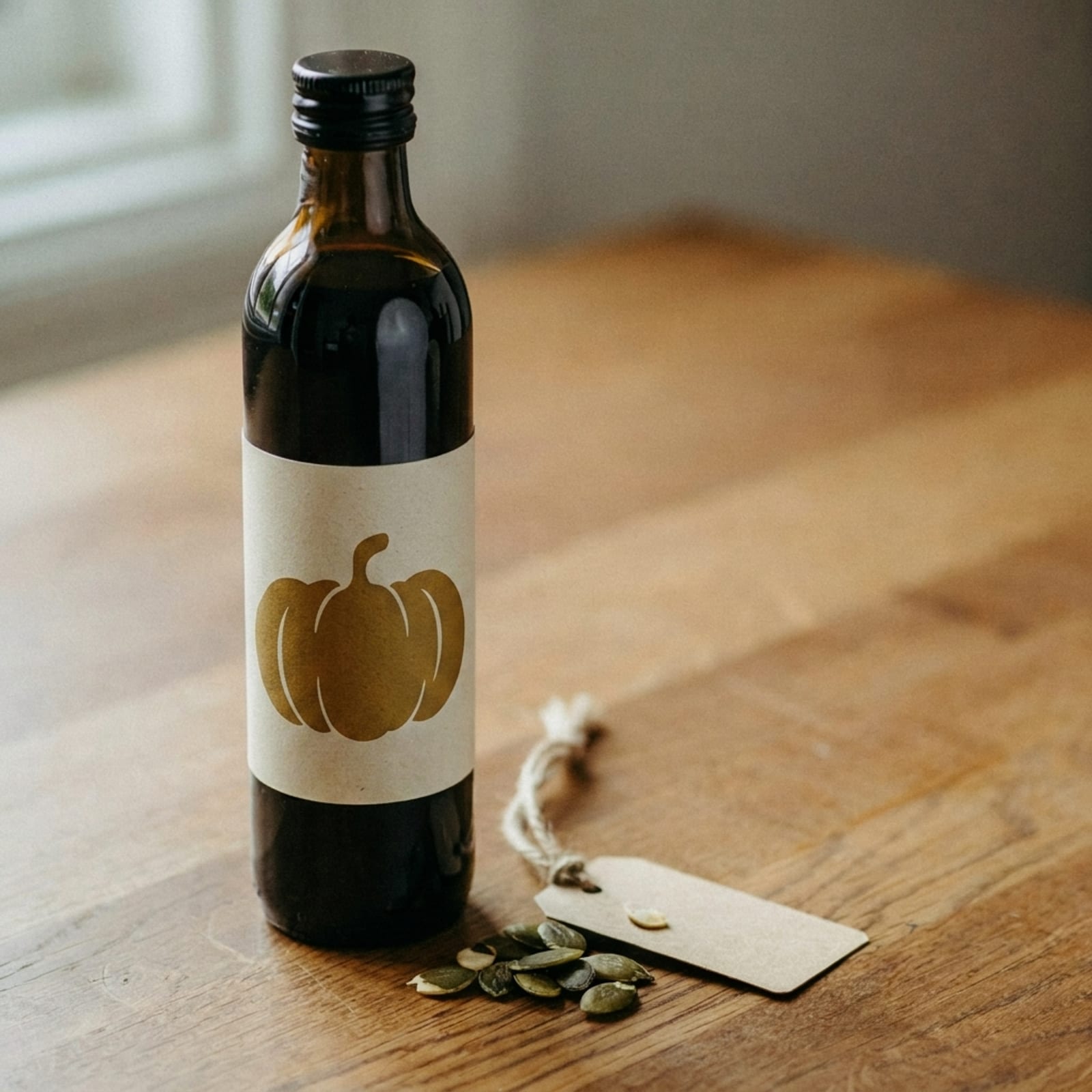
Real origin can be read straight off the label — once you know what to look for. "From Austria" on its own only tells you the seeds came from Austrian farming. It says nothing about whether they're hull-less styriaca seeds, or whether PGI rules apply at all. Plenty of other pumpkin seeds get pressed into oil in Austria too. A dark glass bottle keeps light out — it proves nothing about origin by itself. What actually counts is the PGI seal, the full name, and a named, findable producer on the label. Only then does the bottle read like a real address, not just an attractive shape.
The Neighbour in Slovenia
Historically, Styria never stopped at today's national border. Slovenia's Štajerska region sits just across it, and bučno olje has been pressed there for a very long time. The farming roots run parallel, but the products stand apart — with their own rules, their own tradition, and their own designation of origin. Only areas defined within Austria count toward the Austrian PGI. That doesn't make Slovenian oil any lesser. It simply explains why it cannot, and does not, carry the protected Austrian name. What the oil is called across languages and borders is under pumpkin seed oil in other languages.
Soil, Weather, and the Vintage
Much like wine, the growing site plays its part. Some soils hold water longer; others dry out fast. A hot summer pushes ripening along; a wet autumn demands patience while the seeds dry. That's where a small tension appears: stored too damp, and quality wobbles; dried too fast, and the aroma falls flat. Attentive mills know these differences. They treat each harvest as its own case rather than anonymous stock, adjusting roasting and pressing to match the year. That's how the character of the landscape stays present in the oil — a little different each year, always from the same place.
When the Oil Arrives Home
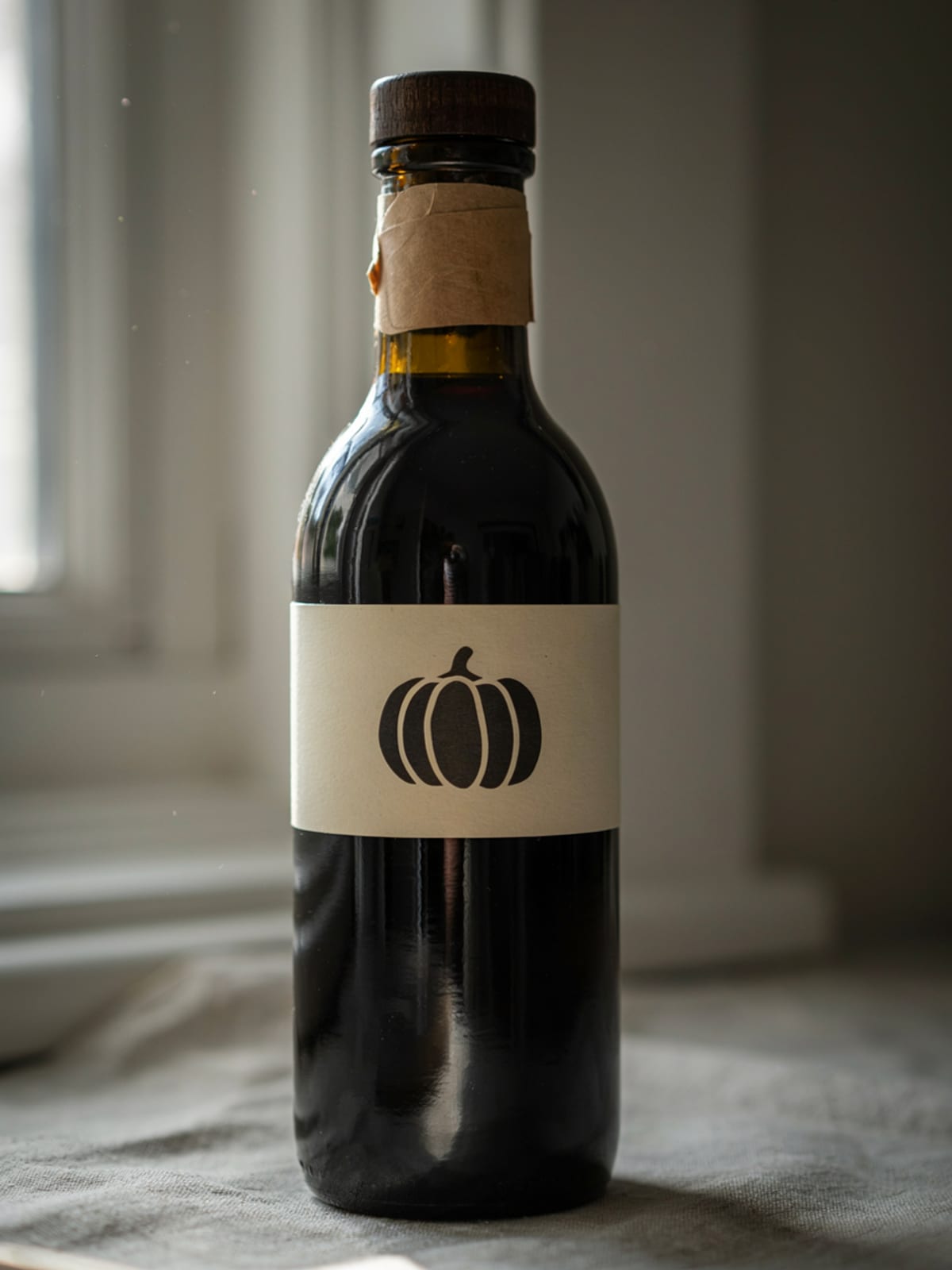
Eventually the bottle lands on your table: dark glass, a plain label, and inside it the dense, near-black liquid that travelled all the way from the field to your kitchen. Look for the PGI mark, the full name Styrian Pumpkin Seed Oil PGI, and a named, real mill. Once you find all three, you know: this oil carries the hills with it — the same smell, the same autumn, the same care that followed it the whole way here.
Shop authentic Styrian oil — start here
Shop now