The Styrian
Pumpkin Seed Oil Journal
The Styrian
Pumpkin Seed Oil Journal
- The Styrian Pumpkin Seed Oil Journal
Shop EN
pumpkinseedoil.ccShop DE
kuerbiskernoel.cc
About
This website also contains some content created with the support of AI.
Oil or Capsules: What the Difference Actually Means
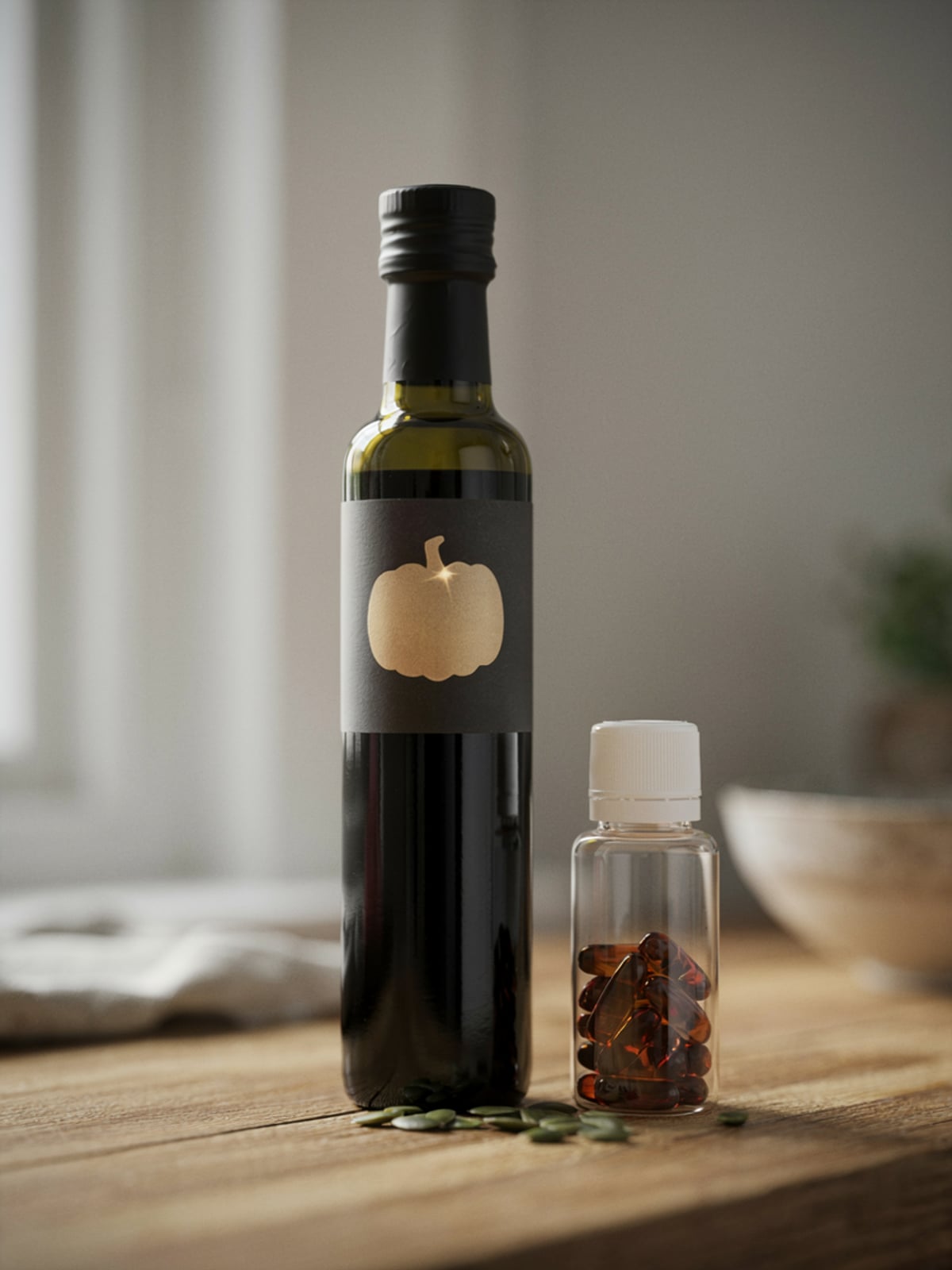
Someone is standing at the kitchen cupboard, a dark oil bottle in one hand, a small tin of capsules in the other. Both promise the same thing: pumpkin seed oil. And yet the choice does not feel neutral. The bottle smells of roasting, of salad and soup. The tin smells of nothing at all — just smooth plastic and the quiet hope that what is inside matches what is in the glass. That is exactly where the real question begins: are oil and capsule really two paths to the same goal, or two quite different things?
One Spoon Against Twenty Capsules
Do the maths and the difference becomes tangible fast. A common 1,000 mg capsule contains roughly one millilitre of oil — about a fifth of a teaspoon. A single tablespoon of cooking oil delivers around fifteen times that. So anyone swallowing one capsule in the morning and believing they are getting the same amount as a splash on their salad is clearly mistaken. That does not make the capsule worthless. It just means "more oil" and "more capsules" are two entirely different sums.
Why the Capsule Still Has Its Place
There are good reasons to reach for the capsule instead. Some people simply do not like the strong roasted flavour. Others travel a lot, and a small tin travels far more easily than a glass bottle in a suitcase. Others still follow a fixed daily ritual and would rather count capsules than spoons. None of these reasons makes the capsule automatically more effective or better — it simply suits a different situation than the oil in the kitchen does.
Two Vessels, Two Roles
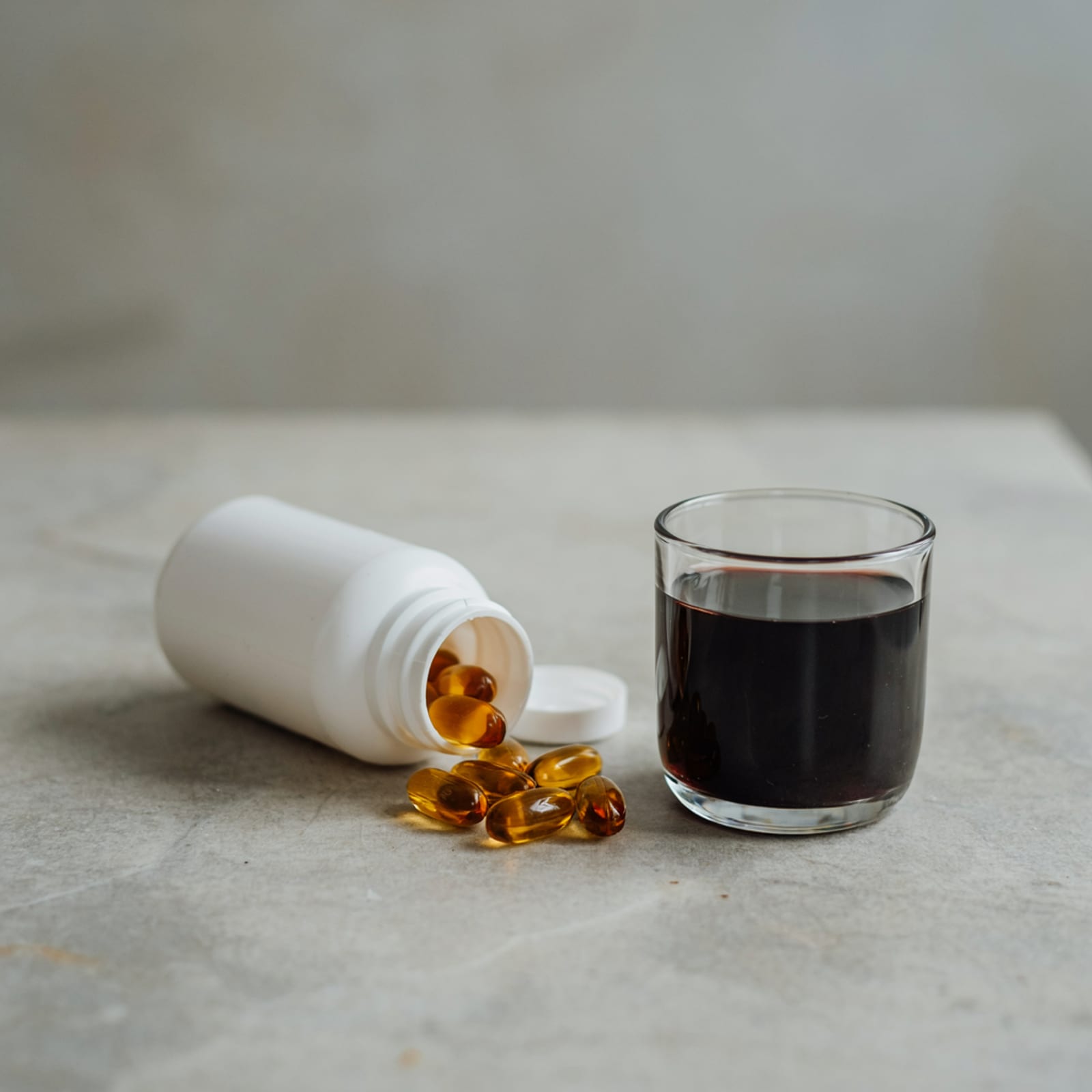
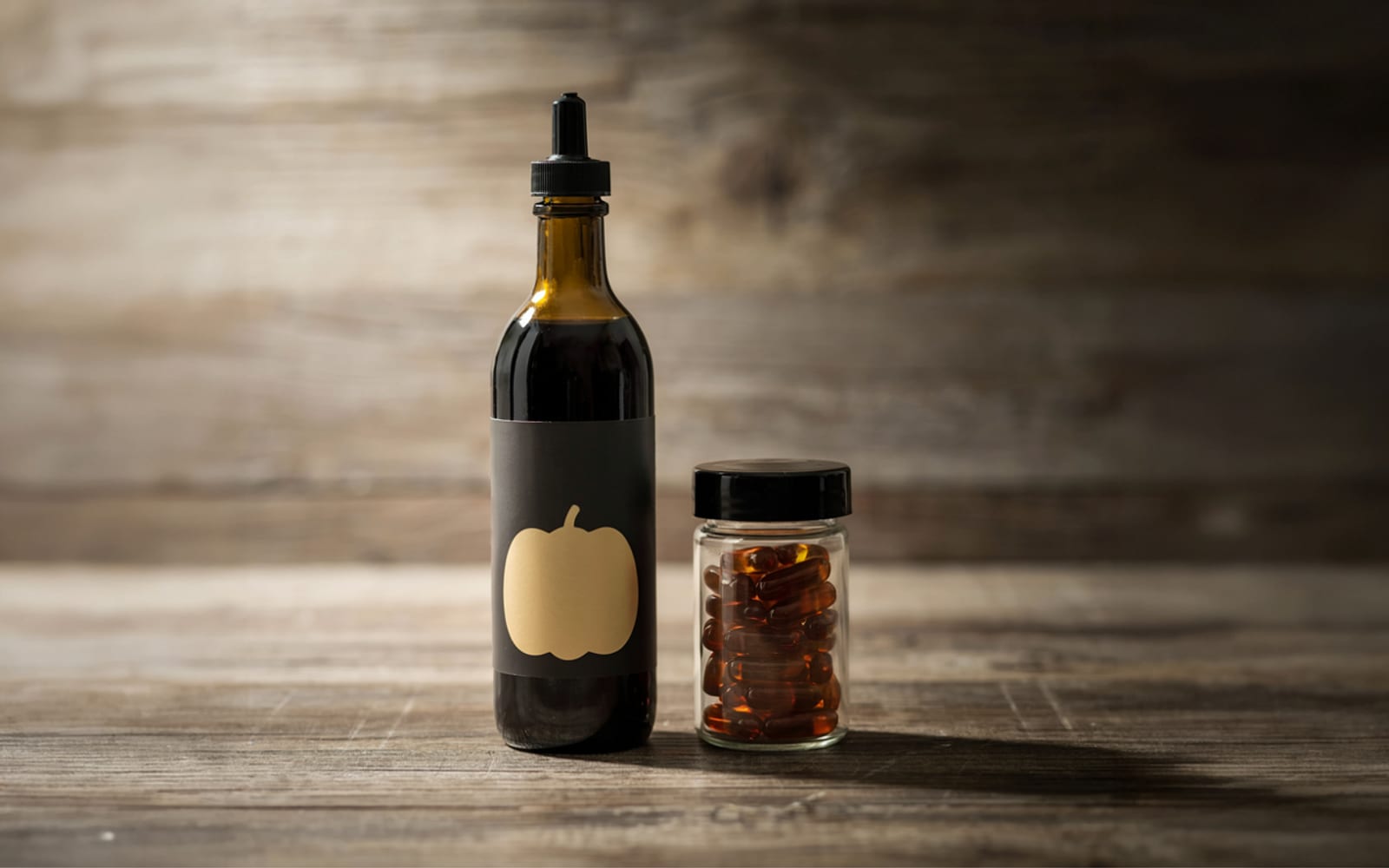
Place both side by side — the small amber capsules and the dark glass with its thick liquid — and the difference is obvious at a glance too. The capsule is built for discretion: no taste, no colour, no memory of roasted seeds. The glass, by contrast, carries exactly that character outward, dark like strong tea. For anyone who does not enjoy the intense tone of real Styrian oil, the capsule is an honest detour. For everyone else, the glass remains the more direct, more concentrated source.
Not Every Capsule Is the Same
What surprises many people: capsule products differ considerably in the quality of the oil filled inside them — origin, pressing, storage. None of that can be smelled or tasted, so these differences simply disappear inside the shell. Styrian pumpkin seed oil PGI is regulated as a cooking oil through its protected designation of origin: region, pumpkin variety, and processing are all fixed. For capsules, that only applies if it is stated explicitly on the packaging. Anyone wanting to understand the oil's own quality assurance can find more at Quality and Price. The nutrient profile is also worth reading up on, at the nutrition facts overview.
What Studies Have Actually Examined
A look into the research shows: clinical studies on pumpkin seed oil — on the prostate or on hair growth, for instance — almost always work with standardised capsules or extracts, not with cooking oil in kitchen quantities. That comes down to methodology: studies need controlled, consistent doses. It does not make the capsule superior; it simply explains why it appears more often in research. A summary of the observations so far sits at the effects overview, and cautions that apply regardless of intake form are covered at Side Effects and Cautions.
When the Spoon Wanders Over the Plate
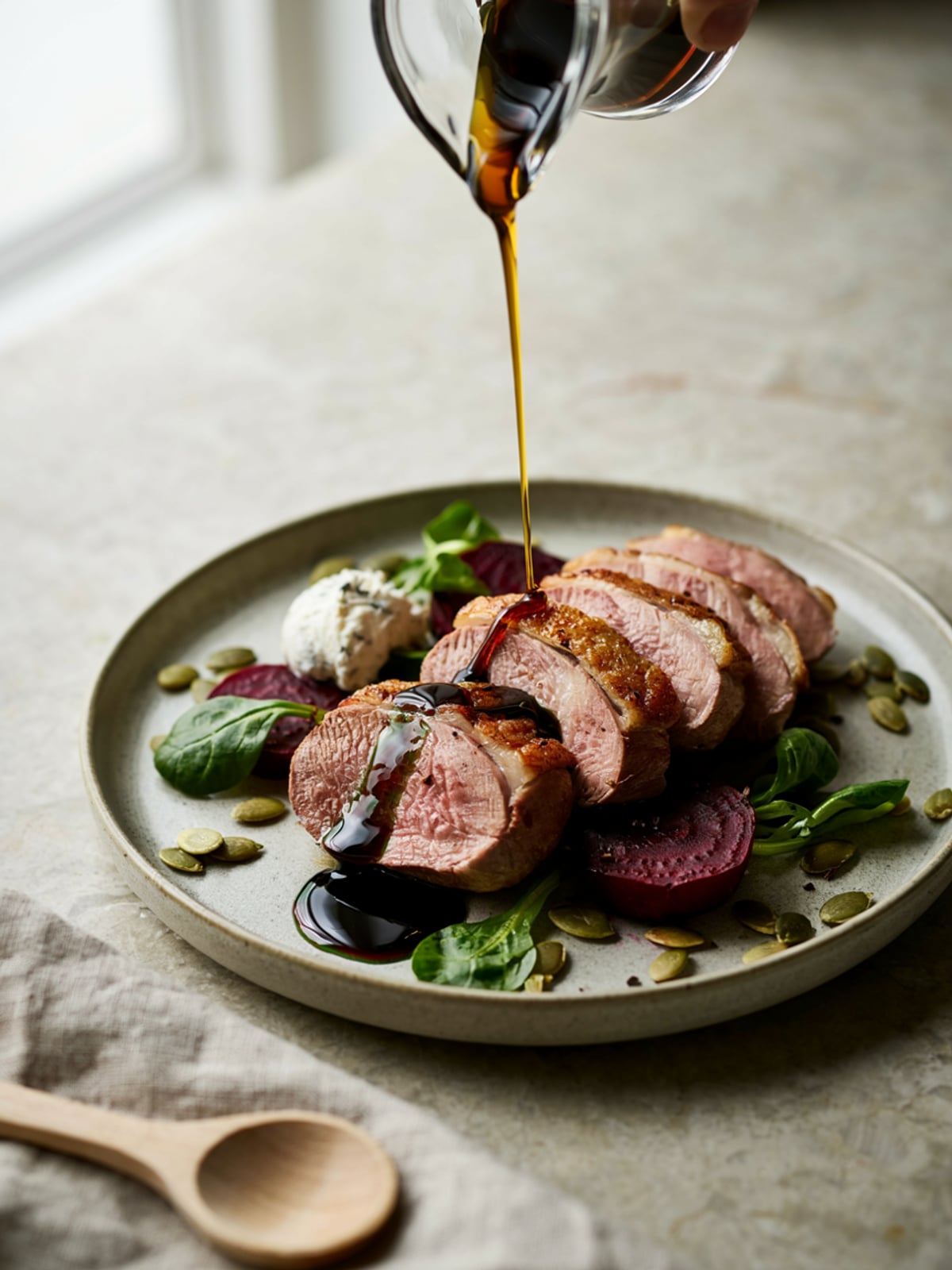
The scene at the dinner table looks quite different. A thin, dark thread runs from the carafe over a warm piece of meat, between beetroot and a few seeds — and suddenly the oil is no longer a supplement at all, just seasoning. This is exactly where the difference shows most clearly: on the plate, the amount measures itself, through taste and feel, not through a number on a package. Anyone using the oil this way relies less on a promise and more on their own experience.
In the End, the Situation Matters, Not the Format
Anyone wanting good Styrian oil in the kitchen — on salad, on vegetables, or as a final touch on soup — finds the clearer, more direct choice in the cooking oil itself. Anyone reaching for a capsule for practical reasons, or following a fixed intake routine, is not making a wrong decision, as long as origin and quality can be traced. The two are not mutually exclusive either: some people use the oil at home and the capsule while travelling. In the end, it is not the little bottle that decides, but what is actually inside it.
Health notice: This page discusses topics related to health research and tradition. It is not medical advice. Do not use it to diagnose, treat, cure, or prevent any disease. Talk to a qualified healthcare professional before changing your diet or supplements.
Taste regional Styrian pumpkin seed oil
Shop now