The Styrian
Pumpkin Seed Oil Journal
The Styrian
Pumpkin Seed Oil Journal
- The Styrian Pumpkin Seed Oil Journal
Shop EN
pumpkinseedoil.ccShop DE
kuerbiskernoel.cc
About
This website also contains some content created with the support of AI.
Pumpkin Seed Oil and the Kidneys: Folklore, Oxalates and Facts
Health notice: This page discusses topics related to health research and tradition. It is not medical advice. Do not use it to diagnose, treat, cure, or prevent any disease. Talk to a qualified healthcare professional before changing your diet or supplements.

Pumpkin seed and the kidneys is one of the older folk-remedy pairings, particularly around kidney stones and general urinary comfort, and it sits alongside a legitimate, separate scientific question about oxalate content that matters specifically to people prone to certain kinds of stones. This article keeps those two threads distinct: the traditional reputation, and the practical, evidence-based information someone managing kidney stones actually needs.
Why Oxalate Advice Online Is So Confusing
Oxalate advice is a frequent source of confusion because most lists talk about foods in their whole form — spinach, almonds, whole pumpkin seeds — without distinguishing between the solid part of a food and an oil pressed from it. A stone-prone patient handed a generic "high oxalate foods" list has no easy way to know that pressing changes the picture entirely, which is exactly the gap the next section addresses.
The Traditional Reputation
Pumpkin seed has a long folk history as a general urinary and kidney "tonic" in several culinary and traditional-medicine cultures, often overlapping with its more thoroughly studied traditional use for prostate and bladder symptoms, discussed on the men's health page and the bladder page. This reputation is old and widespread, but it predates modern clinical trial methodology, and it should be read as cultural and historical context rather than as medical evidence about kidney function or disease specifically.
The Oxalate Question: What Actually Matters
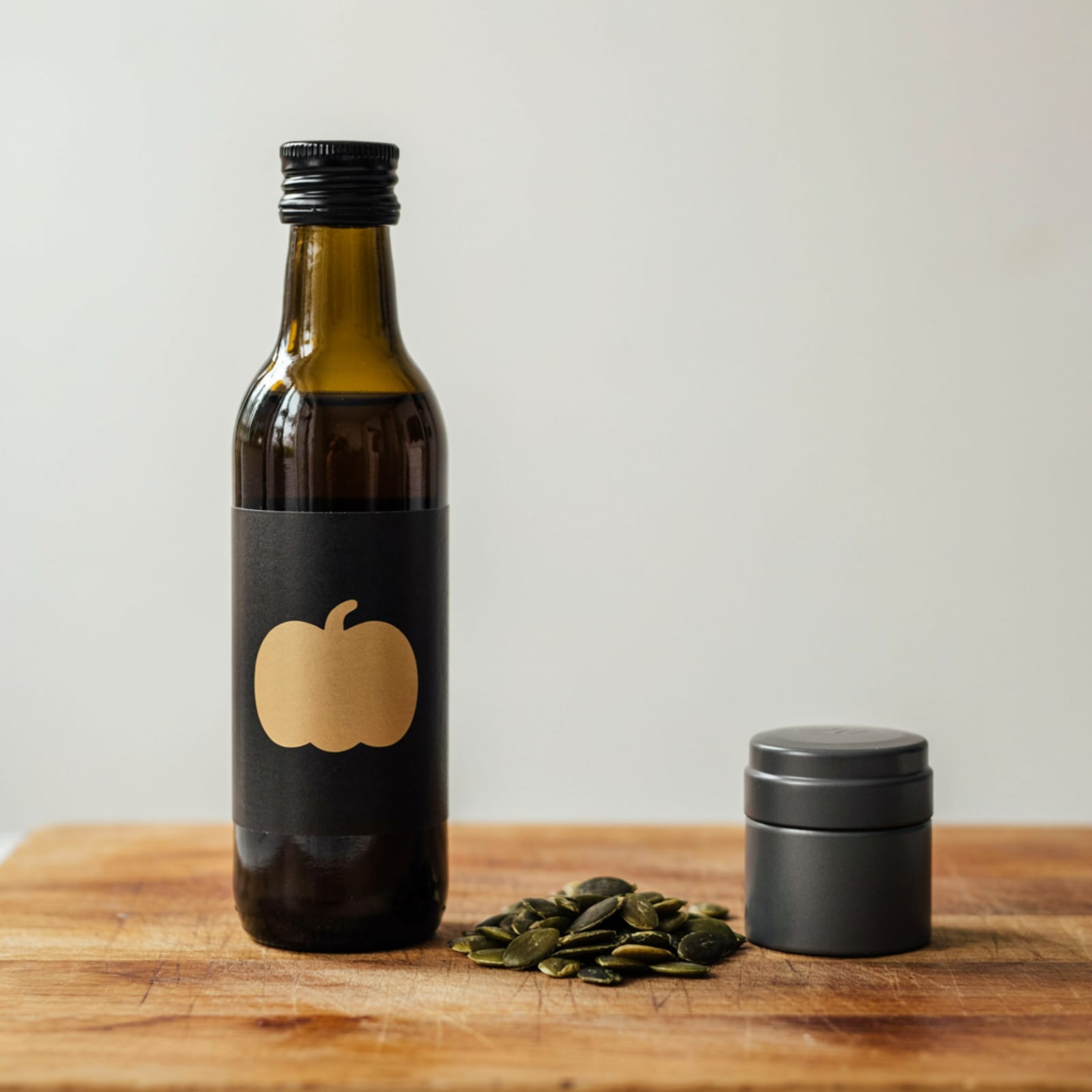
The more practically important issue is oxalate content. Pumpkin seeds themselves contain a moderate amount of oxalates, compounds relevant to people prone to calcium oxalate kidney stones, the most common stone type. Oil pressed from the seed, however, is composed almost entirely of fat and contains negligible amounts of the water-soluble compounds — including oxalates — that remain behind in the seed solids during pressing. This means the oxalate caution that applies to eating whole pumpkin seeds does not transfer in any meaningful way to pumpkin seed oil, which is a distinction worth knowing if a doctor or dietitian has specifically asked a stone-prone patient to watch oxalate intake from seeds and nuts.
Hydration and the Basics of Stone Prevention
For people prone to kidney stones generally, the single most consistently recommended prevention measure across clinical guidelines is simply drinking enough fluid to keep urine reasonably dilute, alongside stone-type-specific dietary adjustments a doctor or dietitian can tailor to the individual — sodium, oxalate, or purine intake, depending on stone composition. Pumpkin seed oil has no established role in that specific prevention protocol one way or the other; it is neither a helpful addition nor something that needs restricting, which is itself a useful, if unglamorous, piece of information for anyone managing a stone-prone history.
What Has Not Been Shown

Pumpkin seed oil has not been demonstrated to treat, dissolve, or prevent kidney stones, to improve kidney function in people with kidney disease, or to replace any part of nephrology care. Chronic kidney disease in particular requires careful, individualised dietary management — including potassium, phosphorus, and protein considerations that vary by stage and by patient — and none of that can be safely generalised from an article about one cooking oil. Anyone with diagnosed kidney disease should follow their nephrologist's or renal dietitian's specific guidance rather than general wellness content.
Where This Fits
For most people without kidney disease, pumpkin seed oil is simply a food that carries none of the oxalate caution associated with whole seeds. For anyone managing stones or kidney disease, the useful takeaway is the oil-versus-seed oxalate distinction above — worth mentioning to a clinician, not a reason to self-manage a kidney condition. New or worsening flank pain, blood in urine, or other stone symptoms need prompt medical evaluation. Related urinary topics are covered in the bladder article and the incontinence article.
Order PGI Styrian oil for your pantry
Shop now