The Styrian
Pumpkin Seed Oil Journal
The Styrian
Pumpkin Seed Oil Journal
- The Styrian Pumpkin Seed Oil Journal
Shop EN
pumpkinseedoil.ccShop DE
kuerbiskernoel.cc
About
This website also contains some content created with the support of AI.
Styrian Pumpkin Seed Oil PGI The Protected Designation Explained
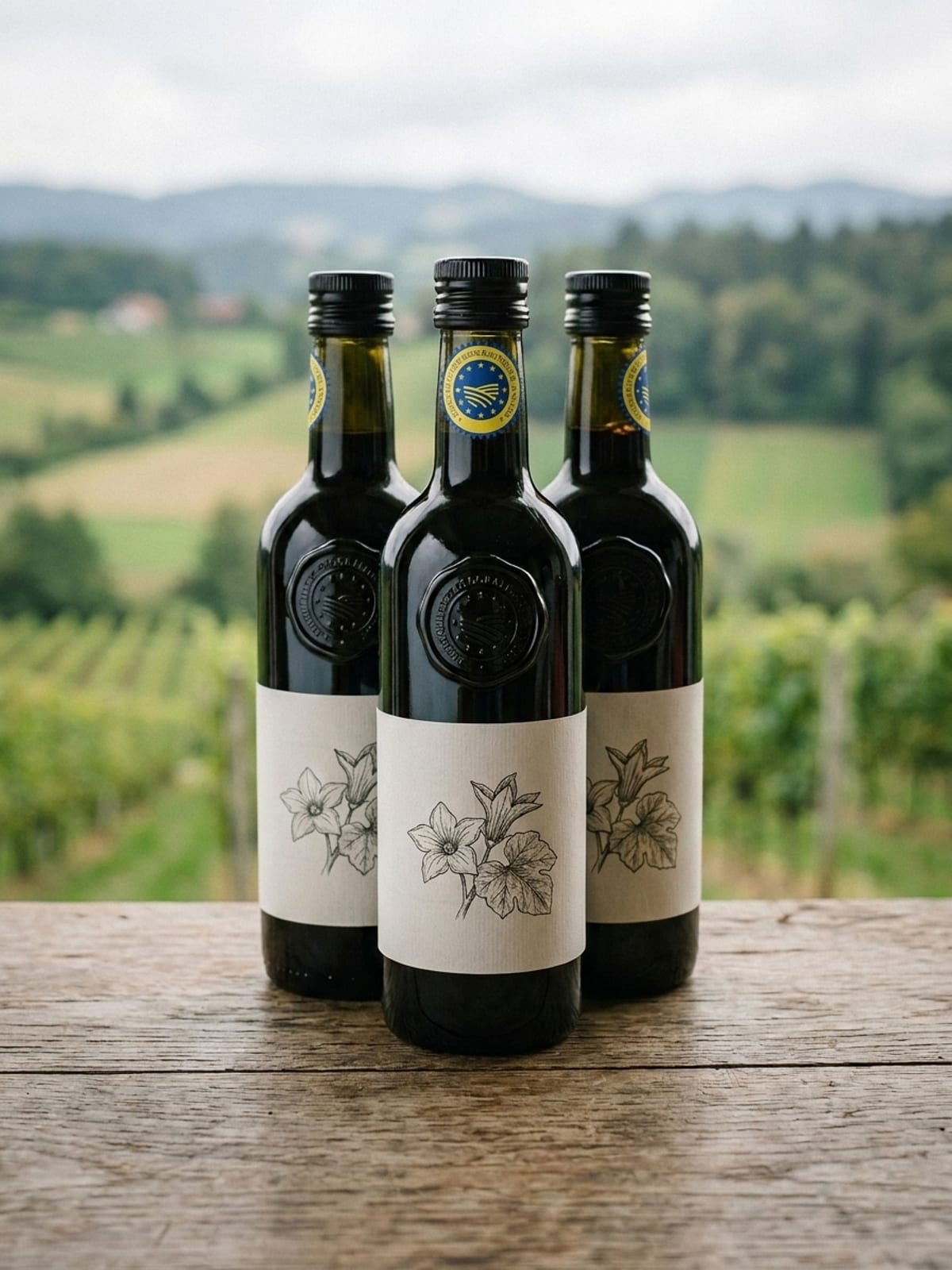
A Saturday morning, a market stall. Dark bottles lined up, different labels, similar shapes. Then a small round mark catches the eye — yellow, green, blue, a ring of stars. Someone who knows what it means reaches for that bottle without hesitating. Someone seeing it for the first time wonders: does this little symbol really change anything? It does.
What the Small Logo Means
The European Union protects food with a specific geographical origin through three separate schemes. Protected Designation of Origin requires every production step to happen inside the defined area. Protected Geographical Indication — PGI, or g.g.A. in German — is a little more flexible: at least one essential step, whether growing, processing, or preparation, has to take place in the region. Styrian pumpkin seed oil carries the PGI. That small mark on the label is not a marketing promise — it is a legally binding guarantee of origin, checked by independent auditors.
Where the Seeds Are Allowed to Grow
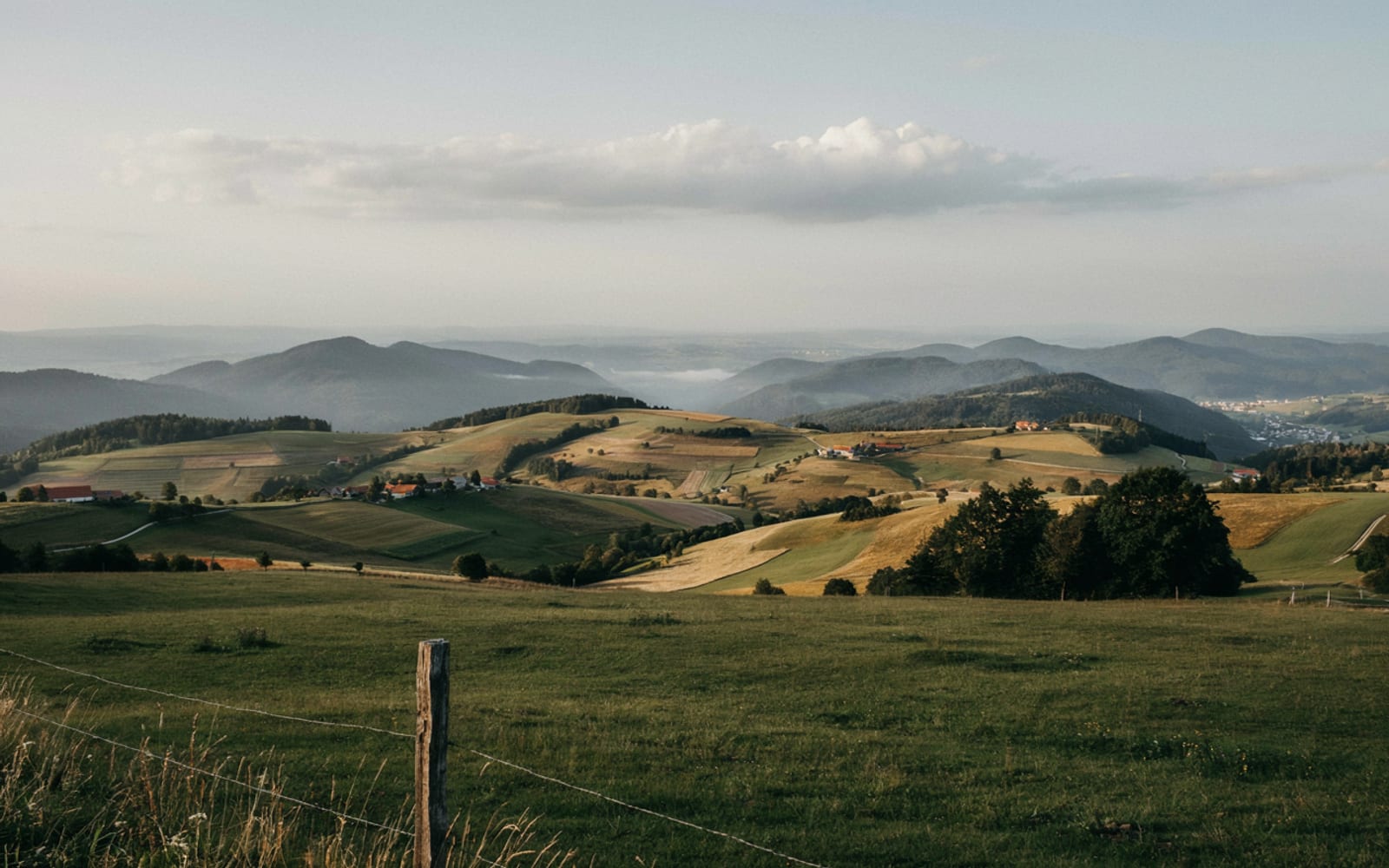
The PGI sets out an exact production zone. The hull-less Styrian cultivar — mainly Cucurbita pepo var. styriaca — may be grown across Styria and in defined parts of Burgenland and Lower Austria. Pressing has to happen inside that same zone too. Buy seeds from elsewhere and press them in Styria, and the right to the designation disappears — just as it does for someone who presses genuine Styrian seeds outside the zone. Slovenia has a related growing tradition and its own protected designation for its oil. It sits outside the Austrian PGI entirely; the two are separate by design, not by accident. That sounds strict, and it is — but that strictness is exactly what makes the seal worth something.
Two Marks on One Label
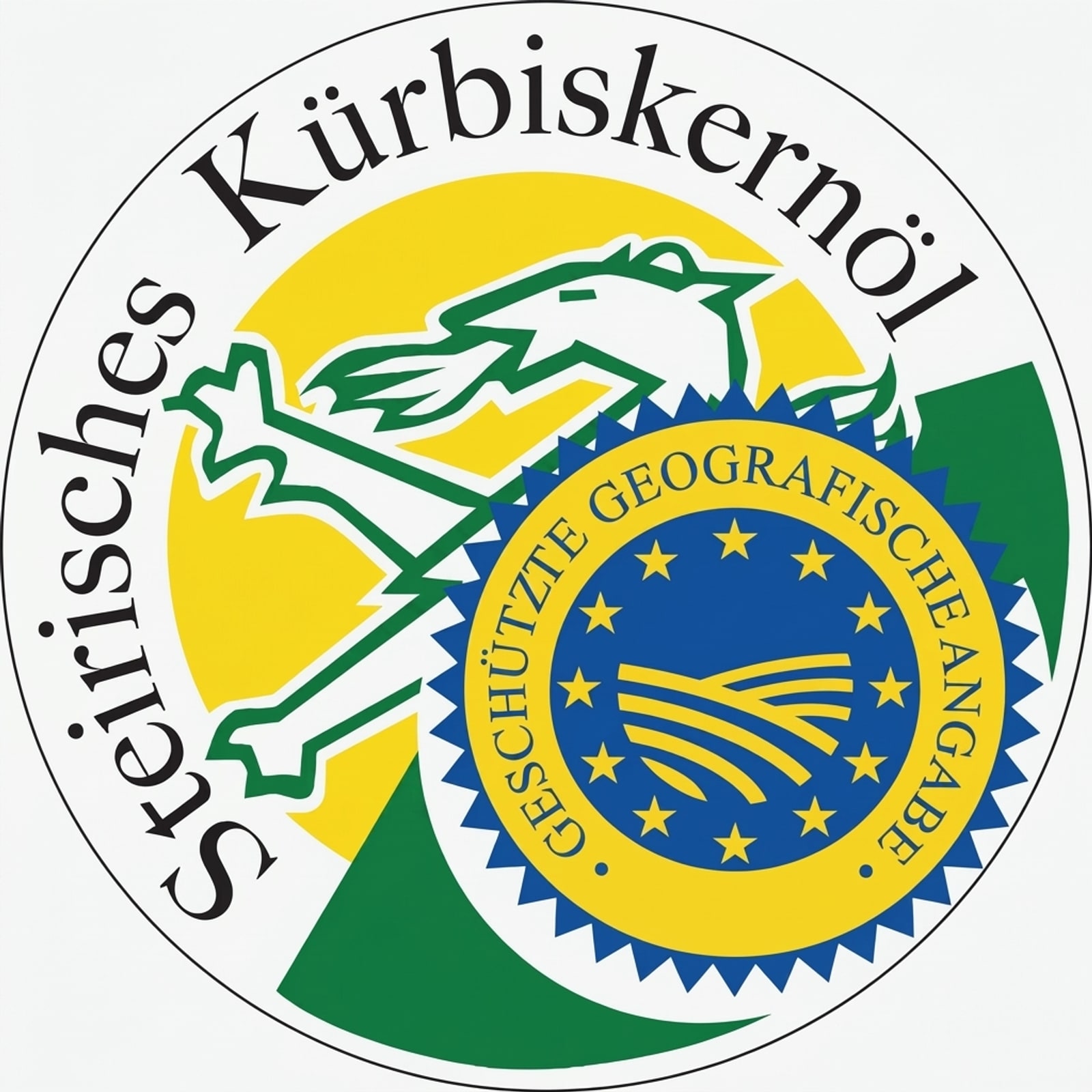
A genuine label often carries not one seal but two. The blue EU mark with its ring of stars and the words "Protected Geographical Indication" stands for the official European recognition. Beside it, the regional seal of the producers' association — green and gold, with the Styrian panther — carries its own promise: the producer meets not only the EU minimum but the regional standards on top of it. Both marks together on one label mean the oil has been checked twice over. That is the strongest assurance available at the point of purchase.
What the Specification Actually Sets
Behind the PGI sits a document filed with the European Commission: the product specification. It fixes which pumpkin varieties qualify, which sensory and chemical values the finished oil has to meet, and how it may be made. Both the traditional roasted method and cold pressing are permitted. In the traditional method, dried seeds are ground, mixed with water and salt, and roasted slowly over moderate heat with steady stirring — only then does the paste go under the press. The production process stays hands-on even at larger scale. The specification sets the frame; inside it, each mill still has room for its own style.
Checked by Independent Bodies
Anyone wanting to use the PGI mark has to register and accept regular inspection. Independent certification bodies, working to European standards, verify where the seeds came from, review production records, and send the finished oil for laboratory testing — fatty acid profile, phytosterol content, peroxide value among them. Nobody can award the mark to themselves. Words like "traditional" or "artisan" carry no legal weight at all. The PGI logo does.
From the Press to the Bottle
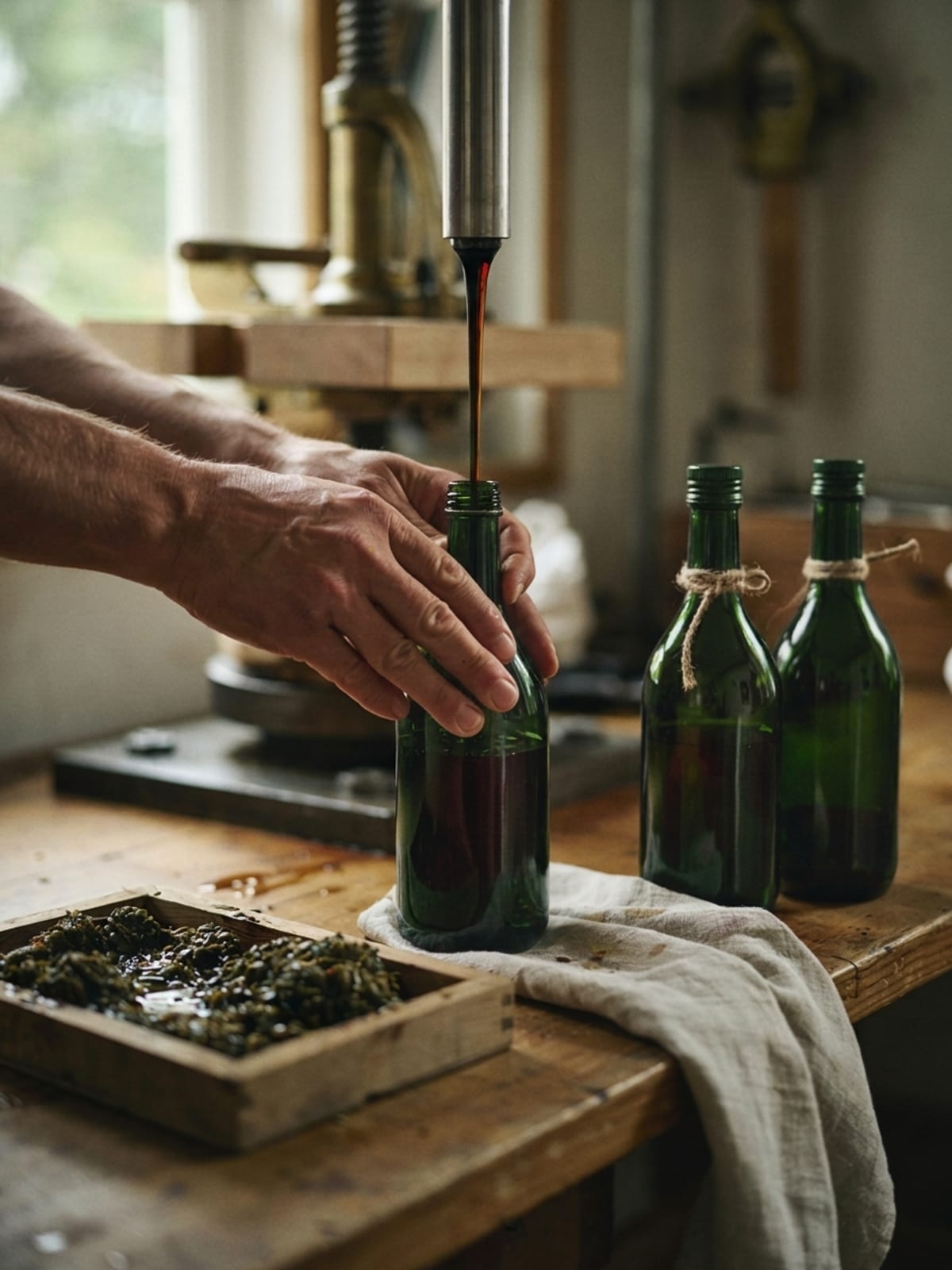
Inside the mill, the oil runs warm out of the press — but it does not go straight into a bottle. First it settles in a holding vessel, resting there while fine sediment sinks and the oil clears. Only then does it get filled into dark glass, which keeps light out and protects the aroma. The smell of nuts and roasting still hangs warm in the air while the bottles are sealed. What comes out of that process is not an anonymous industrial product. It is oil with a traceable origin, an audited method, and a small mark on the label that carries all of that.
What This Means for Your Shopping
At the point of purchase, three things are worth checking: the EU PGI logo, the regional seal of the producers' association, and the name of an actual mill on the label. All three present, and the odds are very good that the original is in your hands. The same holds when buying online. Phrases like "European style" or "Austrian-style" without the formal PGI mark are a reason to look closer. Some oils lean heavily on Styrian visual cues without meeting the requirements — they turn out to be blends or imports with no regional guarantee behind them. That small logo on the label — it was the first thing that caught your eye at the market stall. Now you know exactly why it earned that attention.
Taste Styrian oil pressed in the region
Shop now