The Styrian
Pumpkin Seed Oil Journal
The Styrian
Pumpkin Seed Oil Journal
- The Styrian Pumpkin Seed Oil Journal
Shop EN
pumpkinseedoil.ccShop DE
kuerbiskernoel.cc
About
This website also contains some content created with the support of AI.
What Does g.g.A. or PGI Mean?
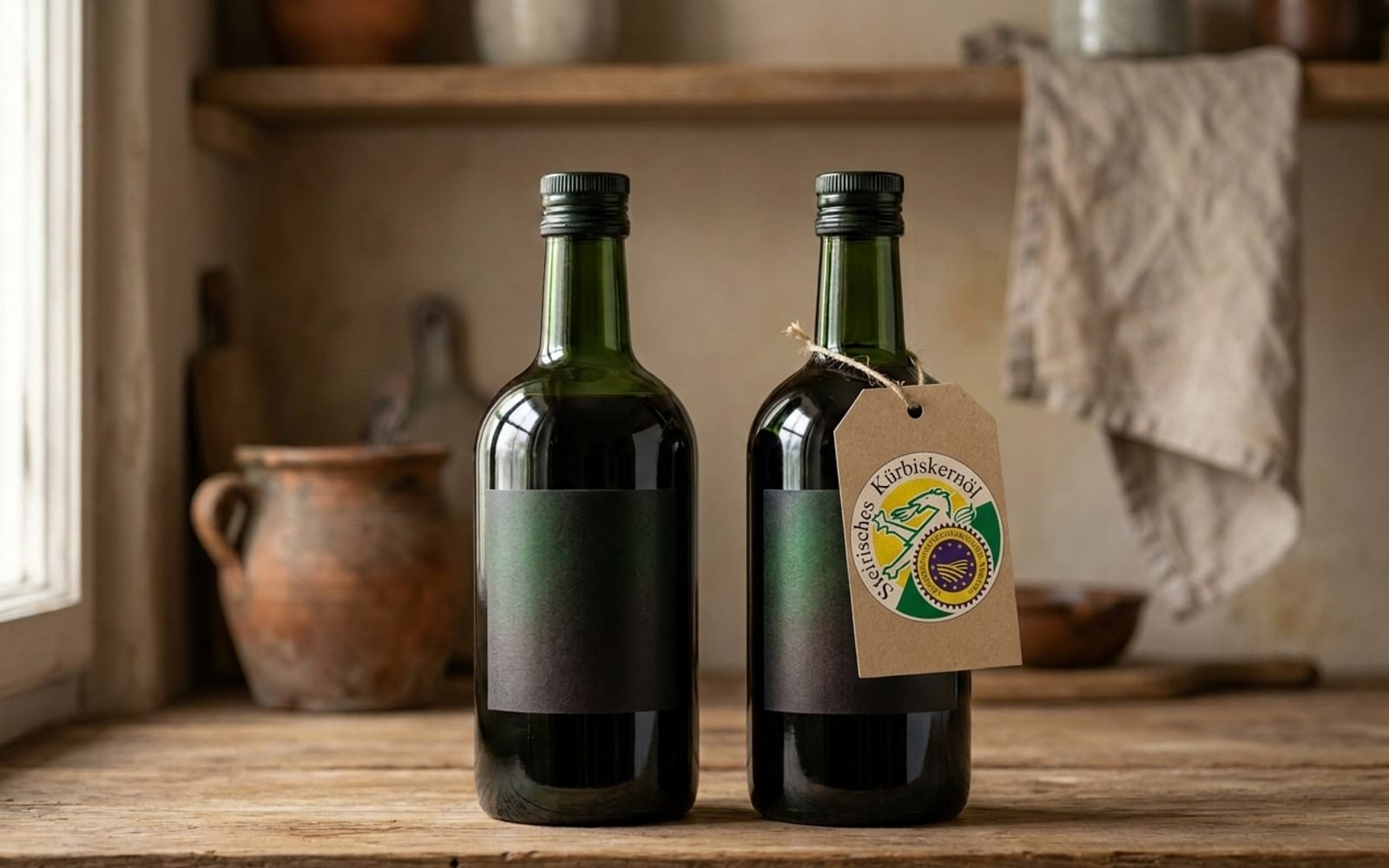
Two dark bottles stand side by side on the shelf, both labelled “pumpkin seed oil,” both about the same weight in the hand. Only on closer inspection does the difference show: just one carries a small round seal ringed with stars. What does that tiny symbol actually change? The answer starts with three letters: PGI.
What the Seal Is There For
PGI stands for “Protected Geographical Indication,” an EU quality system. It exists so a name carrying a place and a method can actually be trusted. “Styrian Pumpkin Seed Oil PGI” isn't a casual nickname — it's a protected designation backed by a written specification. The full explanation lives at Styrian PGI, related terms in the glossary.
Where the Kernels Are Allowed to Come From
Austria's PGI defines a fixed territory where the kernels must grow and the oil must be pressed: Styria, along with designated parts of Burgenland and Lower Austria. Kernels from outside that territory don't count toward the Austrian PGI — including oil grown just across the border in Slovenia, where a separate, related PGI designation of its own applies to Slovenian pumpkin seed oil. The two aren't interchangeable, even though the tradition and the plant are closely related. That may sound strict, but it's exactly why the mark means anything at all.
How to Spot It on the Label
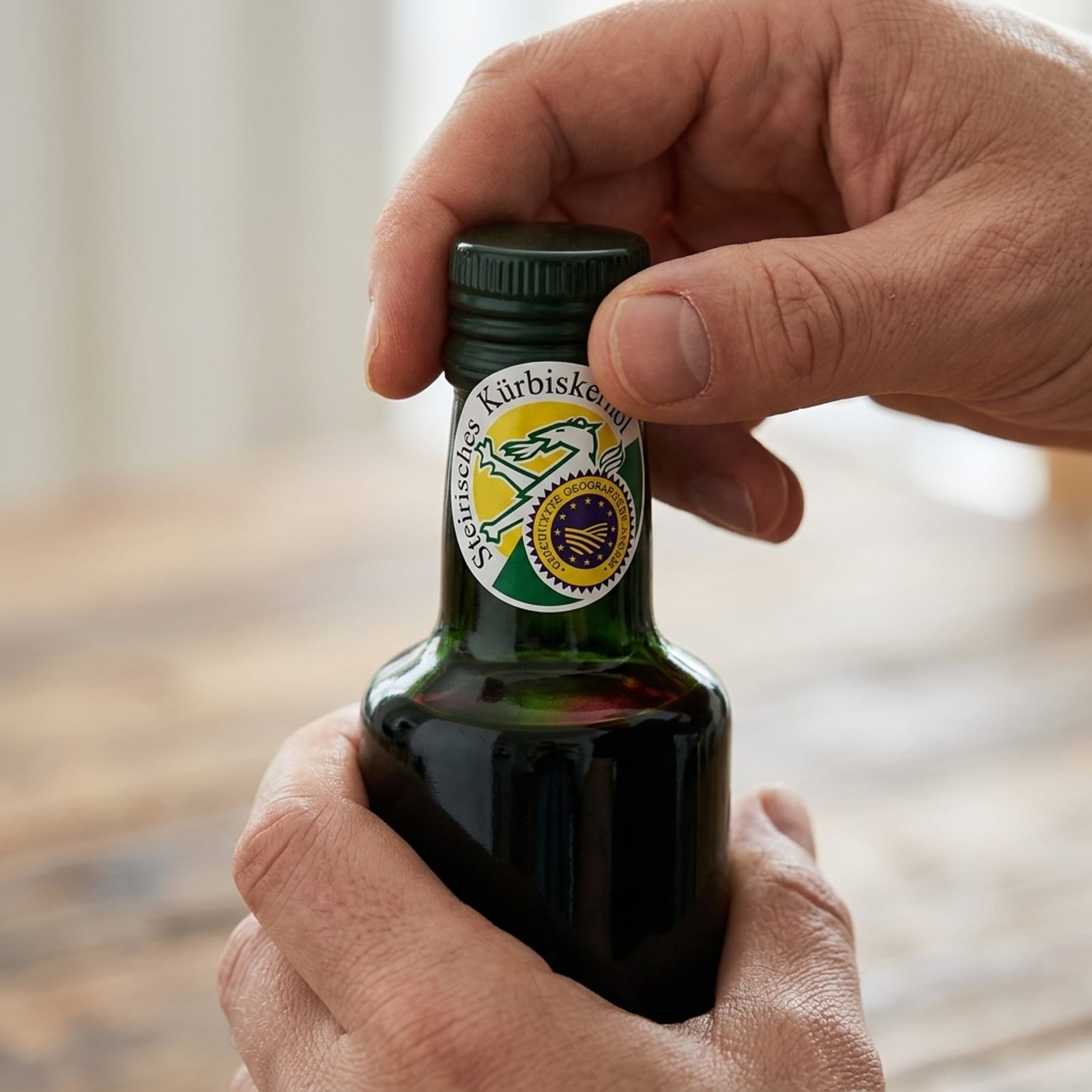
Look for the blue EU logo ringed with stars, and for wording that explicitly ties “Styrian Pumpkin Seed Oil” to PGI status. A glance at the ingredient list is worth it too: pure oil and salad-oil blends are two different products, even when the front label says “pumpkin” in large letters. Open the bottle, and the scent that rises should smell of kernels and roast — not solvent, not rancidity. Help telling the two apart: blend or pure? and blends and imports.
What It Doesn't Mean
PGI is not a medical claim, not a calorie count, and not a guarantee that every pumpkin-flavoured blend automatically qualifies. Oils without this mark can still be honest, edible pumpkin seed oils from other regions — they simply don't carry the protected Styrian designation, nor Slovenia's own PGI for oil grown there. Pale, unroasted oils and unnamed imports sometimes use similar-sounding names without sharing the roasting tradition or the seal.
Why Cooks Pay Attention to It
For many, the seal is a shortcut to exactly the flavour profile this journal describes: roasted kernels, dark oil, used as a finish rather than for frying. It also supports fair prices for producers and mills that follow the rules. It changes nothing about kitchen technique — you still finish with it instead of frying in it. More at cooking and can you cook with it?
PGI Versus Similar-Sounding Words
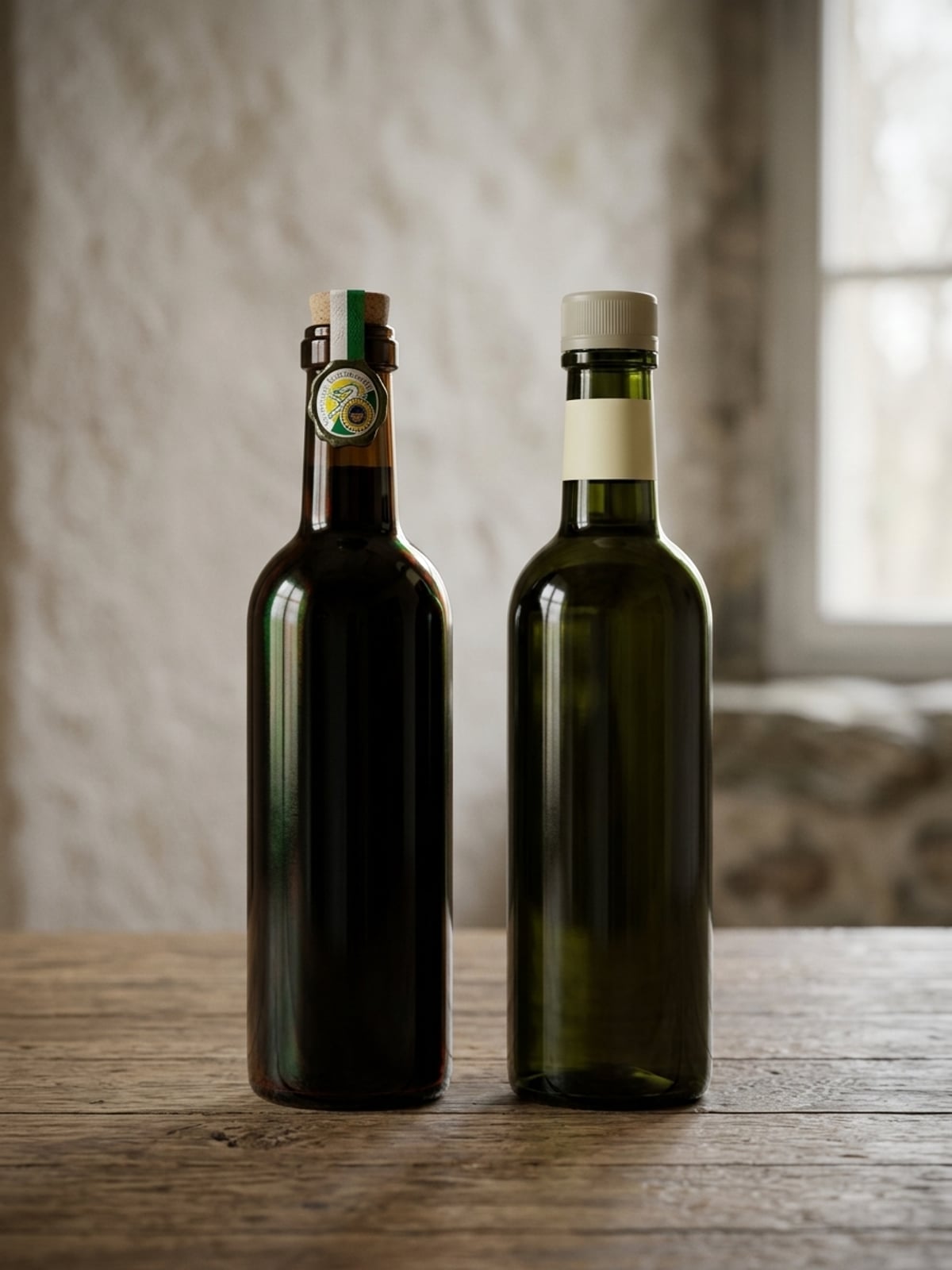
PGI sometimes gets confused with PDO (Protected Designation of Origin), or with brand logos that look official but carry no EU origin status. Two things matter on the bottle: the EU PGI mark itself, and PGI wording tied directly to the product name. If a bottle says only “in the style of” or “inspired by Styria” without a protected designation, that's marketing language — not a seal. The full explanation sits at Styrian PGI.
The Short Answer
PGI on Styrian pumpkin seed oil means: a protected geographical indication, with fixed rules on origin and production that can be checked directly on the label — and, just across the border, Slovenia carries its own separate PGI for oil grown there. Use the mark as an authenticity filter, then cook with the usual finishing discipline afterward. A starting point on the product itself: what is Styrian pumpkin seed oil?; more questions in the FAQ hub.
Discover Styrian Kürbiskernöl for your kitchen
Shop now