The Styrian
Pumpkin Seed Oil Journal
The Styrian
Pumpkin Seed Oil Journal
- The Styrian Pumpkin Seed Oil Journal
Shop EN
pumpkinseedoil.ccShop DE
kuerbiskernoel.cc
About
This website also contains some content created with the support of AI.
Can You Heat or Fry with Pumpkin Seed Oil?
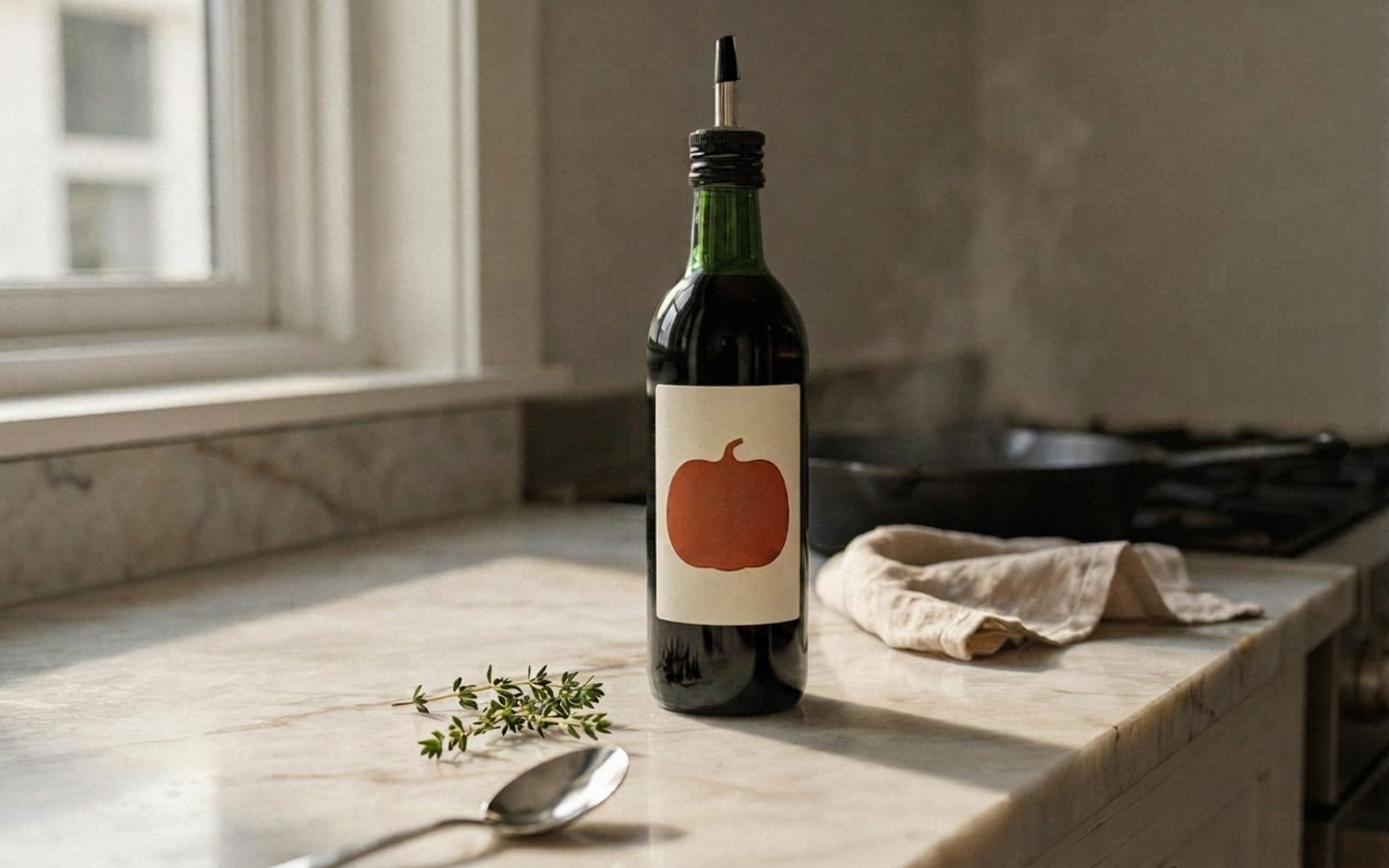
The smell rises the moment the bottle is opened — warm, nutty, a little smoky. That very smell is what heating pumpkin seed oil puts at risk, because it is the first thing to disappear once the pan gets too hot. Pumpkin seed oil is not a frying oil, it is a seasoning oil. Its worth lies in that intense aroma and roasted, nutty taste, and both suffer under sustained heat. For the pan, a heat-stable oil does the job instead; pumpkin seed oil comes afterward, onto the finished dish. That is not a limitation — it is simply the best way to keep the aroma intact.
Why High Heat Does Not Work
A frying pan usually reaches temperatures well beyond what suits pumpkin seed oil. Cold-pressed versions start to smoke at around 120 to 130 degrees Celsius, while frying temperatures often sit at 160 to 190 degrees. Long before that point, though, the delicate aromatic compounds are already fading. What is left can taste bitter or sharp — the oil stops being the enjoyable finish it was meant to be.
What Happens When It Gets Too Hot
Leave oil in a hot pan for a while and its aromatic compounds break down as it starts to oxidise. That shows up as a sharp smell and a bitter aftertaste; the dark colour can also stain food unevenly. A splash over a hot soup is a different matter entirely from five minutes of frying — brief residual warmth is usually harmless, sustained cooking is not.
The Right Oil for the Pan
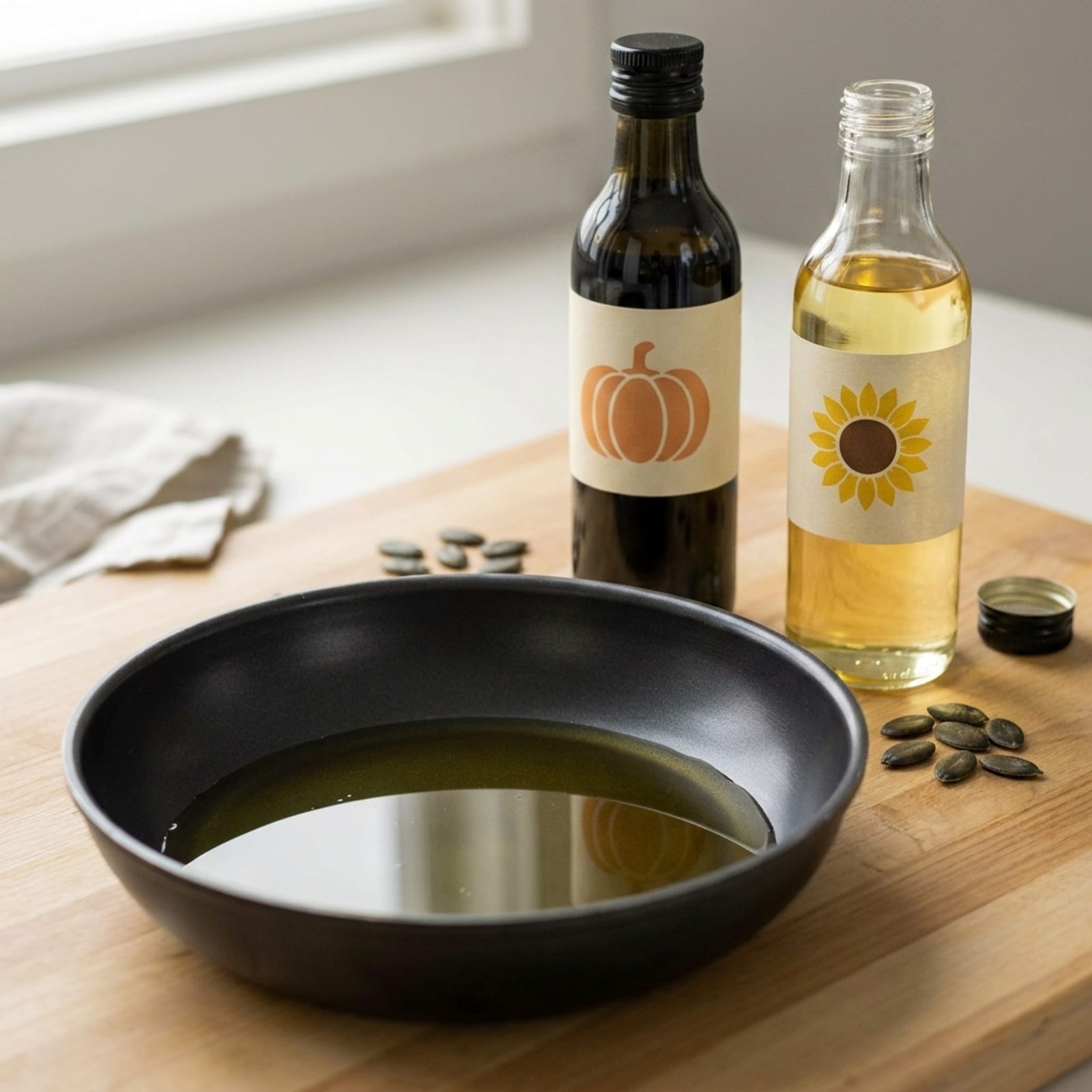
Rapeseed oil, sunflower oil or clarified butter handle the heat reliably without getting ahead of the finished dish's flavour. Only once the pan is off the stove and the food is plated does pumpkin seed oil come into play. That switch is exactly what makes the difference: the roasted notes of the dish and the nutty depth of the oil both stay clearly recognisable, instead of blurring together in the heat.
A Quick Temperature Check
No thermometer is needed for this. If a dish is still visibly steaming, or if a hand cannot rest comfortably above it for a few seconds, it simply needs a little more time. For soup and roasted vegetables, a short pause after plating is usually enough. That way the aroma rises pleasantly while eating, without the delicate compounds having spent too long exposed to heat.
Baking Is the Exception
In bread, crackers or muffins, part of the neutral oil can be replaced with pumpkin seed oil — up to half of the total fat. Baking softens the flavour, closer to roasted nut than the vivid raw character from the bottle, but still pleasant in its own way. Anyone who wants that character more clearly can use a one-to-one ratio with neutral oil instead of the full amount, then add a very small drop once the bake has cooled — an old trick for rye, oat or nut bakes that brings the familiar aroma back to the front at the end.
Finishing Warm Dishes Properly
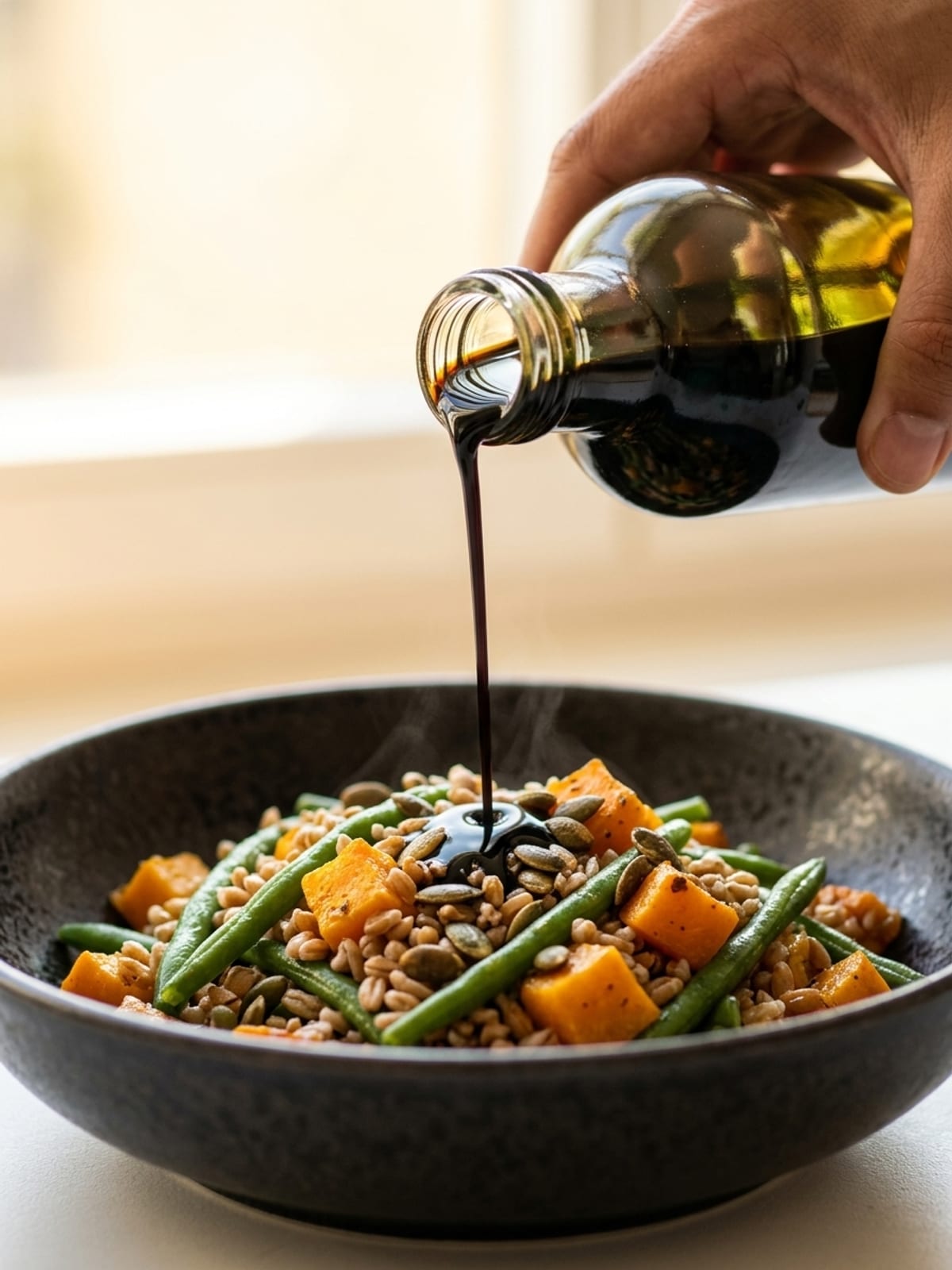
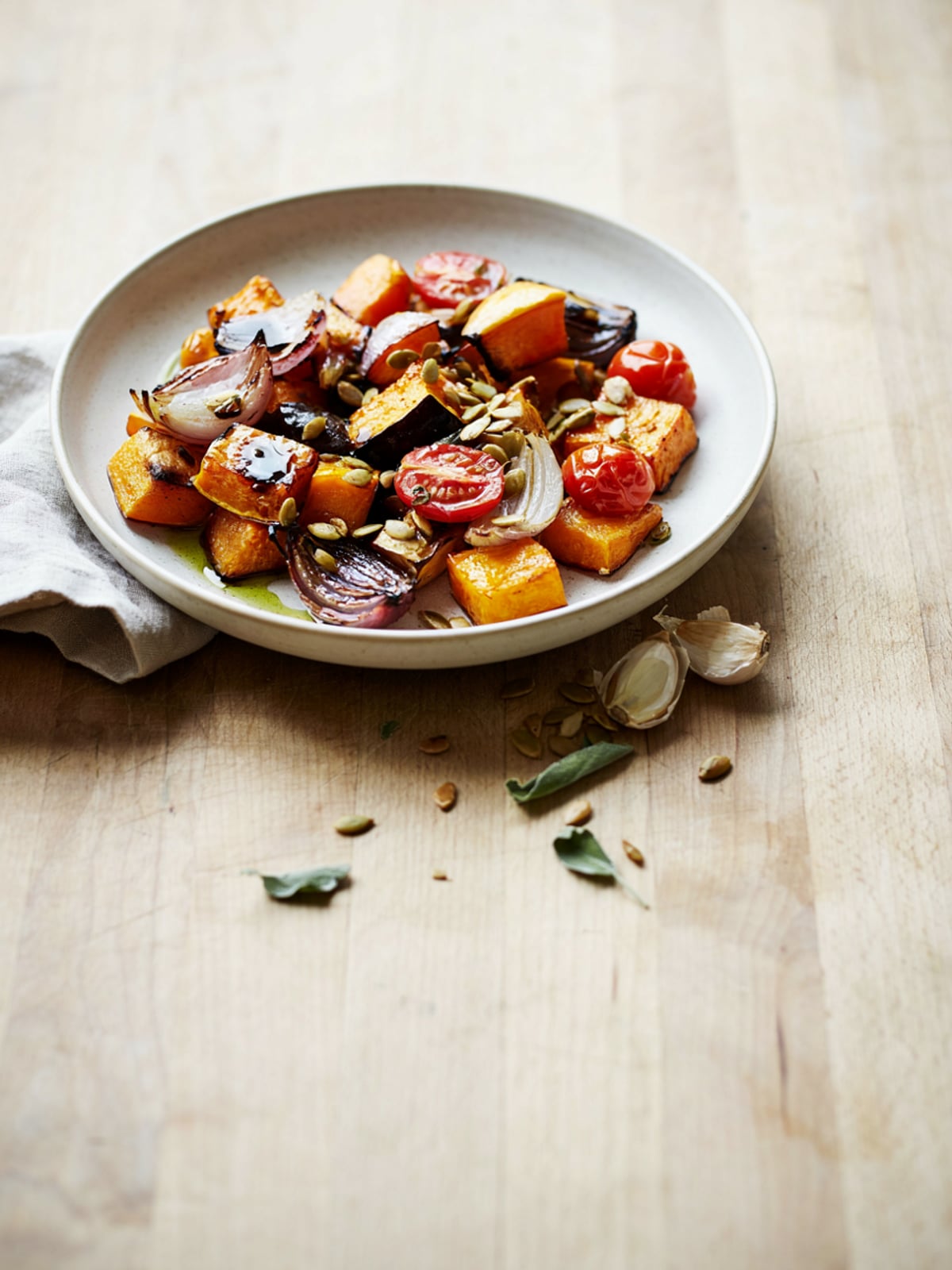
On an already plated soup, risotto or roasted vegetables, the oil works beautifully. Let the dish rest for a minute or two after cooking before the oil goes on: the warmth releases the aroma without destroying it. Pasta, mashed potato or a soft egg benefit from this same last step, and a teaspoon per serving is usually plenty.
The Simple Kitchen Rule
Frying is not done with pumpkin seed oil. It reaches the plate or bowl only once the active heat is gone — from there it suits salad, soup, vegetables, eggs, yoghurt and dessert equally well. Practical ideas can be found under flavour pairings and among the recipes with pumpkin seed oil. The smell that rises when the bottle opens is, this way, exactly the one that reaches the plate at the end.
Shop authentic Styrian oil — start here
Shop now