The Styrian
Pumpkin Seed Oil Journal
The Styrian
Pumpkin Seed Oil Journal
- The Styrian Pumpkin Seed Oil Journal
Shop EN
pumpkinseedoil.ccShop DE
kuerbiskernoel.cc
About
This website also contains some content created with the support of AI.
The Styrian Landscape Behind the Oil
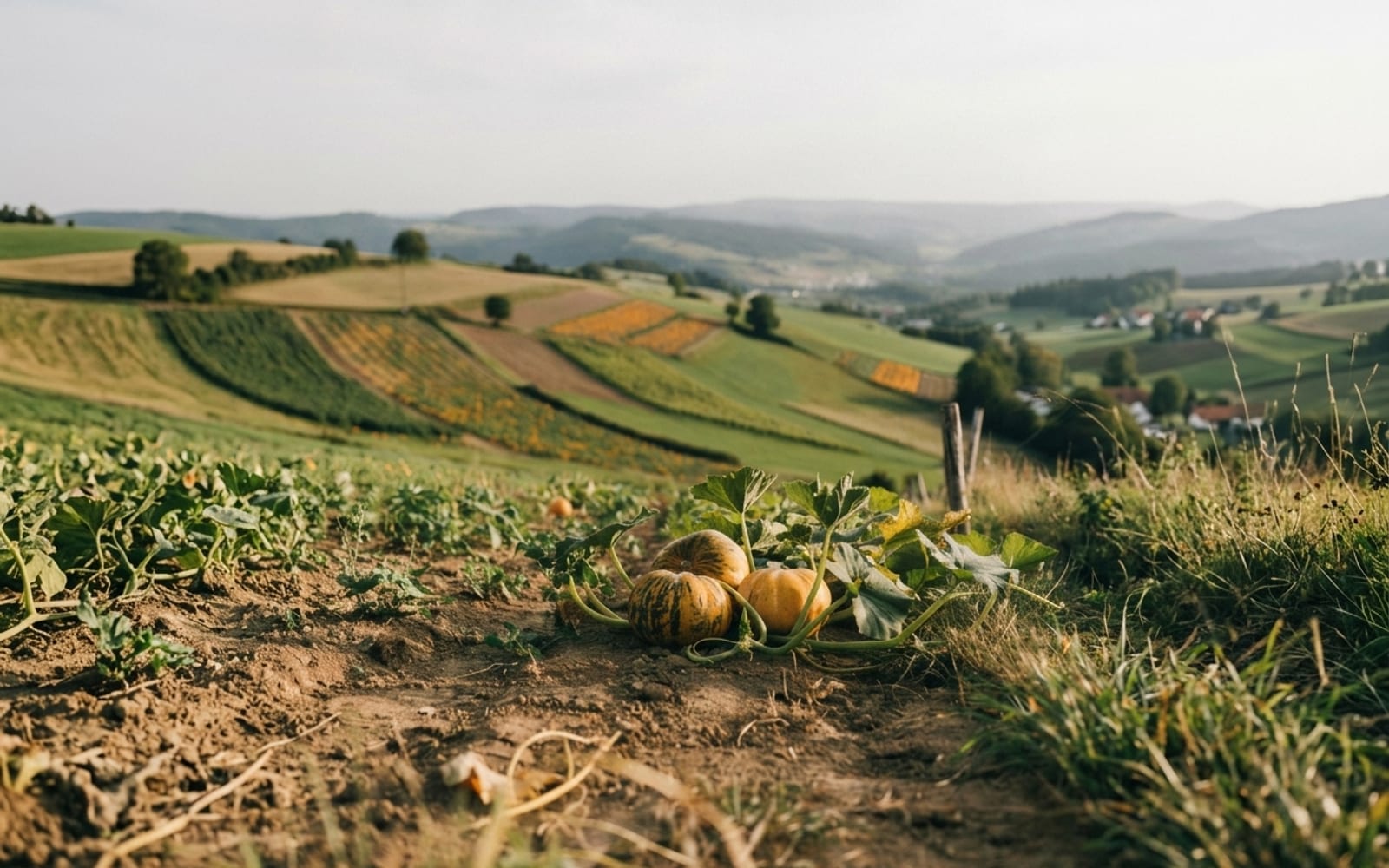
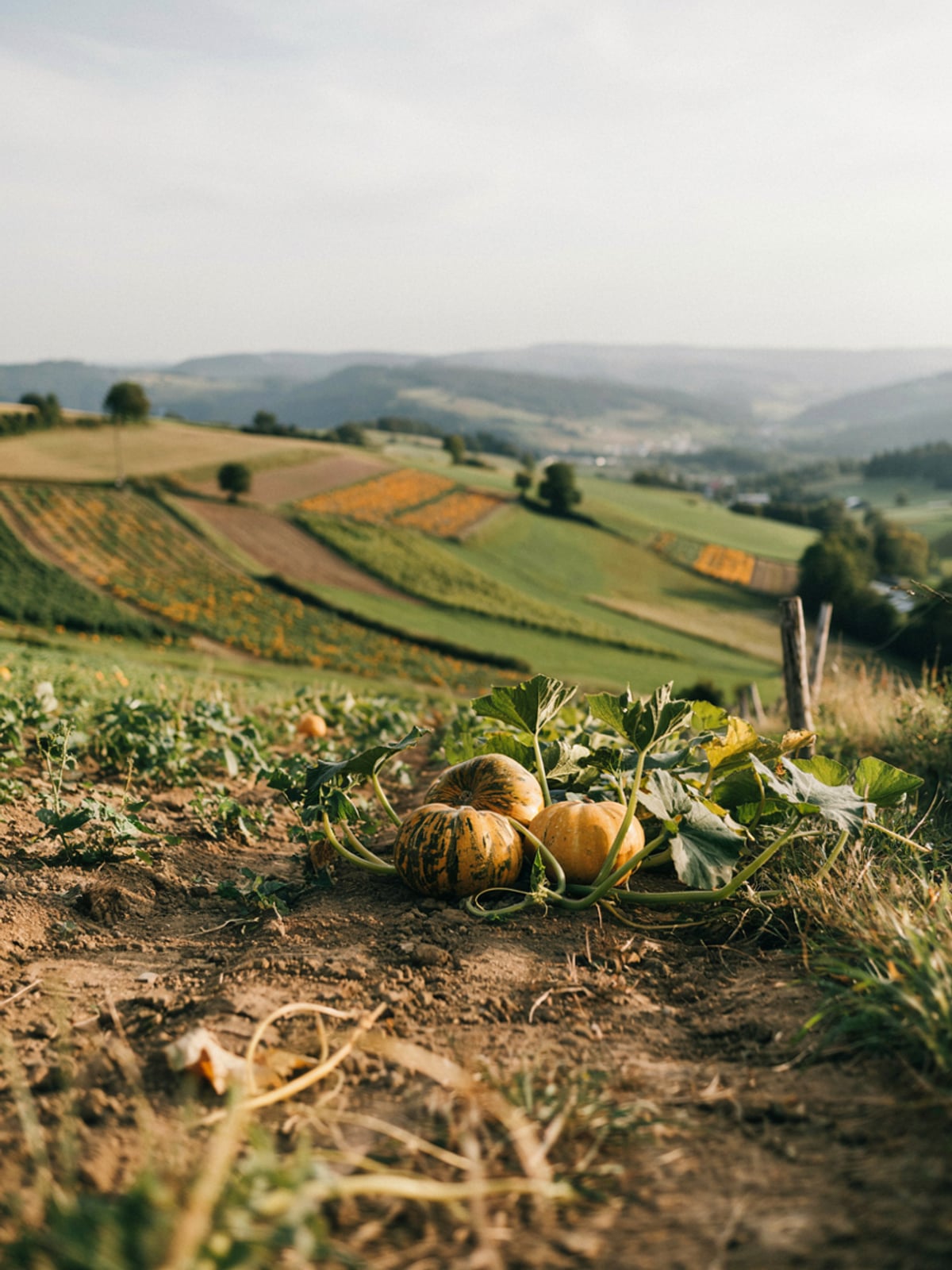
Drive through Styrian oil-pumpkin country and at first you notice only hills and colour: rich green in summer, a warm orange-green once the fruit ripens. Only on a second look does it become clear that this calm scenery hides intense, seasonal work. Styrian pumpkin seed oil tastes of roast and seed — and yet also of this exact place, one you can almost picture with the first spoonful.
Hills That Need No Postcard
Southern Styria and the wider oil-pumpkin country are no alpine drama, just workable slopes, orchards nearby, vineyards in places. No peak pushes itself into the foreground; the hills stay soft, almost understated. Origin rules that tie this land to the product: Styrian PGI. The season when the fields empty again: Autumn in Styria.
Fields That Are Really Factories
What looks picturesque from the roadside pursues one goal from day one: seed for roasting and pressing, not sweet flesh for pumpkin pie. That single focus explains the yield, the price, and why a single litre of oil can never compete with mass-market oil. Further along the path from the field: From Seed to Shop, Harvest Day, Why So Expensive?.
A Mill Emerges from the Mist
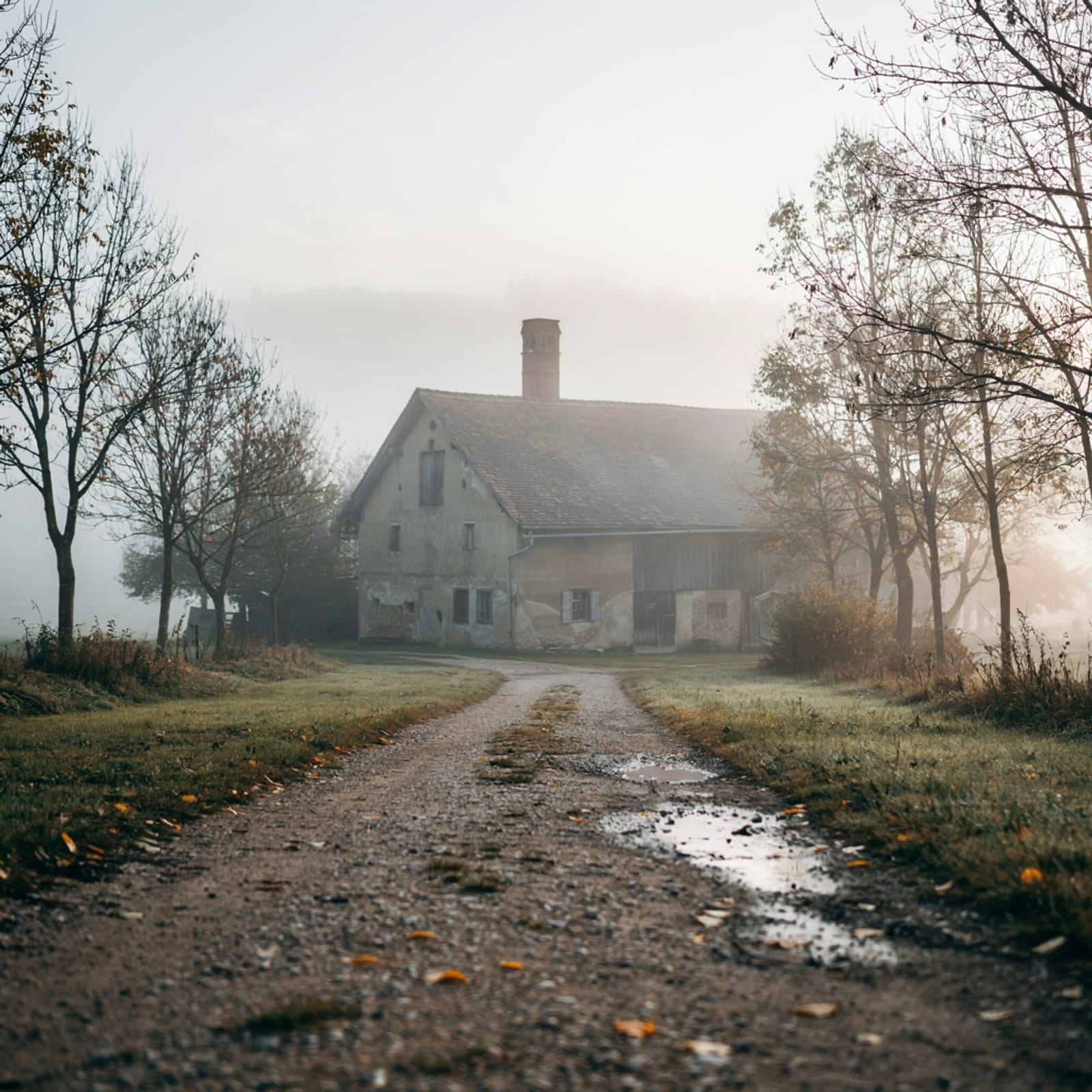
Somewhere between field and shop sits the mill, often family-scaled, sometimes open to curious visitors. Usually you smell it before you ever see the building — smoke and roasted seed drift across the road long before the chimney comes into sight. This landscape carries mills as casually as wine country carries its cellars. Atmosphere: Mill Visit. Technique: Roasting.
Tables That Carry the View Forward
Homes and inns keep the dark bottle within reach, because the landscape outside lets the habit inside grow with it: local oil on local plates. Travellers often notice this ordinariness just as strongly as the view itself. Table culture: Table Culture. Wandering notes: Travel Notes. First sensory encounters: Taste Memory, Bottle and Pour.
What to Expect on the Road
Come here expecting working farms, honest menus, and bottles that look severe until someone pours — not a theme park. Respect for private land is a given; buy from producers and shops that can explain PGI clearly. Kitchen practice for afterward: Kitchen, Cooking FAQ.
Roads Between the Villages
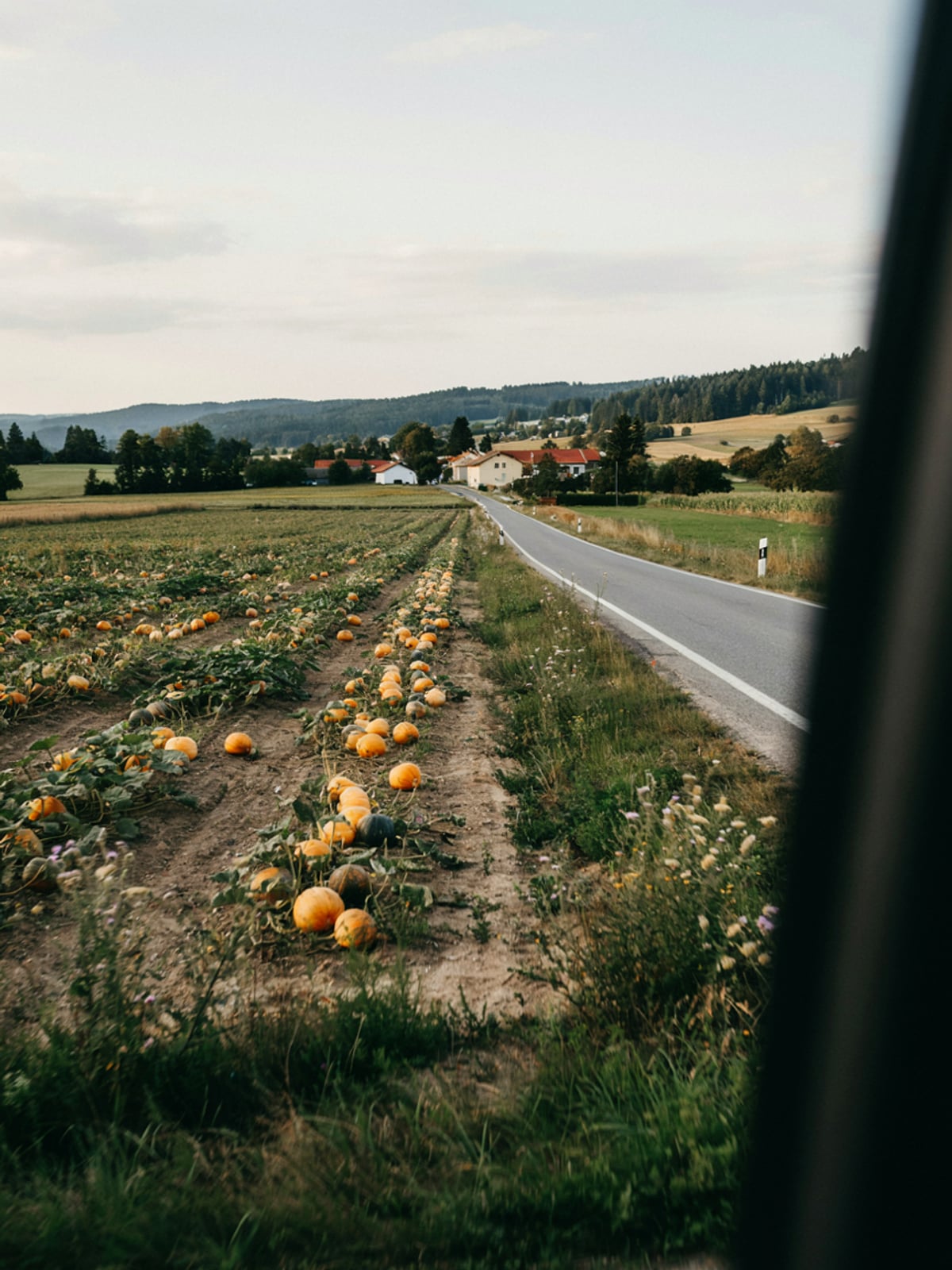
Short drives link farms, mills, and inns, and slow driving pays off: seed drying in farmyards under the sun, dark glass in shop windows, menus that mention the oil without apology. What you gather here is not a collection of sights, but a sense of how ordinary this specialty feels to people who grew up with it.
Weather That Writes the Fields
Wet and dry years change the work, not the underlying story — growers still aim for seed quality fit for roasting and pressing. Anyone picturing only postcard sunshine should also picture mud and early mornings on the same map. That honesty about the labour makes the bottle's price a little less abstract: Why So Expensive?.
Taking the View Home
Hills do not fit in a suitcase, but attention does: finishing food properly, storing the oil kindly, and telling the place's story when someone asks why the bottle is so dark. That is how this landscape continues in your own kitchen — as a habit, not a souvenir. More context in the Journal.
Taste regional Styrian pumpkin seed oil
Shop now