The Styrian
Pumpkin Seed Oil Journal
The Styrian
Pumpkin Seed Oil Journal
- The Styrian Pumpkin Seed Oil Journal
Shop EN
pumpkinseedoil.ccShop DE
kuerbiskernoel.cc
About
This website also contains some content created with the support of AI.
Styrian Sour Beef Salad with Pumpkin Seed Oil
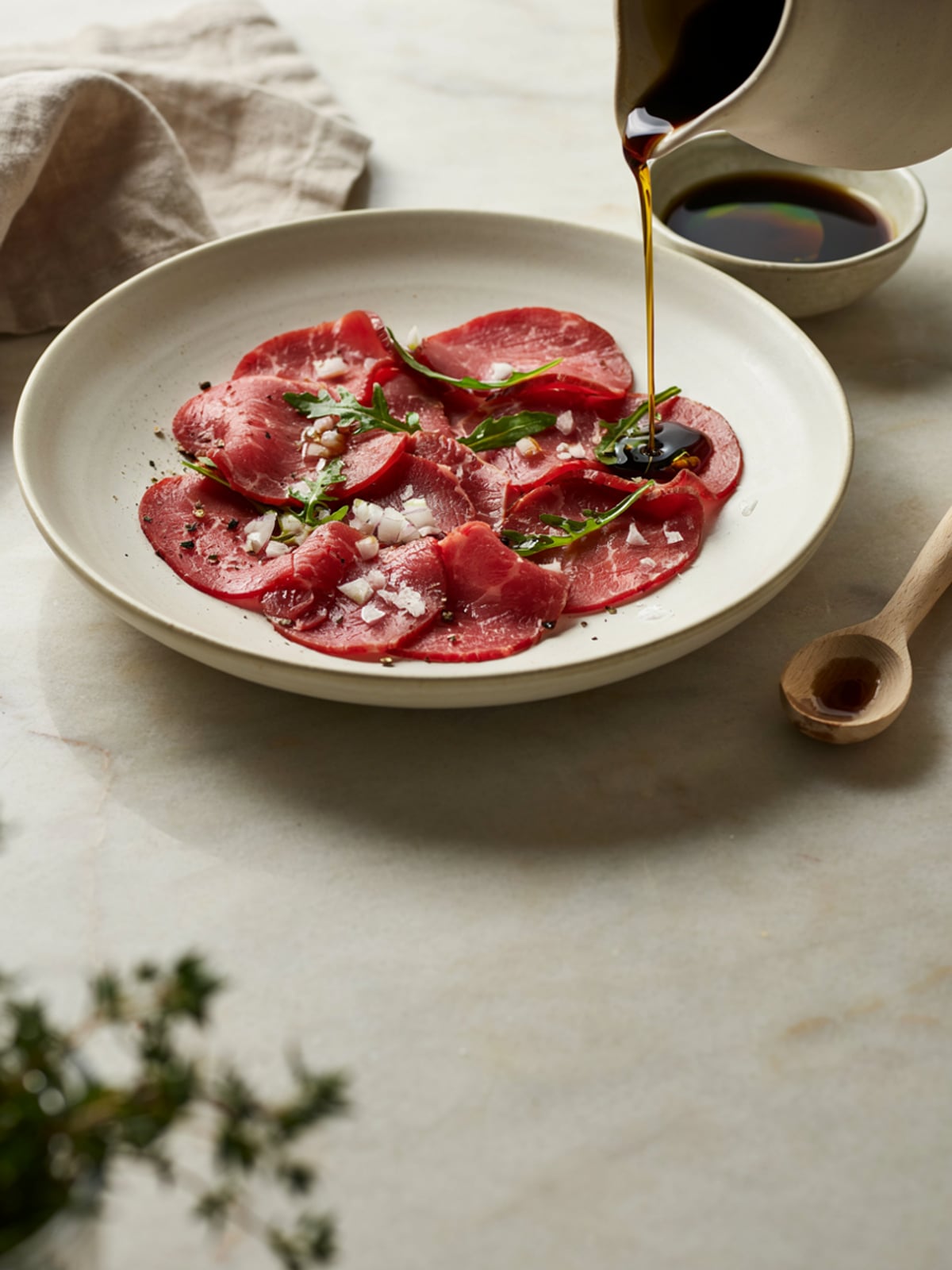
Sunday's pot steamed on the stove. By Monday the beef sits cold and firm on the board, and leftovers turn into something else entirely: a bright, cold plate built from vinegar, onion, and a generous pour of Styrian pumpkin seed oil. No mayonnaise, no hot pan — just the dark oil that leaves the whole plate smelling faintly roasted.
The meat is already cooked; the dressing comes together cold. That single fact lets the oil act as a true ingredient here rather than a frying medium. More on cold assemblies like this one: cold plates and salad.
When leftover beef still has work to do
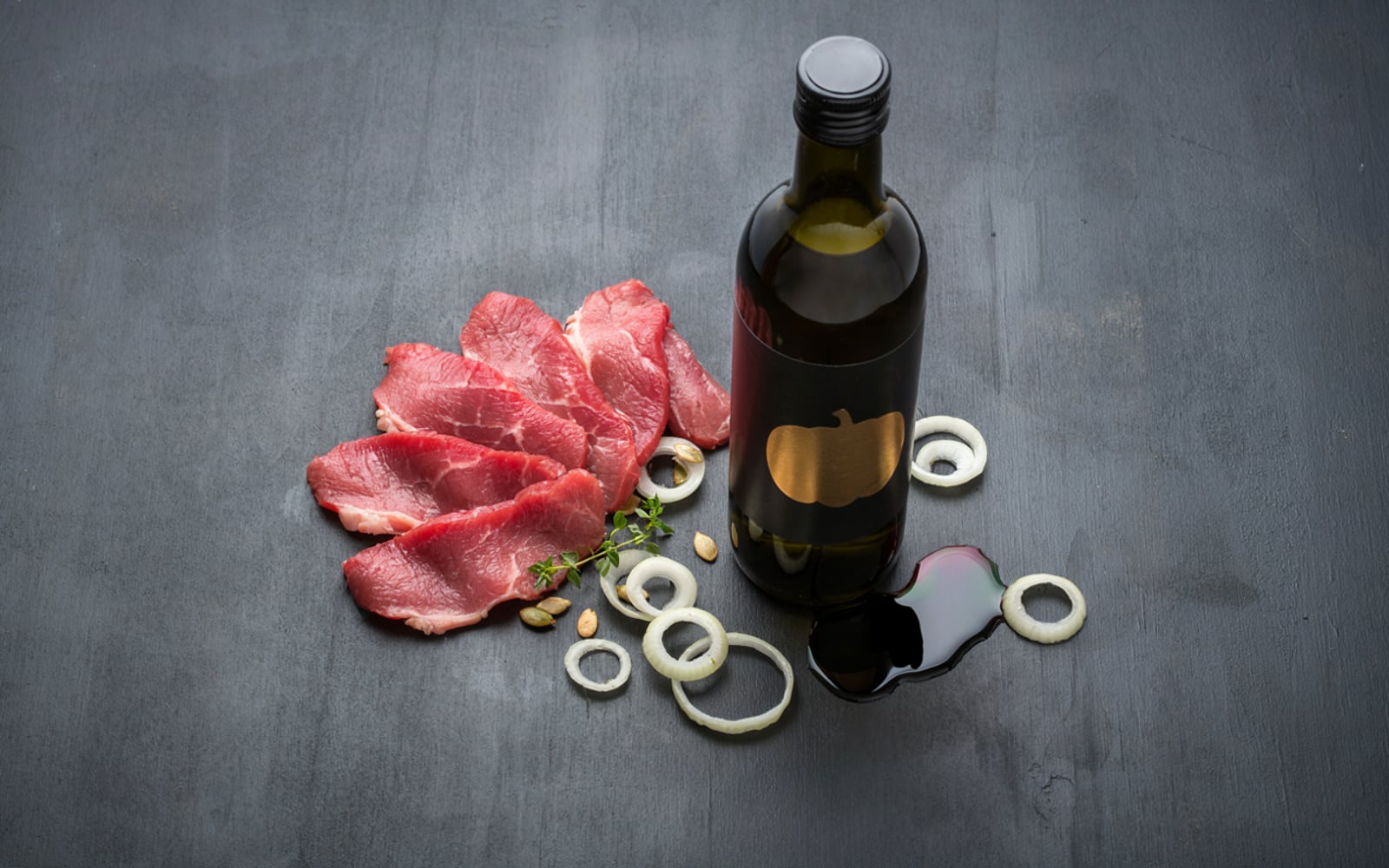
Brisket, silverside, or whatever survived from a Tafelspitz-style pot — anything that stayed cool and juicy earns a place here. Beef that dried out on the way to leftovers turns tough and simply swallows the dressing instead of taking it on. Straight from Sunday's pot, the salad tastes clearest: the meat softens the vinegar's edge, and the oil pushes right back.
Slice thin, tame the onion
Cut across the grain, thin enough that each slice can carry its share of dressing. The red onion follows, sliced paper-thin. If it bites too hard, soak the slices in cold water for ten minutes, then drain and pat dry. That keeps the crunch without sending anyone reaching for a tissue first.
Vinegar meets oil before the meat arrives
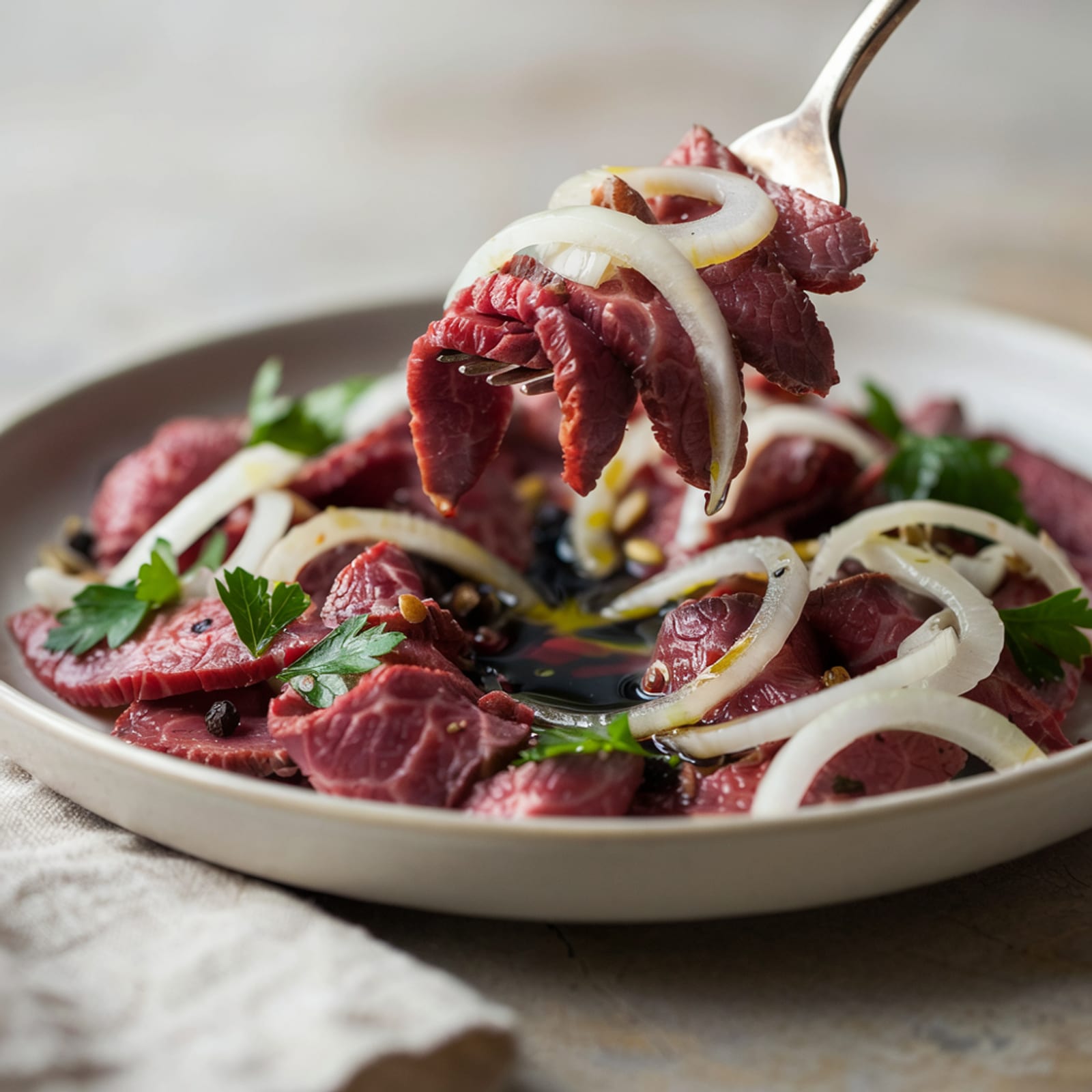
Vinegar, salt, pepper, and a little mild mustard come together in a bowl first. Then the pumpkin seed oil pulls in — dark, glossy, confidently sharp on its own. The dressing should already have an edge before the beef ever touches it; the meat is what softens that edge later. Too little vinegar here, and the whole plate falls flat. Too much oil stirred in before tasting, and it drowns the acidity that makes the dish work.
Ingredients
Serves four as a starter or light main.
- 400–450 g cold boiled beef (brisket, silverside, or leftover Tafelspitz-style beef), thinly sliced
- 1 small red onion, very thinly sliced
- 3 tablespoons mild vinegar (apple cider or white wine vinegar)
- 3–4 tablespoons Styrian pumpkin seed oil
- ½ teaspoon fine salt, plus more to taste
- Freshly ground black pepper
- 1 teaspoon mild mustard (optional)
- 2 tablespoons chopped chives or parsley
- Optional: a handful of pickles, thinly sliced
Method
- Slice the beef. Cut cold cooked beef across the grain into thin strips or small slices. Arrange in a wide bowl so the dressing can coat every piece.
- Onion soak (optional but good). If the onion is sharp, soak the slices in cold water for 10 minutes, then drain and pat dry.
- Make the dressing. Whisk vinegar, salt, pepper, and mustard if using. Whisk in the pumpkin seed oil. Taste — it should be assertively sharp before it meets the meat.
- Toss. Add onion and dressing to the beef. Fold gently. Rest 15–20 minutes at room temperature so the flavours settle.
- Finish. Taste again for salt and vinegar. Add herbs and pickles. Serve with bread — not reheated, not fried.
What "sour" really means here
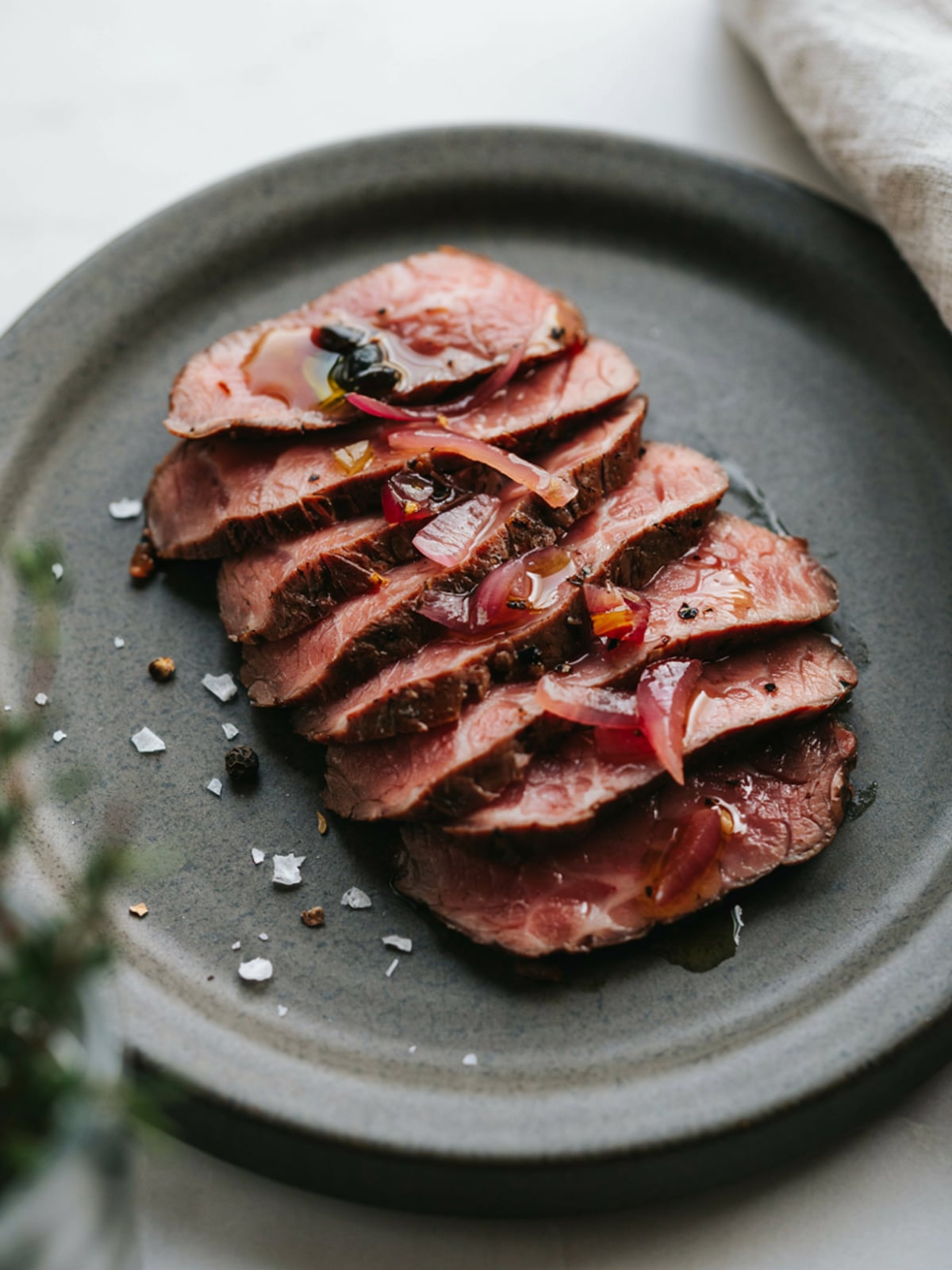
Sour does not mean spoiled. It means vinegar-bright — the same family of flavour as a sharp potato salad or a bread dip built on oil and vinegar. The beef should taste clean and well seasoned; the dressing exists to wake it up. If the salad tastes flat, reach for a spoon of vinegar and a pinch of salt before adding more oil. If it tastes harsh, add oil and let it rest five minutes. That back-and-forth, judged by tongue rather than stopwatch, is second nature in many Styrian kitchens. Heat never enters the picture — the same principle behind heat and frying advice to keep pumpkin seed oil away from the stove.
Make ahead, let it rest
Dress the salad up to a few hours ahead and keep it cool; bring it back toward room temperature before serving so the oil's aroma can open up. Add herbs only at the last minute. Leftovers keep a day, covered, in the fridge. If oil marks a white napkin, treat it early — see stains. Genuine Styrian oil gives this dish its regional voice; a pale blend tastes anonymous by comparison. Against the pink-brown beef, the colour should read dark and glossy: colour and taste. Olive oil makes an entirely different salad — see the olive oil comparison.
What lands on the table
Serve with crusty bread, or alongside beetroot carpaccio and goat cheese salad for a full cold Styrian spread. For crunch on the side, try coleslaw. For dipping, the classic bread dip. More ideas live under recipes and pairings, and the reasoning behind keeping the oil cold sits in cooking with pumpkin seed oil.
Order dark-roasted Styrian seed oil
Shop now