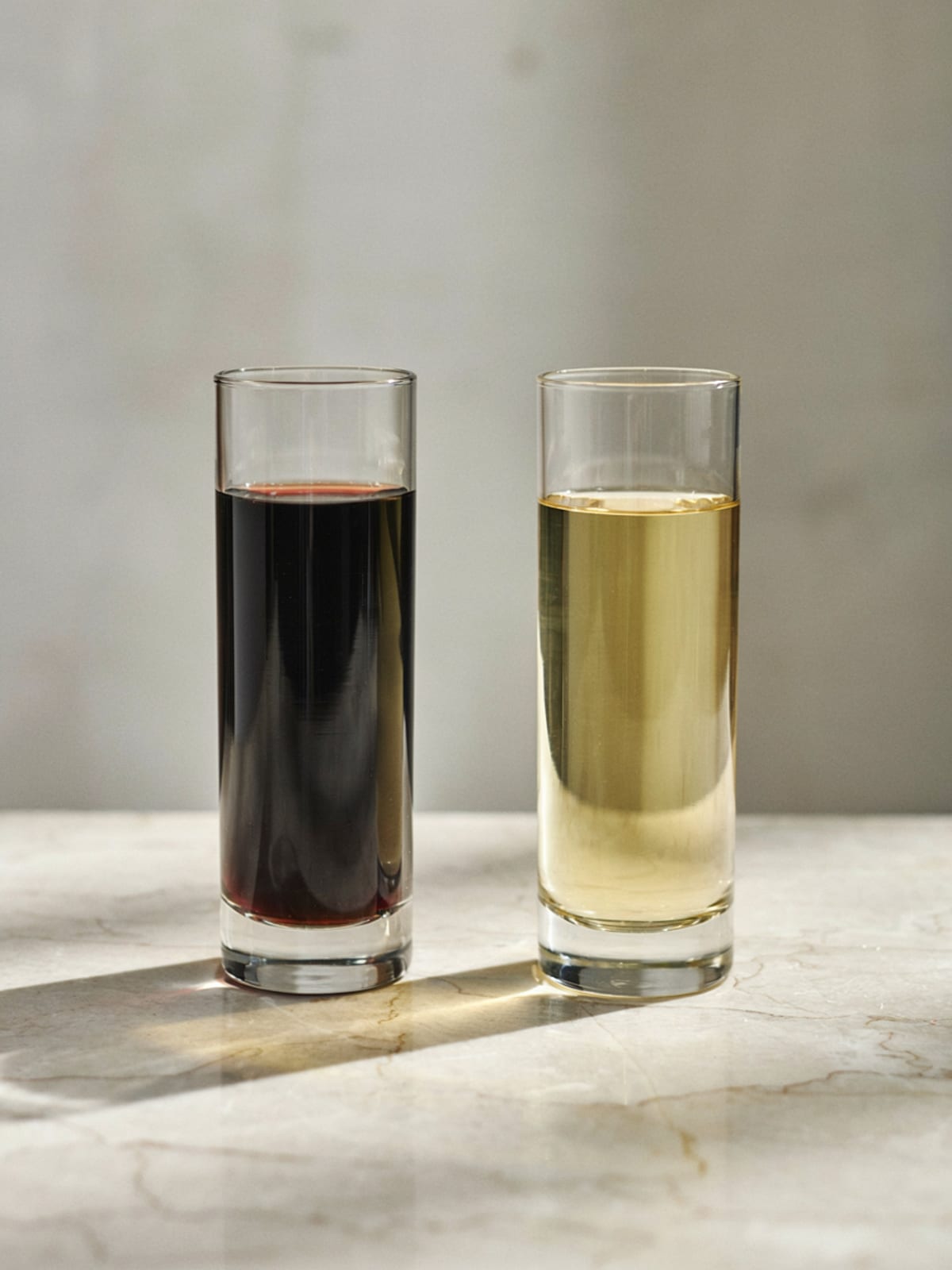
The Styrian
Pumpkin Seed Oil Journal
The Styrian
Pumpkin Seed Oil Journal
- The Styrian Pumpkin Seed Oil Journal
Shop EN
pumpkinseedoil.ccShop DE
kuerbiskernoel.cc
About
This website also contains some content created with the support of AI.
Quality and Authenticity of Styrian Pumpkin Seed Oil
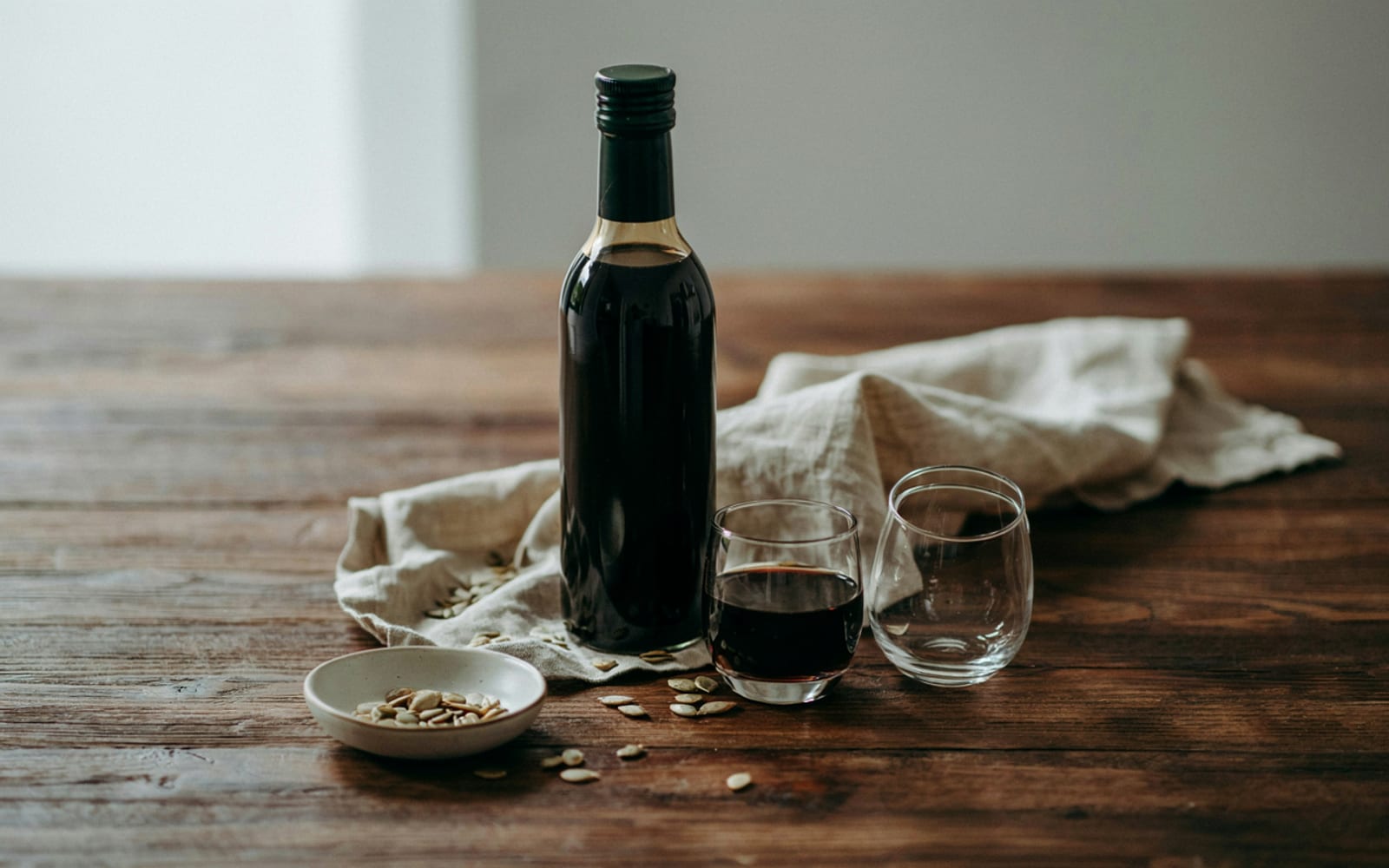
Buying a good bottle of Styrian pumpkin seed oil is straightforward once you know what to look for. The challenge is that the category includes a range of products at very different quality and authenticity levels, from rigorously certified PGI oil produced by named Styrian mills to generic products that borrow the visual language of the Styrian tradition without meeting any of its requirements. Knowing the difference matters both for your kitchen and, if the research-based discussion around the oil's composition interests you, for getting the product whose chemical profile the studies actually examined.
The PGI Seal: First Line of Authentication
Protected Geographical Indication (PGI) is the primary authenticity marker to look for. The EU PGI logo — a yellow sun on a blue background — on a bottle of pumpkin seed oil tells you that the oil was pressed from seeds grown in the defined production zone (Styria, parts of Slovenia, and Burgenland) and that the pressing took place in that zone. The certification is administered by independent bodies operating under EU regulations and requires laboratory analysis as well as production record inspection.
Not every bottle of good Styrian oil carries the full EU PGI logo — some smaller mills certify differently, and some export products are labelled in ways that make the designation less visible. When in doubt, look for the phrase "Steirisches Kürbiskernöl g.g.A." (the German formal designation) or "Styrian Pumpkin Seed Oil PGI" in English labelling. The presence of a specific Styrian mill's name and address is a secondary indicator of authentic origin.
The Regional Quality Seal
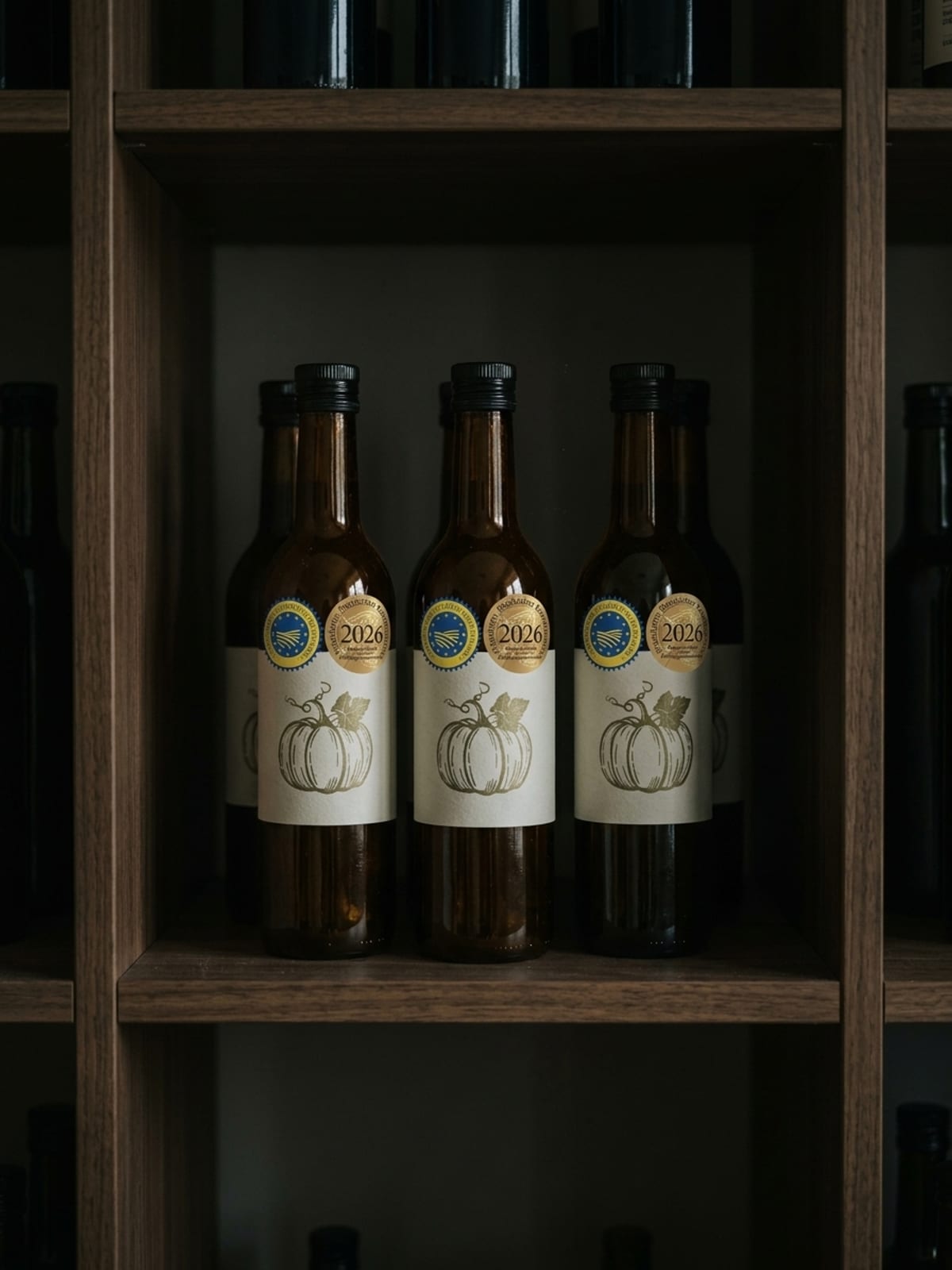
Beyond the EU designation, the Steirische Kürbiskernöl g.g.A. producers' association maintains a regional quality seal — a distinctive green-and-gold design that many Styrian producers display alongside the EU mark. This seal indicates membership in the producers' association, adherence to the group's internal quality standards, and a commitment to regional origin. Bottles displaying both the EU PGI logo and the regional seal from a named Styrian producer represent the highest current level of authenticity verification in the retail market.
Reading the Label: What to Look For
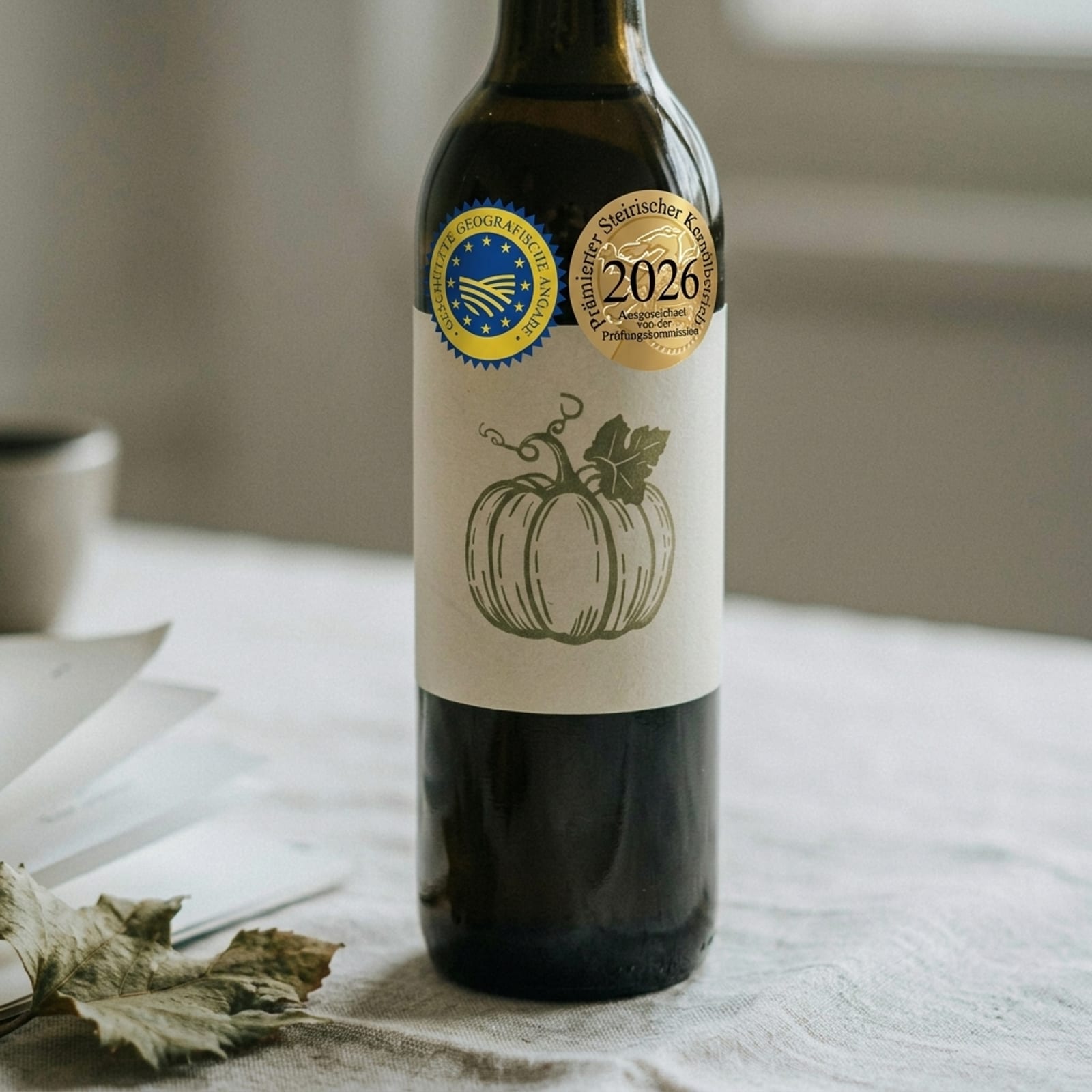
A label that communicates quality will tell you several things. The name and address of the producer or bottler should be present — anonymous "distributed by" labels without a named mill are a reason for caution. The country of origin should be stated, and for authentic PGI oil, this should be Austria or Slovenia within the defined zone. A best-before date should be present; fresh oil pressed from the current year's harvest is preferable to old stock. Some premium bottles carry the harvest year, which allows the most precise freshness assessment. Ingredient information should list only pumpkin seed oil with no additives, preservatives, or blending agents.
Sensory Quality Markers
If you have access to the oil before buying — at a market stall, in a restaurant, from a sample — sensory evaluation provides excellent quality information. Colour: genuine Styrian pumpkin seed oil should be very dark, approaching black in the bottle, with the characteristic garnet or brick-red transparency when seen in a thin layer against light. A pale, yellowish, or translucent brown oil suggests either a different cultivar, under-roasting, or dilution with a lighter oil. Aroma: the oil should smell intensely nutty, roasted, and clean. An acrid or sharp chemical smell indicates rancidity or poor production; a faint or generic oily smell suggests dilution. Flavour: bold, nutty, roasted, slightly sweet, with no off-notes. A thin, watery, or neutral flavour on the palate is inconsistent with authentic Styrian PGI oil.
Traditional vs. Cold-Pressed
Within the PGI category, two production styles exist. Traditional roasted oil is made by grinding, mixing with water and salt, roasting the paste over heat while stirring, and pressing. It is the darker, more intensely flavoured, more aromatic product and represents what most people mean by "Styrian pumpkin seed oil." Cold-pressed oil is pressed without the roasting step, resulting in a greener, lighter, and fresher-tasting oil with a different aromatic profile. Both are legitimate and both can be excellent. Your choice should be guided by the flavour intensity you want in the kitchen — traditional oil for stronger culinary impact, cold-pressed for a more delicate application or for situations where heat-sensitive compounds are a priority.
Price as a Quality Signal
Authentic Styrian pumpkin seed oil has inherent production costs that place a floor under its price. Each litre requires roughly three to four kilograms of seeds. The seeds must be dried, ground, roasted, and pressed. The yield per pressing cycle is low relative to more commodity-style oils. Transport, bottling, and certification costs add to the total. A realistic price for a 500 ml bottle of authentic Styrian PGI oil at retail will typically be in the range that reflects these costs. Prices significantly below regional norms — particularly for bottles claiming PGI status — should be investigated carefully. The most common explanation for an unusually low price is that the product is blended, from a different origin, or not what the label implies.
Storage and Shelf Life
Store pumpkin seed oil in a cool, dark place away from heat sources and direct sunlight. The high polyunsaturated fat content makes it more prone to oxidation than stable oils like coconut or avocado oil. An unopened bottle in ideal storage conditions will keep until the best-before date, which is typically one to two years from pressing. Once opened, use within three to six months and keep the bottle tightly closed between uses. Refrigeration is optional but can extend shelf life after opening; take the bottle out a few minutes before use if refrigerated, as the oil becomes slightly more viscous when cold. A rancid, paint-like, or acrid smell is the reliable signal that the oil has oxidised and should not be used.
Where to Buy
Once you know what to look for on the label, the next step is a trustworthy channel. Our where to buy page explains why specialist sourcing matters and points to authenticated Styrian PGI oil at pumpkinseedoil.cc. For the protected designation itself, see Styrian PGI explained.
Find authentic Styrian oil for salads
Shop now