The Styrian
Pumpkin Seed Oil Journal
The Styrian
Pumpkin Seed Oil Journal
- The Styrian Pumpkin Seed Oil Journal
Shop EN
pumpkinseedoil.ccShop DE
kuerbiskernoel.cc
About
This website also contains some content created with the support of AI.
Pumpkin Seed Oil for Children
Health notice: This page discusses topics related to health research and tradition. It is not medical advice. Do not use it to diagnose, treat, cure, or prevent any disease. Talk to a qualified healthcare professional before changing your diet or supplements.
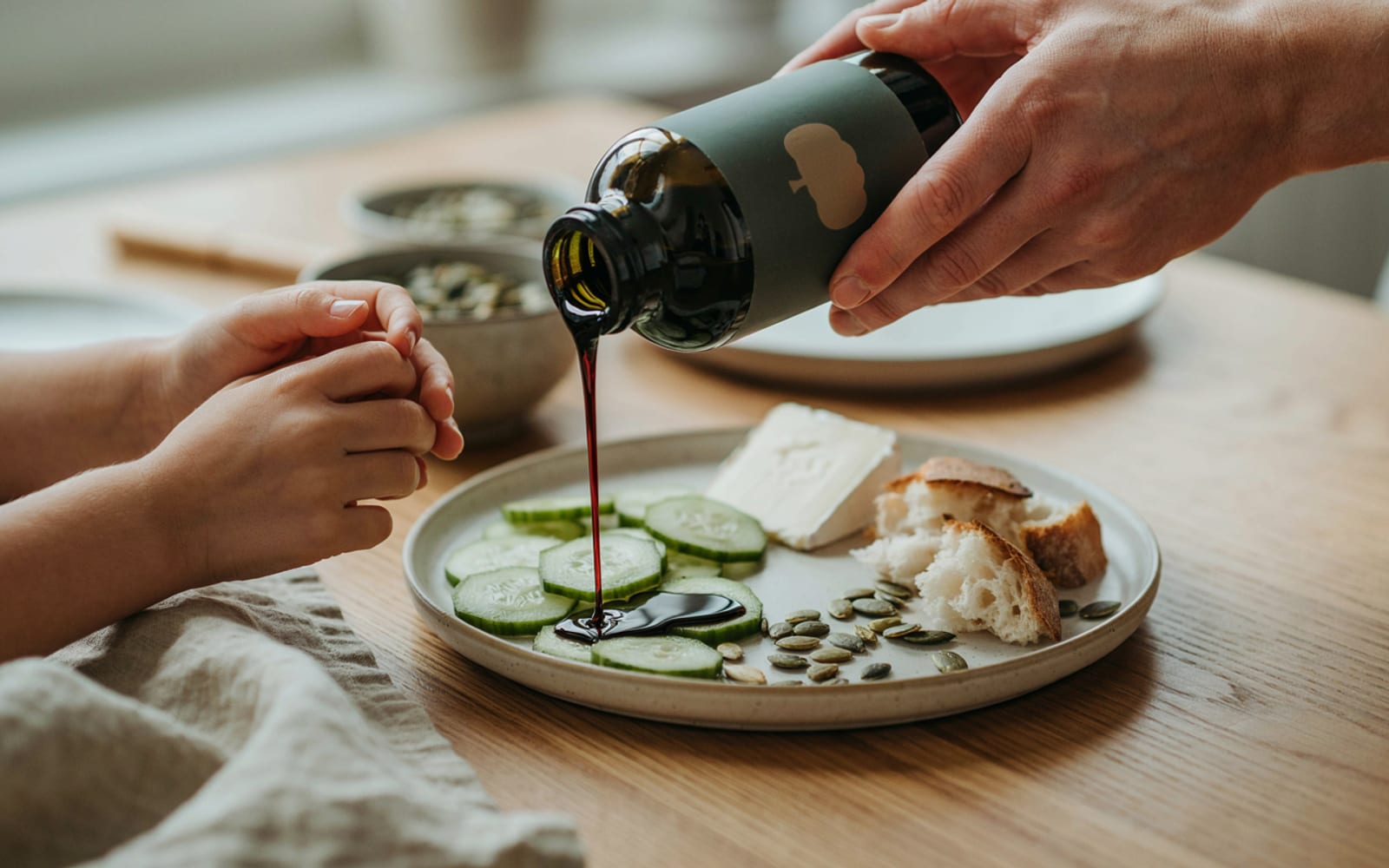
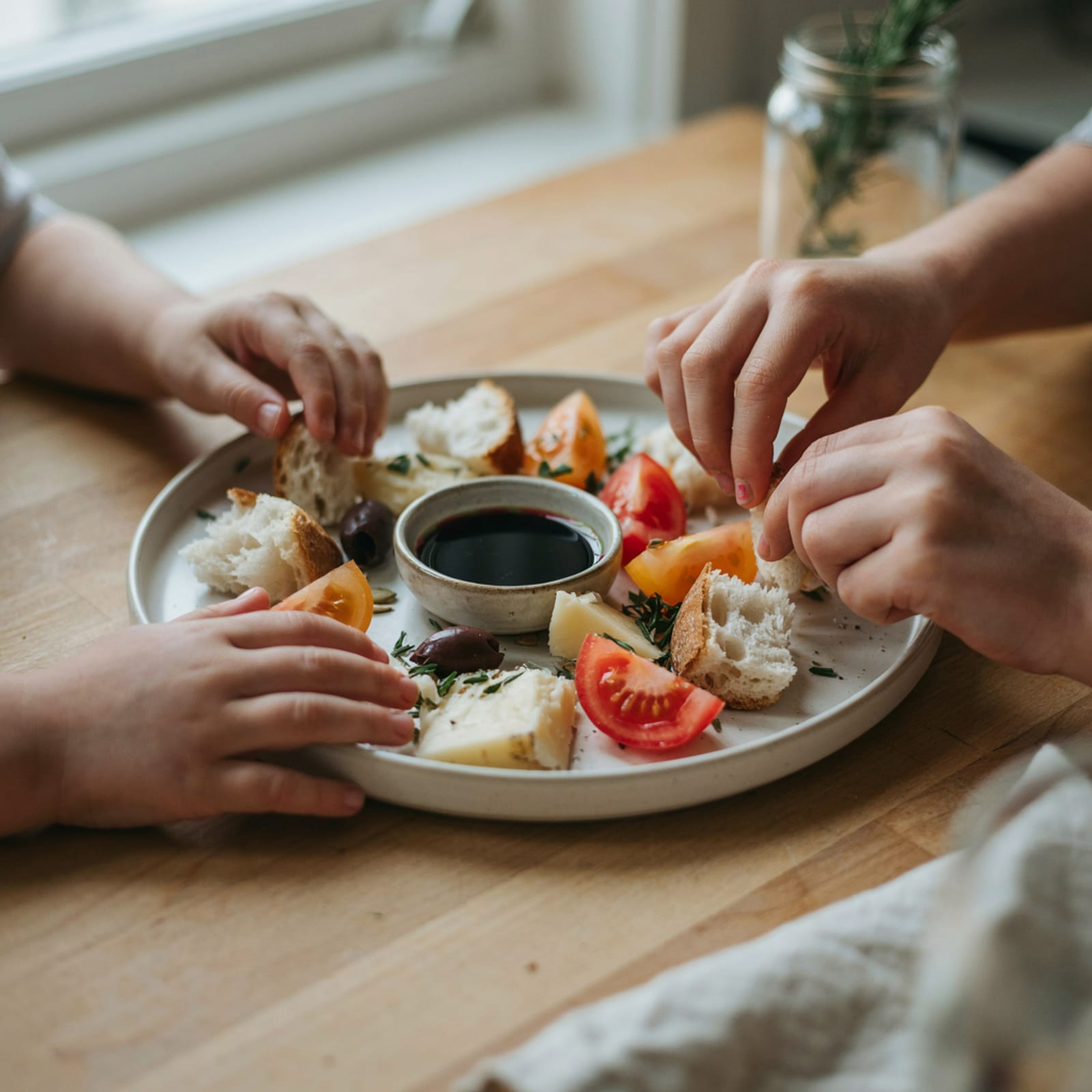
At the family table, a lot gets decided by the nose before the first bite. A child sniffs at the potato salad, wrinkles their forehead, tries it anyway. That is how many families first meet pumpkin seed oil for children — not as a dietary supplement, but as a perfectly ordinary food from the Styrian kitchen.
What This Topic Is Really About
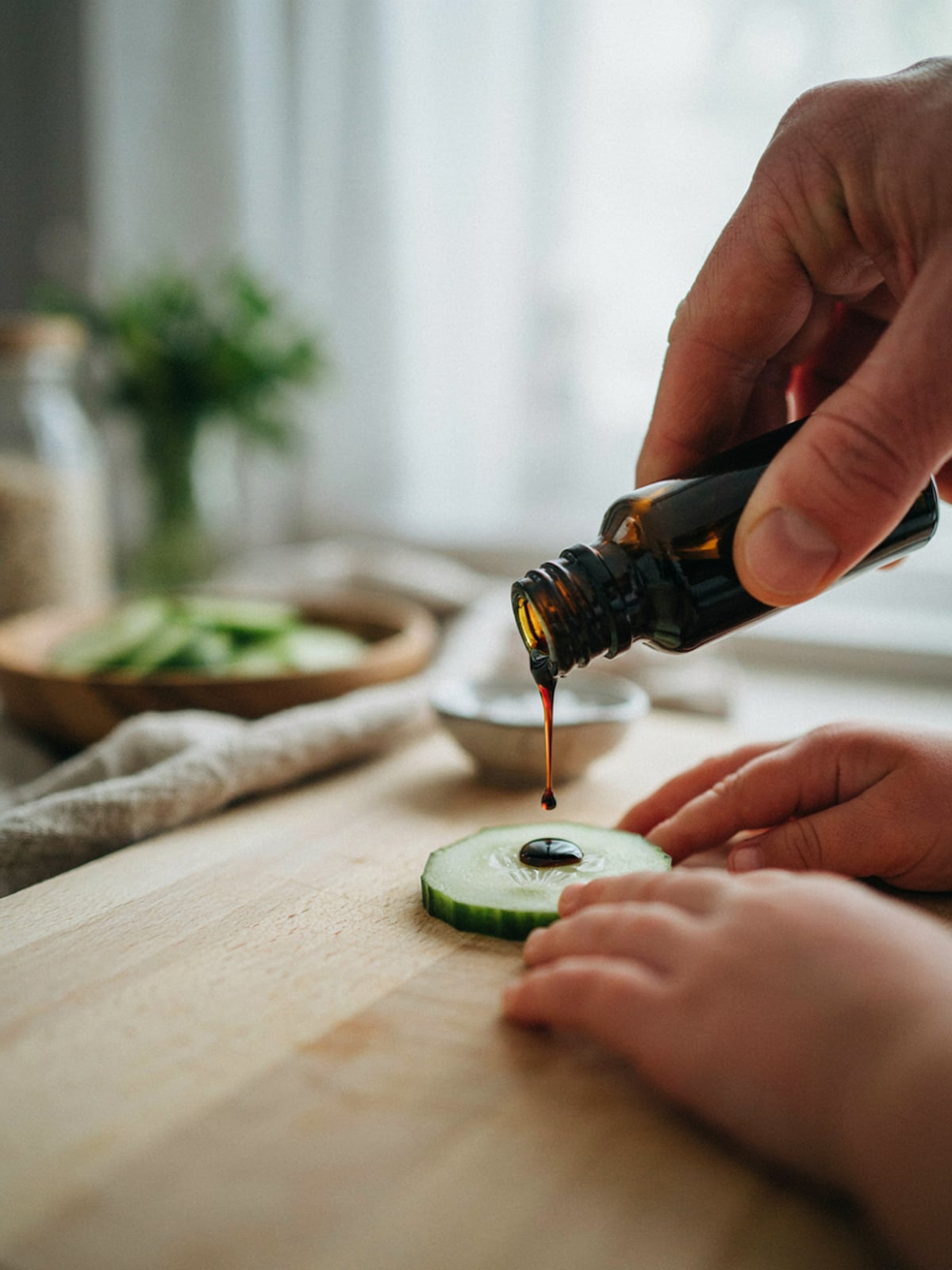
Introduce new foods in small amounts and watch for possible reactions. The bold, nutty flavour does not win over every child right away, and no pressure is needed for that. Some like it from the first spoonful; others need several tries over a few weeks. Both are entirely normal — taste develops on its own; it cannot be forced.
Seed, Extract, and Oil Are Not the Same Thing
When studies examine pumpkin products, the form used is decisive. Whole seeds bring fibre, protein, and minerals along with them. Extracts are concentrated and dosed in fixed amounts. The cooking oil on your plate, by contrast, consists mainly of fat and its fat-soluble companions. Results on seeds or capsules therefore do not automatically transfer to a tablespoon of oil. More on origin and composition sits at the pumpkin seed oil composition overview.
What Matters in the Family Kitchen
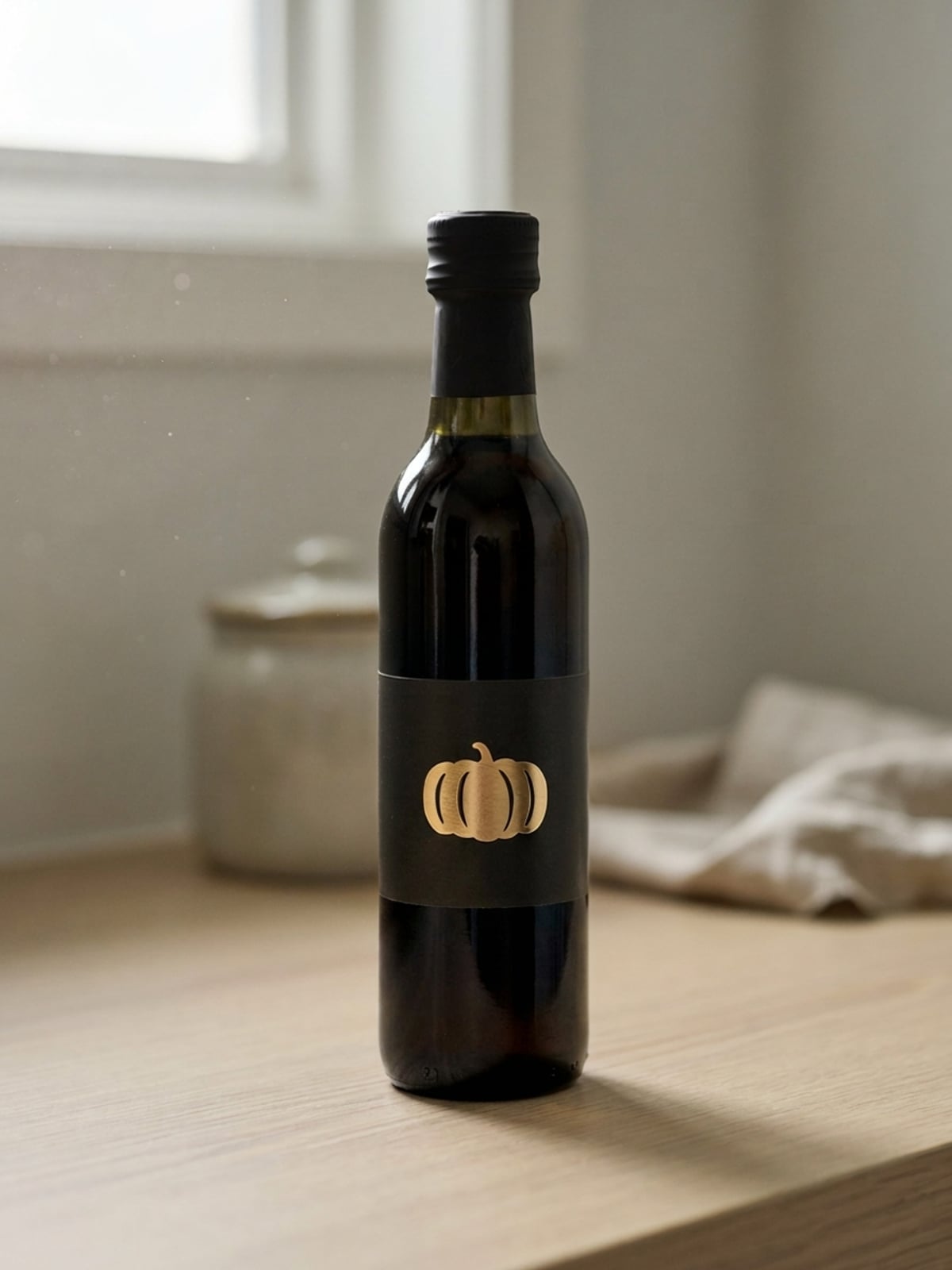
Freshness and storage matter here too: an opened bottle belongs cool and dark, ideally closed in the kitchen cupboard rather than open next to the stove. Rancid oil smells and tastes unpleasantly bitter and should not be used any longer, not even in small amounts. Use the oil mainly for its nutty, roasted flavour: on potatoes, salad, vegetables, or a mild soup. Small amounts are enough, since the oil is intense and calorie-dense. Notes on use, aroma, and storage sit in the kitchen section.
Where a Hunch Ends and Caution Begins
A plausible explanation or a positive lab result is not yet a promise of healing. Good medical recommendations need several matching human studies, traceable amounts, and a benefit that actually counts in everyday life. Until then, the fair reading stands: pumpkin seed oil can add flavour to a balanced diet, but it cannot replace therapy. There is no children's oil therapy for growth, digestion, or allergies.
When a Paediatrician Is the Right Address
For specific questions about growth, nutrition, or intolerances, a paediatrician is the right address — not a general kitchen tip. With acute or worsening symptoms, it makes sense to stop experimenting. Doctors can distinguish causes that no wellness text recognises.
Back to the Bottle on the Shelf
In the end, the dark bottle goes back into the cupboard, well sealed, until the next meal. Anyone interested in the wider health picture finds the same cautious perspective on further topics at the health overview. At the family table, pumpkin seed oil stays mainly one thing: a good food that gets to know slowly.
Order genuine Styrian PGI seed oil
Shop now