The Styrian
Pumpkin Seed Oil Journal
The Styrian
Pumpkin Seed Oil Journal
- The Styrian Pumpkin Seed Oil Journal
Shop EN
pumpkinseedoil.ccShop DE
kuerbiskernoel.cc
About
This website also contains some content created with the support of AI.
A Day Inside a Styrian Oil Mill
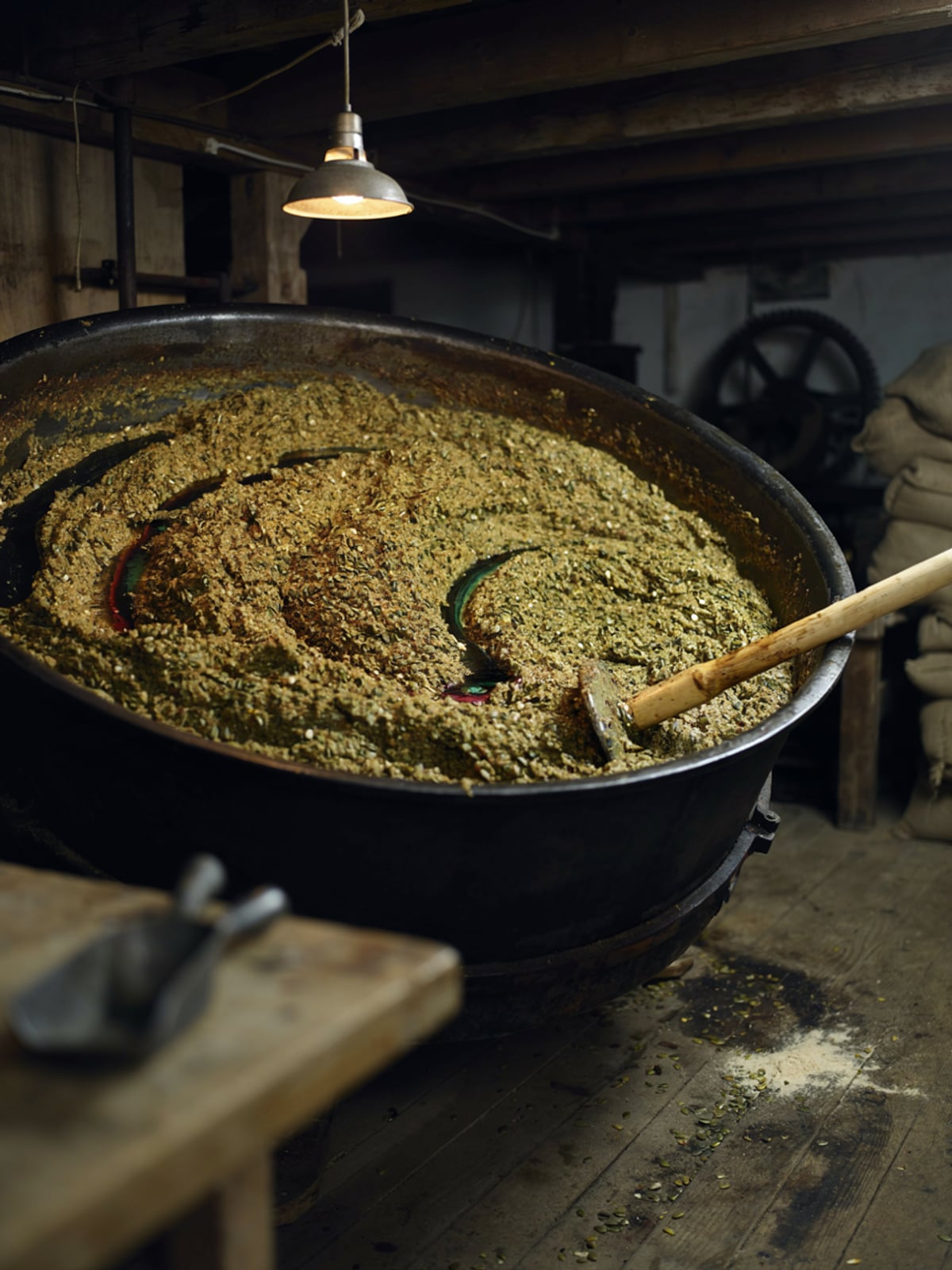
On a working day, the whole farmyard carries the scent of warm, roasted seed long before anyone sees a machine. Step through the gate and your nose takes over where your eyes leave off: somewhere inside, the roasting pan is already turning. A Styrian mill runs on a plain rhythm rather than a performance — seed in, roast, press, settle, bottle. Walk that rhythm once, and the bottle at home stops looking like an ordinary grocery item.
Seed Arrival
Bins and sacks of dried oil-pumpkin seed wait in the morning light, some grown on the mill's own land, some bought from contracted growers who work inside the rules that protect Styrian origin. Pick up a handful and you hear it before you really see it — a light, dry rustle. The drama of harvest already happened elsewhere, told in Harvest Day; the origin framework behind it sits in Styrian PGI.
The Roast
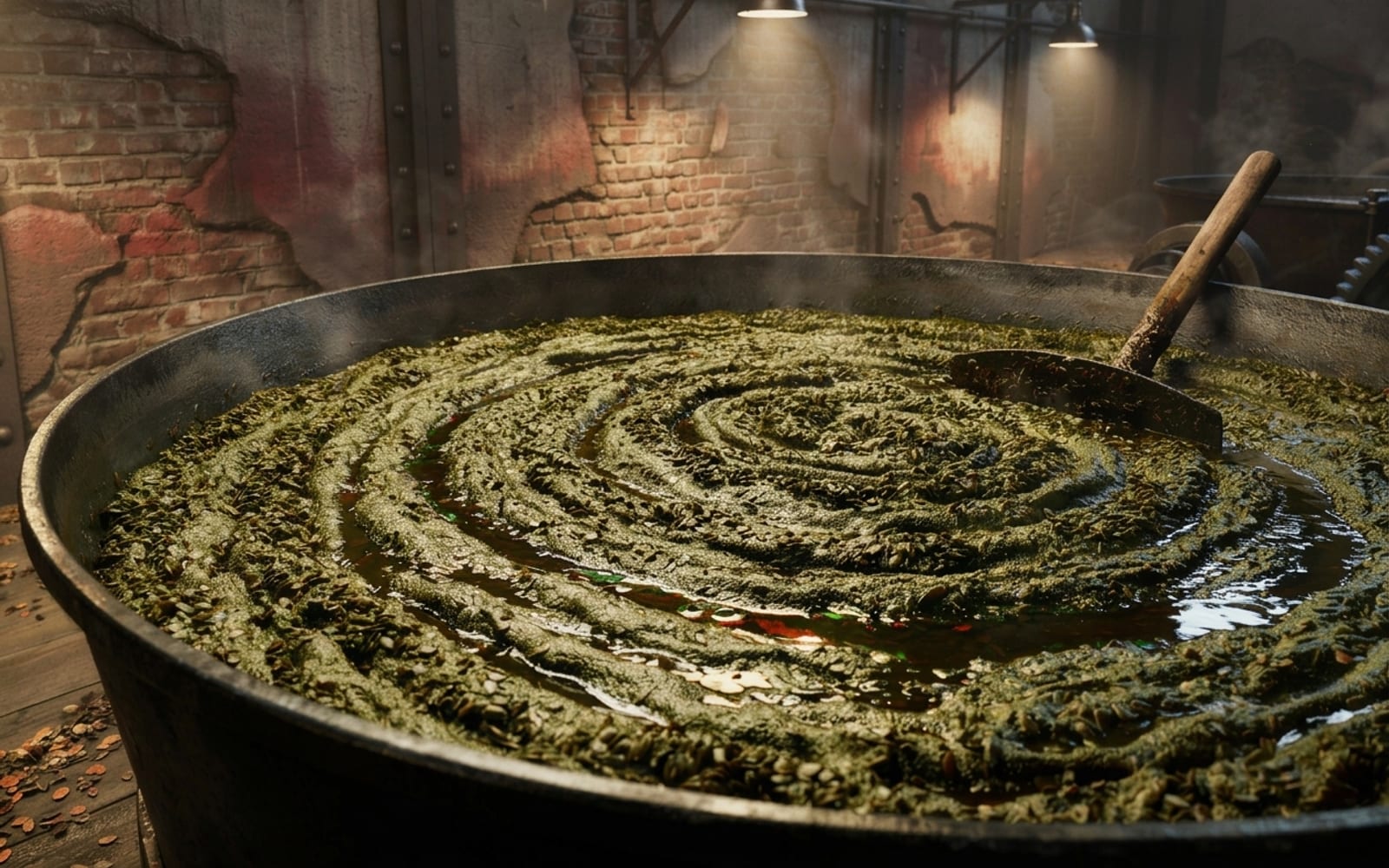
Then comes the step that actually sets the Styrian character. Seeds are ground, mixed with a little water and salt into a dark paste, and heated slowly while someone keeps stirring. The smell thickens, turns nuttier, almost like bread edging toward its last safe minute in the oven. You often hear the same line repeated: "Too hot and it burns. Too cool and it stays flat." Whoever tends the pan watches colour, smell, and time the way a baker watches a crust. More on this craft: Roasting the Seeds.
The Press
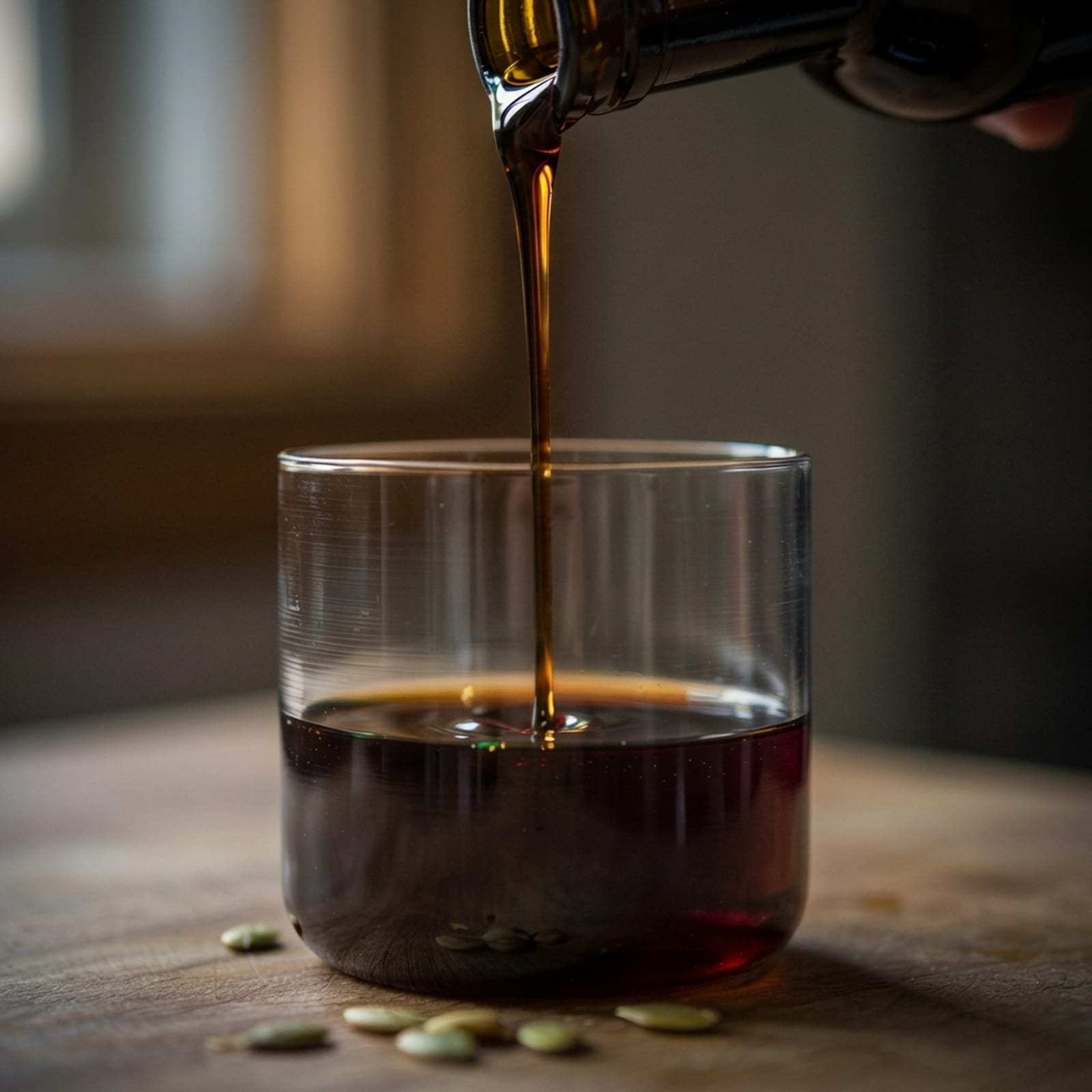
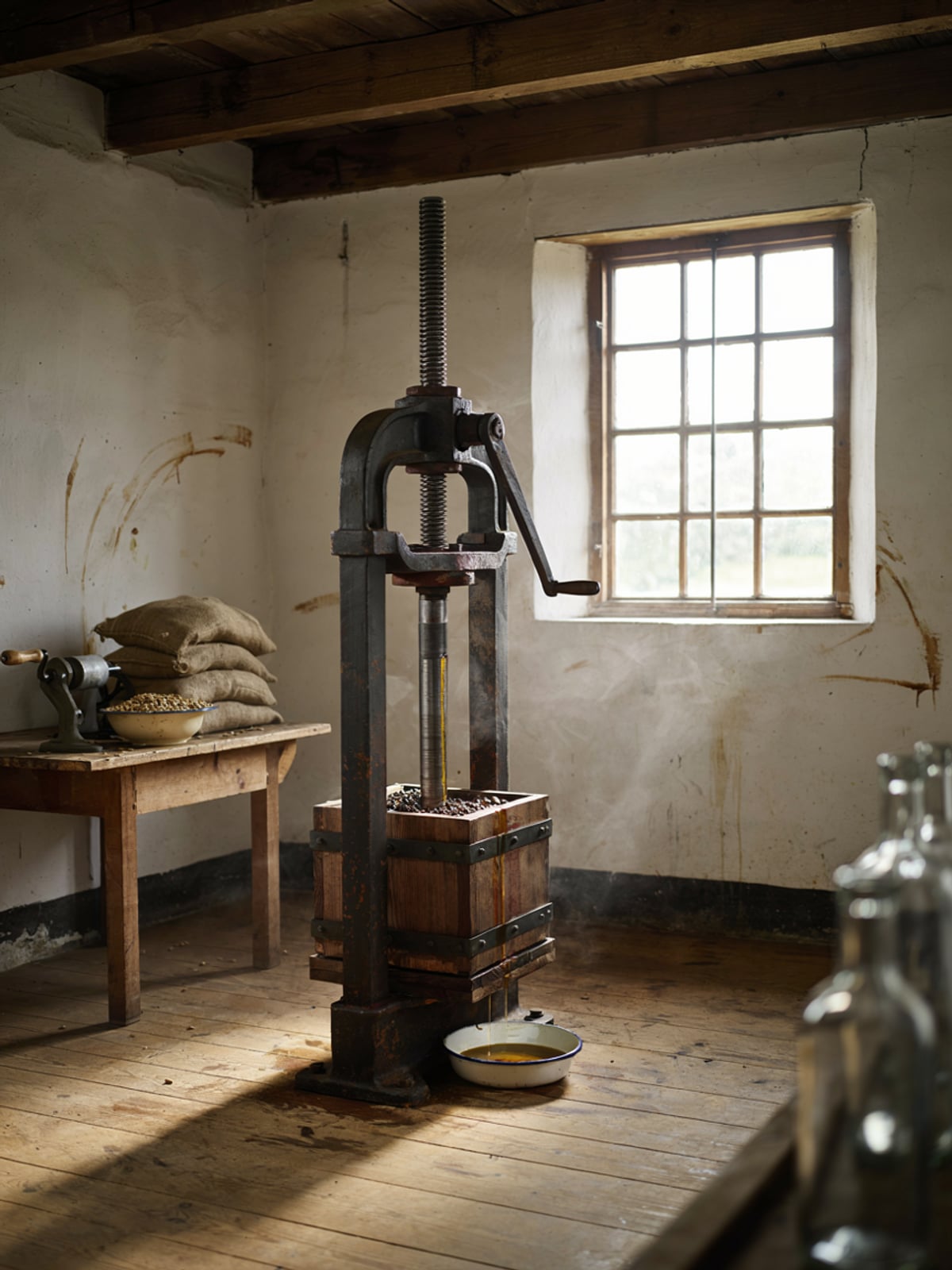
The moment the roast is right, the warm paste moves straight to the press. Under pressure, oil runs out dark and thick, its smell filling the whole room. What leaves the press is no longer a raw cooking fat — it already tastes finished. How cold-pressed and roasted paths differ is explained in Cold Pressed vs Roasted.
Settling Before the Bottle
Straight from the press, the oil is cloudy and far too warm for glass, so it goes first into a tank or barrel. There it rests while heavier particles sink slowly to the bottom; some mills filter lightly afterward, depending on house style. Only once the oil is clear enough — while keeping its deep, almost dichroic colour — does it move into dark glass bottles. Bottle too soon and the result is a cloudy jar that undersells the mill's own work; patience here is craft, not delay. What sits inside the oil is covered under Ingredients and Fatty Acids; the protein stays mostly in the press cake, as Protein: Seeds vs Oil explains.
Bottling and Labels
Before a bottle leaves the yard, its label has to earn trust: origin, the PGI mark where it applies, and a clear statement of whether the glass holds pure oil or a milder salad-oil blend. Shoppers who learn to read those few lines buy with fewer surprises — Blend or Pure?, What Does PGI Mean?, Glossary.
What Visitors Take Home
Beyond the bottle, one rule tends to stick: this oil was roasted for flavour, not for high heat at the stove. Keep it cool, dark, and closed, so the roast smell that just filled the whole yard is still there weeks later. Practical follow-up: Cooking, Storage, Shelf Life.
The Day in the Larger Arc
A mill day sits squarely between harvest and shop shelf. The full arc — field, mill, warehouse, kitchen — is mapped in From Seed to Shop. More field and table stories live in the Journal hub; comparisons that make more sense once you have smelled the roast are gathered in the Compare hub.
The Smell That Travels Home
Weeks later, when you open a fresh bottle in your own kitchen, it is the same aroma that once filled that mill yard — just quieter, concentrated onto a single spoon. If your bottle smells flat or sharp, storage or age is almost always the reason, not a different kind of oil. Compare it against a newly bought PGI bottle when in doubt, and you will recognise exactly what began that morning at the roasting pan.
Buy the original Styrian pumpkin seed oil
Shop now