The Styrian
Pumpkin Seed Oil Journal
The Styrian
Pumpkin Seed Oil Journal
- The Styrian Pumpkin Seed Oil Journal
Shop EN
pumpkinseedoil.ccShop DE
kuerbiskernoel.cc
About
This website also contains some content created with the support of AI.
Pumpkin Seed Oil vs Rapeseed Oil
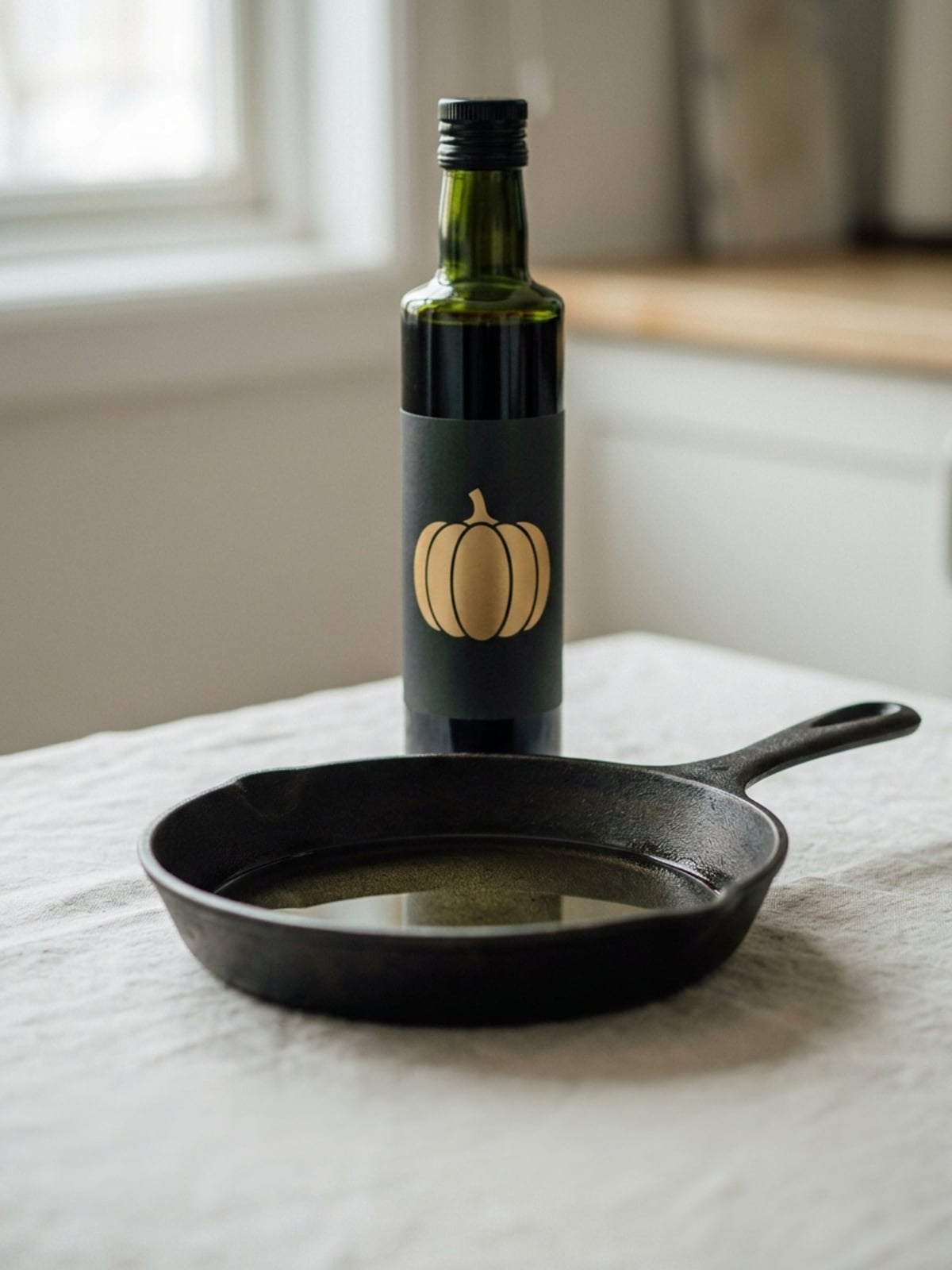
In many Central European kitchens, rapeseed oil simply lives there: next to the stove, within reach, without any fuss. Styrian pumpkin seed oil lives somewhere else — usually in a cupboard, cool and dark, and comes out only for the final touch on a dish. Setting the two side by side settles a rule that saves both money and flavour: don't fry in the expensive bottle, and don't expect the quiet everyday oil to taste of Styria.
An Everyday Workhorse and a Sunday Guest
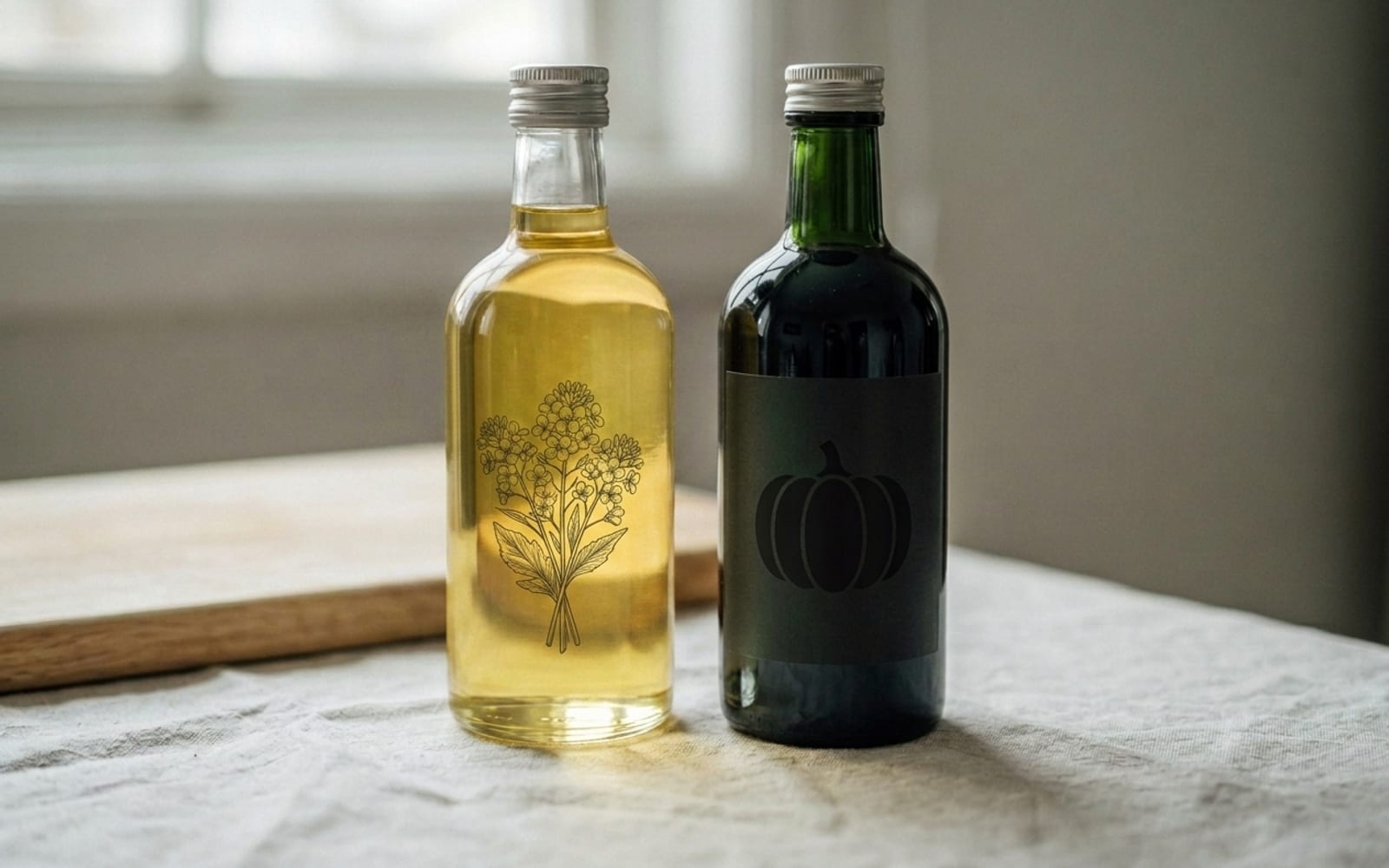
One container works several times a day: frying, baking, sautéing. The other appears less often, but with more presence. Refined rapeseed oil is deliberately mild, so it disappears into roasts, bakes, and the everyday pan. Even cold-pressed rapeseed styles usually stay softer than pumpkin seed oil. Styrian pumpkin seed oil is roasted and assertive — a single spoonful can perfume an entire bowl of salad. If a dish needs a blank canvas, rapeseed wins. If it needs a roasted signature, pumpkin seed oil wins. Background: what is Styrian pumpkin seed oil?
The Line Drawn at the Pan
Picture the hot pan: rapeseed oil pours in, spreads, and holds up under heat. Pumpkin seed oil would burn here before it ever showed its aroma. Smoke point and price make rapeseed suitable for strong heat — and make Styrian pumpkin seed oil suitable for finishing. So rapeseed oil (or another heat-stable fat) goes in the pan, and pumpkin seed oil arrives only once the heat is off. That is exactly the advice Styrian cooks give when a guest asks whether the green-gold bottle can go in the fryer. Details: cooking with pumpkin seed oil and can you cook with it?
Two Jobs in the Same Kitchen
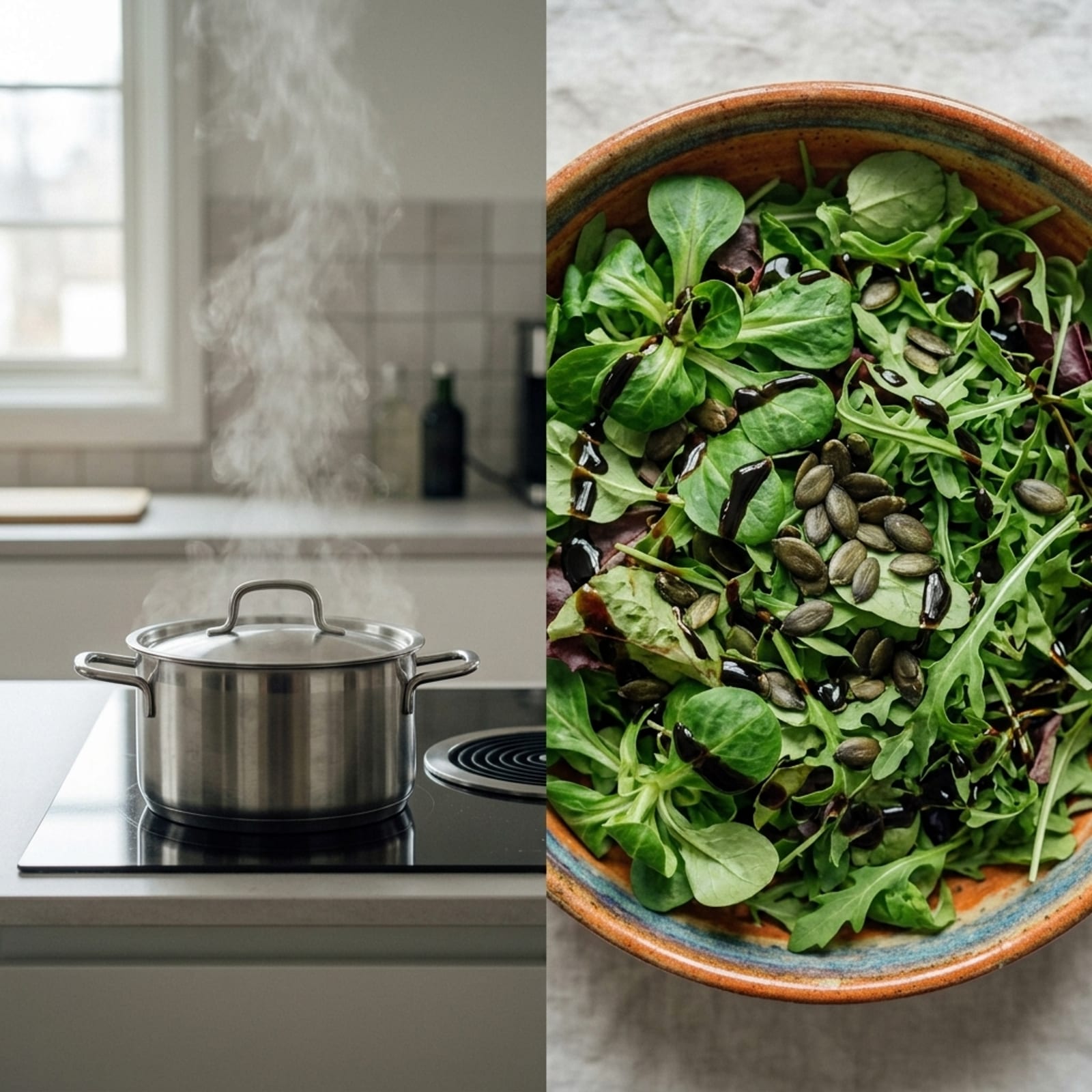
Rapeseed oil handles the cutlet in the pan, the vegetable tray in the oven, the everyday dough, and the mayonnaise where neutrality matters. Pumpkin seed oil handles the Styrian salad, the soup finish, the soft egg, the potato salad, and the cheese or charcuterie board. Roast vegetables in rapeseed oil and finish with pumpkin seed oil right at the end, and both bottles do their best work. Ideas: flavour pairings, cold plates, recipes.
How to Spot the Real Thing
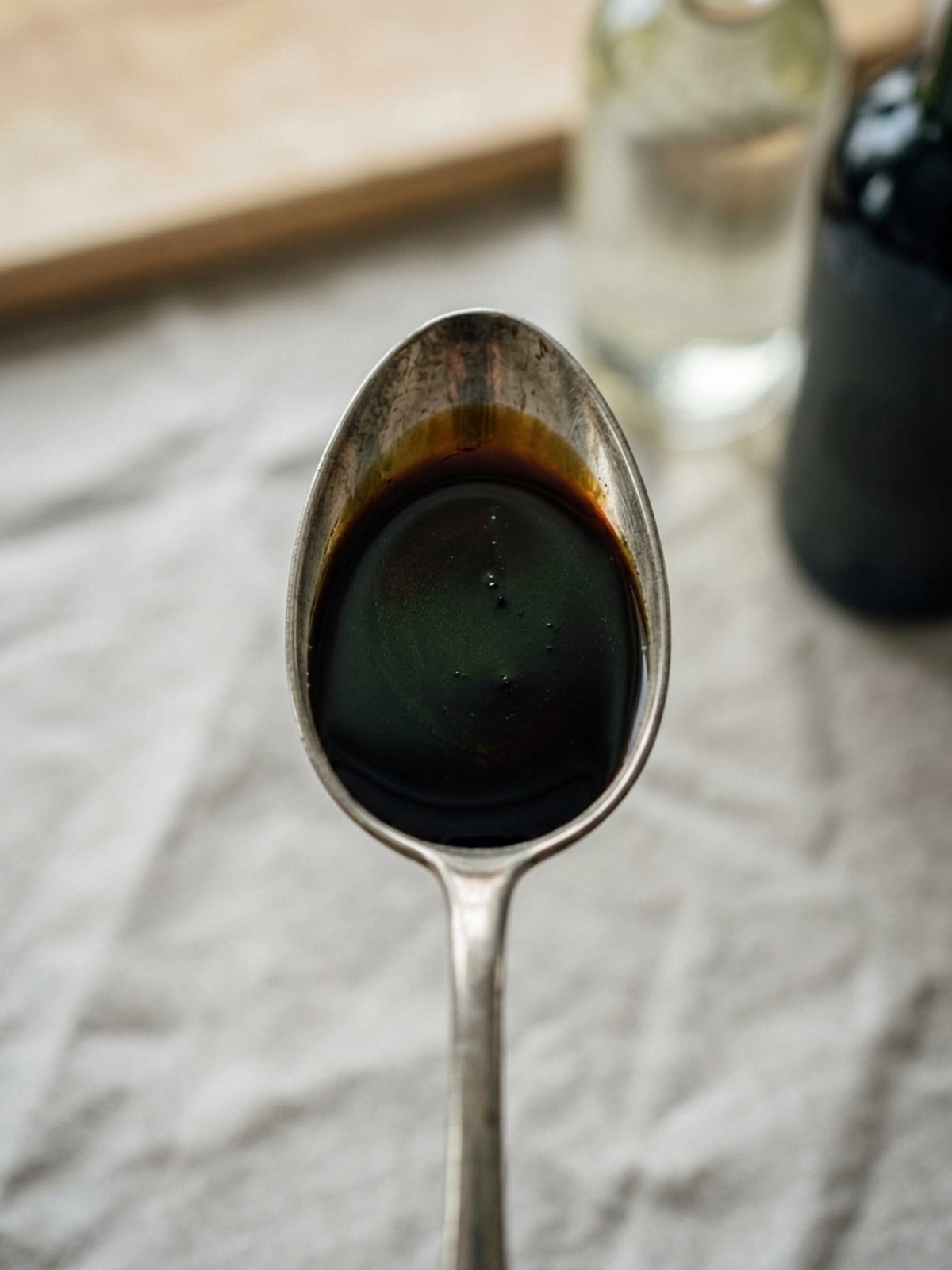
Rapeseed oil is pale gold, unremarkable, interchangeable. Pumpkin seed oil looks very dark in the bottle and, in a thin layer, shows green when it carries genuine Styrian roast. Pale “pumpkin seed oils” without that roasted character belong to a different category altogether. For protected Styrian oil, look for the PGI / g.g.A. mark — see Styrian PGI and what does PGI mean? Blends that dilute pumpkin seed oil with cheaper oils exist for everyday salads but are not the same as pure oil — blend or pure?
What a Litre Actually Costs
Per litre, rapeseed oil is far cheaper. Per delicious finishing spoonful, pumpkin seed oil can still be reasonable, because so little is needed. Buying a large PGI bottle to fry with is the expensive mistake; buying a small bottle for salads and soups is the intended use. Keep opened bottles cool and dark: storage, shelf life.
The Two-Oil Method for Everyday Cooking
Roast a tray of vegetables or potatoes in rapeseed oil until they take on colour. Move them to a serving plate, season with salt and a splash of vinegar or lemon, then finish with Styrian pumpkin seed oil and herbs or seeds. The mild, affordable oil does the heat work; the specialty bottle delivers the flavour finish. The same pattern works for grain bowls and warm lentil salads — and it is the fastest way to stop treating pumpkin seed oil like an all-purpose frying fat without using it any less often. More patterns: flavour pairings and the recipe hub.
Shopping Without a Guilty Conscience
Nobody needs to give up rapeseed oil to “eat better,” and nobody needs a litre of Styrian oil for everyday frying. One large bottle of heat-stable oil next to a smaller bottle of PGI pumpkin seed oil is enough — that split respects both budget and taste. If friends ask why the salad suddenly tastes different, the answer sits in the finishing splash, not in some secret frying technique. Authenticity checks for the Styrian bottle stay the same: PGI mark, clear ingredients, honest blend labelling — blend or pure. More oil comparisons in the compare hub, including vs olive oil and vs flaxseed oil.
Get PGI-certified Styrian pumpkin seed oil
Shop now